SAADAA × OPTIPHOENIX: A SIZE SELECTION REDESIGN DROVE A 20% CONVERSION RATE UPLIFT
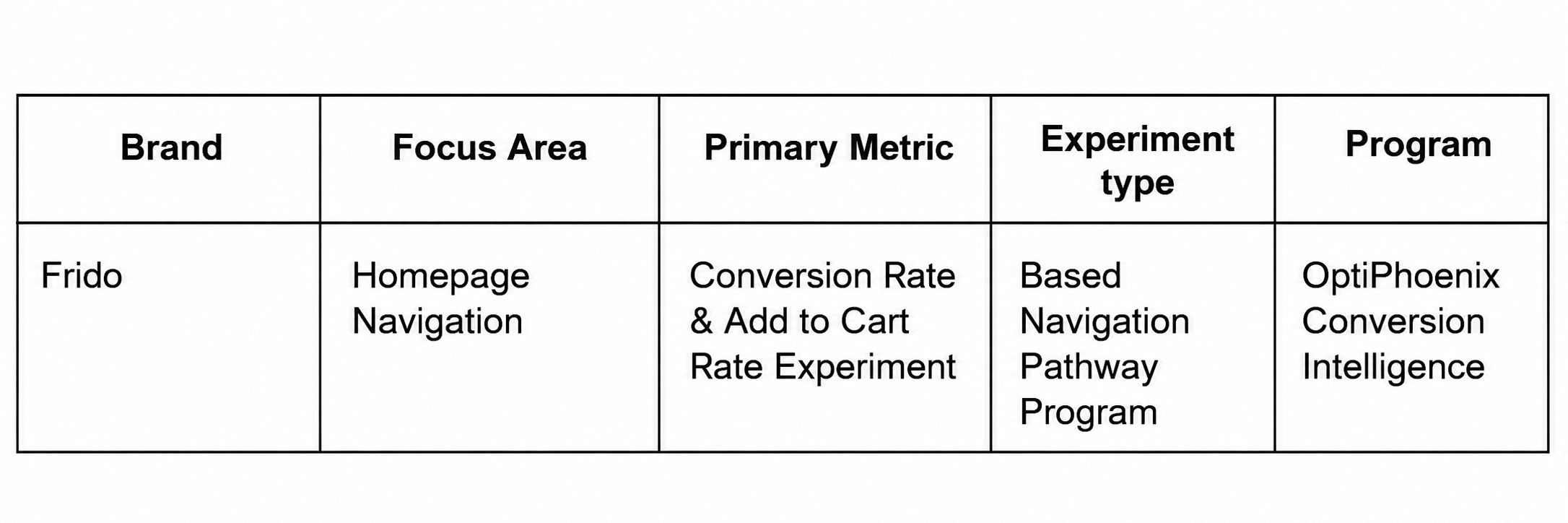
Frido is an Indian wellness and mobility brand that develops ergonomic products, including orthopedic cushions, pillows, insoles, footwear, and posture-support solutions, designed for concerns such as back, neck, and foot pain. On Frido’s homepage, users could only browse products through category-based navigation. This worked for shoppers who already knew what type of product they wanted, but it did not directly address visitors who arrived looking for a solution to a specific pain concern. That gap likely increased the effort required to find a relevant product and slowed the path from homepage to purchase.

OptiPhoenix partnered with Frido to test whether adding a concern-based navigation pathway would reduce that friction and improve conversion.
Category navigation answers “what type of product,” but it does not answer “what is bothering me.” A visitor dealing with foot pain, back pain, or neck pain does not always know which product category solves that problem. Category-first navigation left that visitor to guess or search, adding effort at the very first step of their journey.
The gap sat between a visitor who already knew their pain point and a homepage that only organized products around type, not concern.
OptiPhoenix proposed that adding a dedicated “Shop by Concern” section to the homepage, alongside the existing category navigation, would align product discovery with what visitors were actually trying to solve. This was expected to help visitors find relevant products faster, convert with less friction, and drive a higher conversion rate.

OptiPhoenix ran a controlled A/B test on Frido’s homepage.
Variant A (Control): The original homepage, with category-based navigation only.
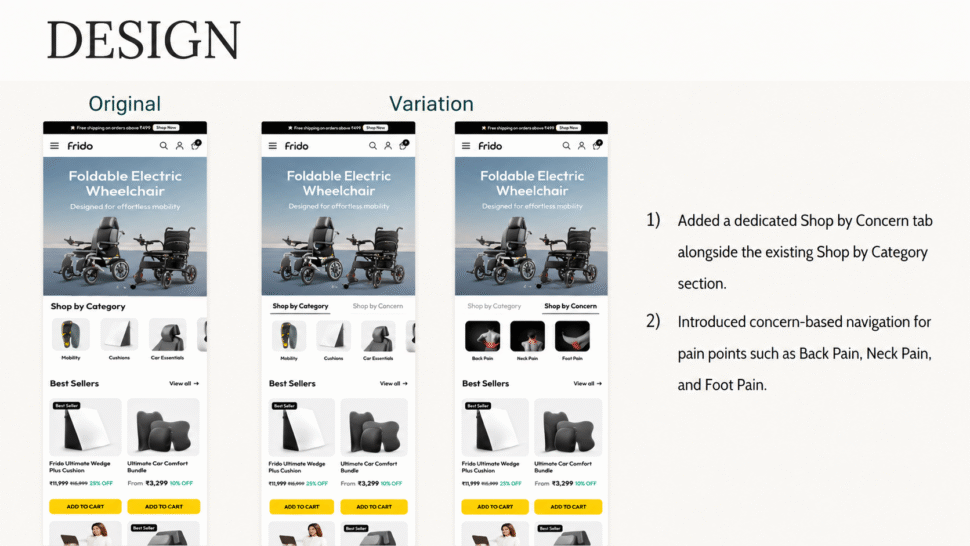
Variant B (Test): A dedicated “Shop by Concern” tab added alongside the existing “Shop by Category” section, introducing concern-based navigation for pain points such as Back Pain, Neck Pain, and Foot Pain.
Metrics measured: Conversion Rate and Add to Cart Rate.
Letting visitors navigate by their pain point, not just by product type, moved more of them toward a purchase.
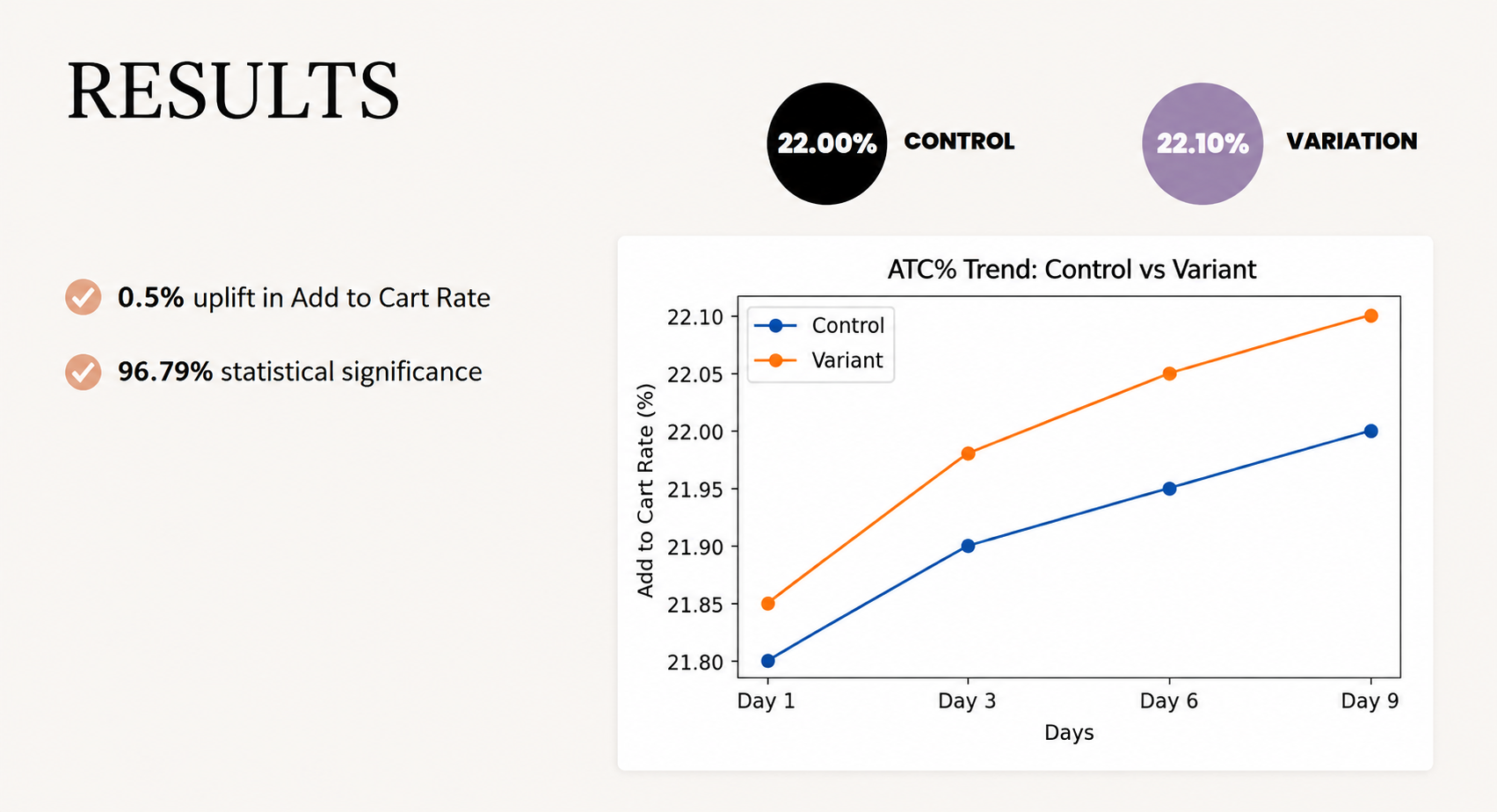
Conversion Rate rose 0.48%, reaching 96.79% statistical significance and producing 21 additional monthly orders. Add to Cart Rate rose 0.5%, also at 96.79% statistical significance, producing 79 additional monthly add to carts.
Product type and customer intent are not the same thing. Category navigation organizes what a brand sells. Concern-based navigation organizes what a visitor is trying to fix. Frido’s visitors responded to the second framing, which is why adding it alongside the existing structure, rather than replacing it, drove measurable gains in both metrics.
A parallel pathway can work better than a redesign. OptiPhoenix did not remove or restructure the existing category navigation. Adding “Shop by Concern” as an additional option let visitors self-select the pathway that matched how they were already thinking about their problem.
Discovery friction shows up early. Both Conversion Rate and Add to Cart Rate moved together, which suggests the friction being removed was upstream, at the point of first navigating the homepage, rather than later in the funnel.
Frido’s visitors were not failing to find products because the products were not there. They were failing because the homepage only let them search by category, not by the concern that brought them there in the first place. By adding a concern-based pathway alongside category navigation, OptiPhoenix closed that gap, and conversion followed.