SAADAA × OPTIPHOENIX: A SIZE SELECTION REDESIGN DROVE A 20% CONVERSION RATE UPLIFT
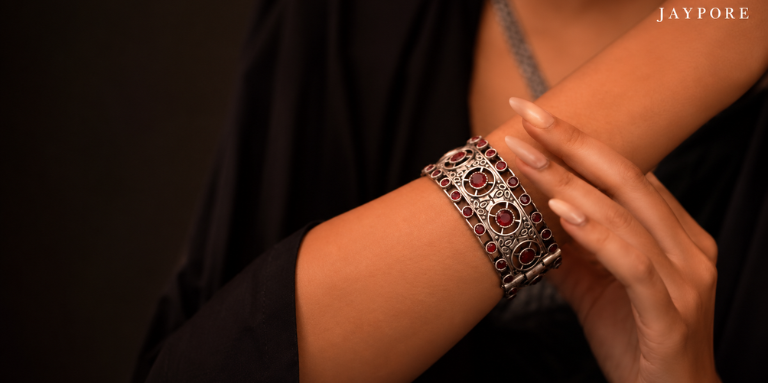
For a craft and lifestyle brand built on authenticity, the material is the product. A buyer choosing silver jewellery is buying the assurance of what the piece is made of, as much as how it looks. On Jaypore’s PDP, that assurance was hard to find. Shoppers were not getting clear, quick cues about material quality, and a differentiator as important as silver purity was either buried in the details or not highlighted at all.
For jewellery, where trust drives the decision, that absence created hesitation right at the point of commitment.
OptiPhoenix partnered with Jaypore to test whether making material quality visible on the product page would reduce that hesitation and improve outcomes.
The hesitation was not about price or design. It was about proof.
A shopper looking at a silver piece wants to know it is genuinely sterling silver before they commit. When that fact sat in a specification block rather than on the product image, the buyer had to hunt for the one detail that would give them confidence. Hunting at the moment of decision is friction, and friction at that moment reads as doubt. The gap was a missing trust signal, sitting between a credible product and a buyer who could not see the credibility at a glance.
If material quality is signalled directly on the product image, it will act as a visible trust cue. For jewellery specifically, a clear purity indicator such as a sterling silver tag will reduce hesitation and build credibility, lifting conversion and order value.
OptiPhoenix ran a controlled A/B test on the PDP:
Variant A (Control): The original product page, with no material cue surfaced on the product image.
Variant B (Test): A visible “sterling silver” tag added on the PDP as a material and credibility cue, placed where shoppers would see it without searching.
Metrics Measured: cart views, conversion rate, average order value, revenue
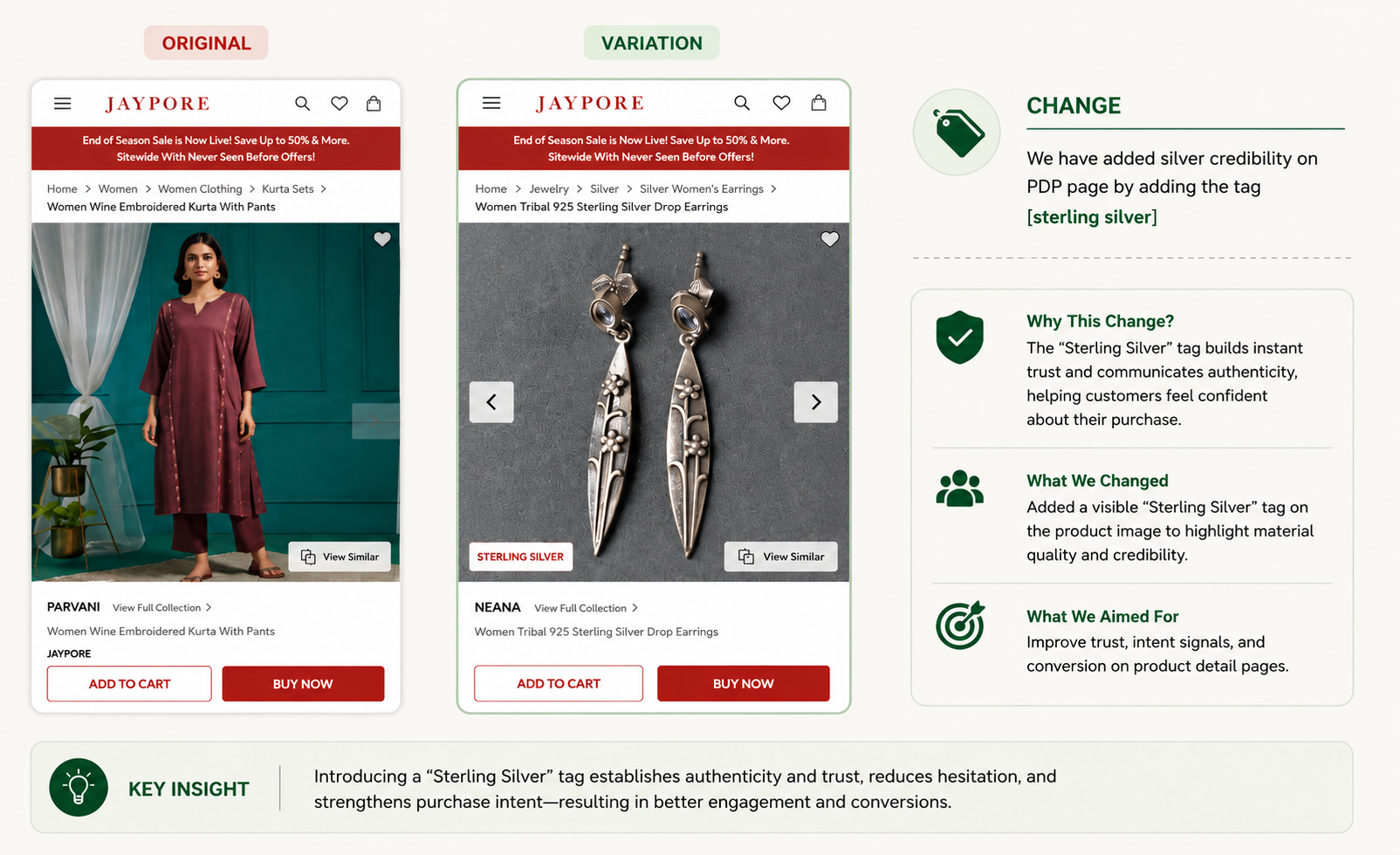
Making purity visible changed how shoppers moved through the funnel.
Cart views rose 4.5%, and progression from the product page to the cart improved, which points to stronger purchase intent. Average order value rose 13.37%. The result reached 92.82% statistical confidence, just short of the conventional 95% threshold, so the direction is clear and the read is positive while warranting a confirmatory run.
A single visible material cue on the PDP lifted average order value by 13.37% and moved more shoppers into the cart.

In trust-led categories, proof belongs on the image. The specification was already accurate. Moving the purity signal to where the eye lands first is what turned an accurate detail into a buying cue.
A trust cue can raise order value, not only conversion. The 13.37% lift in average order value suggests shoppers who felt confident in the material were willing to commit to more, which is the behaviour you would expect when hesitation drops.
Report confidence honestly. At 92.82%, this result sits below the 95% threshold. It is a strong directional signal that earns a confirmatory test rather than a closed case.

Jaypore shoppers were not unconvinced by the jewellery. They could not see the one fact that would convince them without going looking. By surfacing the sterling silver cue on the product image, the proof a buyer needed arrived at the glance, and the hesitation that had been holding back orders eased at its source.