SAADAA × OPTIPHOENIX: A SIZE SELECTION REDESIGN DROVE A 20% CONVERSION RATE UPLIFT

Giva is an Indian jewellery brand offering silver, gold, and lab-grown diamond jewellery through a digital-first shopping experience. Users on Giva’s Product Detail Page relied on product imagery as their primary way of evaluating a piece. Important purchase-driving information, such as material quality, plating details, stone type, and warranty, was not immediately visible. Users had to actively seek it out elsewhere on the page.

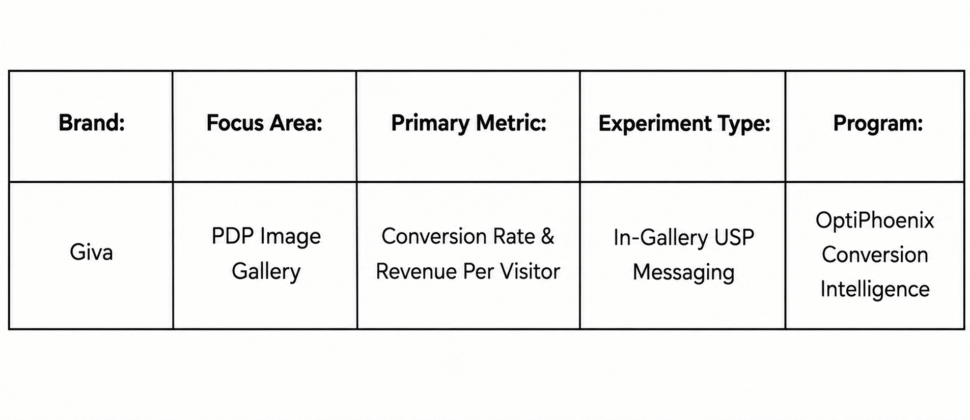
OptiPhoenix partnered with Giva to test whether surfacing key product USPs directly within the image gallery would reduce that friction and improve conversion.
Shoppers were already looking at the images. The information that would help them decide was just not there when they looked.
Asking a shopper to leave the image carousel and search the page for material quality or warranty details adds a step at the exact moment they are forming a judgment about the product. The gap sat between a shopper actively evaluating a piece through its photos and information that could have supported that evaluation but was positioned elsewhere.
OptiPhoenix proposed that embedding key product USPs within the image gallery itself would let shoppers discover high-impact product information while browsing images. This was expected to improve product understanding, strengthen trust, and reduce friction in the purchase journey.

OptiPhoenix ran a controlled A/B test on Giva’s mobile PDP.
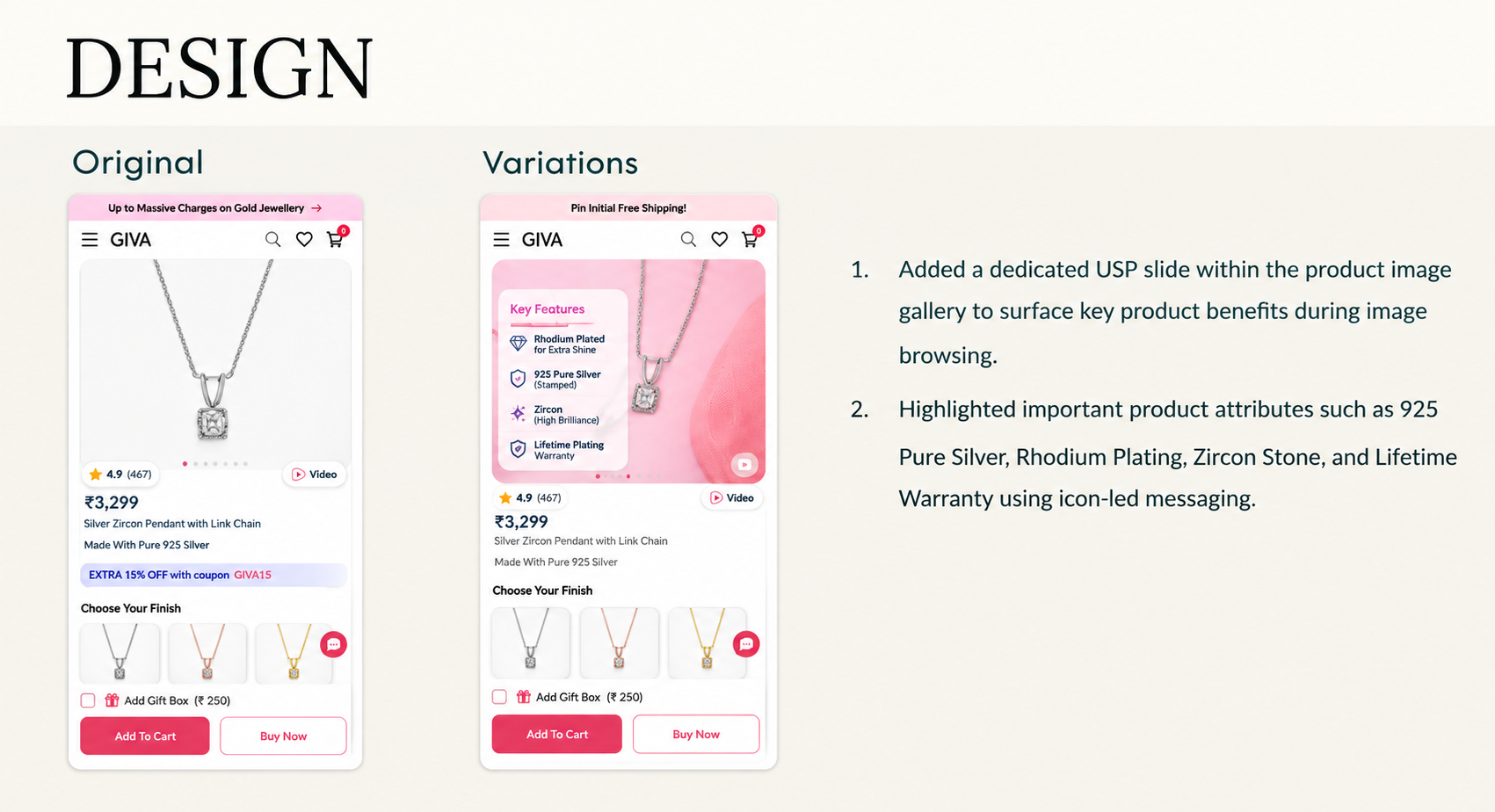
Variant A (Control): The original image gallery, showing product photos only, with material and warranty information positioned elsewhere on the page.
Variant B (Test): A dedicated USP slide added within the product image gallery, highlighting attributes such as 925 Pure Silver, Rhodium Plating, Zircon Stone, and Lifetime Warranty using icon-led messaging.
Metrics measured: Conversion Rate and Revenue Per Visitor (RPV).
Putting purchase-driving information where shoppers were already looking moved more of them toward a purchase.
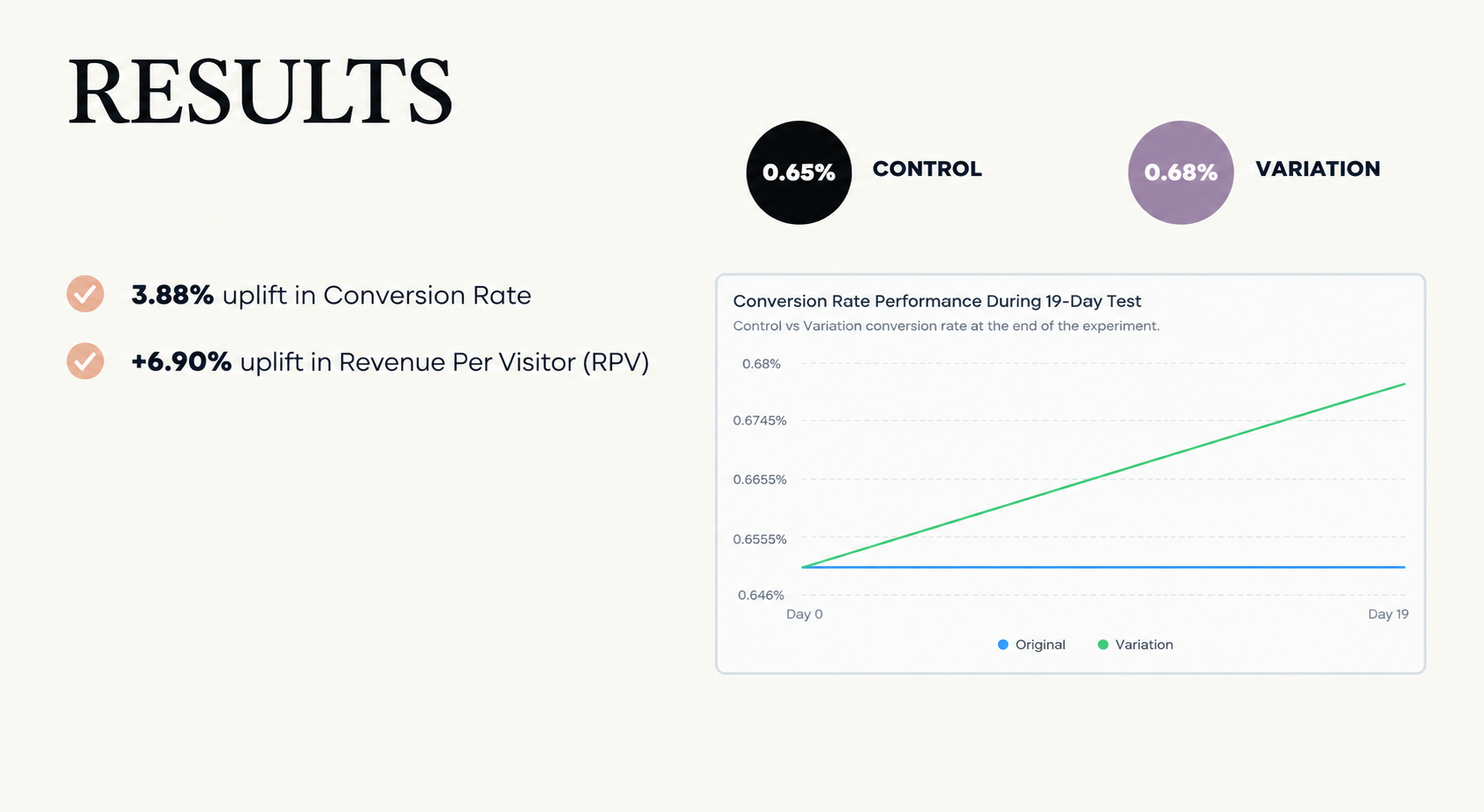
Conversion Rate rose from 0.65% to 0.68%, a 3.88% increase. Revenue Per Visitor rose 6.90% over the same test. Together, these lifts translated to a projected ₹1,39,36,219.49 in additional yearly revenue.
Trust-building information works best where attention already is. Shoppers were not ignoring material and warranty details out of disinterest, that information simply was not in front of them while they were forming their impression of the product through images.

Icon-led messaging can communicate quickly within a visual format. Embedding USPs directly in the image carousel, rather than as separate text elsewhere on the page, let shoppers absorb key attributes without breaking their existing browsing behavior.
RPV moved further than Conversion Rate, which points to added confidence, not just added information. A 6.90% RPV increase against a 3.88% Conversion Rate increase suggests shoppers who saw the USPs were not just more likely to buy, they may have felt more confident in what they were buying.
Giva shoppers were not short on interest in the product, they were short on the information that would confirm their decision, right where they were already looking. By embedding key USPs directly into the image gallery, OptiPhoenix closed that gap, and shoppers moved from browsing to buying with more confidence.