SAADAA × OPTIPHOENIX: A SIZE SELECTION REDESIGN DROVE A 20% CONVERSION RATE UPLIFT
The cart page is where purchase intent is highest. Users have already chosen a product, set a size and quantity, and navigated away from browsing. By conventional logic, the hard work is done.
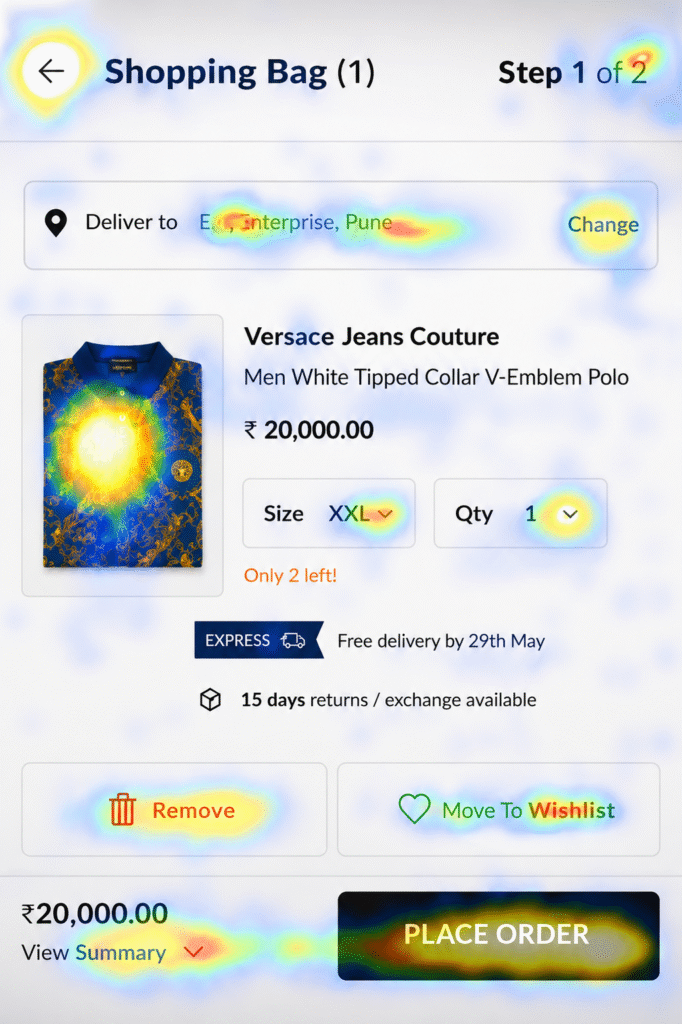
Yet The Collective’s cart page was losing a significant share of users before they completed payment. Heatmap data revealed the pattern: most cart-page users were clicking the product image or hitting the back button to return to the PDP.
Analytics confirmed the scale of the problem. Of all users who reached the cart, 62% navigated back to the product detail page. Among that group, 22% returned to the cart and completed a purchase -meaning a substantial portion never came back at all.
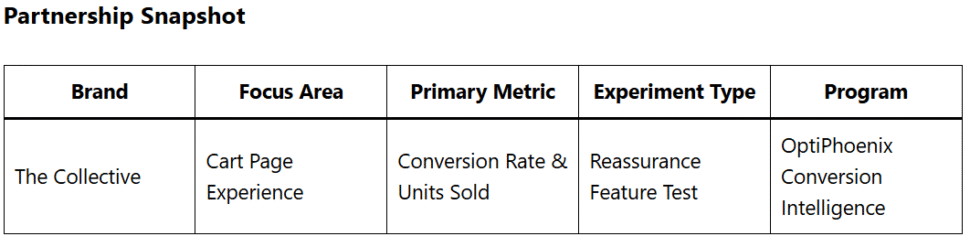
OptiPhoenix partnered with The Collective to understand why buyers were leaving the cart and what could be done about it.
The PDP bounce wasn’t indecision about whether to buy. It was a need for confirmation about what they were buying.
Luxury fashion carries a level of purchase anxiety that mass-market categories don’t. At price points like ₹20,000 per item, buyers want to verify their selection before committing. When the cart page showed only a thumbnail, product name, and price, that reassurance wasn’t available without navigating away.
The exit to the PDP was a confidence gap, not a change of mind.
If users can access a quick view of the product directly from the cart page without leaving, the need to navigate back to the PDP will decrease, reducing friction and increasing completion rates.
OptiPhoenix designed an A/B test targeting the cart page interaction:
Variant A (Control): Original cart page – product images link back to the full PDP on tap.
Variant B (Test): Product images on the cart page trigger a quick view overlay displaying the product in full detail, with a “View Product Details” option for deeper review.
All other cart elements remained unchanged.
Duration: 5 weeks
Metrics Measured: Conversion rate, units sold, revenue

The quick view feature produced a decisive shift in cart behavior.
Conversion rate increased by 13.4%. Units sold grew by 30%. Revenue increased by 6.1%.
Users who could verify their selection without leaving the cart converted at a materially higher rate than those who had to navigate away to do the same thing.
A single friction-reduction change at the cart stage moved 13.4% more users through to purchase.
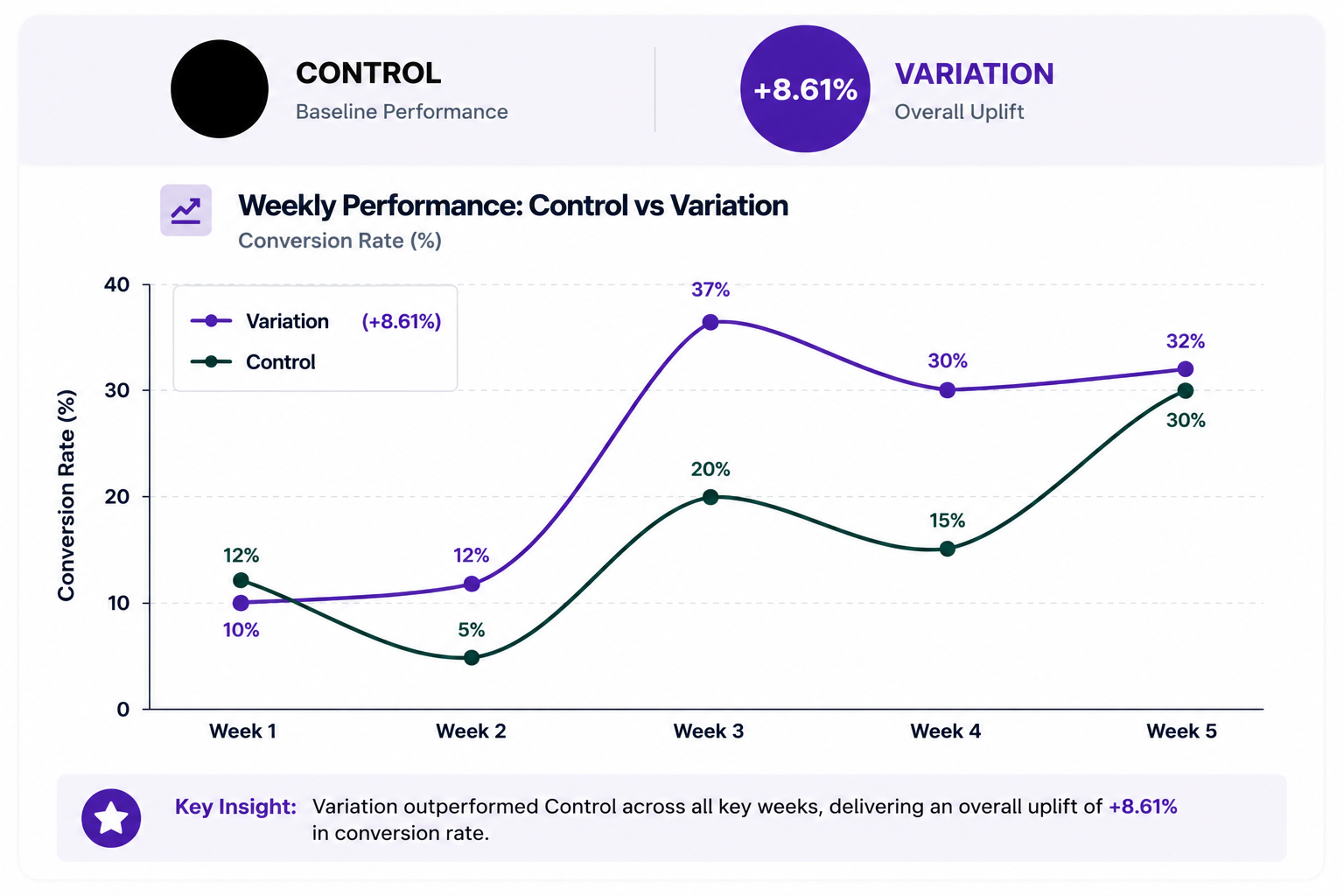
Cart abandonment often reflects an information gap, not a purchase reversal. When users leave the cart for the PDP, they are seeking confirmation, not reconsidering. Giving them that confirmation without forcing navigation keeps the purchase intent intact.
Friction compounds in high-consideration categories. For luxury goods where individual items carry significant financial and emotional weight, every additional step between intent and completion is a real cost.
Reassurance at the right moment converts. Adding product detail access at the point of highest intent – not earlier in the funnel – is what made the difference here.
The Collective‘s buyers weren’t abandoning the cart because they changed their minds. They were leaving to double-check a decision they had already made. By meeting that need in place – with a quick view that required no navigation – the friction that was quietly draining cart completions was eliminated at its source.