
How to Choose a CRO Agency

With the rise of e-commerce and digital marketing, businesses have access to a wealth of data that can assist them in identifying customer preferences, enhancing user experiences, and increasing sales revenue. This is crucial in the highly dynamic digital landscape, where fierce competition exists among businesses.
To remain competitive in today’s fast-paced market, businesses must adopt cutting-edge strategies and tools as the digital ecosystem continues to evolve. AB testing is a powerful tool for businesses to refine their marketing strategies, optimize website performance and drive revenue growth.
A/B testing enables businesses to test and compare two versions of a webpage or marketing campaign to determine which version performs better in key metrics.
According to some reports, more than 71% of companies conduct at least two tests every month.
By conducting A/B test development, businesses can make real-time data-driven decisions to improve their conversion rate optimization strategies and user experience, increasing revenue.
However, A/B testing is not about randomly showing users two webpage versions and picking a winner. It requires careful planning, execution, and analysis to ensure that the results are accurate, reliable, and actionable. According to a VWO study, one out of every eight A/B tests has a successful outcome.
This comprehensive ab test guide will provide you with everything you need to know about A/B tests. The AB test guide covers best practices, examples, and tools to help you effectively plan, execute, and analyze your A/B tests.
Whether you’re a digital marketer, website owner, or strategist, this guide will equip you with the knowledge and skills to optimize your digital strategies. Let’s start by understanding the basics first.
A/B testing is a statistical method used to compare two versions of a webpage or mobile app to determine which performs better in achieving the goal set by the business.
Users are randomly divided into two groups for A/B testing. One group is presented with the original version of a webpage or app, and the other group is presented with a modified version of the same webpage or app. The behaviour of each group is then compared to determine which version performs better.
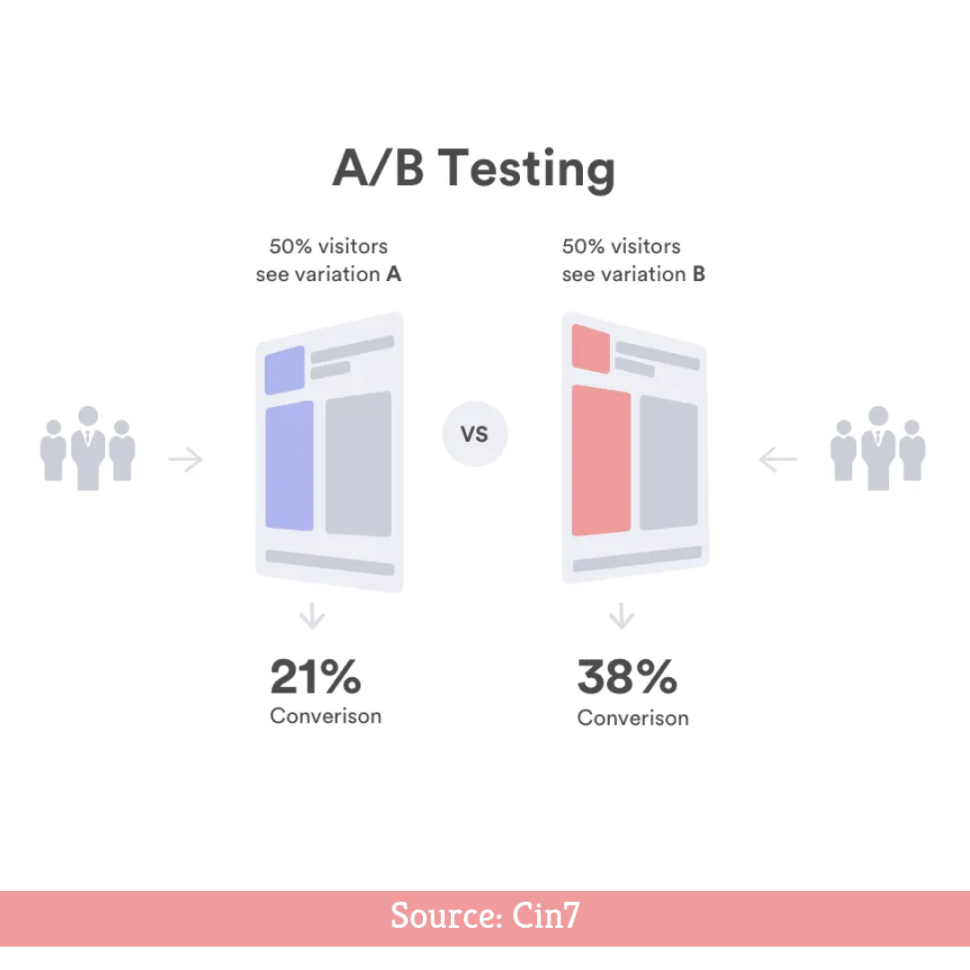
A/B testing is widely used to optimize website conversions, increase click-through rates, and improve user engagement. By making data-driven decisions based on the results of A/B testing, businesses can ensure that their digital properties are designed to maximize their potential.
Another report by VWO states that, a good A/B test can improve the average revenue per unique visitor on e-commerce websites by 50%. These statistics demonstrate the growing importance of A/B testing in today’s digital landscape and highlight the need for businesses to embrace this technique to stay competitive.
In today’s world, making informed decisions and utilizing the power of data is indispensable. A/B testing is an essential component of digital marketing and website optimization, and its effective application can result in substantial enhancements to website performance and, eventually, business success.
Now that we understand what is A/B testing, let’s take a closer look at the different types of A/B tests and how they can be leveraged to improve website conversion rates and user experience.
A/B testing is an effective tool for enhancing the performance of websites and applications. But, not all A/B tests are made alike, and choosing the right type of test can significantly impact the success of your efforts to optimize your website.
Businesses can perform different types of A/B testing, and each has its own set of advantages and drawbacks that are exclusive to itself. Below, we will explore the types of experiments and help you determine which is right for your optimization goals.
Testing multiple variations of various elements on a website or app simultaneously is known as multivariate testing. Multivariate is a form of A/B testing that offers comprehensive data and helps companies make informed decisions about which combinations of elements will yield the best results.
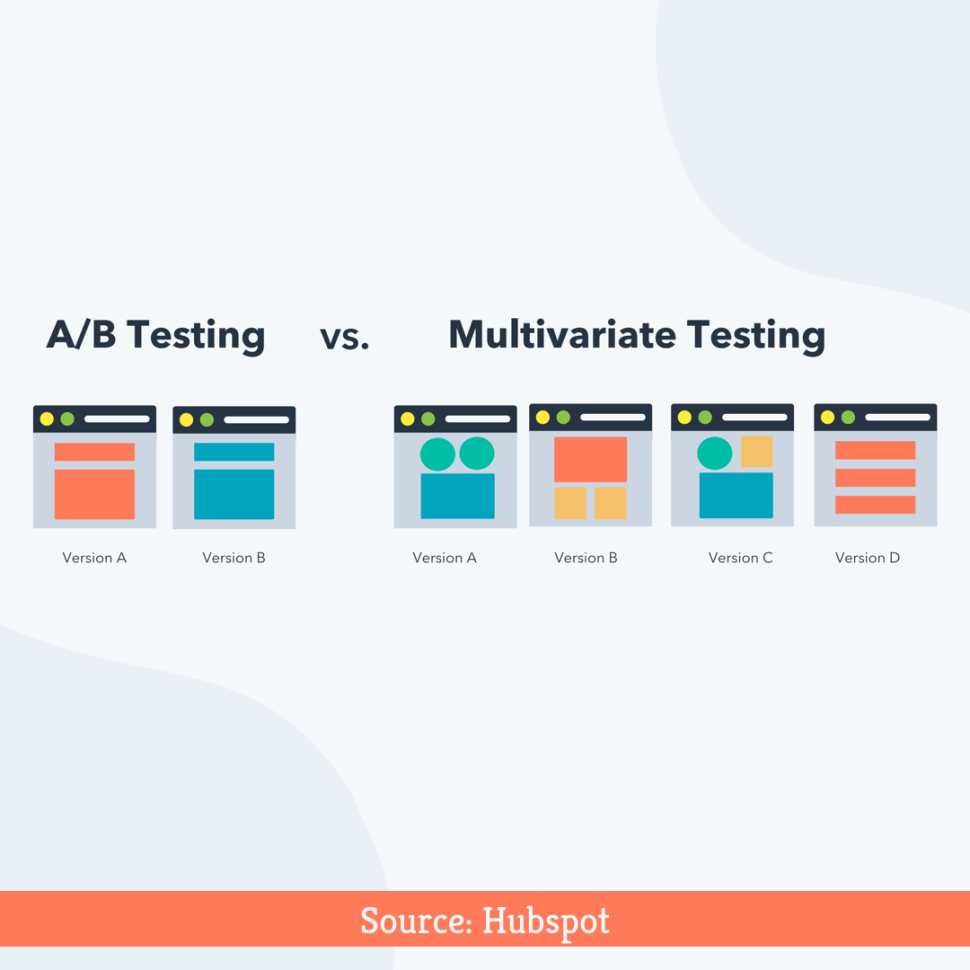
Multivariate testing can provide valuable insights into the most effective element combinations, allowing companies to optimize their websites or apps and enhance user engagement and conversion rates. However, multivariate testing is more complex and time-consuming than simple A/B testing. In this test, you need a bigger group of participants to get meaningful results which can be challenging to organize and manage.
Multi-page funnel A/B testing is an advanced type of A/B test that combines various types of A/B testing across multiple pages. This approach is often used in sales funnels where changes are made on a sequence of pages instead of individual pages. By doing this, businesses can test how specific changes impact their sales funnel or conversion rates.
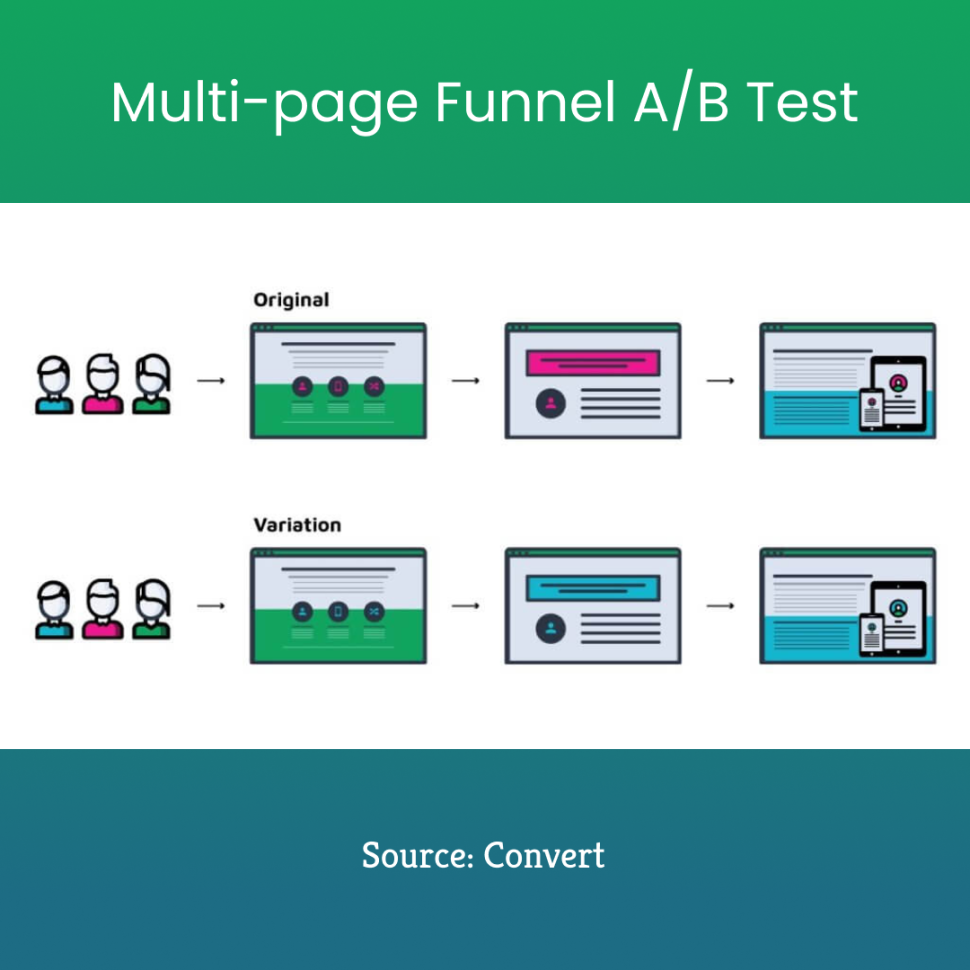
This type of experiment provides visitors with a persistent variation of the website to experience, which allows companies to see the broader impact of a site-wide change. However, it is important to note that the number of changes to be tested should be kept to a minimum.
By testing multiple pages and combinations of pages, companies can identify the most effective elements of their website or app and improve the user experience, leading to higher website conversion rates and increased revenue.
Although multi-page funnel A/B testing provides valuable insights, it can be more complex and time-consuming than traditional A/B testing. It requires a significant time investment and resources to set up and manage, and a larger sample size may be needed to generate statistically significant results. Nonetheless, multi-page funnel A/B test development is an excellent tool for businesses looking to optimize their sales funnel and improve their bottom line.
In comparison to A/B testing, a multi-armed bandit solution is considered to be “smarter” or more advanced. It uses machine learning algorithms that dynamically distribute traffic to variations, which perform well while assigning less traffic to underperforming variations.
When using multi-armed bandit testing, the evaluations are dynamic and include both periods of exploration and periods of exploitation simultaneously. The traffic is directed in the direction of winning variations rather than waiting until the end of an experiment to declare a winner (an approach that is taken in traditional A/B testing).
This process is quicker and more efficient than others due to the fact that less time is spent sending traffic to low-performing variations.
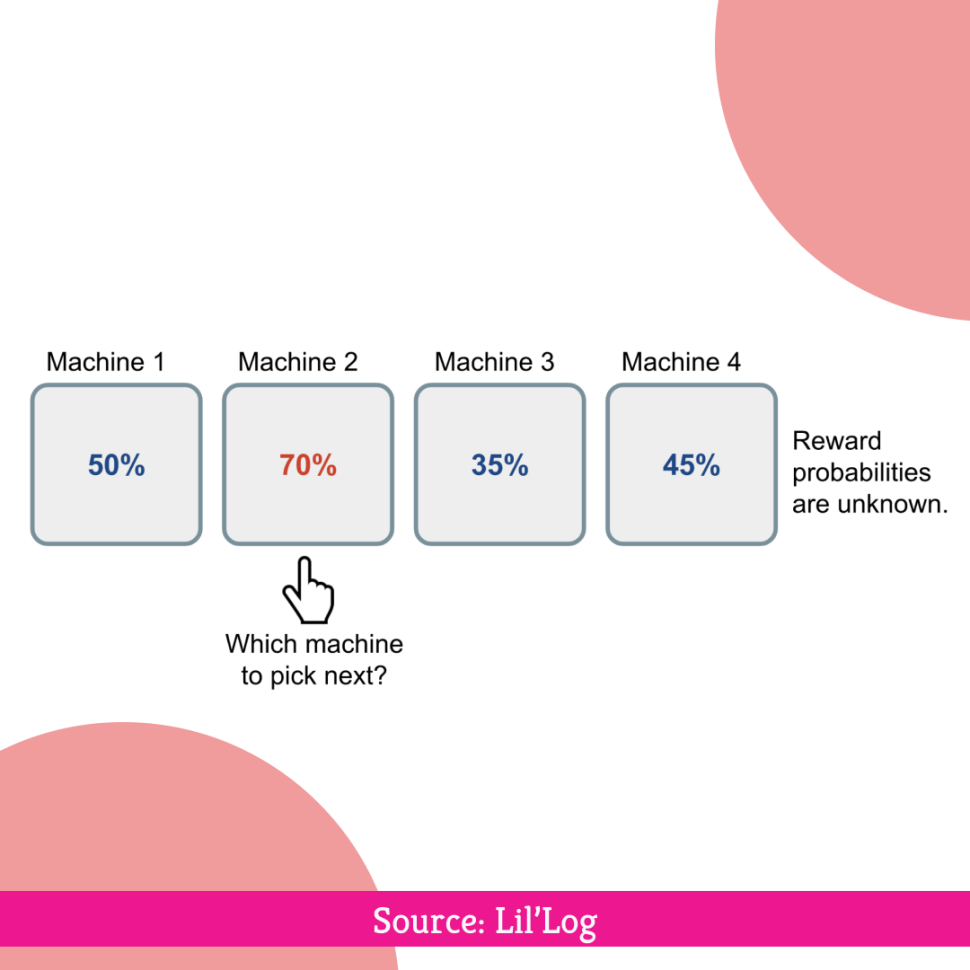
A prime example of a multi-armed bandit problem is the predicament that arises when a news website wants to choose which of its articles will be displayed to an individual. Because there is no information about the visitor, the results of any click are unknown. Finding out which articles will receive the most clicks is the first thing that needs to be determined.
Whenever a new feature is added to software or an existing feature is modified, it’s important to conduct feature testing.
This involves checking the added or modified features that are designed in a useful, interesting, and effective way. It is essential to do feature tests in order to ensure that the software meets all of the business requirements and that all of the major features work, as intended.
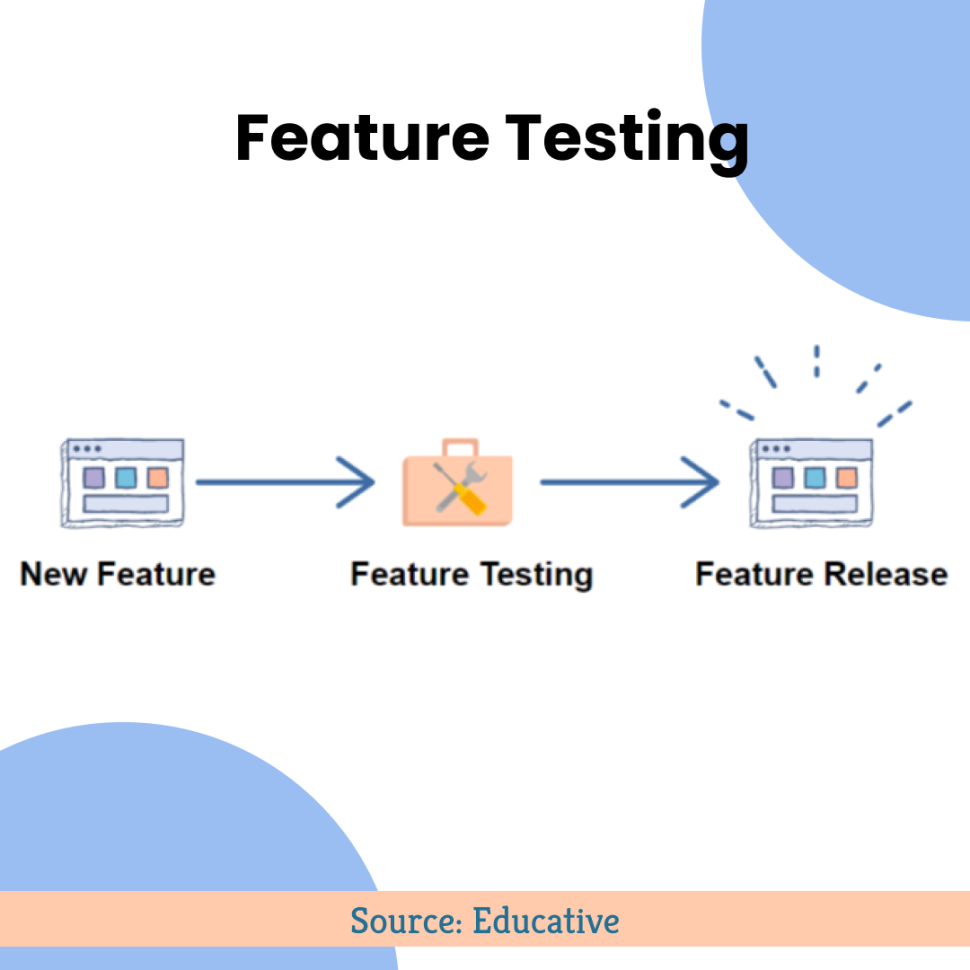
To avoid issues later on, it’s important to test new features thoroughly at the earliest stage possible to identify any bugs before implementation. By doing so, developers can make sure that the software is reliable and delivers a positive user experience.
For example, if you are testing a new search feature on a shopping application, you would ensure that the search results display all the relevant products when searching for something. In simpler terms, it’s like checking if a new appliance you bought works as intended by testing its different features.
An A/A test is a test that can be run by a company to determine the accuracy of an A/B testing software or to establish a baseline conversion rate for use in subsequent A/B test development.
An A/A test involves randomly splitting traffic into two groups, with both groups being shown the same page. Then, to gain insight, each group’s reported conversion rates, click-through rates, and associated statistics are logged.
Businesses that opt to utilize AA testing typically conduct such tests when they are evaluating a new AB testing tool or when they are initiating a new implementation.
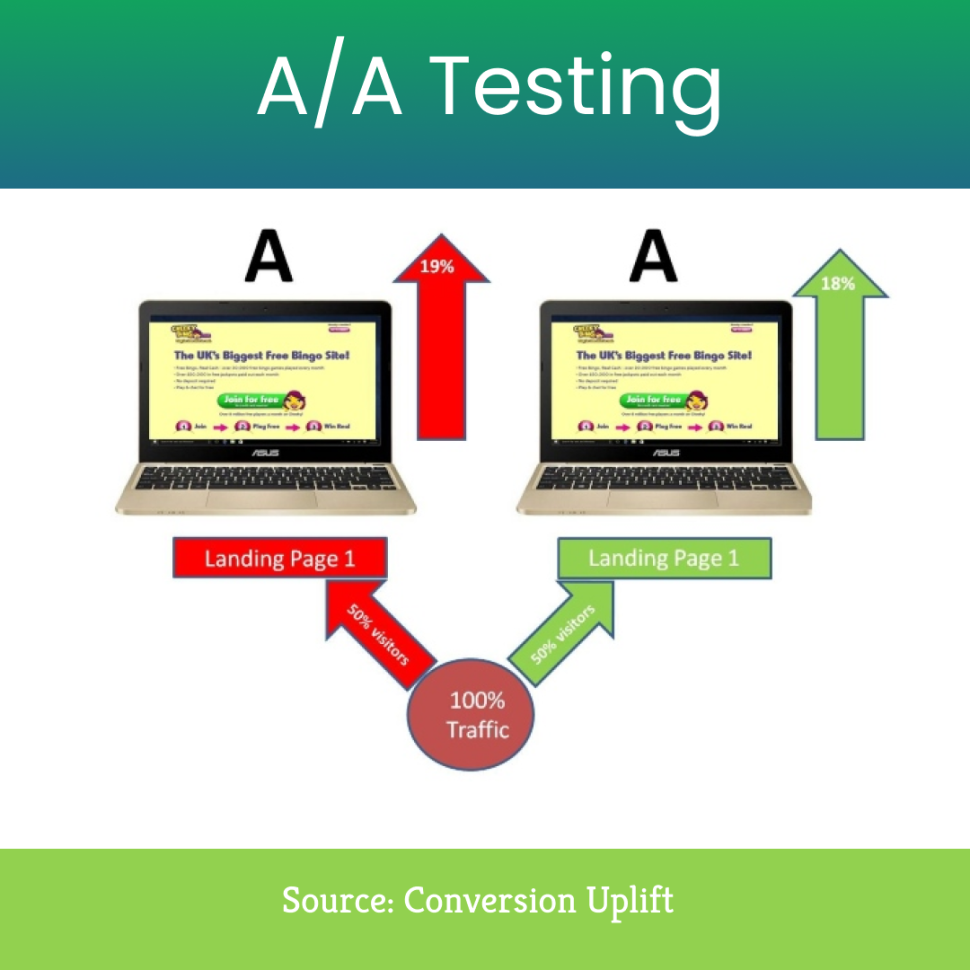
The A/A testing requires a sizeable amount of time to complete the procedure. A/A tests require a significantly larger sample size than A/B tests. When comparing two versions that are the same, you need a large sample size to demonstrate the existence of a significant bias.
The A/A test is a low-risk method for ensuring your tests are properly set up. However, there are circumstances in which conducting an A/A test makes sense. One of these circumstances is when you are unsure about a new A/B testing software and want additional proof that it is accurate and can perform its intended functions.
By utilizing AA testing, companies can make data-driven decisions and improve their implementation processes for enhanced business performance. Therefore, AA testing is valuable for companies when evaluating new AB testing tools or initiating a new implementation.
When it comes to optimizing your website or digital marketing campaigns, it can be difficult to know which strategy will be effective for achieving your goals. That’s where AB test development comes in.
Businesses can learn about their customer’s behaviours and preferences by testing different versions of websites or applications from the best AB testing agencies to increase customer satisfaction. More customer satisfaction includes more repeat sales, which means more revenue.
The section below will explore the importance of A/B testing for businesses of all sizes and industries.
One of the most significant benefits of A/B testing is improved content engagement.
By testing different versions of content, businesses can gain insights into what resonates with users and what doesn’t. This information can be used to create more effective and engaging content that keeps users on a website or mobile app for longer periods.
For example, a business might test two versions of a landing page content—one with a shorter introduction about the business and one with a longer introduction. By measuring user engagement with each version, the business can determine which introduction is more effective at capturing users’ attention and driving them to read more about the company.
Another key benefit of A/B testing is a reduced bounce rate. A high bounce rate occurs when users visit a website or mobile app but leave after only viewing one page. This can be an indication that the content or user experience is not meeting users’ expectations.
Bounce rates can be a major indicator of your website’s visitor engagement.
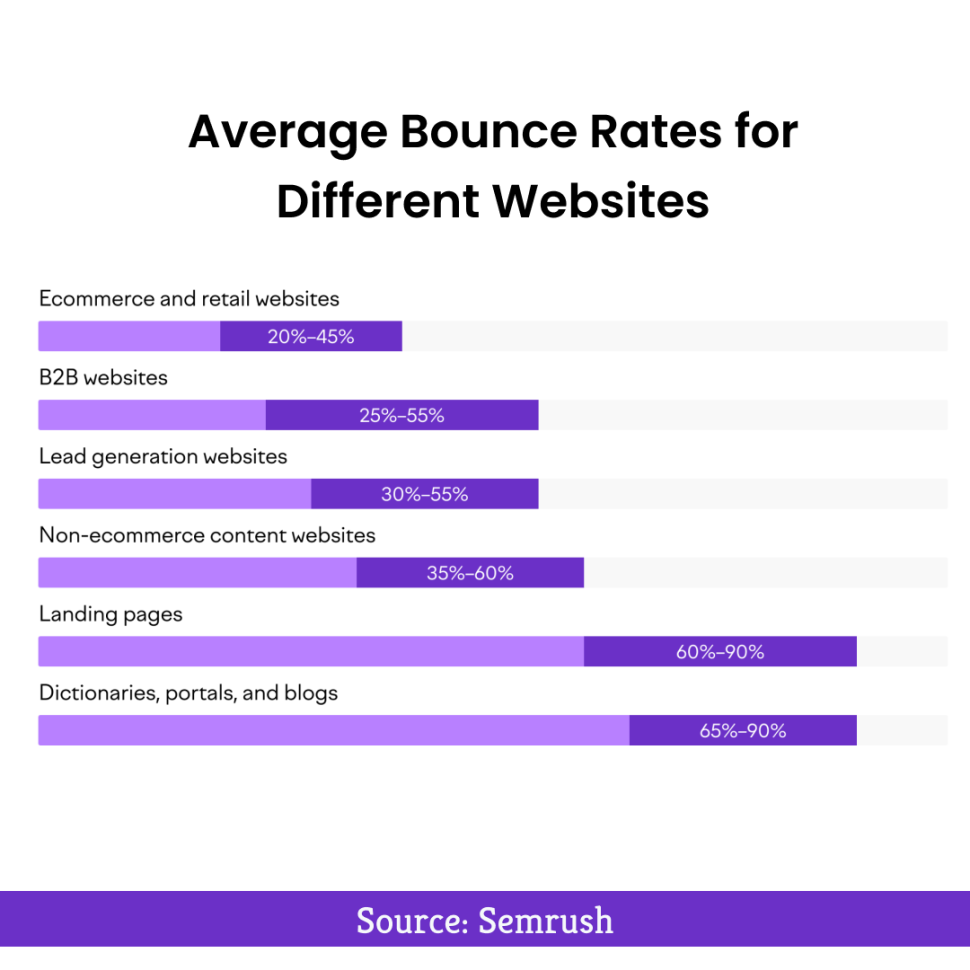
As per Customedialabs, e-commerce and retail sites have a bounce rate of 20% to 45%, while B2B sites have slightly higher rates ranging from 25% to 55%.
The same report informs that lead generation sites have bounce rates from 30% to 55%. Whereas, non-eCommerce content websites usually fall within the 35% to 60% range, and landing pages tend to have the highest bounce rates, ranging from 60% to 90%. Finally, dictionaries, portals, and blogs can expect 65% to 90% bounce rates.
A/B testing and split testing can help reduce the bounce rate by identifying areas where improvements can be made.
For example, a business might test two versions of a landing page—one with a simple form and one with a longer form. By measuring the bounce rate for each version, the business can determine which form length is more effective at keeping users engaged and driving website conversions.
The most significant benefit of A/B testing is that it provides data-driven insights.
Rather than relying on guesswork or intuition, businesses can use data from sources like heatmaps, user feedback, past tests, and so on to make informed decisions about how to improve their digital presence.
By measuring user behaviour and preferences, businesses can gain insights into what works and what doesn’t and use that information to make data-driven decisions about how to improve the user experience.
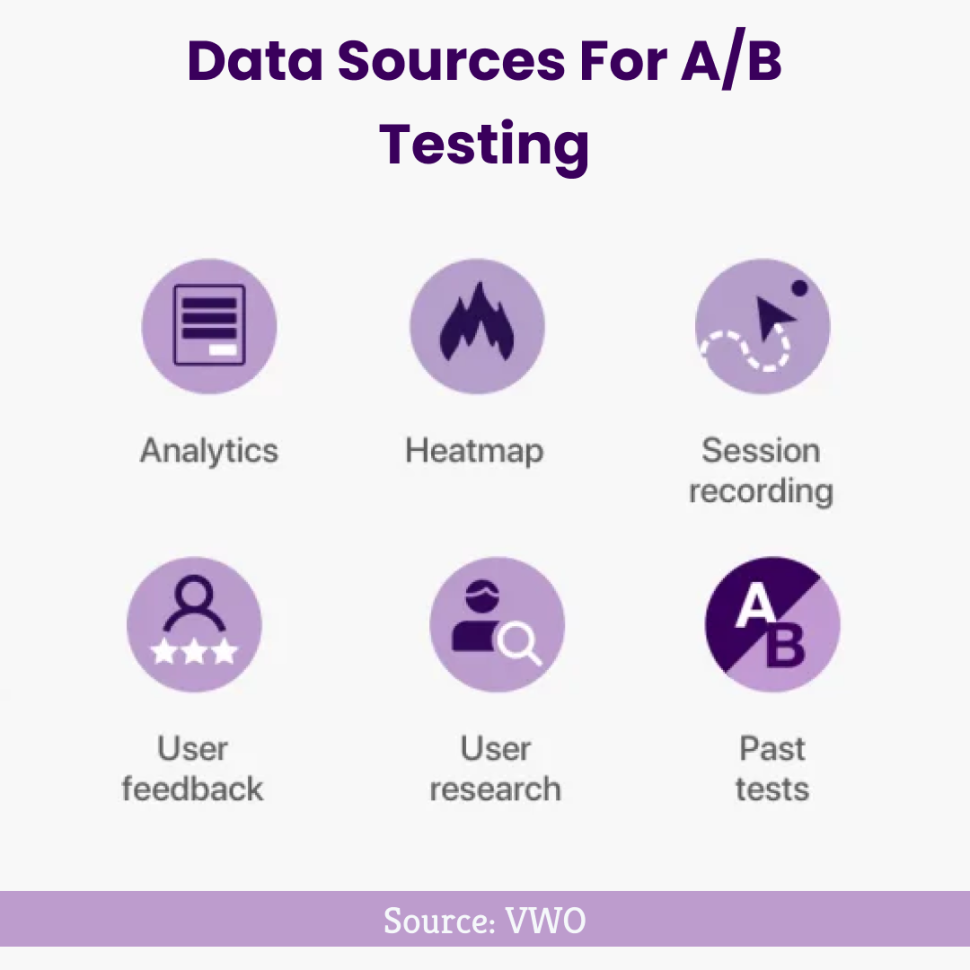
For example, a business might test two versions of a product page—one with a larger product image and one with a smaller product image. The business can determine which image size is more effective at driving website conversion rate by measuring data-driven insights of user behaviour, such as click-through rates and time spent on the page.
Cart abandonment is a significant challenge that all e-commerce businesses face. When customers add items to their shopping carts but fail to complete the purchase, it can result in lost revenue and missed opportunities.
A study by the Baymard Institute found that the average cart abandonment percentage is 69.99%. AB testing can help reduce cart abandonment by identifying areas where improvements can be made to the shopping experience.
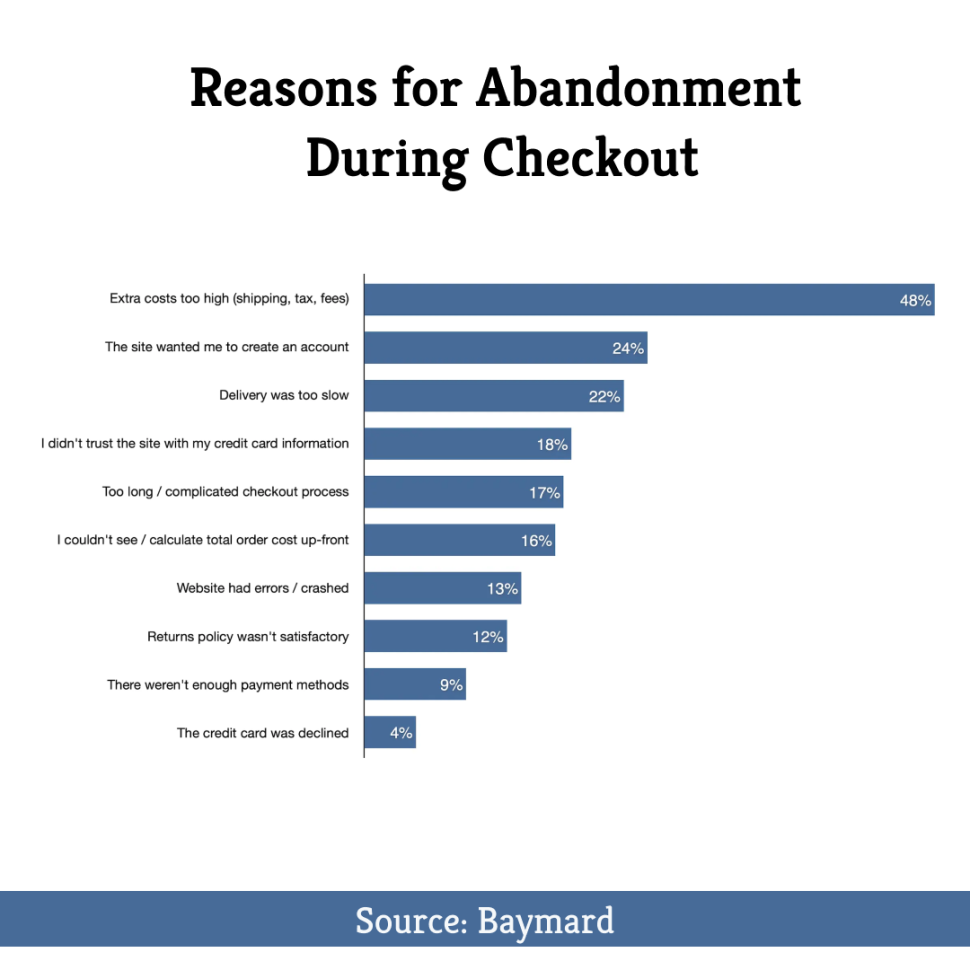
For example, a brand might test two versions of a checkout page—one with a single-step checkout process and one with a multi-step checkout process. By measuring website conversion and cart abandonment rates for each version, the business can determine which checkout process is more effective for encouraging customers to complete their purchases.
A/B testing provides businesses with the data they need to make informed decisions about their digital properties.
By testing different versions of webpages, mobile apps, or marketing campaigns, businesses can gain insights into what works and what doesn’t and use that information to optimize their strategies for maximum impact.
According to Litmus report, businesses that A/B test every email, experience 37% greater RoI than those that never do.
For example, a brand might test two versions of an email marketing campaign with the help of an AB testing service provider—one with a promotional offer and one without the offer. The business can determine which approach is more effective at driving engagement and sales by measuring open rates, click-through rates, and conversion rates for each version.
Ultimately, the goal of A/B testing is to improve the user experience. By identifying areas where improvements can be made, businesses can create more engaging, user-friendly digital properties that meet the needs and expectations of their target audience.
For example, a brand might test two versions of a website homepage—one with a carousel of images and one with a single hero image. By measuring engagement metrics such as time spent on the page, bounce rate, and click-through rate, the business can determine which version of the homepage is more effective at capturing users’ attention and driving them to explore the site further.
AB test development increases customer satisfaction by improving the user experience and meeting the needs and expectations of customers. By identifying areas where improvements can be made, businesses can create more engaging, user-friendly digital properties that resonate with their target audience.
For example, a brand might test two mobile app versions—one with a simplified user interface and one with a more complex user interface. By measuring user engagement metrics such as app downloads, app usage time, and user retention rates for each version, the business can determine which version is more effective at meeting the needs and expectations of users.
So, whether you’re a small business owner or a large corporation, AB testing is a powerful tool that can help you stay competitive with the help of professional conversion optimization services providers in today’s ever-changing digital landscape.
One of the primary goals of A/B testing is to increase conversion rates. By testing different versions of webpages, businesses can identify which elements are most effective at driving conversion rate and optimize their website accordingly by creating website conversion rate optimization strategies.
For example, a brand can test two versions of a product page—one with a longer product description and one with a shorter product description. By measuring website conversion rates for each version, the business can determine which version is more effective at encouraging users to make a purchase.
By leveraging the power of the AB test guide, businesses can improve their bottom line and achieve their business goals. Therefore, companies must incorporate AB split testing as part of their digital marketing strategy to drive growth, enhance customer experience, and achieve long-term success.
In order to fully leverage the power of AB test development, it is essential to measure the effectiveness of different variations of the website or app through a set of common metrics. So now we will explore some common AB testing metrics that you should consider.
The key performance indicators (KPIs) used to evaluate an A/B test’s effectiveness are called A/B testing metrics. These metrics help businesses make data-driven decisions by generating valuable information about how people engage with different versions of a website or app.
Conversion rate, click-through rate, bounce rate, and cart abandonment rate are common A/B testing KPIs. Successful AB testing and performance optimization of a website or app need an understanding of these data and the ability to evaluate them.
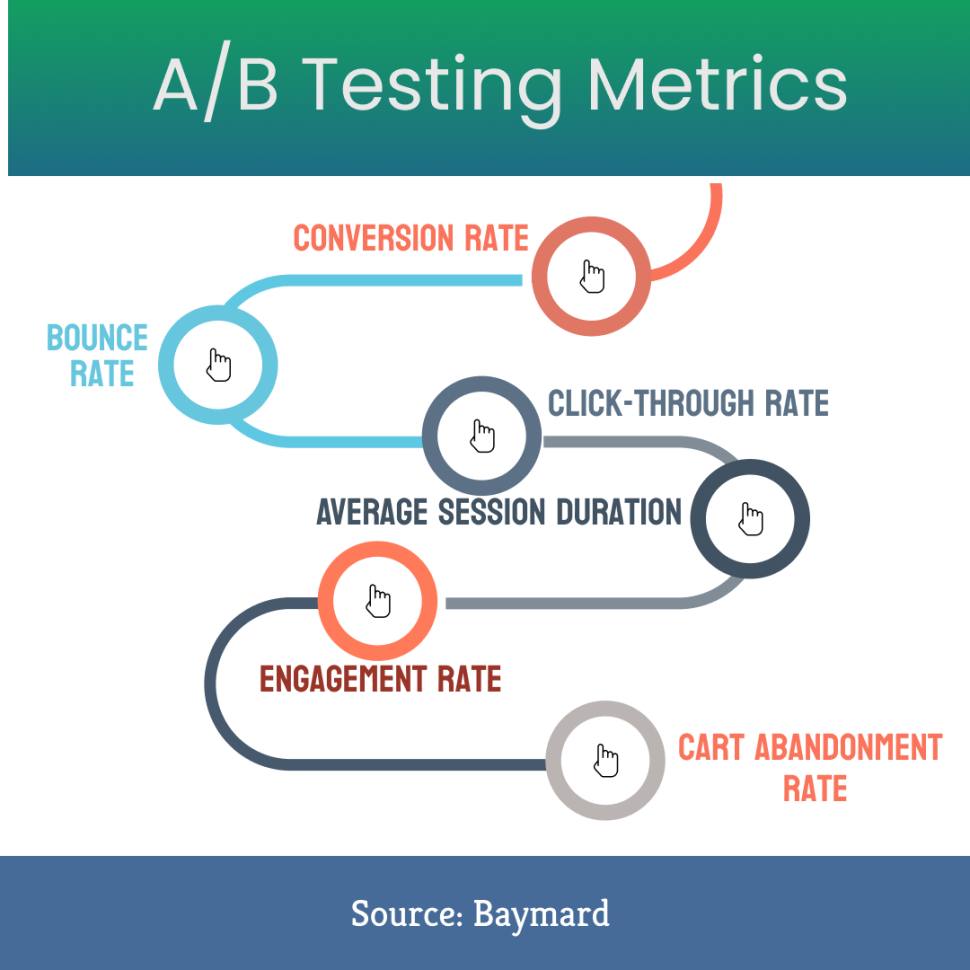
We will examine some of the most popular A/B testing metrics below. Understanding these metrics may help you advance your optimization efforts, irrespective of your level of experience with A/B testing.
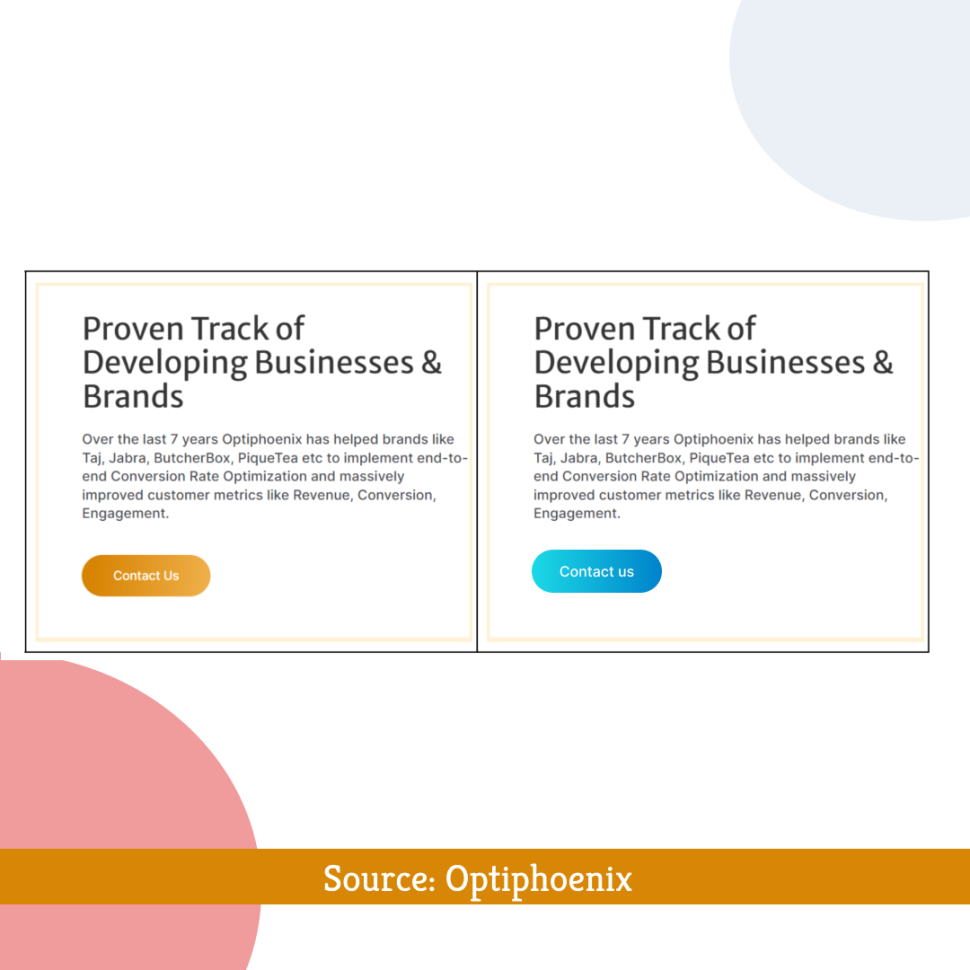
Conversion rate is the most important metric in A/B testing. It measures the percentage of users who take a desired action on a website or app, such as purchasing, filling out a form, or signing up for a newsletter. By comparing the conversion rates of different variations of a website or app, businesses can identify which changes are most effective at driving conversions.
For example, let’s check the below image. Now suppose a business is running an A/B test to determine which colour CTA button on a website results in the highest conversion rate. If the original button is golden and the variation is blue, the conversion rate for each variation can be compared to determine which is more effective at driving conversions.
The bounce rate is a metric that quantifies the proportion of users who exit a website or application after visiting a single page.
High bounce rates indicate that the website or app is not engaging users effectively or that the content is not relevant to their needs. By comparing the bounce rates of different variations of a website or app, businesses can identify which changes are most effective at reducing bounce rates and keeping users engaged.
For example, a business might run an A/B test to determine whether a pop-up message on a website is effective at reducing bounce rates. The original version of the website has a pop-up message asking users to sign up for a newsletter, while the variation has no pop-up box. By comparing the bounce rates of each version, the business can determine the effective reduction in bounce rate with the removal of pop-up messages.
Click-through rate measures the percentage of users who click on a specific element on a website or app, such as a button, link, or image.
By comparing the click-through rates of different variations, businesses can identify which elements are most effective at driving engagement and encouraging users to take a desired action.
For example, (let’s look at the below image) a business might run an A/B test to determine which headline on a web page results in the highest click-through rate.

Here you can see that the original version of the web page with the headline reads “Sport Coach: Superior fit and comfort. Will stay in, no matter how hard you work out”. While the variation has a headline that reads “Fits Any Ear. Guranteed.”
The brand can determine which headline is more effective at generating user engagement and convincing users to navigate through the website by comparing the click-through rates of each version.

The average amount of time users spend on an app or website can be measured using a metric known as “average session duration.” Longer session durations can indicate that the website or app engages users effectively and provides relevant content.
By comparing the average session durations of different variations, businesses can identify which changes are most effective at keeping users engaged and spending more time on the site.
For example, a business might run an A/B test to determine whether a product video effectively increases the average session duration. The original version of the product page includes no video, while the variation includes a video that explains the benefits of the product or service being offered. By comparing the average session durations of each version, the business can determine whether the video is effective at keeping users engaged for longer periods and converting them into customers.
Engagement Rate is a metric that measures the level of user interaction with a website or an app. It includes actions such as clicking on links, filling out forms, commenting on posts, sharing content, and more.
Engagement Rate is an important A/B testing metric because it indicates how well users connect with a website or app’s content, design, and features.
For example, suppose an e-commerce business is testing two different versions of its product page. In that case, it can measure the Engagement Rate of each variation by tracking how many users engage with each page. If Variation A has a higher Engagement Rate, it suggests that users prefer the layout and design of that version and are more likely to interact with the content.
Cart Abandonment Rate is a metric that measures the percentage of users who add items to their shopping cart but do not complete the checkout process.
This metric is important in e-commerce A/B testing because it helps businesses identify issues that prevent users from completing a purchase. Common reasons for high Cart Abandonment Rates include long or confusing checkout processes, unexpected shipping costs, or a lack of trust in the business or its payment methods.
For example, if an e-commerce business is testing two different checkout processes, they can measure the Cart Abandonment Rate of each variation by tracking how many users add items to their cart but do not complete the purchase. If Variation A has a lower Cart Abandonment Rate, it suggests that the checkout process is easy to navigate or more intuitive, leading to more completed purchases.
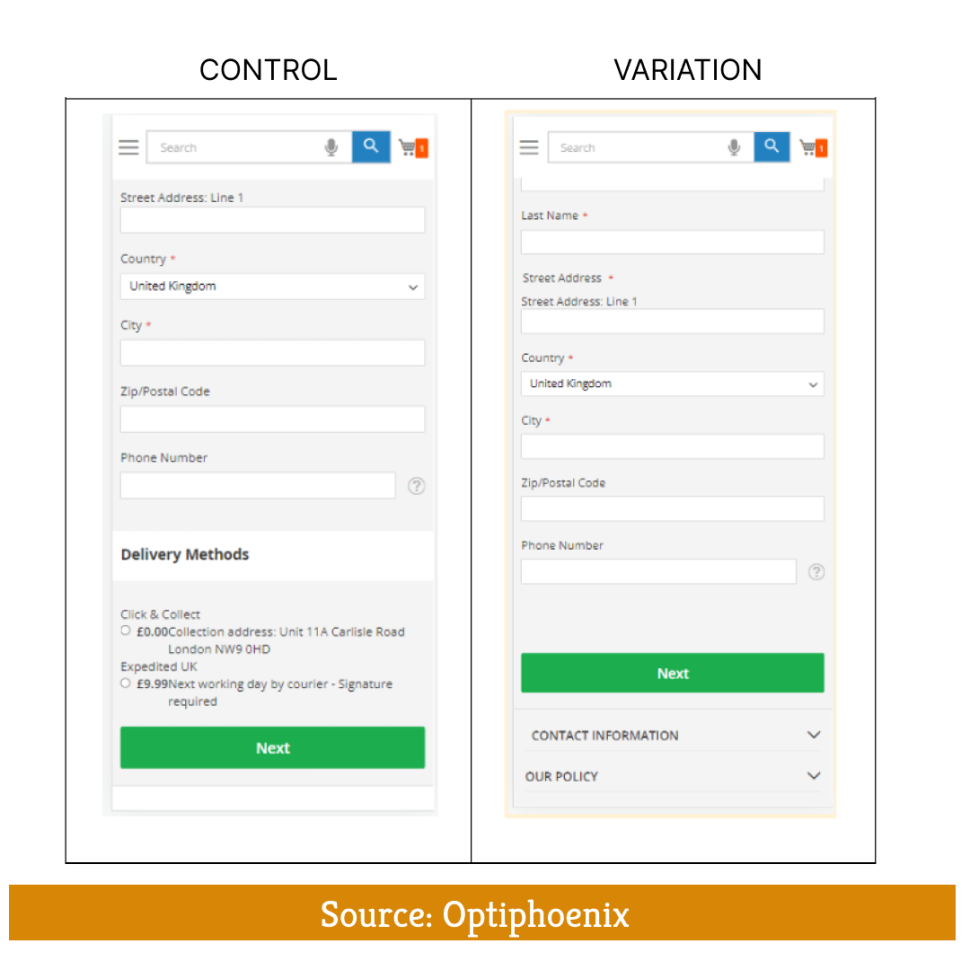
Measuring the impact of changes made through A/B testing requires the use of various metrics and by leveraging these metrics, businesses can continuously improve their digital presence and drive growth. z
Thus, to effectively measure the impact of changes made through A/B testing, businesses need to follow an organized process. Let’s continue reading to know the steps for proper A/B testing.
As to conduct an accurate and reliable A/B test, several steps need to be processed. By following the below-discussed steps, businesses can compare two different versions of their webpage or app to determine which version performs better.
Businesses can conduct A/B testing with confidence and get ideal results that increase website performance and ROI by understanding the procedures involved.
Below there is a thorough brief on how to implement AB testing and how they help make the testing process successful.
Let’s examine the crucial procedures that businesses must adhere to while performing A/B testing.
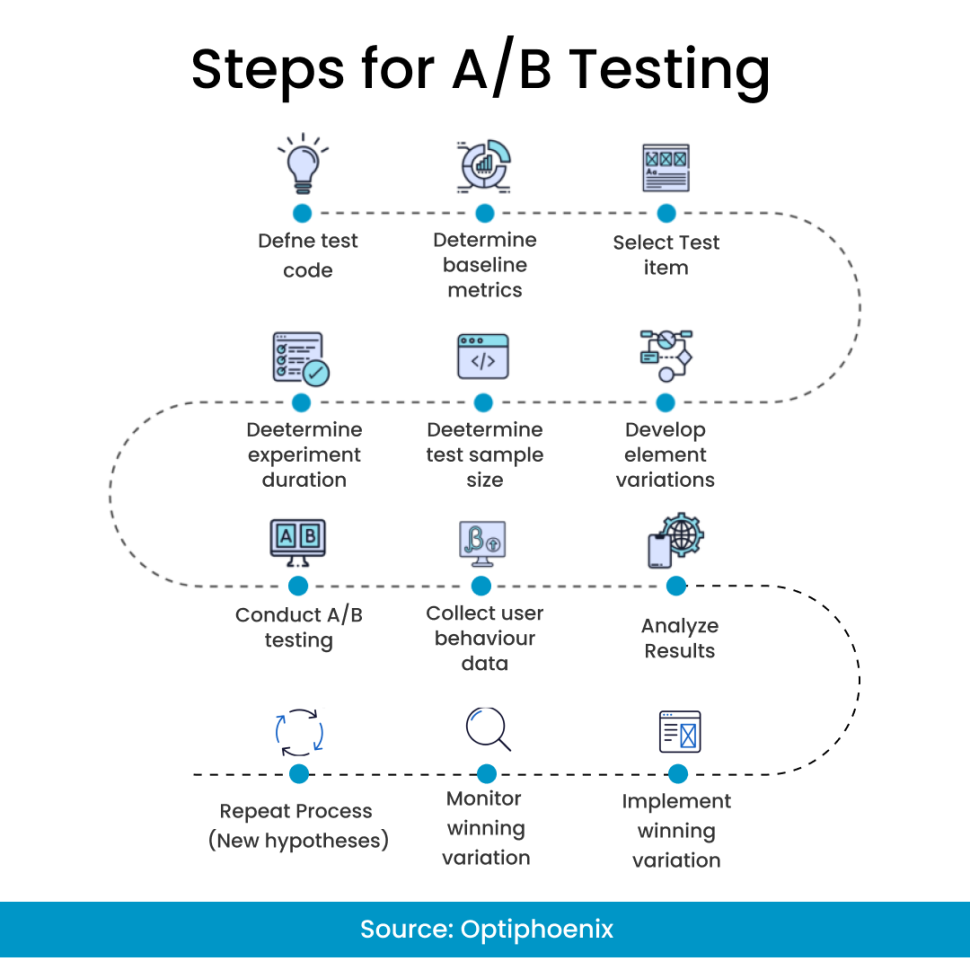
Defining the test’s objective is the first step in A/B testing. This entails understanding what you want from the test and finding an opportunity to develop a hypothesis.
Businesses should ensure their testing efforts are targeted and strategic by defining the test’s objective. They should also develop the hypothesis while working with an AB testing agency to get a better result.
For instance, a company could aim to boost the number of users that sign up for their newsletter and hypothesize that altering the website’s call-to-action button will increase sign-ups.
Businesses should consider their overall goals and identify areas for improvement to determine the test’s purpose. Moreover, it is essential for businesses to consider their target audience while conducting A/B testing, as diverse audiences may react differently to various versions of the same marketing material.
Once businesses have defined their test’s objective they can create a hypothesis with experts explaining how a specific change would improve the results.
If you are thinking about how to run an AB test? Then finding the baseline metrics is the second step in A/B testing. The key performance indicators (KPIs) that will be used to gauge the test’s success must be identified.
For instance, the baseline statistic can be the existing sign-up rate if the test’s objective is to increase the number of forms filled. Businesses may monitor their progress and assess the success of their testing efforts by defining a baseline metric.
To establish baseline metrics, businesses should review past data to understand how well the website, application, or promotional strategy has performed. Also, they have to think about their intended audience and the particular behaviours they wish to promote. By establishing baseline metrics, businesses can ensure they have a solid understanding of their existing performance and the effects of any changes made during the A/B test.
Choosing one test item means selecting a particular website, application, or marketing campaign element to update throughout the test.
The call-to-action button, for instance, would be the test item if the hypothesis meant that changing it would increase newsletter signups. Businesses can ensure that their testing efforts are focused and manageable by choosing just one test item.
Businesses should consider the hypothesis and determine the specific component they wish to improve before choosing the test item. They should also consider how the change will affect the user’s experience and ensure it is relevant to the test’s objective so that they can precisely determine the effects of any changes made during the test by choosing just one test item.
In order to develop variations of the element under test, multiple versions of the website, application, or other promotional strategies must be developed, each with the only difference in the element undergoing the test.
For instance, if the ‘checkout now’ button is the test element, it is feasible to develop two versions of the webpage: one with the existing ‘checkout now’ button and another with the new ‘checkout now’ button.
To reduce the chance of confounding variables (i.e. a third variable that influences both the independent and dependent variables), it’s crucial to make sure the variations are similar in every other aspect. If the headlines on the two versions of the homepage differ, for instance, it will be difficult to tell whether any performance changes result from the ‘checkout now’ button or the headline.
The selection of the appropriate sample size for the A/B test is one of the processes of how to run an AB test. This requires determining the total number of users participating in the test.
If the sample size is too small, the results may not be reliable, whereas if it is too large, it can be time-consuming and costly.
Businesses should consider their desired confidence level and the expected effect size when choosing the test sample size. While the effect size refers to the expected performance difference between the control and the variation, the degree of confidence relates to how confident businesses wish to be in the results.
Choosing the duration of the test entails selecting the time period till when the tests will run. The experiment’s duration should be adequate to ensure that participants have seen both versions of the website, application, or marketing campaign. The duration should not be excessively long which might influence the results.
Businesses should consider the expected effect size and the number of users of the website or app when deciding how long the experiment should last. Ultimately, striking the right balance between experiment duration and statistical accuracy is essential for successful A/B testing.
The actual testing includes randomly allocating users to the control and variation groups and presenting them with the different versions of the webpage, application, or marketing campaign that are being tested. To avoid incorporating biases into the test findings, it is important to ensure that the participants are unaware that they are taking part in a test.
Using the baseline measurements as discussed in the second point, businesses need to monitor the performance of both webpage versions while the test is being conducted. When the time allotted for the experiment has passed, the business can analyze the results to determine whether the variation or the control performed better.
E-commerce optimization is the next important step for gathering data on user behaviour. The information gathered must be accurate, reliable, and consistent with the experiment’s goals. A tracking system must be set up to track user behaviours like clicks, views, conversions, and so on. The success of the test variations will be evaluated using this data.
The effectiveness of AB testing depends on the collection and evaluation of the data on user behaviour since it offers insights into how users engage with the testing elements. For the results to be statistically significant, gathering information from a large sample size is crucial. In addition, the data should be collected over an adequate period to capture changes in user behaviour.
The results of the AB test development are next analyzed for statistical significance. The objective is to establish whether the performance differences between the test groups are significant enough to be considered.
Statistical procedures like hypothesis testing are used to determine if the observed variations in performance between the test groups are statistically significant. If the findings are statistically significant, one variant considerably outperformed the other(s) in accomplishing the intended objective.
Further testing may be required to ascertain whether the variant performs better if the findings are not statistically significant, indicating no clear differentiation between the variations are found.
When a test result is statistically significant, it signifies that one variant considerably outperformed the other(s) in accomplishing the desired result. The winning variant can then be used as the standard version in this case.
The findings may need to be tested further to identify whether the version performs better if they are not statistically significant, indicating no substantial difference between the variations.
After a successful test, the next step in how to implement AB testing is implementing the winning variation. This stage entails implementing the winning variant and demonstrating the performance increase on the website. To prevent adding any problems or flaws to the website, it is crucial to ensure that the implementation is done properly.
The winning version will be put into practice as the standard version to significantly boost website conversions and user engagement.
Once the winning variant has been implemented, assessing its impact on the website is essential. This stage includes monitoring user behaviour to establish whether the changes have accomplished the desired goals.
Businesses can determine if the improvements made by the winning variation are continued over time or whether there are any negative outcomes when the impact of the winning variation is monitored.
If the findings are favourable, the business is moving in the correct direction; however, if the results are bad, further testing is necessary to enhance the test outcome.
It is essential to continually generate new hypotheses and put those hypotheses to the test, as ab split testing is an iterative process. This helps ensure that your website or landing page is always updated with the current marketing trends and best practices.
You must keep detailed records of the results of each A/B test and make use of those records to guide subsequent experiments. Businesses can continue to optimize their digital assets and stay ahead of the competition with professional AB testing service providers. Doing this will lead to an increase in conversion rates, revenue, and customer engagement.
By following the key steps involved in A/B testing businesses can make data-driven decisions that deliver measurable results. Whereas determining the duration of an A/B test is a critical next step in the process. By understanding how long an A/B test should run, businesses can gather enough data to make confident decisions that deliver measurable results. Therefore, let’s take a closer look at the duration of A/B testing.
A/B testing and split testing both are useful tools for optimizing websites and increasing conversion rates. But do you know how long should an ab test be allowed to run to obtain relevant results?
Though the response may vary depending on various aspects, including the size of the sample and the degree of the change, running an A/B test for at least a couple of weeks is mostly recommended.
In the end, the time limit to run a test depends on the sample size and other factors which we will discuss below.
In the process of A/B testing, determining the appropriate test duration is one of the most important decisions that must be made. However, this question does not have a one-size-fits-all answer. In general, a couple of weeks is a good starting point for A/B tests. Let’s know the factors that influence the duration of an A/B test.
The likelihood that the observed difference in conversion rates between the control and test groups is not a result of chance is referred to as statistically significant.
The longer an A/B test runs, the greater it has the chance of generating statistically significant findings. This is because the longer it runs the more data it collects.
An AB test that runs for a shorter period of time can provide inconclusive or false positives, where the difference that is noticed is not statistically significant but seems to be the consequence of chance.
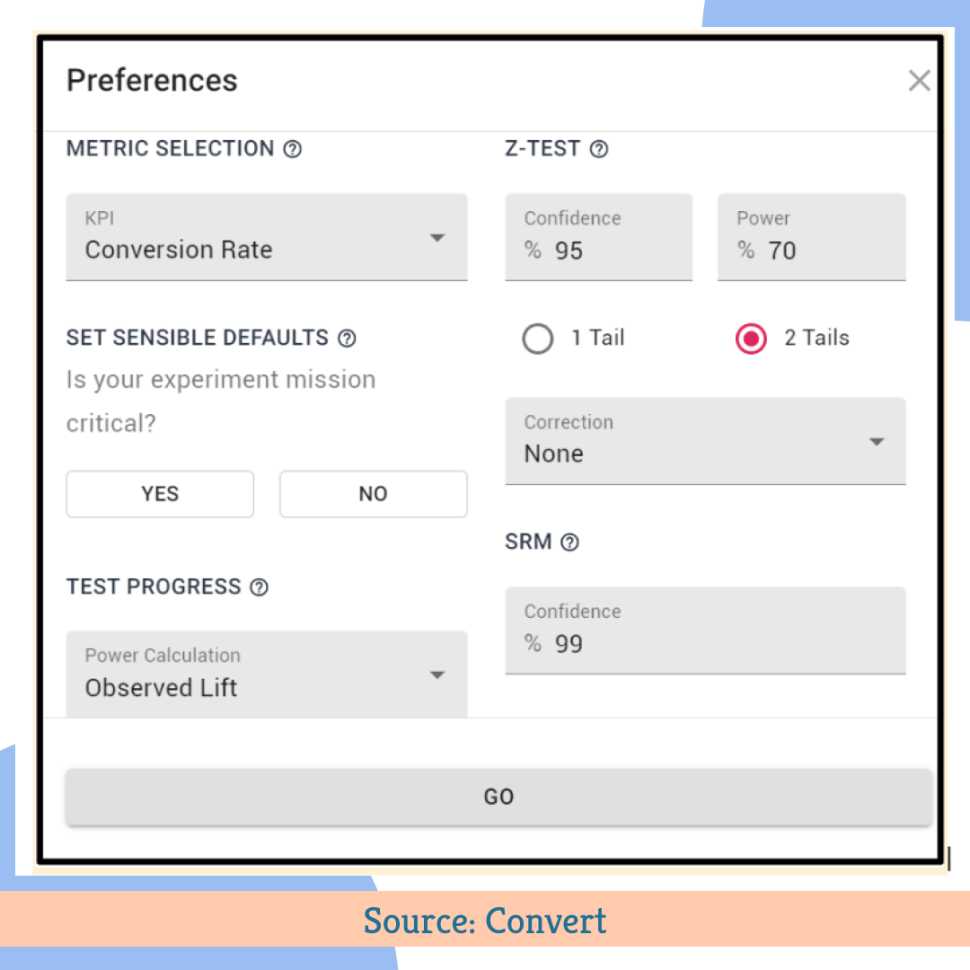
One can measure statistical significance to get a rough idea through various calculators available online. For example, below is the Statistical Significance calculator from Convert.
Another reason for running A/B tests for at least a couple of weeks is to account for temporal effects. Temporal effects are changes in user behaviour that develop gradually.
For instance, an A/B test carried out during the holiday season can provide different outcomes from one carried out away from the holiday season. To account for these temporal effects and ensure that the findings are not limited to a particular time period, an A/B test should be run for a longer time.
Lastly, performing A/B testing for a couple of weeks gives you enough time to gather a sufficient sample size.
Sample size, or the number of users in the A/B test, is an important consideration for getting accurate findings. Results with a small sample size could be unreliable, whereas those from a high sample size might be more accurate.
Conducting an A/B test for at least a few weeks ensures enough users are participating in the test, which results in a more accurate estimation of the real conversion rate. However, it is important to note that the ideal duration of an A/B test may vary depending on the nature of the website, the desired changes, and the sample size.
For example, a website with high traffic may require a shorter A/B test duration compared to a website with low traffic. Additionally, the magnitude of the change being tested may also affect the duration of the A/B test. A small change may require a longer A/B test duration to detect a statistically significant difference, while a larger change may require a shorter duration.
While jumping right into a full-scale test may be tempting, starting with a couple of weeks is a smart choice. This timeframe allows enough time to collect sufficient data and make informed decisions without wasting resources on a test that is too short to be effective.
While A/B test development may be a successful tactic for enhancing performance, it has drawbacks. Businesses may improve their A/B testing approach and make smart decisions to drive success by learning from their mistakes.
Many companies make common A/B testing mistakes that compromise the reliability of their test results and cause them to draw the wrong conclusions. In the section below, we’ll look at some of the most common A/B testing mistakes companies should avoid in getting accurate findings.
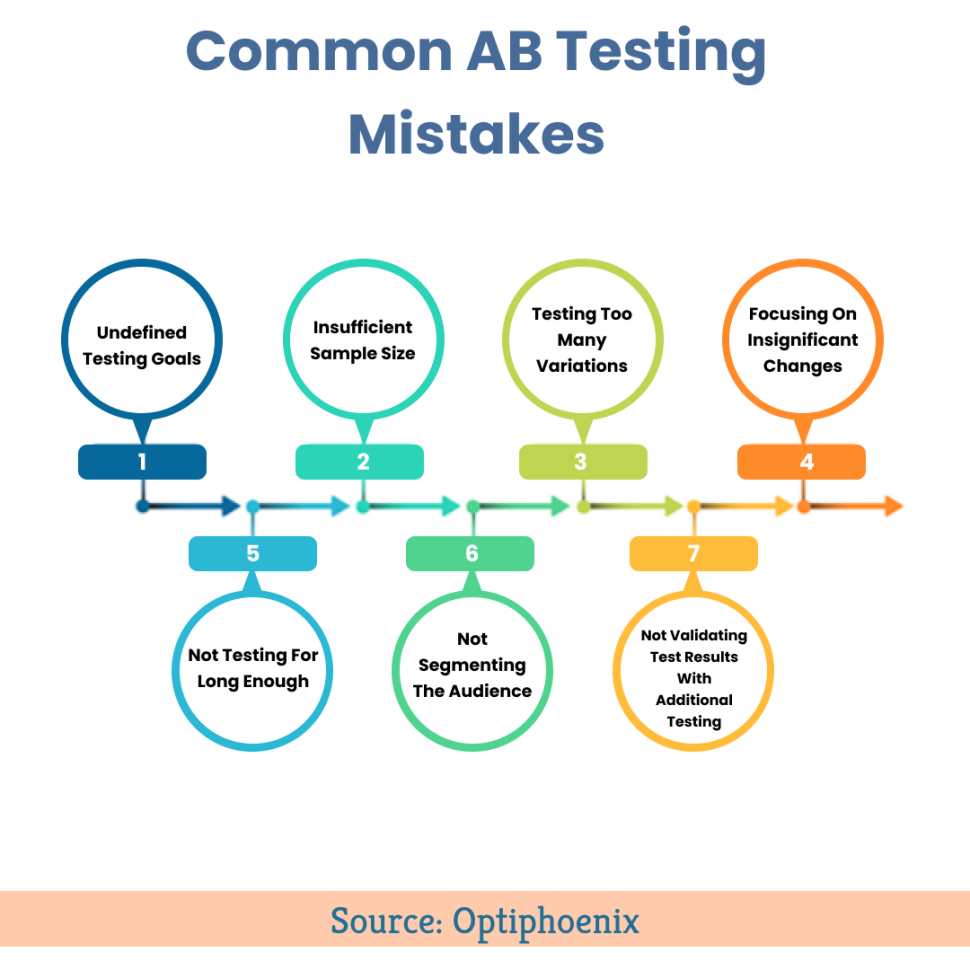
One of the most common A/B test development mistakes is not having clear goals for your tests. Without well-defined goals, it can be difficult to determine what metrics to track and what success looks like. This can lead to wasted resources and inconclusive results.
Identifying what you hope to achieve through A/B testing is important. Your goals can include increasing website conversions or improving user engagement, and establishing key performance indicators (KPIs) to measure your progress towards those goals.
Another A/B test development mistake is the insufficient sample size when designing an experiment. A small sample size can lead to inaccurate results that don’t reflect the behaviour of your entire user base.
To ensure statistically significant results, you’ll need a large enough sample size to capture the full range of user behaviour. Calculating the required sample size beforehand and ensuring that you reach that number before ending the test is crucial to getting reliable results.
It can be tempting to test multiple variations at once to speed up the testing process, but this can lead to unreliable results. With too many variations, it becomes difficult to determine which changes are responsible for any observed differences in behaviour.
Limiting the number of variations in each test is important to avoid confusion and ensure accurate results. A good rule of thumb is to test no more than two or three variations simultaneously.
One of the most common mistakes in A/B testing is focusing on insignificant changes that do not have a measurable impact on user behaviour or the overall performance of your website or app.
It’s essential to focus on changes that are most likely to impact your KPIs and significantly prioritize those changes during testing. It’s important to remember that small changes may not always lead to significant improvements in performance, so it’s crucial to focus on changes that will significantly impact the result.
Running A/B tests for a sufficient duration is critical to achieving accurate results. Running tests for short a time can lead to inconclusive results and false conclusions.
Hence, it’s important to determine the ideal testing duration before launching the test and ensure that it runs for that long to achieve reliable results. The ideal testing duration can vary depending on traffic volume, conversion rates, and the magnitude of the expected changes.
Another common A/B testing mistake is not segmenting the audience. Different user groups may respond differently to design or content changes, so it’s crucial to segment your audience to ensure that your test results accurately reflect the behaviour of each group.
By segmenting your audience based on demographics, location, and behaviour, you can better understand how each group interacts with your website or app. This will assist you in determining areas that require improvement and in making decisions based on data.
It’s important to validate A/B test results with additional testing to ensure that changes to your website or app for e-commerce optimization produce consistent results over time. Failure to validate test results can lead to false conclusions and inaccurate decisions, potentially costing you time and resources.
By performing additional testing, you can confirm the validity of your initial test results and make more informed decisions about implementing changes. This will help you to optimize your website or app’s performance and achieve your business goals.
Incorporating A/B testing into your marketing strategy can be a game-changer for your business. By taking the time to avoid common mistakes and carefully analyzing the insights generated, you can stay ahead of the competition and drive meaningful improvements in engagement, conversion rates, and ultimately revenue.
Now that we have carefully analyzed what mistakes to avoid while testing, it’s time to dig further into the A/B testing process. Let’s look at the tools that can be used to simplify the process.
The appropriate tools can make all the difference when it comes to A/B testing. You can quickly and effectively create, run, and analyze A/B tests with the help of a number of ab testing software solutions.
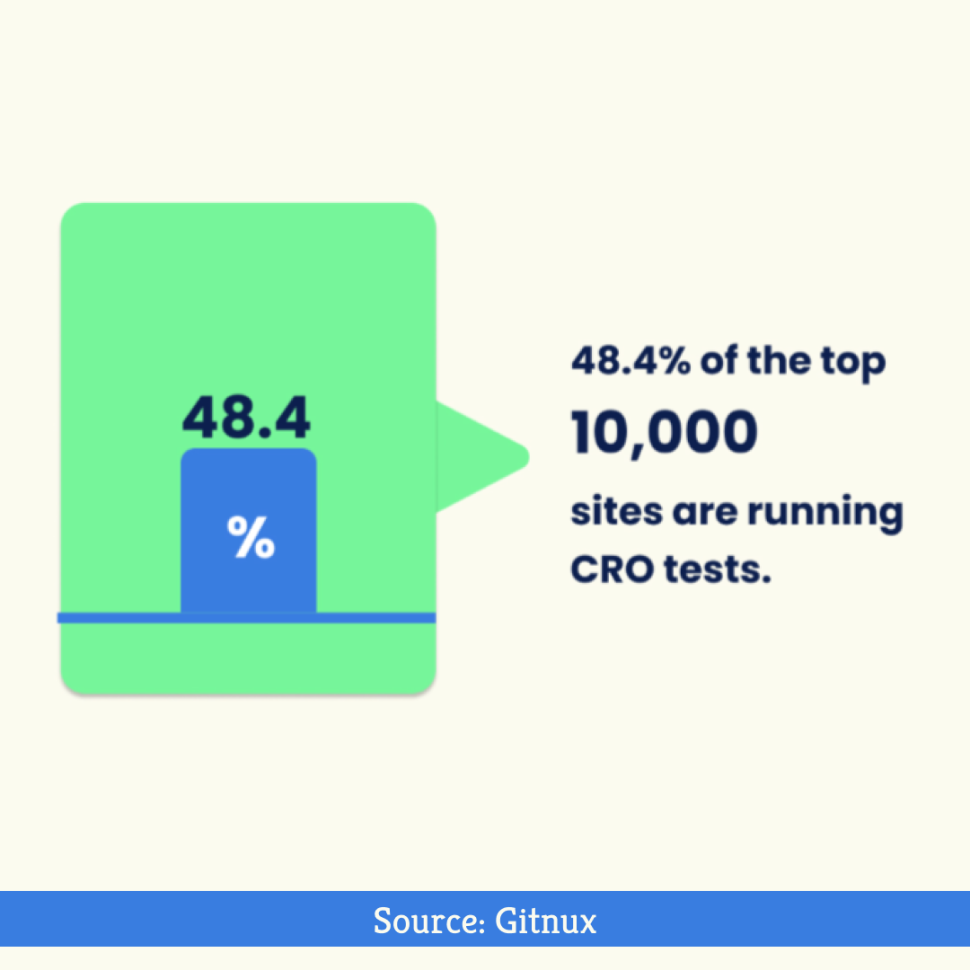
According to the recent Gitnux report, less than 0.11% of websites use CRO tools or conduct tests, yet 48.4% of the top 10,000 websites run CRO tests.
Below we’ll examine some of the best A/B testing tools, including free and paid options.
Omniconvert is a solution designed to help eCommerce businesses become more customer-centric.
It includes Omniconvert Explore, an advanced experimentation tool that enables the team to launch advanced experiments and test implemented ideas in real-time, bypassing the CDN cache with the dedicated browser extension.
There are two plans offered by Omniconvert to its users: Platform with $273/month and Enterprise with a custom quote.
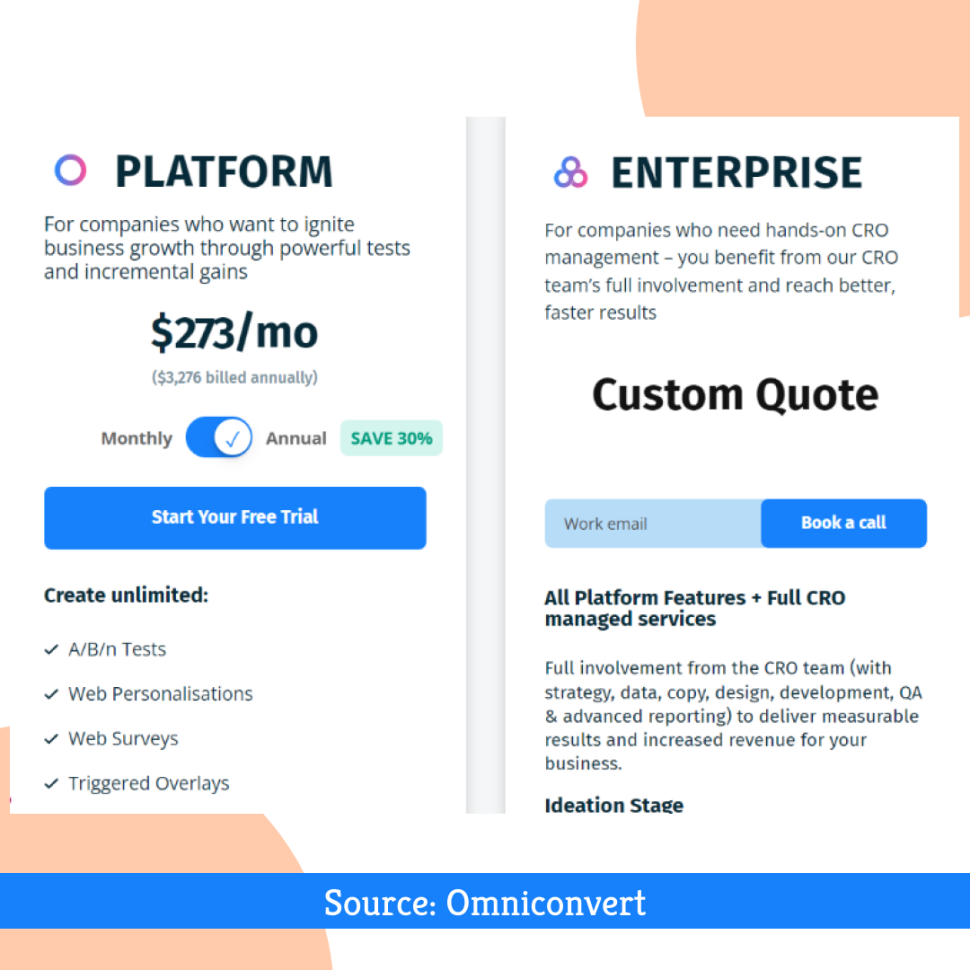
With Omniconvert, businesses can create and run A/B tests on various elements of their website to improve user experience and increase conversions.
Optimizing variables, detecting significant results, and monitoring outcomes to enhance website conversion rates are the core principles of A/B testing. Marketers can take advantage of HubSpot’s A/B Testing Kit provided by Kissmetrics and HubSpot, which offers a range of valuable resources.
HubSpot’s A/B Testing Kit includes a beginner’s guide to A/B testing, an easy-to-use calculator to determine significance, and a template to track progress over time.
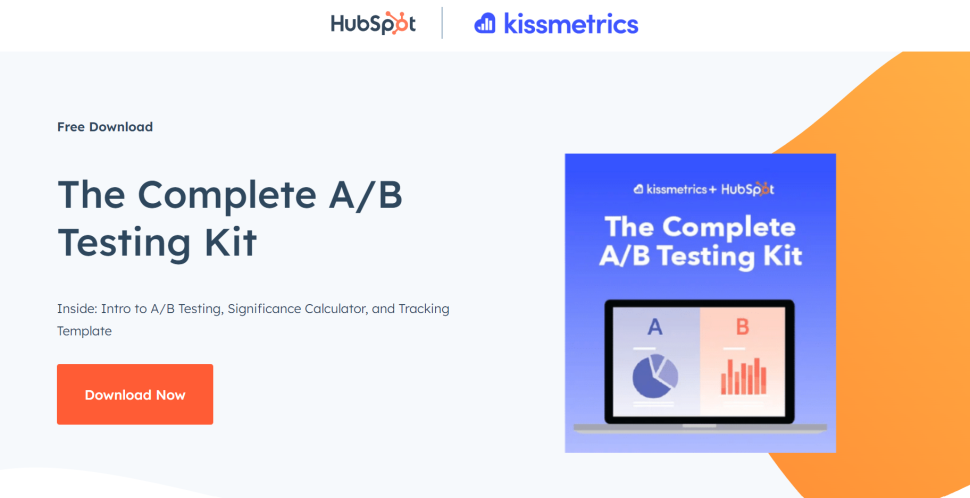
Additionally, the kit comprises ten guidelines for effective A/B test development, which variables to assess, how to conduct and analyze split tests, a significance calculator, and a template to organize and enhance the tests. Best of all, HubSpot’s A/B Testing Kit is free of charge for readers.
VWO enables businesses to conduct more comprehensive and impactful experimentation by offering tools that facilitate multi-channel experimentation. VWO provides tools to help businesses understand visitor behaviour, including session recordings, heatmaps, on-page surveys, form analytics, usability reviews, and funnels.
VWO offers businesses a variety of pricing plans to fit their needs and budgets. VWO’s pricing plans have various features and tools like VWO Testing -Web, Mobile App, Server Side, and VWO Personalize, among others. The pricing plans are for different products. For price details click here.
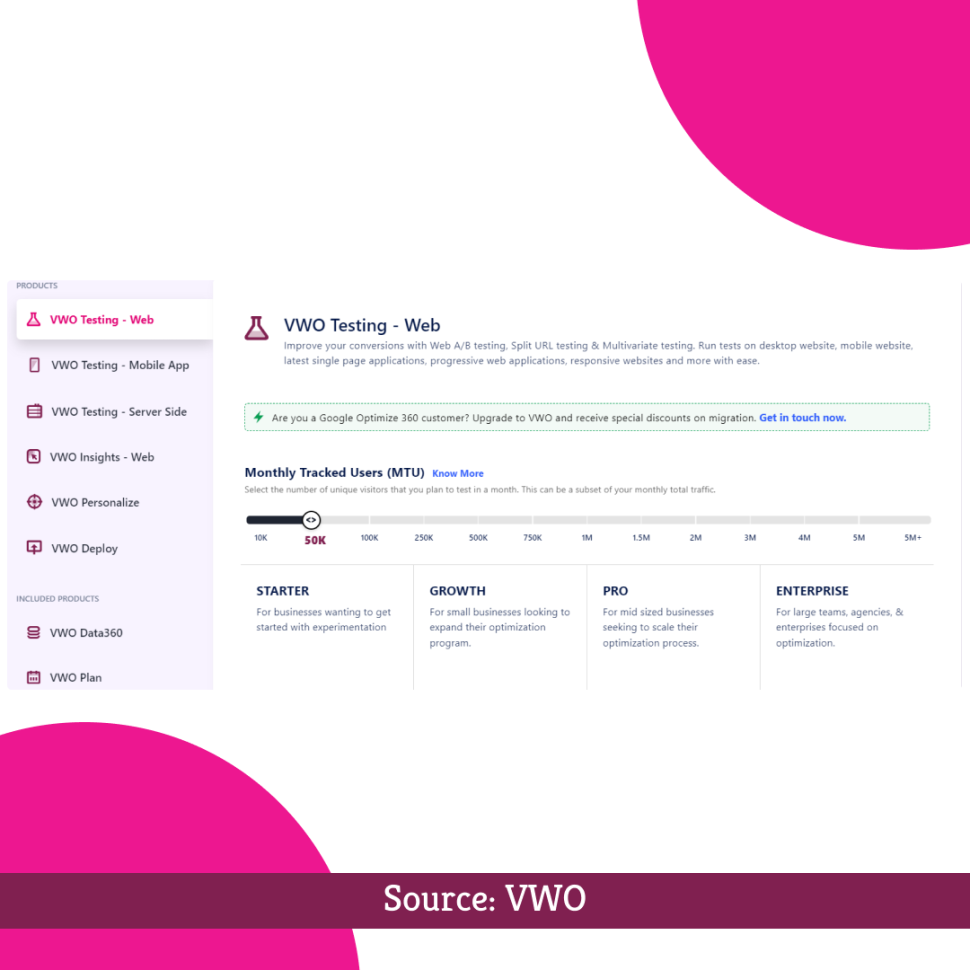
By providing a comprehensive suite of tools, VWO allows businesses to improve their conversion rates, increase engagement, and optimize their website’s performance cost-effectively and efficiently.
Crazy Egg is a powerful online analytics application that provides businesses with eye-tracking tools to improve their website performance. This tool generates heatmaps based on where people clicked on a website, giving businesses insights into where to focus their optimization efforts.
Additionally, Crazy Egg offers insights in four different ways, including heatmaps, scroll maps, overlay tools, and confetti which ultimately assists with designing an experiment.
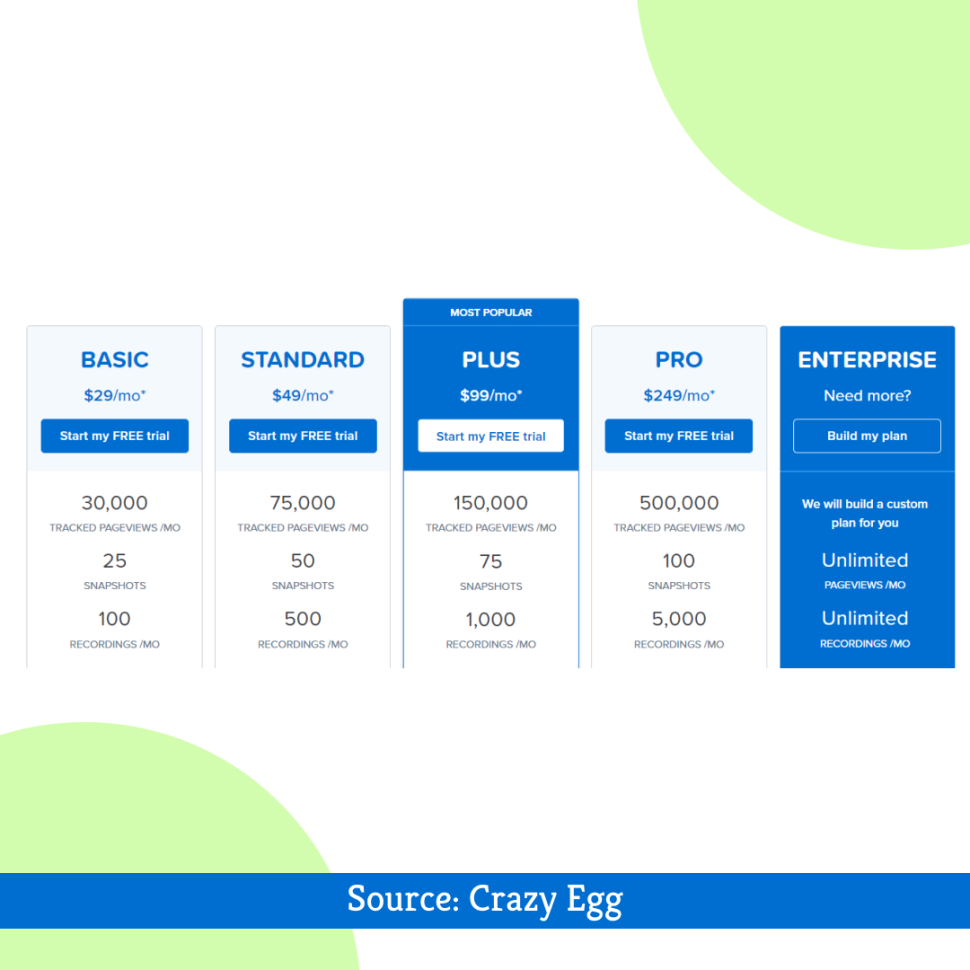
The pricing plans are divided into four tiers, including Basic ($29/month), Standard ($49/month), Plus ($99/month), and Pro ($249/month). These plans offer businesses access to different features and functionalities based on their requirements.
Businesses can choose from a range of pricing plans from Crazy Egg that are tailored to their specific requirements and budget.
Freshmarketer is a comprehensive suite of marketing automation tools that enable businesses to manage contacts, create engaging marketing campaigns, and automate email marketing.
The integration between Freshmarketer and Freshsales streamlines data management, providing uniform customer and lead data. This integration helps businesses gain more insight into their leads and their position in the buyer’s journey.
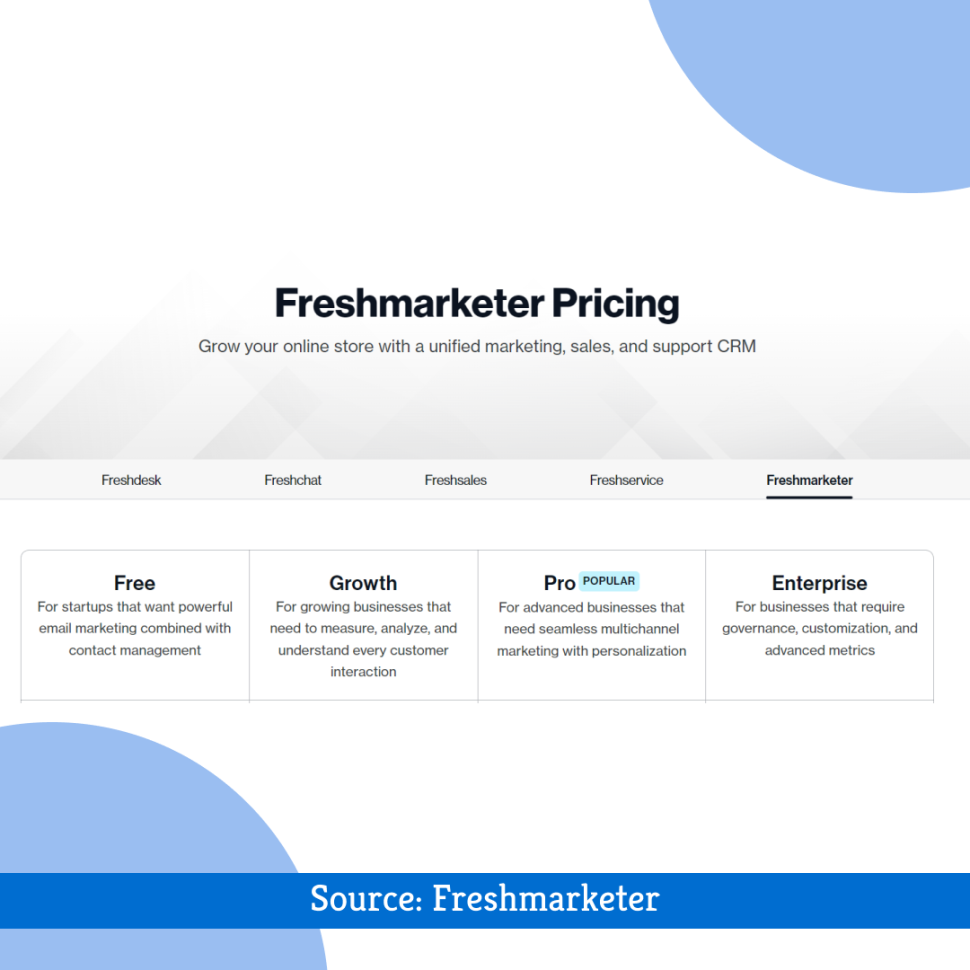
Freshmarketer provides four pricing plans to their users, one of which is free, while the other three are paid. The paid plans include Growth (priced at ₹1,299 per month), Pro (priced at ₹10,499 per month), and Enterprise (priced at ₹20,999 per month).
The suite lets businesses send automated emails with rich visuals and relevant, contextual content. Businesses can have controlled experiments and can choose to pause or stop syncing their data at any time. Privacy management options allow for easy unsubscribing or opting out of communication based on individual preferences.
Zoho PageSense enables businesses to monitor and assess their website’s performance and visitor behavior, allowing them to implement data-driven modifications aimed at improving website conversion rates, personalization, optimization, and engagement.
Additionally, businesses can customize their website experience for each individual visitor, all without negatively impacting page load times.
Utilizing a variety of tools such as Funnel Analysis, Form Analytics, Heatmap, Session Recording, A/B Testing, and Personalization, businesses can gain a precise understanding of what is working on their website and what causes drop-offs, enabling them to optimize it for optimal conversions with this ab testing software.
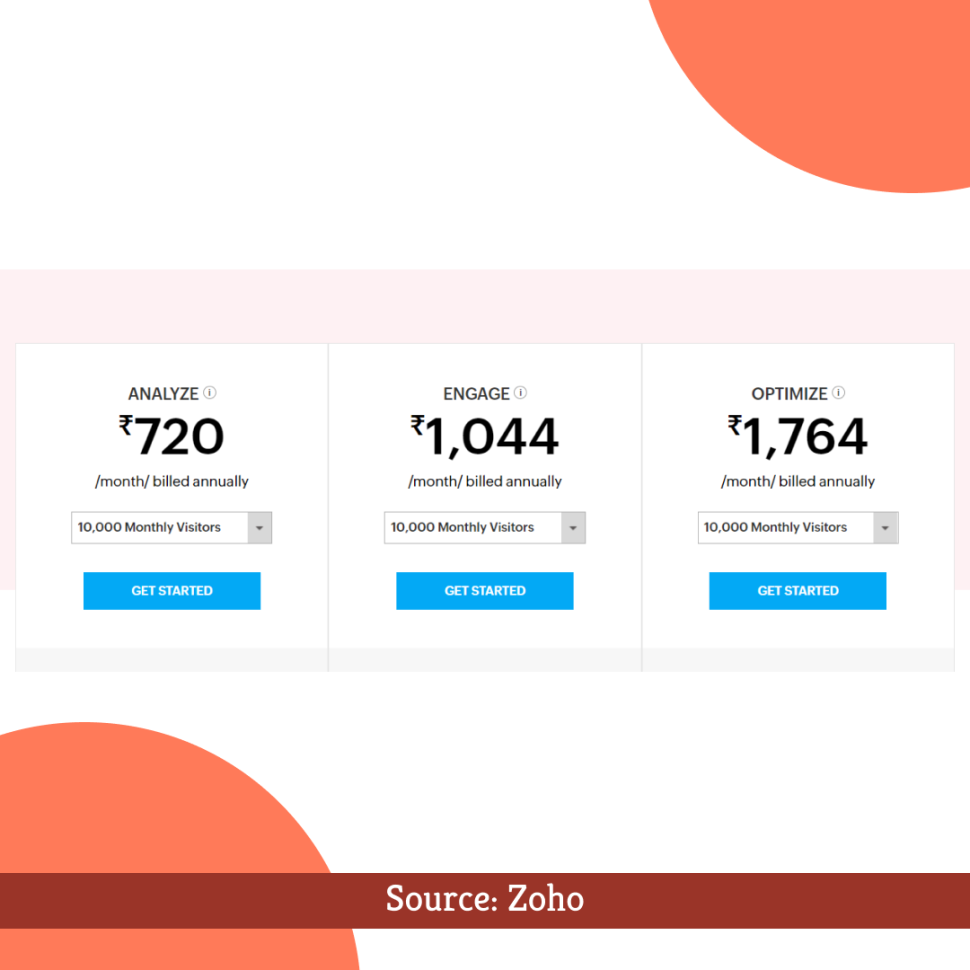
Zoho PageSense offers three distinct pricing plans to its users, namely, Analyze (₹720/month), Engage (₹1,044/month), and Optimize (₹1,764/month). It’s worth noting that local taxes (such as VAT, GST, etc.) will be charged in addition to the aforementioned prices.
By using the appropriate tools, organizations can create and execute effective A/B testing campaigns that offer valuable insights into how to enhance their website or application for better user engagement, conversion rates, and customer satisfaction. These insights can assist companies in identifying areas for improvement, customizing their digital offerings to meet their customers’ needs and preferences, and ultimately driving conversions.
AB testing is one component of a much larger process involving ongoing optimization. Even after businesses identify a winning version of a page or advertisement, they should continue to monitor their results and test new variations to ensure they are always improving their digital presence.
In general, A/B testing has the potential to be a valuable tool for businesses that want to improve their online presence and enhance the performance of their websites, applications, and marketing campaigns.
By following the best practices outlined in this guide and staying focused on their goals, businesses can use A/B testing to make data-driven decisions that drive meaningful results for their business.