AI Agent vs Chatbot: What’s the Difference for Your Store?
Ecommerce has transformed consumer purchasing behavior and has created new sourcing and distribution opportunities across the globe. Rising expectations are one of the drivers of growth for B2B eCommerce which continues to be a larger piece of the B2B revenue pie. According to Forrester, the B2B ecommerce of the U.S. will reach $1.8 trillion, accounting for 17% of all B2B sales in the U.S. by 2023.
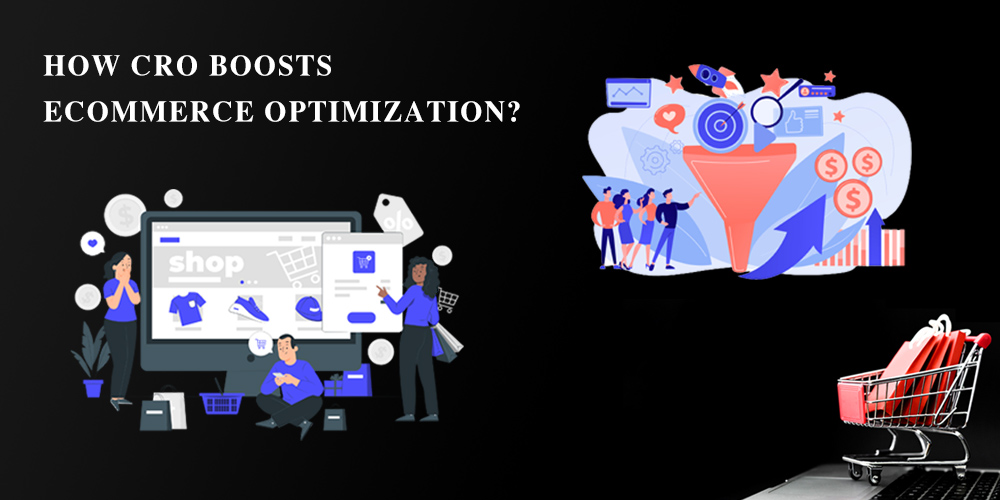
Since you know that ecommerce is the marketing and selling process, thus the most critical elements of any business’s success is marketing. Every company that engages in marketing activities uses the same marketing modification cycle to assess its efforts and turn leads into consumers. You’ll need a CRO (conversion rate optimization) strategic plan if you want to increase sales, broaden your audience, encourage repeat customers, and increase traffic to your site. Many experienced companies and B2C ecommerce academic researchers have assisted a variety of mid-market merchandisers in achieving effective CRO. If you want to know how CRO is used in ecommerce optimization, then keep on reading.
Knowing your audience will increase the likelihood that everything you do will be for the betterment of those who matter most to your business, be it leads or consumers. This is how you develop reliable, lasting relationships with your customers and build brand loyalty and advocacy over time. So, let’s look at some comprehensive and effective ecommerce conversion strategies to better identify your core demographic audience.
Customer personas are a tried-and-true strategy that firms use to better understand their target populations. Note down a blueprint of your ideal “target customer” in this section. Most of the time, this falls into the category of a fictional character, which you create by filling in data like academic achievement, personal life, occupation and salary, and perhaps even a name as well as behavioral qualities.
If you’re implementing a content marketing or media platforms plan, comments and activities are very significant. Here, your goal is to keep track of just how many visitors are interacting with your content, how they’re responding, and how frequently they’re adapting. In general, the more “engagements” you receive (comments, likes, and referrals), the better off your advertisement is.
Finally, the simplest method for learning further about your spectators is to ask them questions. Creating and launching a survey is simple, specifically with an efficient and straightforward tool. You may ask your website visitors and email subscribers anything that you want to discover about your customer base by putting it in the form of a question. You may then assess the results (or manually read them) and withdraw most of the information you need.
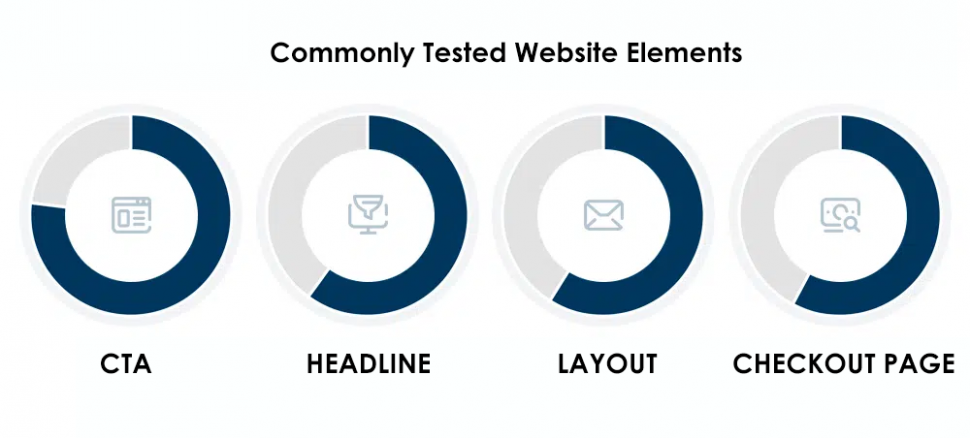
A/B analysis is perhaps the only method to figure out how much your customers want to view before they go through the checkout process and buy something. A/B testing may be done on almost any part of a website, and even little modifications can oftentimes produce unexpectedly positive results. Some of the most often tested website elements are:
● Button shape, hue, location, and call-to-action (CTA) phrasing are all factors to consider when creating a call to action.
● Visual clips, auditory demonstrations, and hero photos are just a few of the image modifications available.
● Social evidence is a term that refers to the fact that A/B testing of case studies, emblems, affiliate trademarks, and assessments are frequent.
User involvement on your website is a key factor in determining your site’s performance and rating. Every website is in a battle with its competitors to enhance the consumer experience. Regardless if you receive a lot of visitors, it won’t help you much unless you can engage them and convince them to do what you want.
The first stage in the transfer process is to engage and reach your audience. Before you can persuade someone to buy or subscribe, you must first captivate them. Furthermore, if customers abandon your homepage within a few seconds, your bounce rate will suffer. So, if user engagement on your website is so vital, how do you boost it? Let us mention some concepts to help you get started:
What if a substantial percentage of your site’s visitors depart because they can’t locate what they’re looking for?
Many websites are overly complicated to browse, leading to increased bounce rates and little user engagement. Simplify and restructure your navigation system so that users may quickly access the information they need.
In 2022, the World Advertising Research Center estimates that around 2 billion people currently access the internet through their smartphones which is equal to 51% of the global smartphone users. By 2025, there will be approximately 3.7 billion mobile users worldwide which is 72.6%. This means that, in order to engage both mobile and desktop visitors, Internet marketers must create flexible websites. It may be difficult to procure your web browser web presence on a smartphone, resulting in low user engagement.
A responsive website means that the site will dynamically resize according to the screen size and convey content clearly no matter how large the screen is – from a cellphone to a wristwatch to an E-notebook to a desktop. Before launching or redesigning a website, it is recommended that ecommerce business owners should first determine how their customers utilize the site. You may build a suitable plan after you know how they will utilize the site.
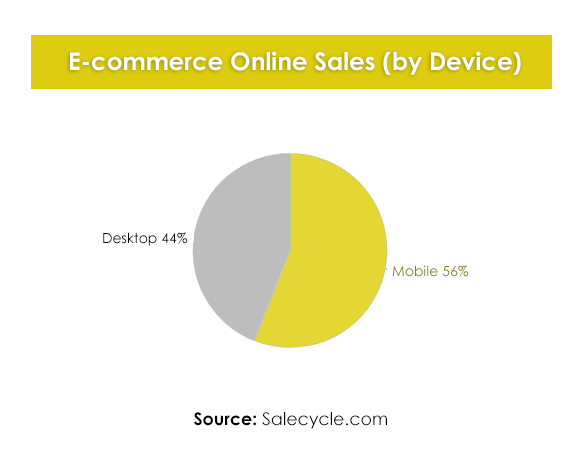
Ensure that your site is approachable to all readers, from altering the balance so colorblind persons can read material to using screen readers to help individuals with vision disabilities interpret. As per Ecommerce Stats and Trends Report, 56% of online sales were made through mobile in 2021. According to InsiderIntelligence, by 2024 m-commerce will account for $620.97 billion, or 42.9% of all online sales.
Page speed, in a nutshell, relates to how rapidly your document appears when someone views a homepage. Page speed doesn’t need to be confused with web browser speed; it refers to how quickly a page loads. There are a few simple things you may do to speed up the loading time of your page.
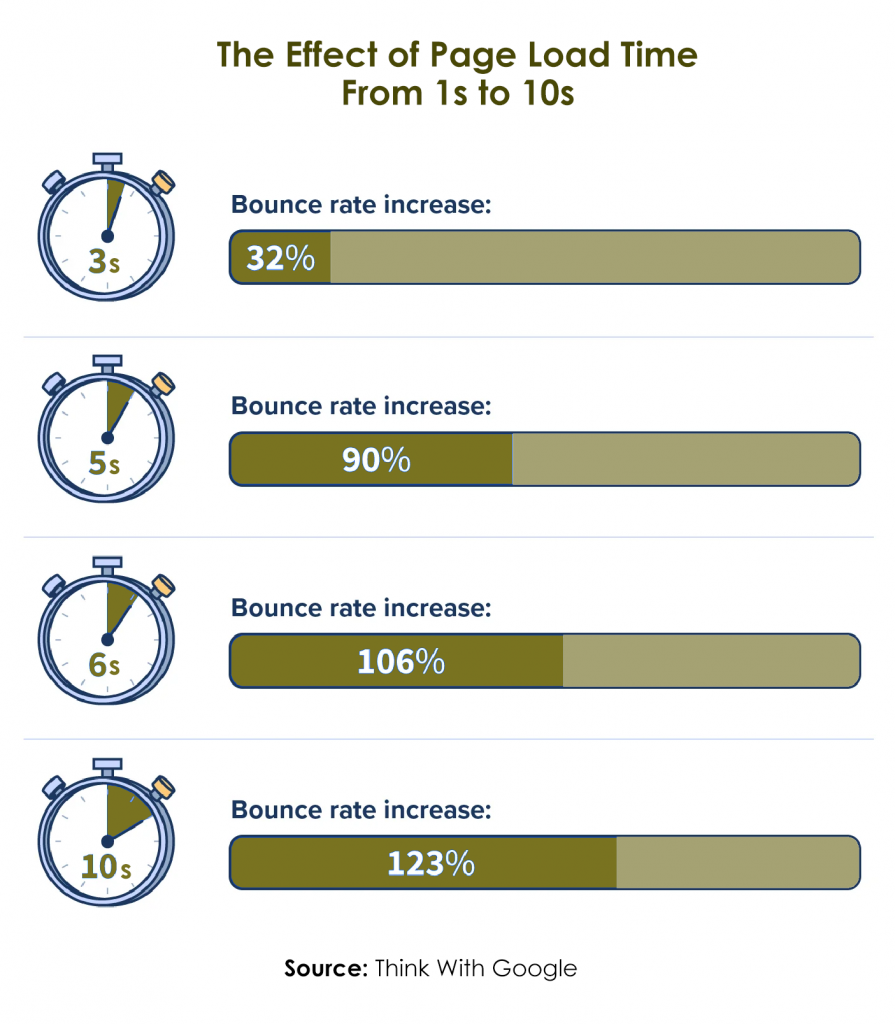
Your website’s maintenance and performance are heavily influenced by the hosting service you choose. Its page speeds are included in this.
Accepting mediocre infrastructure in order to save money on your monthly bill is one of the greatest blunders you can make. Poor performance is generally a result of low-cost hosting.
Another type of buffering you may use to enhance page loading times is browser caching. This technique allows the browser to save a range of data, such as stylesheets, pictures, and Javascript code so that the page does not have to be reloaded for every person who knowingly sees it.
Page loading time can be improved by optimizing the approach your files are loaded. Minifying existing CSS, JavaScript, and HTML code can also help. To limit the complexity of the files, this involves deleting extraneous spaces, characters, remarks, and other non-essential parts.
It’s also simpler to implement files when their sizes are less. Post this, you will be left with cleaner code and faster-loading web pages.
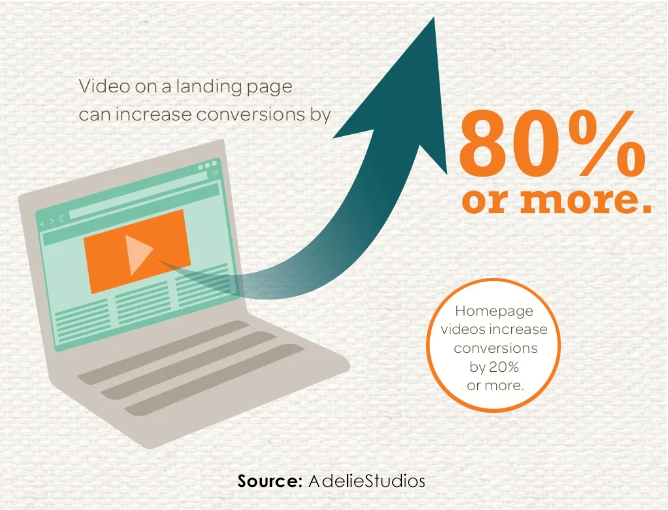
When given the choice between reading text and viewing a video, the majority of viewers will opt for the latter. Video on a landing page can help increase conversions, but it must be used correctly.
These tips will take you closer to your goals:
Your thumbnail is the first thing that draws your audience in. The majority of people use a still impression from the program as a thumbnail with a play button. When producing thumbnails, you want to represent the video content’s topic matter, entice viewers to click through, identify your brand, and make sure they’re accessible for all devices. Even minor variations in the hue/saturation of the colors used in a graphic can capture attention.
Test out both short and long versions to understand what your customers require. Many marketers stray on the verge of generating videos that are excessively long. One of the benefits of using multimedia is that it may provide information more quickly. Creating a long, fully fleshed video can completely defeat the purpose. You can use video analytics to see how a consumer interferes with your video.
You may segment your audience by employing the correct tools. Targeting your videos to different buyer demographics, geographic areas, and other factors can help you get more performance out of them. Make sure your videos are hosted on a site that connects to your marketing automation software.
Visual advertising is a major part of every marketing strategy, according to online data. Visual marketing is a component of a digital promotional strategy that may be utilized to differentiate articles and content. The main goal is to capture your audience’s attention. Visual marketing promotes brand exposure and audience engagement while also critical to delivering to the target audience. Here are several pointers to get you started with graphic marketing.
You may better communicate to your prospective customers and demonstrate because you’re on the identical page with them by using popular themes in your marketing. To figure out which themes are best for your business. You can conduct surveys to learn more about your target audience’s lifestyle.
CTAs are useful because they may quickly help you generate replies from your primary audience. They act as a source of motivation for them to do the needed actions. They also aid in the progression of your viewers through your sales funnel. Feedback CTAs, underside smart CTAs, and engage in socio-economic CTAs are all examples of CTAs you might wish to investigate.
A wide range of methods is available to accomplish this. But, whenever you start making adjustments, spend some time and imagine yourself in place of your target demographic, landing for perhaps the first time on your website.
It’s difficult to evaluate your own content objectively (one among several reasons to hire a marketing copywriter), but completing this assignment will put you in the appropriate mindset to think about the following approaches to streamline your site contents:
This part of the firm is briefly presented on the homepage, and in a slightly mutually reinforcing form first on the About Us page, and finally in varied incarnations on the Operations and Process pages. Your site has to be simplified if your users have to go to numerous pages to grasp an idea that might be delivered in one.
Although considering user experience is crucial, there is also a need to direct users to the pages that will increase conversions and revenue. Maintaining a balance between pages that might pique a visitor’s curiosity and also adding links that guide people through your funnel is also important.
For instance, provide a link to your blog along with the “About us” and “Contact us” pages. Then include a strong call to action, such as “Download”, “Know More”, and “Get Started” for both website and mobile devices.
The checkout process refers to the processes that a customer must complete in order to complete an online transaction. Intend to reduce your checkout abandonment rate for the highest performance, as consumers who leave have a substantial financial impact. When clients abandon the ordering process after it had already begun, this is known as checkout abandonment.
The most common reason customers turn towards product abandonment are:
In order to reduce this rate, here are a few measures that can help reduce the rate of abandonment:
A separate web page designed solely for marketing purposes is known as an eCommerce landing page. When a visitor clicks on a link, such as a Google ad or a promotion in an email campaign, this is the page that they “land” on.
A business model product landing page is a part of the website that is supposed to enhance or sell a product, as the name suggests. Visitors arrive at your product landing pages via a sponsored ad, a hyperlink in your email address, a social media post, or a search result. These pages are used to sell digital or physical products. Consider your brand landing page to be a virtual statement of purpose for your service or product. The landing page must first have all of the information a visitor requires to purchase a particular product.
The goal of eCommerce landing pages is to get customers to fulfill a certain task. This is largely a buy in the context of eCommerce. Here are some tips to excel your landing page game:
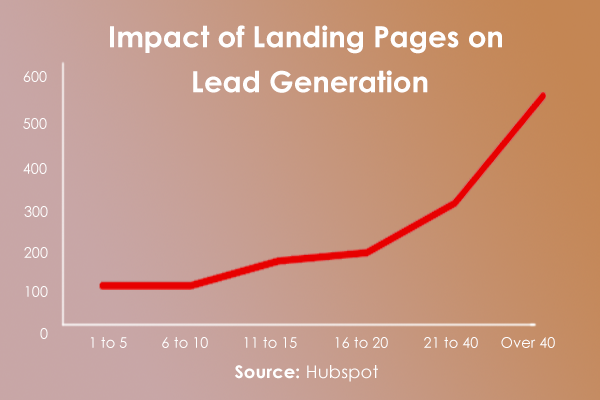
According to Hubspot’s Marketing Benchmarks From 7,000 Businesses report, for generating leads and conversions, landing pages are frequently preferable. A company is more likely to attract visitors if it has more optimized pages. The report also says that the leads will increase by about 55% if you create 10 to 12 landing pages. Businesses can further increase their lead prospects when there are more than 40 landing pages.
Even the most talented webmasters and developers can make improvements. Experimenting with various tactics over time is the greatest way to establish an eCommerce site which thus generates sales. Every field benefits from using the scientific approach. CRO will benefit every eCommerce site, no matter how big or small it is.
You’ll know what works and what may not when it comes to conversion rate optimization. All of your new knowledge and improvements will add up to greater conversions. It’s important to concentrate on CRO regardless of how much traffic your site receives.