Personalization in 2026: From Algorithms to Ethics
Running an online store means getting as many people as possible to swoop in and make a purchase. But how should you go about doing that exactly? What’s the best way to convert your visitors into paying customers?
If you believe that providing awards or loyalty programs may improve customer retention rates, you are mistaken!
Enticing users with offers is not just enough nowadays! Customers today want to connect with a brand more than they desire the items.
Therefore, how can companies accomplish this?
The answer is technology.
By minimizing human intervention and enhancing product personalization, technologies like artificial intelligence (AI) and machine learning (ML) have transformed the eCommerce business landscape. In the modern eCommerce web settings, AI increases the eCommerce conversion rate.
Improving conversion rates, minimizing human error, personalizing products, and analyzing customer feedback, are some of the key motives of employing AI widely in eCommerce.
In recent years, AI is mostly used for customer service interactions. AI can provide a quick customer experience by automating tasks that were traditionally done by humans. For example, AI technology can be used to help businesses respond quickly to customer requests without manually processing each response.
According to a report by Servion Global Solutions, about 95% of customer interaction with the brand will get powered by AI by 2025.
Another study by Meticulous Research predicts that by 2025, the global market for artificial intelligence in online retail will be worth $15.3 billion that will grow at 35.9% CAGR (compound annual growth rate) from 2019 to 2025.
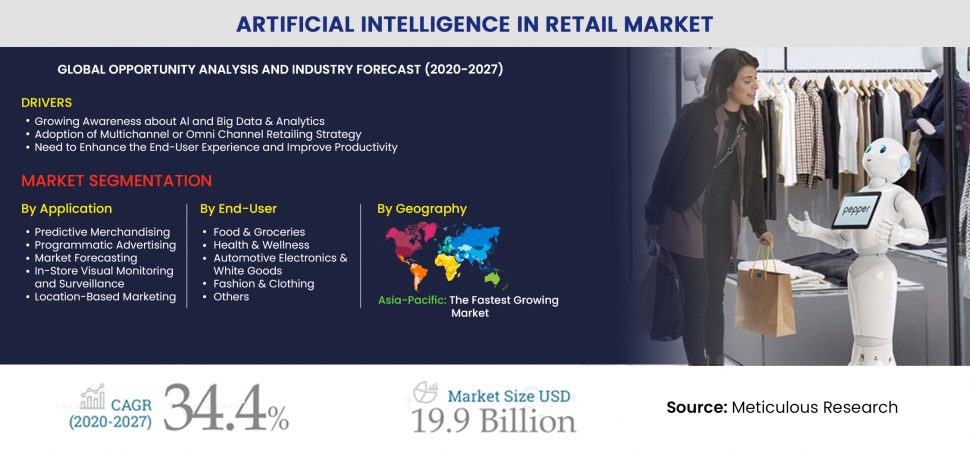
As a result of the growing penetration of smart devices and applications, IoT proliferation, adoption of cloud services, and technological breakthroughs; the general awareness and acceptance of AI and big data analytics in the retail business has increased.
As an example, one of the ecommerce professionals that has integrated AI into their operations is Amazon.

Amazon has been at the forefront of using technology since its inception and is an ideal AI in ecommerce examples.
Amazon always had a hand up in adopting AI to increase the efficiency of its business operations. As AI accounts for 35% of Amazon’s income, the technology plays a significant part in the recommendation engine.
Amazon is currently using AI to forecast the purchasing behaviour. Its new tactic is to send customers complimentary product samples. These are the goods that a certain person is most likely to purchase.
Amazon also leverages AI to reinvent the supply chain by automating the ability to predict consumer demand, estimate product availability, optimize delivery routes, and customize customer communications while tracking the entire supply chain.
There are different ways in which AI improves ecommerce conversion rate, and the most common ones are discussed below:
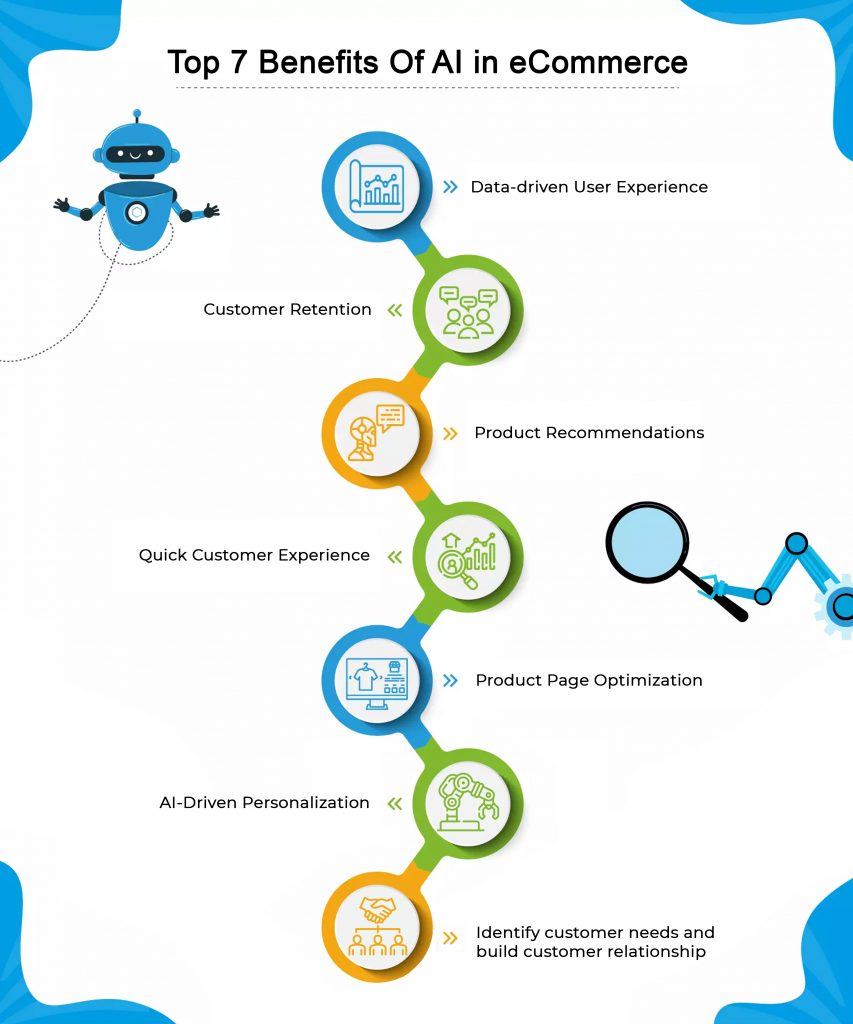
The user experience (UX) of a website is crucial for any ecommerce conversion rate. AI can continuously monitor key data and customer behavior. Designers are now able to identify links and pages that are diverting attention from user engagement conversions. Such problems tamper with user experience.
According to a research by Adobe, if a website design is unattractive, the majority of users would quit visiting it completely. The same research also shows that 66% of users would spend time on a website with a great design.
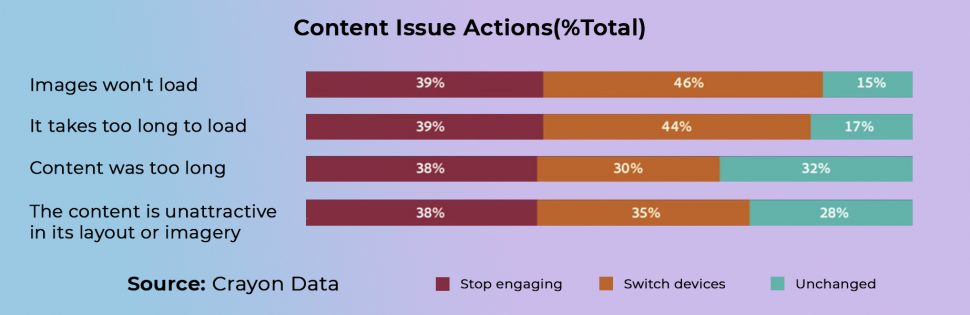
Previously designers had to rely on A/B testing to contrast different design versions. But with AI enabled solutions, several design components can be tested at once. Predictive technology can then quickly estimate the outcomes and even provide reports based on suggestions for improvement. This is how AI is helping with optimal design testing.
Companies are looking forward to AI technology to solve the obstacles of marketing and customer relations in today’s hyper-connected environment.
Customers are picky, and if your offering fails even slightly short, plethora of rivals are waiting for their chance. For success, brands must interact with consumers in real-time and with context.
While customer retention is a major business challenge, AI software on the other hand can be a powerful tool to help businesses address it.
AI technology can build predictive models that measure customer behavior and predict their actions based on past interactions. The technology also assesses how users feel about products and services in general.
By learning about users who make up your customer base, you’ll be able to tailor your offerings to them in meaningful ways. This will then imply better customer retention.
AI also increases ecommerce conversion rate process to churn customer data more quickly and more accurately.
AI helps companies determine which customers are likely to become repeat customers. This way they can target individuals with special offers that will encourage them to make additional purchases.
This can reduce costs and increase profit margins. Additionally, AI technology can be used to predict how likely a customer is to return for future purchases based on their online activity. This indeed can help businesses decide what kind of offer they should make on social media or in emails so that they get the most out of each interaction with their audience.
One of the key justifications for businesses offering AI-based product suggestions is a product or, in Netflix’s case, content discovery. According to business consulting company McKinsey, the product recommendations accounted for 35% of Amazon transactions and 75% of Netflix content.
AI-powered website customization provides consumers what they were searching for; that is whether it’s promoting your seasonal items at the correct time or offering a fitness-focused set of recommendations to consumers seeking the newest accessories.
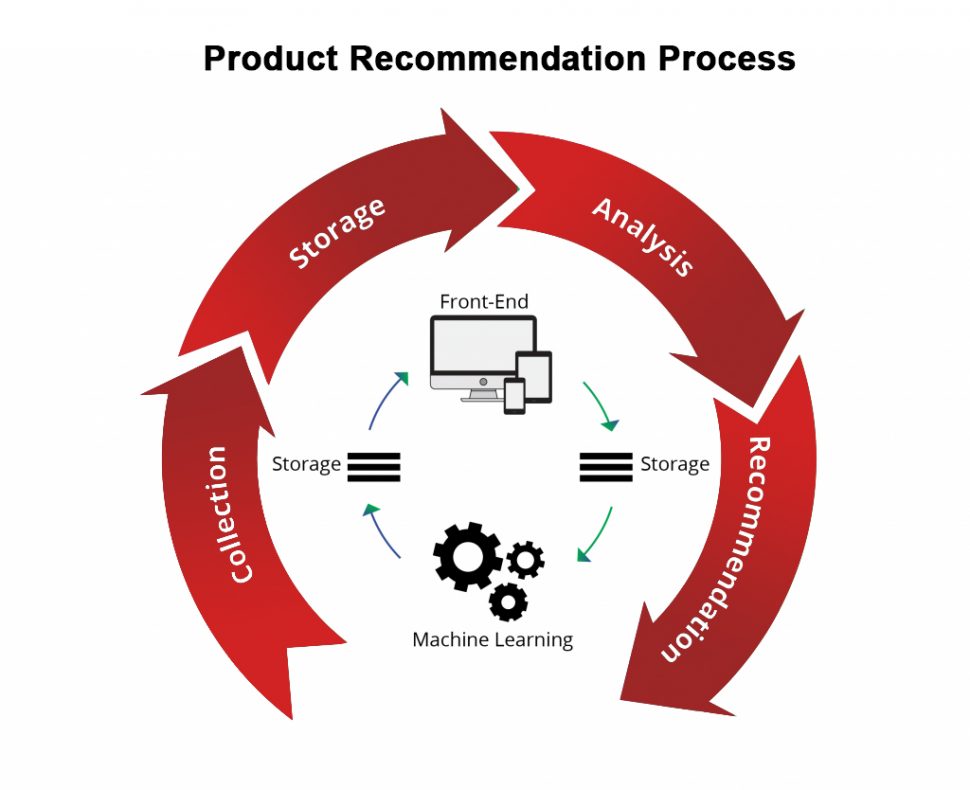
A natural outcome of an effective AI in ecommerce website personalization is on-site search. But brands must be careful not to promote inaccurate products since this might result in a poor consumer experience.
Think about the scenario when a brand suggested a sold-out item. Or consider how you may have felt when a business made repeated suggestions for a product you didn’t desire. These can be avoided. You should have a complete view of every customer across all interactions.
Customer experience demands are at an all-time high. According to some reports, 74% of consumers believe they are somewhat inclined to make their purchase decisions solely on their experiences.
Hence, one must make sure that their consumer encounter is perfect if they want to build brand loyalty.
To remove obstacles while communicating and improve conversion with customer, AI in ecommerce can include and combine other technologies such as machine learning, deep learning, and natural language understanding.
Conversational chatbots and product suggestions based on visitor behavior analytics are two most used and well-known benefits of AI to provide quick customer experience and increase conversions.
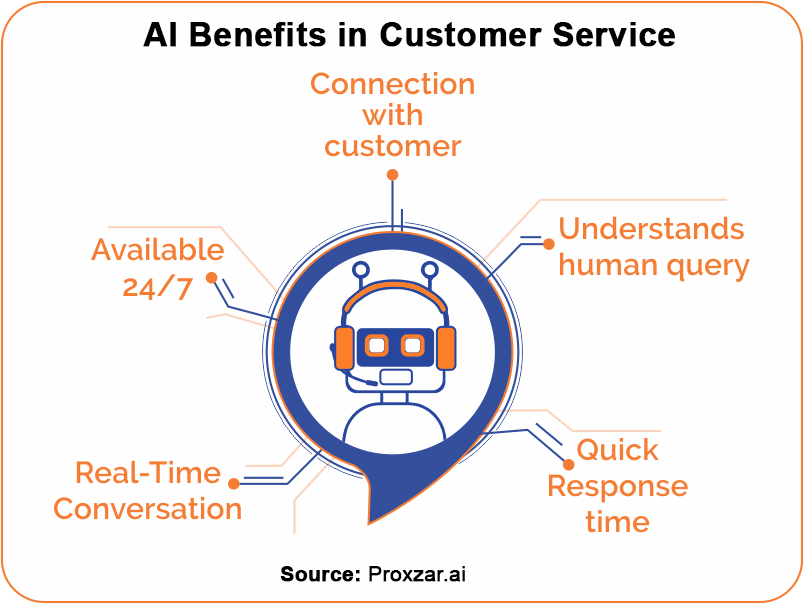
As the AI software gathers and examines a vast quantity of user data, they get to develop a close connection with individuals. With this method, they may interact with people more personally and carry out tasks more like a genuine personal assistant.
We must concede that machines can recognize and anticipate consumer needs, just as we do regularly with the help of personal digital assistants, smartphones, and other devices.
The Netflix super predictive algorithm and great personal AI assistants with voices are two AI in ecommerce examples. They gather your data, get to know you, and then improve the AI user experience accordingly.
AI also optimizes product pages for maximum conversions by using machine learning technology.
Machine Learning can help identify which parts of the website are performing well and which are not. It can help you categorize products by category and price point so that you can make better-informed decisions about what products to put on each page.
It also helps to determine which images will best capture the attention of potential customers who are looking at the product pages.
For example, Israel’s company Twiggle offers semantic search capabilities without replacing its customers’ search engine.
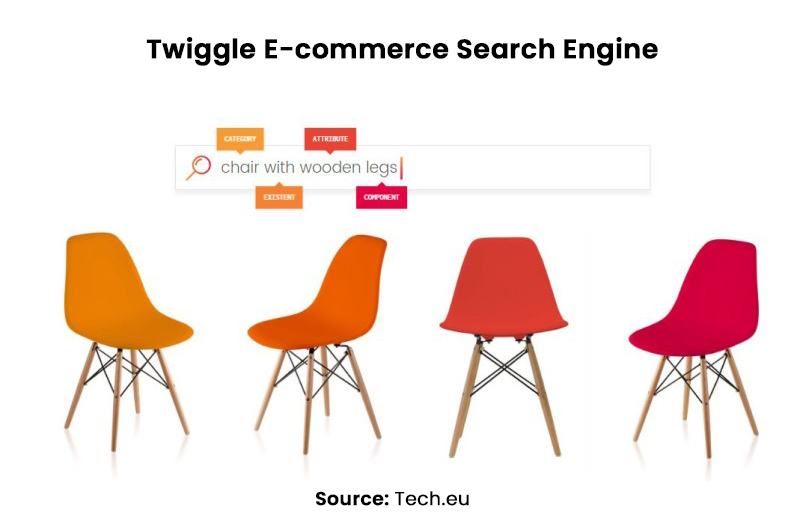
AI software does everything from optimizing landing pages to suggesting products to customers based on their browsing habits. It also helps to create more personalized shopping experience by predicting products that a user is most likely to buy.
Marketers always seek for meaningful consumer insights to support their strategy. Ecommerce and AI gives them access to the wealth of information they need to target customers effectively.
Instead of depending on high-level, superficial personas to drive consumers to act, AI enables ecommere professionals to customize their content to their specified micro-segments. Building long-lasting relationships with customers are crucial in today’s business environment. Users will check out your competition, who are just a call or click away, if you don’t pay attention to your customers.
As per the reports by PWC, 32% of consumers give up shopping with their favorite brand after only one negative encounter. AI enables the creation of highly personalized interactions that give customers a sense of worth and recognition.
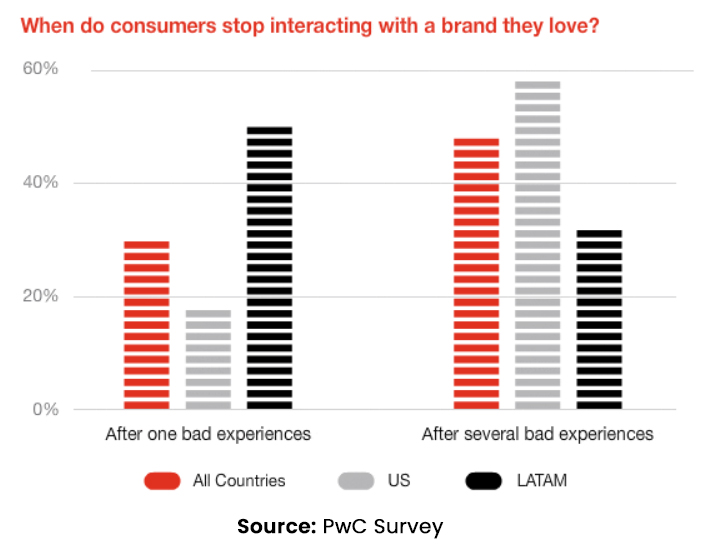
By smoothly guiding consumers through the purchasing process, you can reduce hassles and customer service problems. Simply put, utilizing AI is the finest approach to demonstrate your concern for your customers.
According to studies, organizations that use AI-powered ecommerce marketing to personalize, optimize, and lead clients through distinctive journeys increase revenue. AI assist marketers in attracting, capturing, and nurturing leads while gathering data that enables you to rapidly construct an accurate customer profile.
These insights give marketers a comprehensive knowledge of a prospect’s behaviors, reasons for purchasing, and frequently asked questions. In action, AI software bots can be four times more successful than untrained salespeople and as effective as expert salespeople. Purchase rates fall by 75%, if the buyer comes to know that they are speaking with an AI bot.
For instance, businesses frequently spend hours planning and writing weekly emails to various consumer segments. The issue is that one cannot provide a personalized email to every single consumer on the list, even with the correct email segments.
Artificial Intelligence can help with it. Sending highly customized emails is possible through benefits of AI in ecommerce, which examines areas of interest and looks for trends to suggest important insights to increase ecommerce conversion rate.
AI helps to identify customer needs and builds customer relationships by providing data-driven insights into the customer’s needs, wants, and preferences. Using this information, AI can provide customized customer experiences that are designed with the specific needs of the individual customers in mind.
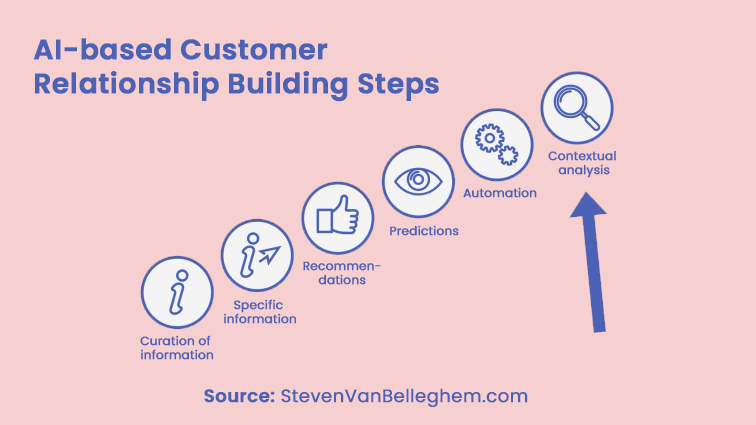
Companies can use AI to help them better understand how their products fit into customers’ lives. The ability of AI powered ecommerce to learn about customers’ habits over time can help companies create products that are tailored to their tastes and interests.
Companies can also use data analytics to analyze patterns in customer behavior and identify potential opportunities for growth.
By being able to predict what customers will want, companies can make better decisions on how they can improve their products; so they can provide customers with something more convenient or helpful in meeting their needs.
Advanced AI powered ecommerce and machine learning technologies will keep giving marketers access to previously unattainable user behavior information. Marketing will become increasingly individualized with AI enabled solutions.
Marketers will be able to target consumer needs and create ads that are more effective thanks to deep learning and pattern recognition. With its capacity to offer precise answers based on a huge array of data, virtual assistants will become the standard and transform how customer support systems function.