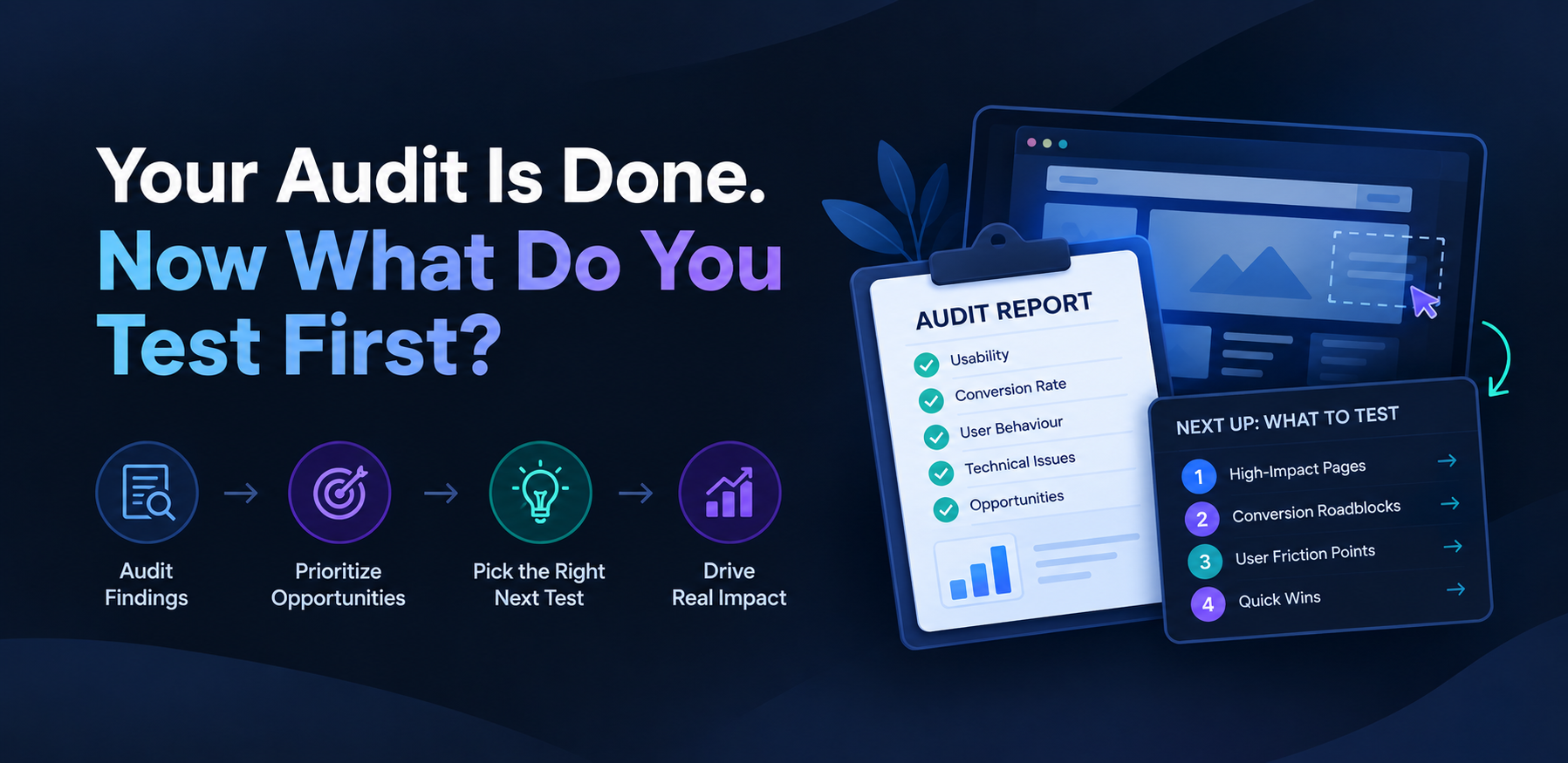
Your Audit Is Done. Now What Do You Test First?
Most CRO programs have a testing calendar full of headline variants, CTA colors, and layout tweaks. The team ships tests every week. Reports show wins. Everyone feels like experimentation is working.
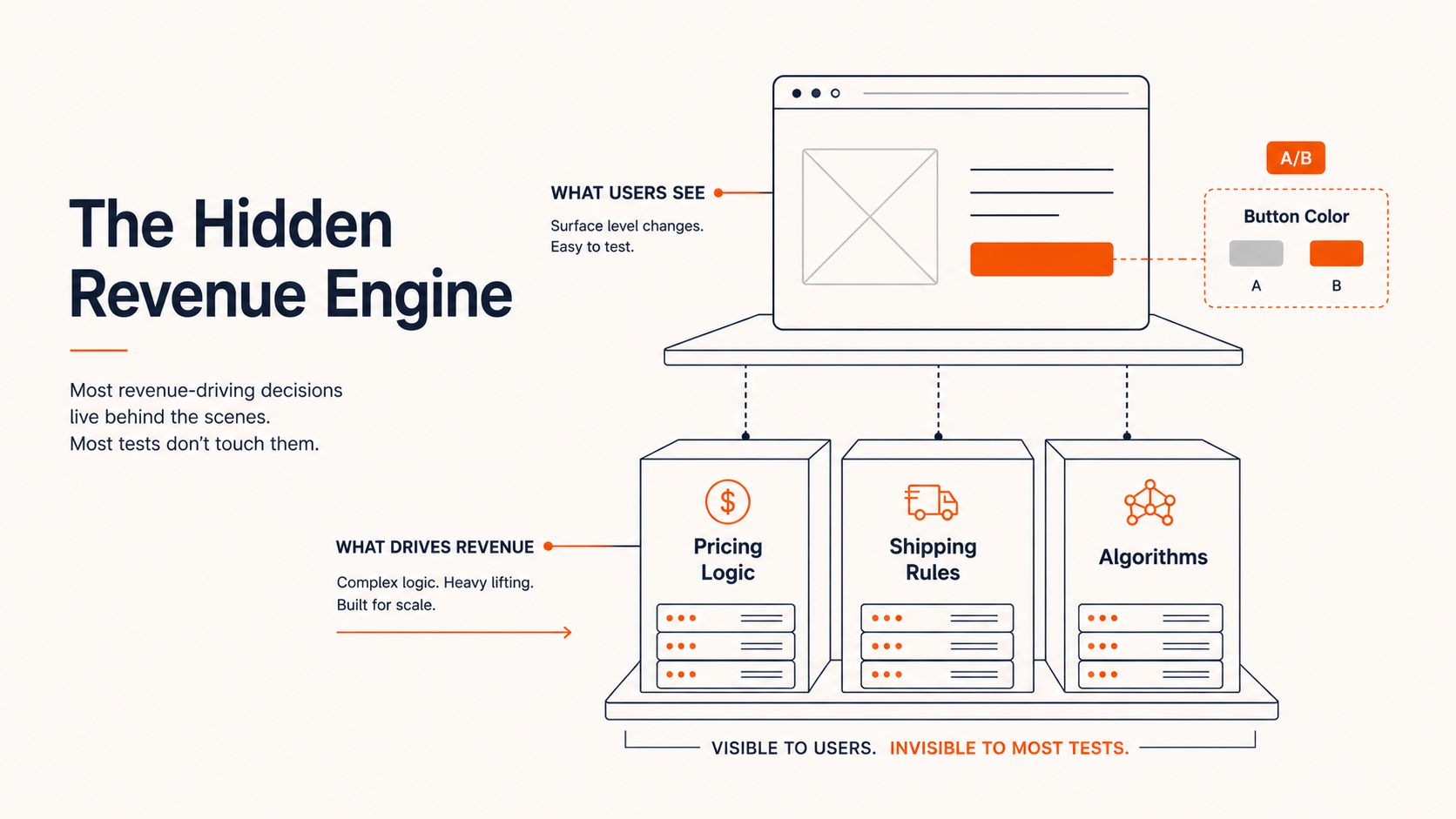
Meanwhile, the pricing page hasn’t changed in two years. The recommendation engine runs on logic nobody has validated since launch. Someone configured the checkout flow’s shipping rules once and never revisited them. These decisions carry more revenue risk than any button color ever will, and almost nobody tests them.

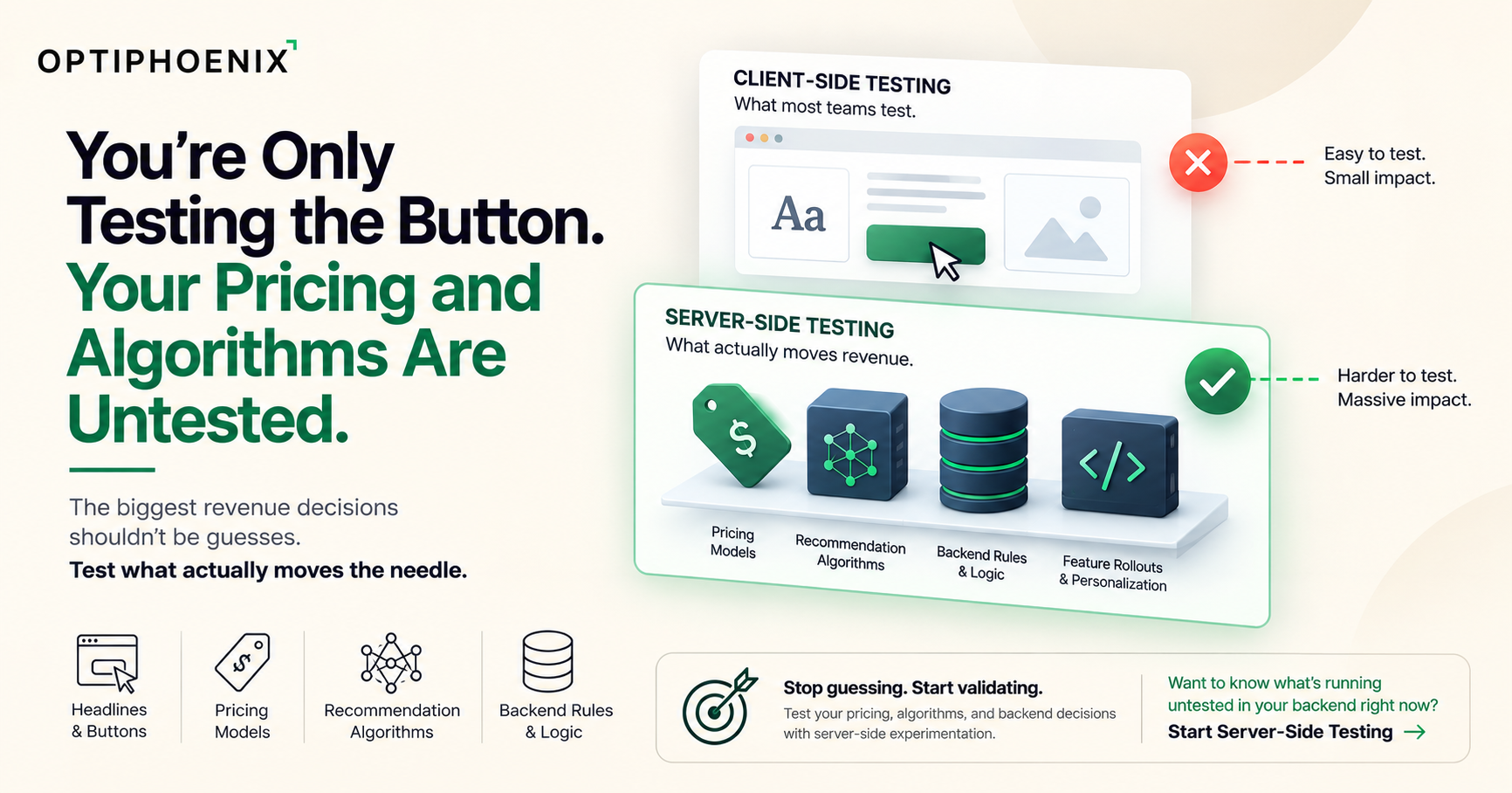
This isn’t a failure of ambition. It’s a structural gap. Client-side testing, the kind that runs in the browser, is fast to set up and doesn’t require engineering time. Server-side testing, the kind that validates what happens on the backend, does. Most programs default to what’s easy to test rather than what’s actually worth testing. Over time the gap becomes invisible, because nobody’s measuring what isn’t being tested at all.
The scale of this gap is larger than most teams assume. In a study of more than 2,200 SaaS companies, OpenView Partners found that 52 percent don’t test their pricing at all. Only 6 percent have done the kind of in-depth research needed to understand what customers are actually willing to pay. The rest are, functionally, guessing.
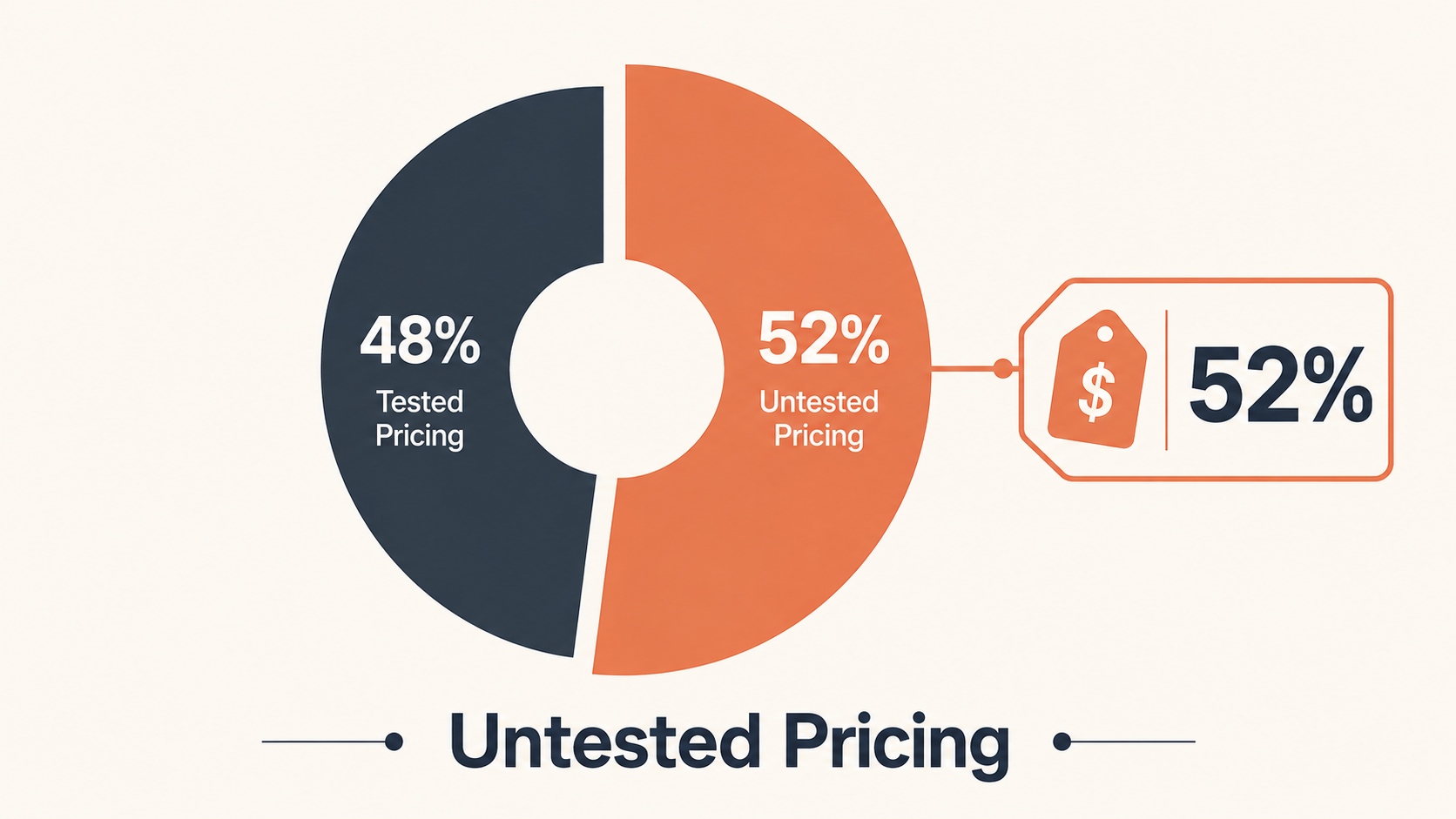
Pricing isn’t the only untested layer. Recommendation logic, search ranking, feature rollout sequencing, personalization rules: these all run on decisions made once, based on the best judgment available at the time. They stay untouched because testing them requires backend work; most CRO calendars were never built to include.
This matters because these are exactly the decisions with outsized leverage. A 5 percent lift on a homepage headline test might move conversion by a fraction of a percent. A validated pricing model, or a recommendation engine that actually reflects what drives repeat purchases, moves revenue at a completely different scale. Testing budgets rarely reflect that difference.
Client-side testing earned its popularity honestly. A marketer can open a visual editor, change a headline, and launch a test without waiting on a developer. That accessibility is genuinely valuable, and it’s why most CRO programs start there and never leave.
Server-side testing works differently. The server itself determines which variation a user sees before the page ever reaches the browser, which means engineering has to be involved from the start. This is precisely why it can reach places client-side tools can’t. Algorithm testing, changes to backend response logic, and anything that touches a database can’t be simulated by browser-level JavaScript. It has to happen where the decision is actually made.
The tradeoff is real. Server-side testing needs planning, engineering time, and closer collaboration between product, CRO, and dev teams than a quick headline test does. That friction is exactly why so many programs quietly avoid it. The ROI isn’t lower. The setup cost is just higher, and nobody owns closing that gap.
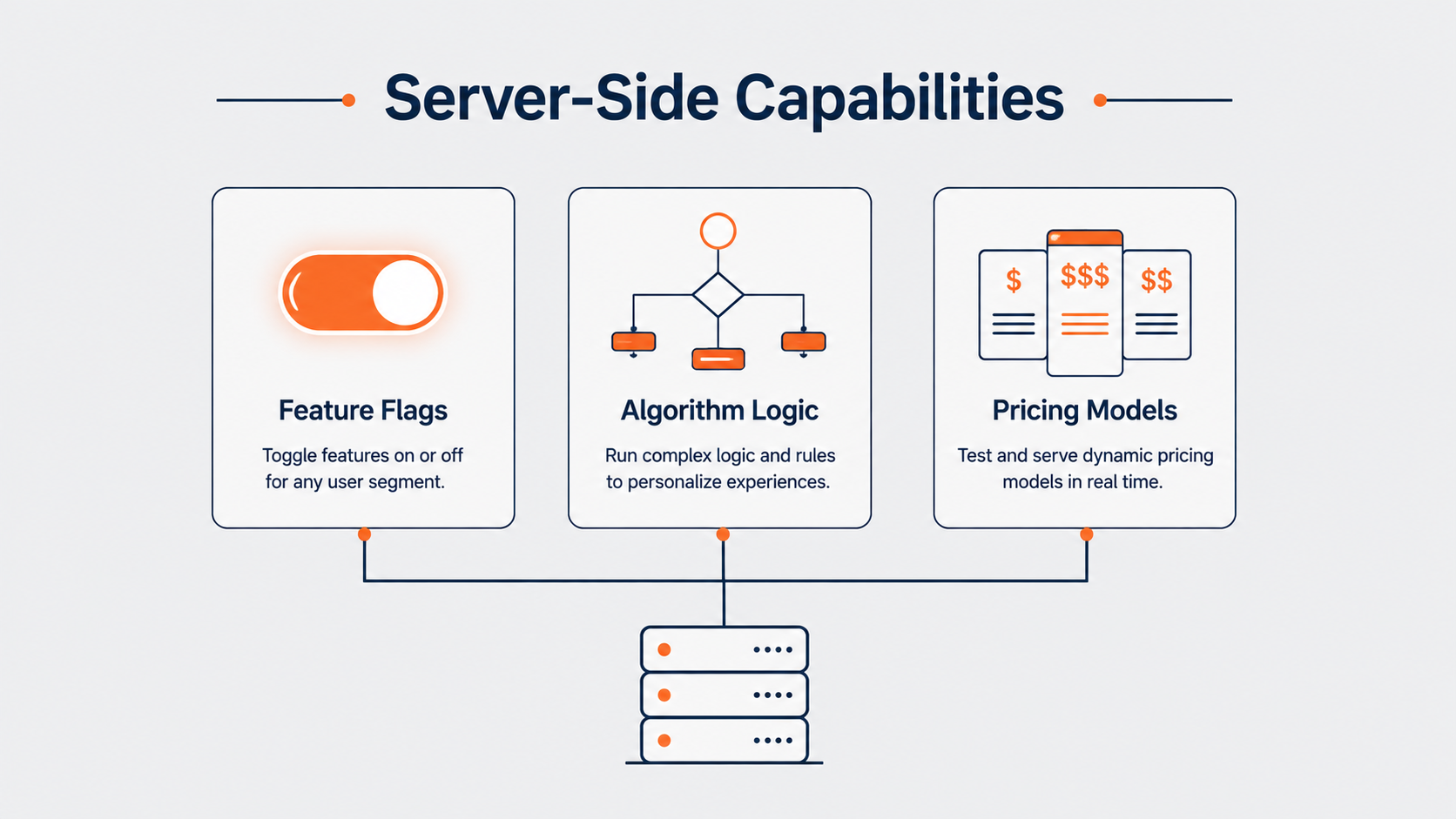
Instead of shipping a new feature to everyone at once, feature flags let a team release it to a small percentage of users first. The team watches how it performs, then expands gradually. This turns risky releases into controlled, measurable rollouts rather than all-or-nothing bets.
You can test recommendation engines, search ranking, and personalization models against real user behavior instead of shipping them on faith. This is one of the clearest cases where client-side testing simply cannot reach, since the logic being tested lives entirely on the backend.
Structured, segmented experiments can validate discounts, bundles, and pricing models before a full rollout. The alternative is a single company-wide guess that stays unchanged for years because nobody wants to risk revenue to test it.
When testing logic lives on the server, every user sees a consistent experience across web, app, and other channels. A browser-based test, by contrast, only ever reaches part of the audience.
The instinct, once a team recognizes this gap, is to spin up server-side testing as a second initiative. It usually ends up owned by engineering, running separately from the marketing-led client-side program. That’s the wrong fix. It just moves the fragmentation instead of closing it. Data ends up split across two systems, prioritization happens in two different places, and nobody has a single view of what’s actually been validated and what hasn’t.
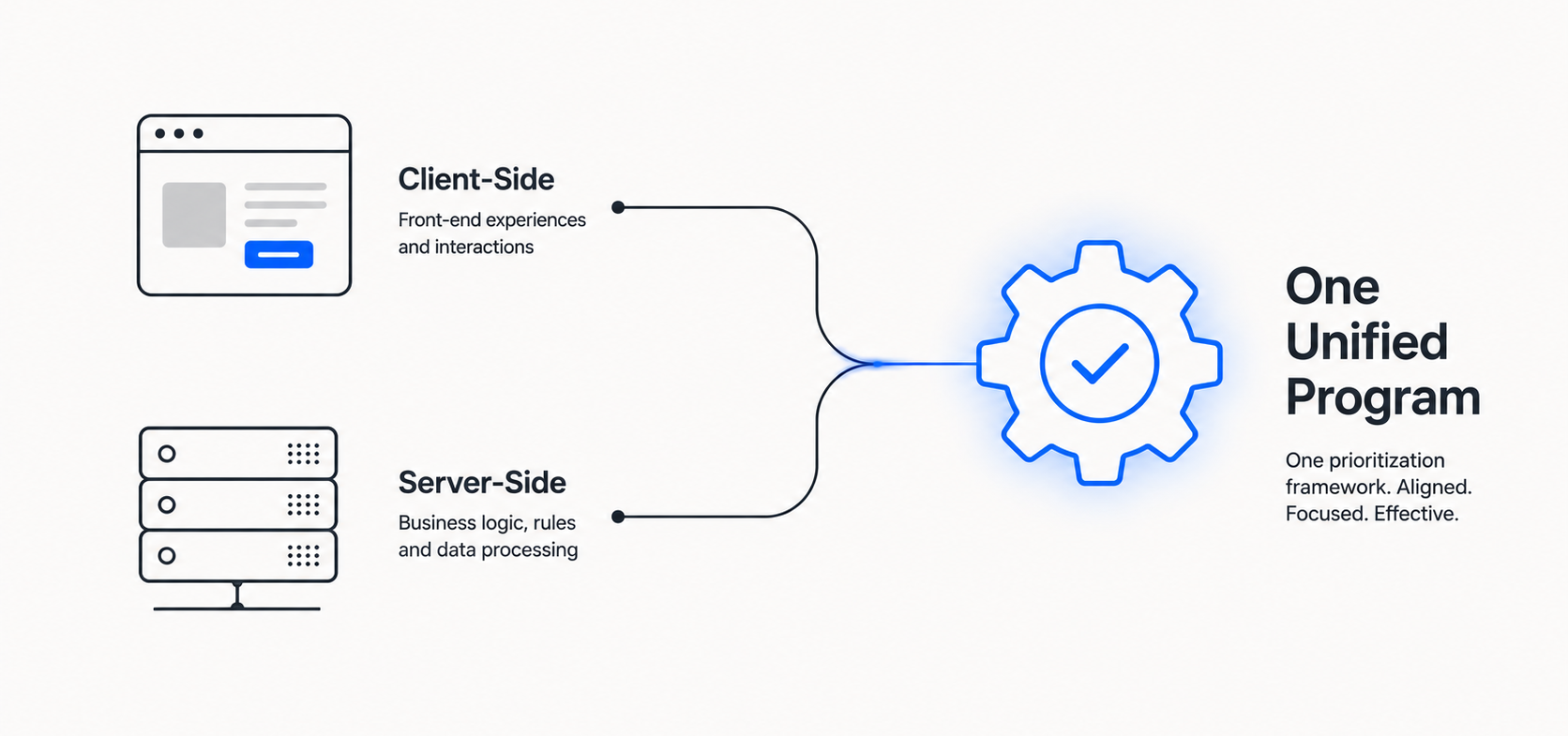
The better approach treats client-side and server-side testing as one experimentation program with two execution methods, not two programs. The same prioritization framework decides what gets tested regardless of whether the fix lives in the browser or the backend. This is the same discipline behind treating experimentation as a company-wide system rather than a series of isolated projects. It just extends that discipline to the layer of the stack most programs currently leave out.
If your team is comfortable running client-side tests but has never tested a pricing model or an algorithm, that’s usually not a sign those decisions don’t need testing. It’s a sign your program has a blind spot, and the fix isn’t more headline tests. For a refresher on how disciplined testing works at the layer you’re likely already running, our guide to A/B testing implementation covers the fundamentals this builds on.
Client-side testing renders variations in the visitor’s browser using JavaScript, after the server has already delivered the page. Server-side testing determines which variation a user sees on the server itself, before the page reaches the browser. This lets it test backend logic like algorithms, pricing, and database-dependent changes that client-side tools cannot reach.
Yes, but only through server-side testing. Since this logic runs entirely on the backend, browser-level JavaScript can’t simulate it. Server-side testing renders the actual algorithm variation before the response reaches the user, making it possible to measure real performance differences.
Most companies don’t. Research from OpenView Partners found that 52 percent of SaaS companies never test pricing at all. Structured pricing experiments, run through segmented cohorts rather than showing different live prices to the same audience simultaneously, let you validate models before committing to them company-wide.
Yes. Because the variation logic lives on the server rather than in the browser, you need engineering involved from the start. This is the main reason server-side testing lags behind client-side testing in most CRO programs, not because it matters less, but because it costs more to set up.
No. Running them separately tends to fragment data, prioritization, and ownership across two disconnected efforts. A single experimentation program treats client-side and server-side as two execution methods, not two programs. Prioritization stays consistent regardless of where a given fix needs to happen.