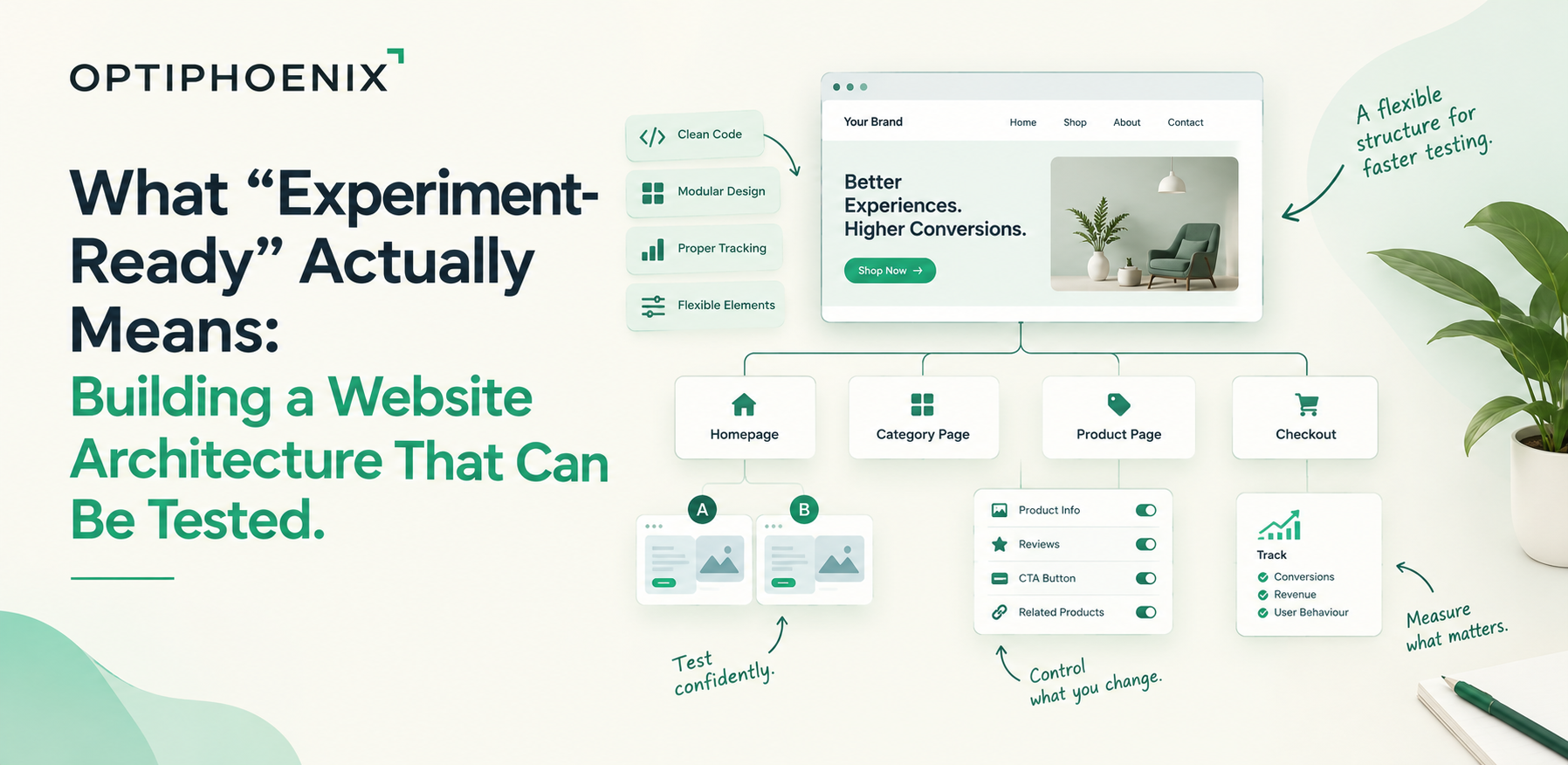
Your Audit Is Done. Now What Do You Test First?
In 2026, marketing efficiency will become the single biggest growth constraint for digital-first brands.
Acquisition costs have risen by over 35% globally since 2021 (source: Statista), while user attention spans continue to shrink – now averaging just 8 seconds on mobile before drop-off.
In a world where traffic is expensive and competition is relentless, Conversion Rate Optimization (CRO) has quietly evolved from a “marketing hygiene” practice to a strategic growth pillar for CEOs and CMOs.
Why?
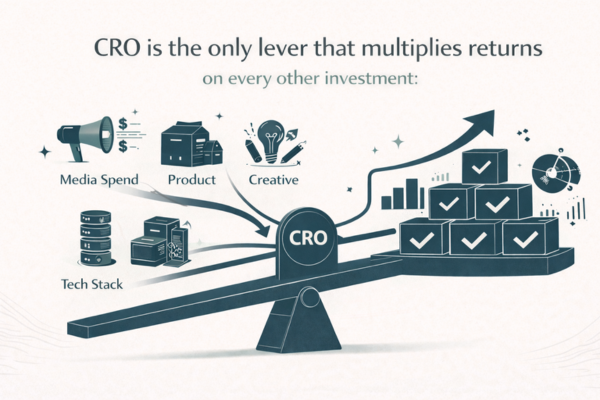
Because CRO is the only lever that multiplies returns on every other investment, your media spend, your product, your creative, your tech stack.
Let’s put this in perspective:
CEOs no longer see CRO as a marketing function, they see it as an organizational discipline: a way to make every decision evidence-based, every customer experience frictionless, and every growth bet validated by data.
This guide breaks down on
the modern pillars driving results,
the challenges leadership teams face,
and the proven strategies that are actually moving the needle for brands worldwide.
Conversion Rate Optimization (CRO) is the process of systematically improving your website or digital experience to increase the percentage of visitors who take a desired action, be it a purchase, sign-up, form fill, or lead submission.
But in 2026, CRO isn’t about button colors or headline tweaks.
It’s a data + behavioral science + experimentation system, a closed-loop process that identifies friction, tests hypotheses, and measures uplift at scale.
At its core, CRO answers a single question:
“What stops your customers from saying yes, and how can you remove that friction?”
This process combines three lenses:
In 2023-2026, the digital landscape changed dramatically:
This means you’re paying more for every click, but converting less of them.
That’s where CRO becomes the multiplier.
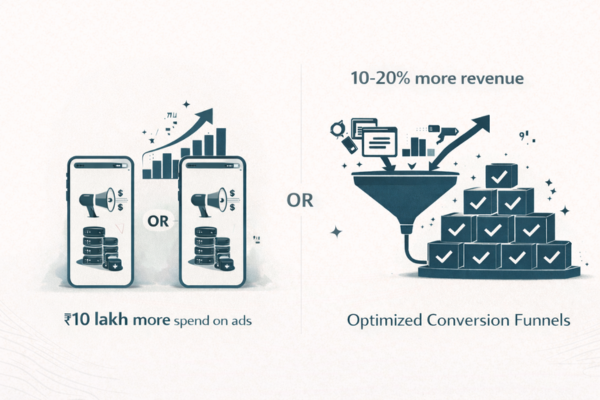
Instead of spending ₹10 lakh more on ads to chase growth, brands can extract 10-20% more revenue from the same traffic by optimizing conversion funnels.
A 2025 study by VWO found that businesses implementing structured experimentation saw:
CRO amplifies marketing. It makes every rupee smarter.
Every brand, regardless of vertical, runs on a funnel:
Most funnels leak at multiple points.
CRO identifies where those leaks happen and why, then uses data-backed testing to fix them.
Think of it as financial compounding for growth, small percentage gains stacked across multiple touchpoints yield exponential results over time.
When tracked properly, these metrics turn CRO from a tactical project into a boardroom growth dashboard.
Traditional growth playbooks focus on traffic, product launches, or new channels.
But as the digital cost curve steepens, leadership teams are realizing something deeper:
Traffic is finite. Attention is expensive. Efficiency is forever.
Companies that build CRO into their culture, not just as a marketing function but as a company-wide learning system, are seeing durable compounding results.
As Brian Balfour (ex-HubSpot VP Growth) puts it:
“The fastest-growing companies aren’t the ones who get everything right; they’re the ones who learn fastest.”
CRO is how you learn faster than your competition.
As we move into 2026, Conversion Rate Optimization (CRO) will no longer be a tactical lever, it will be a strategic growth engine embedded deep into how businesses make decisions.
The digital landscape ahead will be defined by rising acquisition costs, AI-driven personalization, and customers who expect frictionless experiences across every touchpoint.
CRO will evolve into the connective tissue that holds data, creativity, and psychology together.
At Optiphoenix, we see five key pillars shaping the next wave of CRO success in 2026: a framework that blends experimentation, insight, and empathy to deliver measurable business outcomes.
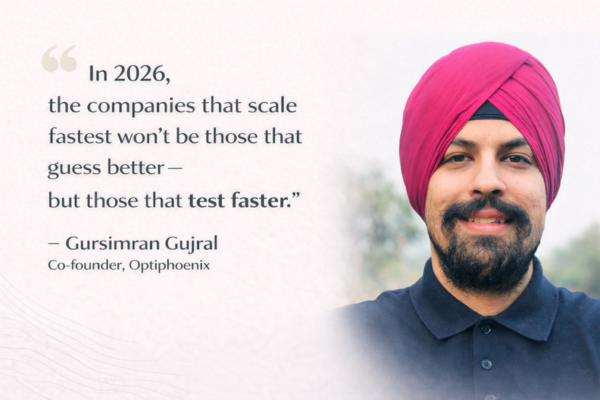
A/B testing will mature from a marketing experiment into a strategic operating system.
By 2026, most high-performing brands will run experimentation programs that look more like scientific labs than campaign calendars.
By 2026, personalization will shift from static “if-this-then-that” logic to dynamic intent prediction.
Websites anticipate user behavior.
The next wave of UX in CRO will prioritize friction-free flow over fancy design.
Attention will be scarce, and decision fatigue will be real. Winning brands will focus on clarity, speed, and cognitive ease.
Behind every conversion is a human decision moment, and understanding that psychology will separate great CRO from average.
By 2026, behavioral analytics will combine quantitative tracking with emotional inference, going beyond “what users did” to explain “why they did it.”
No CRO strategy will work in 2026 without clean data and a culture that embraces testing.
The highest-growth companies will treat data as infrastructure.
By 2026, CRO will look less like marketing optimization and more like scientific product development.
Every hypothesis tested will contribute to an expanding knowledge base of user behavior, creating a feedback loop that compounds growth over time.
At Optiphoenix, we visualize it as the Experimentation Flywheel:
1️⃣ Data → 2️⃣ Insight → 3️⃣ Test → 4️⃣ Learn → 5️⃣ Scale → 6️⃣ Automate
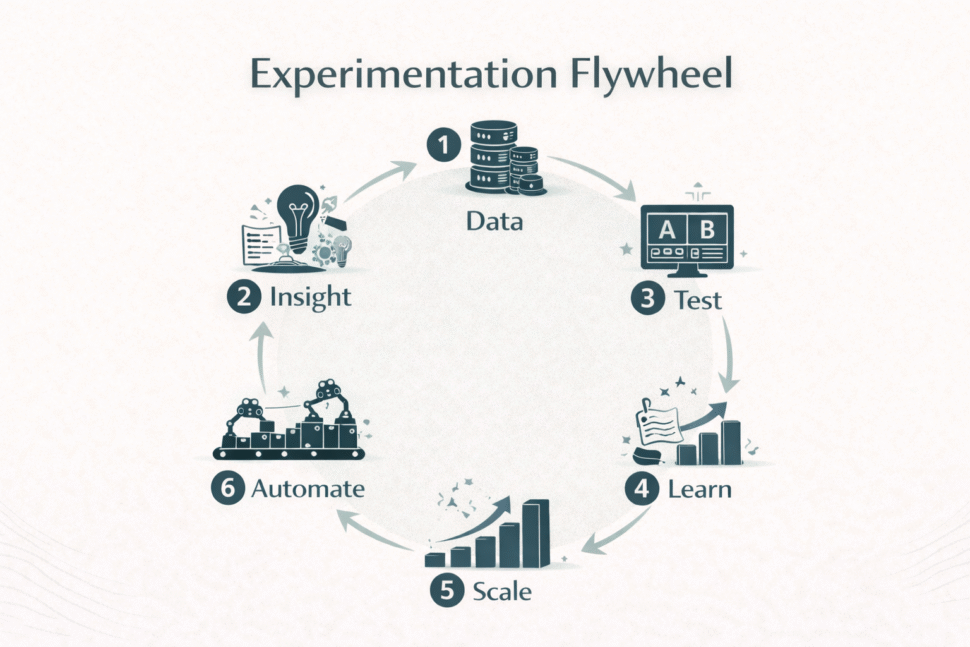
Every spin makes the next one faster, smarter, and more profitable.
The organizations that master this flywheel will move beyond conversion optimization; they’ll build conversion intelligence.
In 2026, the best CRO programs will be those with the most discipline and velocity.
The brands that build on these five pillars will see not just higher conversion rates, but higher learning rates, and that’s the ultimate edge.
By late 2025, every CEO has heard the same promise:
“Optimize your conversion rates, and you’ll grow faster without spending more.”
Yet as brands move into 2026, most will discover that knowing the importance of CRO is easy, building a scalable, organization-wide program is not.
CRO’s maturity journey follows the same pattern as digital transformation did a decade ago:
The first 10% is tools, the remaining 90% is people, process, and mindset.
Below are the five biggest challenges leaders will face in 2026 as they try to turn experimentation into a growth culture, and how the most adaptive CEOs will overcome them.
In 2026, the biggest CRO challenge will be cultural.
Most companies still celebrate A/B tests like campaign trophies:
“Variant B won by +7%; let’s move on.”
But in high-performing organizations, leaders will start asking a deeper question:
“What did this test teach us about our users, and how can that insight scale to the next 20 tests?”
CEOs will need to reframe CRO success from “what won?” to “what did we learn that scales?”
That mental shift; from growth hacking to growth science, will separate the winners in 2026.
Even in 2026, most CRO decisions will still be made on incomplete or untrusted data.
GA4 migration issues, broken attribution models, cookie deprecation, these are the silent killers of conversion insights.
By mid-2026, data fragmentation will become a strategic risk.
Without accurate inputs, even the smartest experimentation frameworks collapse.
In 2026, data cleanliness will be a strategic differentiator.
By 2026, CRO expertise will become one of the most in-demand growth skills globally.
The discipline requires a rare mix of left-brain and right-brain, analytics, psychology, design, and storytelling.
This talent bottleneck means many organizations will rely on specialized CRO partners, agencies or hybrid in-house pods: that combine engineering precision with behavioral insight.
Forward-thinking leaders in 2026 will treat CRO as a shared skillset embedded across teams, empowering marketers, designers, and product managers to think experimentally.
It will be less about hiring one “CRO expert” and more about building an experimentation-literate company.
As companies scale their experimentation programs, a new challenge will emerge, quantity without quality.
Many will boast “we ran 100 tests this quarter,” yet few will know if those tests were statistically valid, contextually relevant, or even worth running.
By 2026, CRO discipline will outcompete CRO activity.
The CEOs who enforce rigor will see compounding ROI, while others drown in noise.
Perhaps the biggest shift in 2026 will be the integration of CRO across departments.
Conversion optimization will touch everything from UX to pricing, onboarding, and retention.
In short, the companies that make CRO everyone’s responsibility, not just the growth teams – will create learning organizations that outlast tactical competitors.
In 2026, CEOs will realize that CRO maturity mirrors organizational maturity.
It’s about transforming how decisions are made.
Those who build cultures of experimentation, enforce data discipline, and connect every optimization to business outcomes will see outsized growth returns because they built a company that learns faster than the market changes.
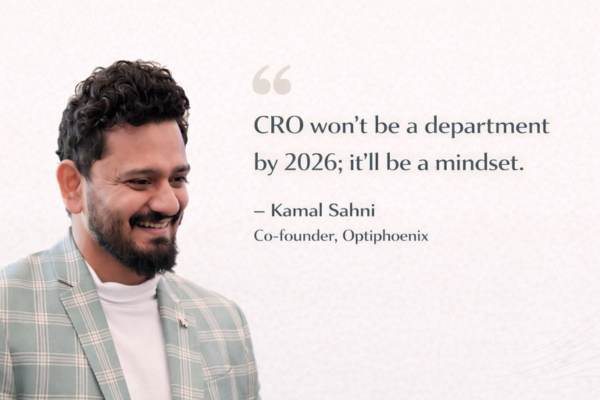
By 2026, every dollar spent on acquisition will be under scrutiny.
Traffic will still matter – but efficiency will define survival.
The next phase of CRO will not be about more campaigns; it will be about better compounding – every click, visit, and interaction engineered to deliver incremental lift that scales quarter after quarter.
Below are the strategic pillars and tactics that will consistently generate measurable ROI in 2026 – distilled from Optiphoenix’s research programs and global CRO trend analyses.
The era of “feature-heavy” design will fade.
In 2026, simplicity will become the single strongest conversion accelerant.
Attention spans will average under 5 seconds per landing page view, forcing brands to distill propositions to one decisive moment.
Every unnecessary field, link, or distraction will become a revenue leak.
High-growth brands will streamline navigation, declutter interfaces, and move toward intent-based design, layouts that surface what the user is most likely to need next.
Cognitive friction will become a measurable KPI; simplicity will become strategy.
Personalization will evolve from segmentation to prediction.
Algorithms will forecast what a visitor intends to do, not just what they have done.
By mid-2026:
CRO leaders will combine behavioral analytics, AI inference, and dynamic UX to ensure that every visitor experiences a contextually relevant journey; invisible in its complexity, seamless in its execution.
Design will no longer be evaluated on beauty but on velocity – the speed at which a user can understand, trust, and act.
“Flow” will replace “page” as the unit of optimization.
Conversion gains will come from:
The most advanced CRO programs will quantify friction the way finance teams quantify risk; identifying, scoring, and eliminating it continuously.
CRO in 2026 will be inseparable from behavioral science.
Analytics will evolve from descriptive to diagnostic: not what users did, but why they did it.
Marketers will rely on a blend of:
Behavioral insight will move from the UX lab to the boardroom.
Companies that understand user emotion will optimize not just conversions, but trust.
By 2026, mature organizations will measure growth not by revenue alone but by learning velocity, how quickly hypotheses are tested, validated, and scaled.
Experimentation will become a core business process, with automation handling:
The CRO programs that win will not run the most tests; they will build the fastest feedback loops.
CRO effectiveness will depend on the integrity of its data spine.
With GA4, CDPs, and event-based tracking maturing, leadership will treat data accuracy as competitive infrastructure.
Every tested hypothesis will be tied to business metrics: revenue, margin, retention.
Dashboards will evolve from “marketing analytics” to conversion intelligence systems accessible to every stakeholder.
Clean data will mean cleaner decisions; cleaner decisions will mean compounding growth.
The internet of 2026 will be fatigue-saturated.
Consumers will reward authenticity and penalize manipulation.
CRO will shift toward ethical persuasion; transparency, truth-based urgency, and evidence-driven trust.
Ethics will no longer be a compliance checkbox; it will be a conversion driver.
The conversion journey will no longer end at checkout.
By 2026, retention will be the new CRO frontier.
Brands will optimize post-purchase flows; confirmation pages, onboarding sequences, re-engagement triggers – to extend lifetime value.
CRO will integrate directly with CRM and lifecycle marketing systems, treating every repeat visit as another conversion opportunity.
The organizations that internalize this continuum will see the highest ROI on experimentation programs.
Across all high-ROI tactics, three meta-principles will define CRO in 2026:
By 2026, CRO will mature into an enterprise discipline; a structured, cross-functional system that blends data science, behavioral insight, and continuous testing.
Organizations adopting this model are projected to achieve:
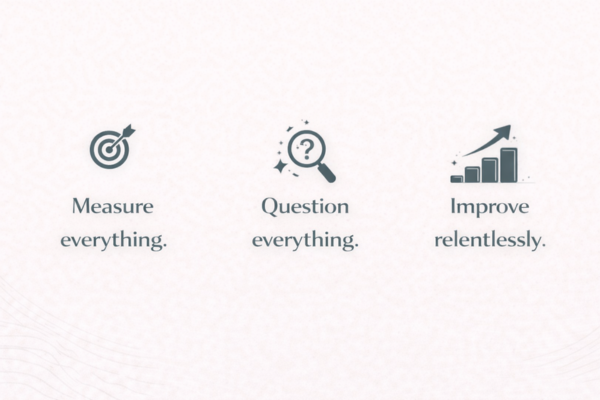
The playbook will be simple but unforgiving:
Measure everything. Question everything. Improve relentlessly.
As we enter 2026, one fact will define digital growth: brands that learn faster will grow faster.
CRO will evolve from a marketing tactic into a strategic discipline, the bridge between data, psychology, and performance.
It will be about building organizations that think experimentally.
Every decision – creative, product, or pricing; will soon be validated through evidence, not assumption.
Growth will come not from more spend, but from more intelligence per customer interaction.
At Optiphoenix, we believe 2026 will reward clarity, speed, and experimentation discipline.
CRO will become the nervous system of growth; continuously learning, adapting, and compounding.
It will be a culture.
And those who build it will define the next decade of digital growth.