AI Agent vs Chatbot: What’s the Difference for Your Store?
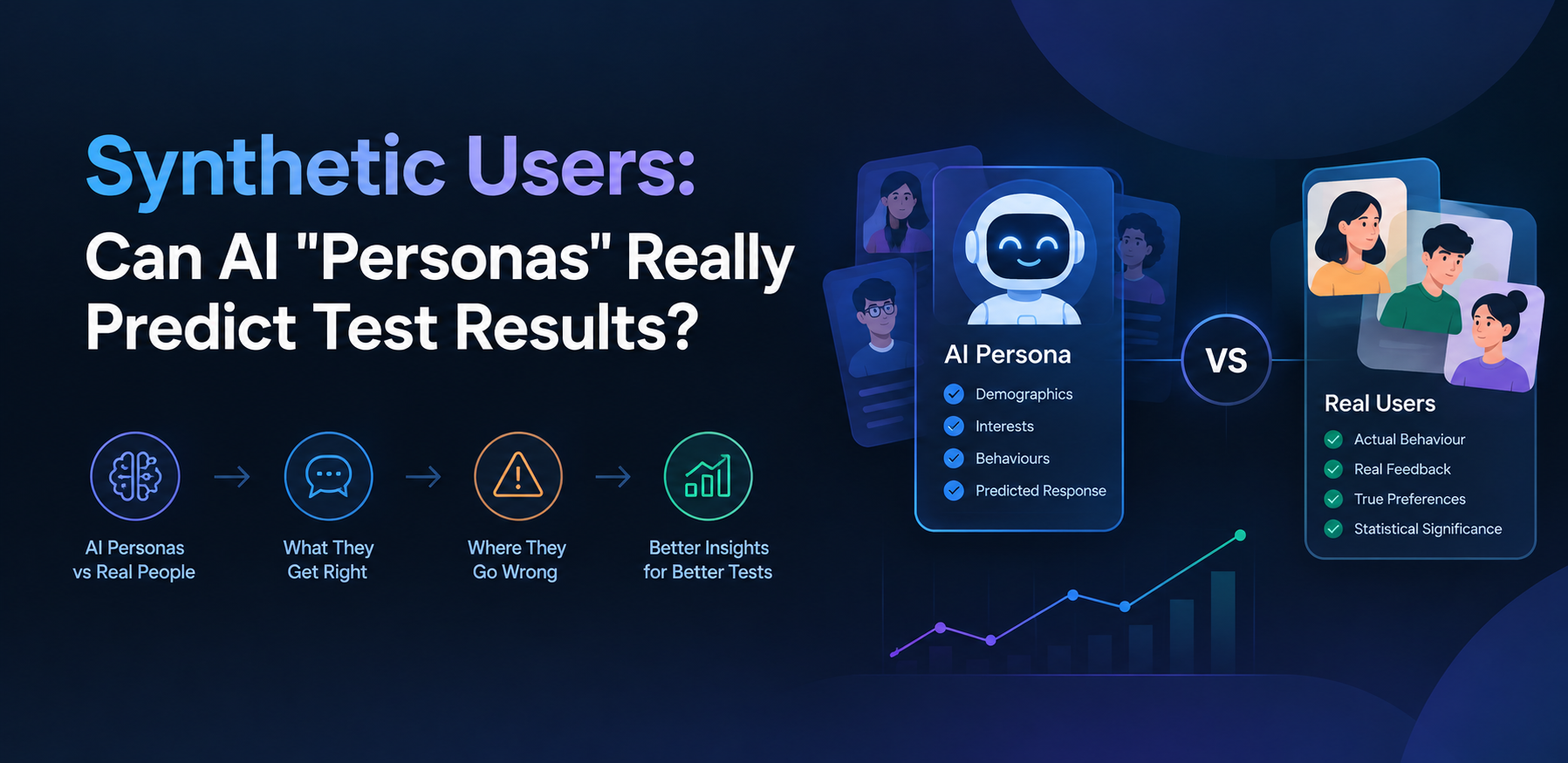
Ask five AI “customer personas” what they think of your new idea, and the responses come back enthusiastic, confident, and unanimous in under ten minutes.
That’s not validation. That’s the first warning sign.
A real A/B test takes weeks to reach significance. A synthetic panel takes ten minutes and never says no. Before that speed becomes a reason to skip straight to build, it helps to know exactly what a synthetic user is made of, and what the research says it consistently gets wrong.

None of that means ignore synthetic users. It means know exactly what they’re good at, and where they quietly fail.
The best synthetic-user research to date isn’t a vendor claim. It’s a 2025 synthesis by the Nielsen Norman Group covering three independent studies: a Stanford/Google team, a University of Wisconsin marketing study, and a political-science paper testing ChatGPT against real survey data. The headline finding: how the persona is built matters more than which AI model runs it. Not all “synthetic users” are built the same way
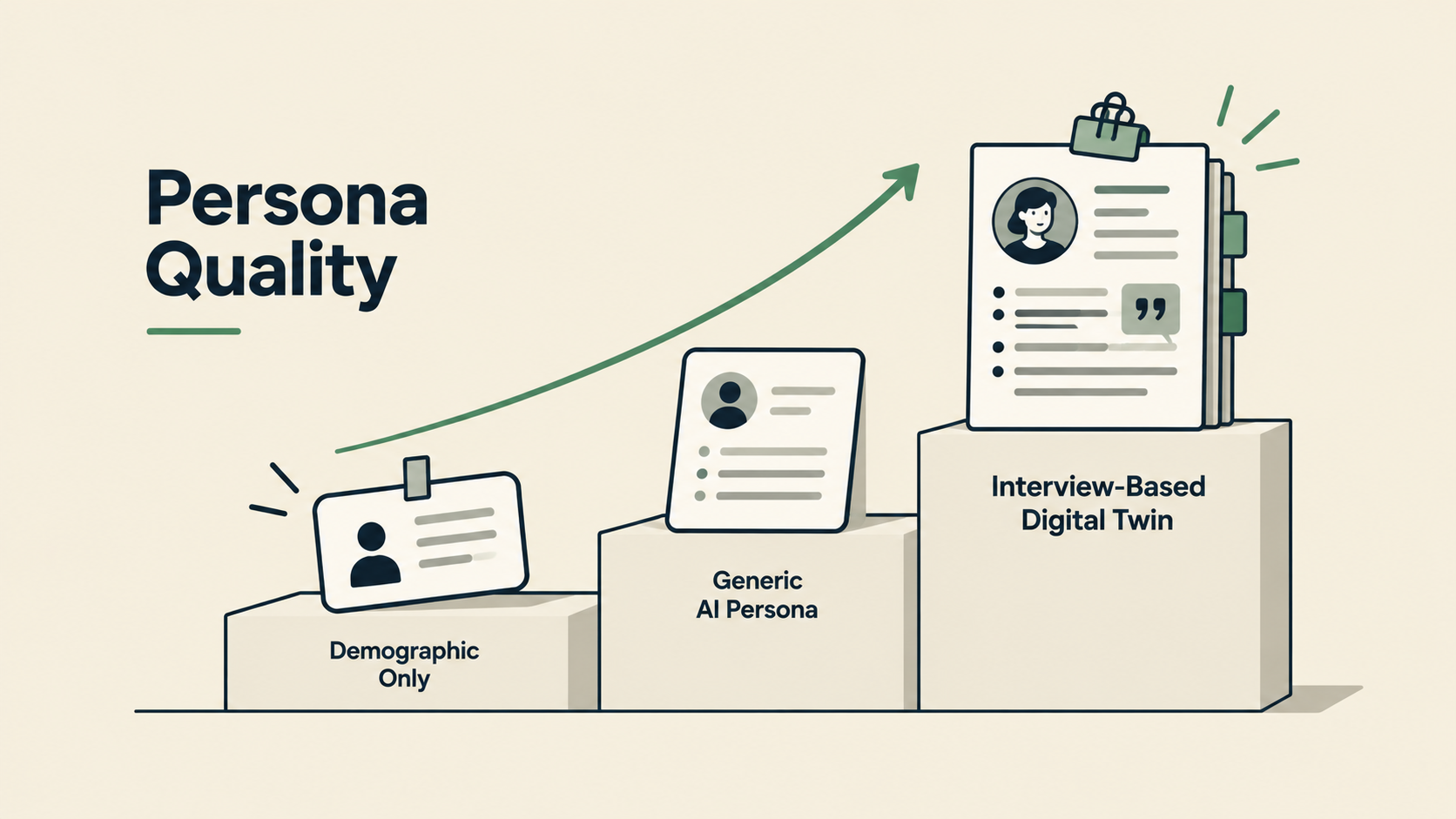
Most tools marketed as “AI personas” use the cheapest version: a demographic tag, nothing more. The Stanford/Google researchers tested three tiers side by side, against the same real human answers, and the gap between the cheapest and best-built version is not small.- Demographic-only (“32-year-old woman, urban, middle income”): the weakest tier across the board, down to 55% on personality prediction. That’s barely better than a coin flip on some traits.
Here’s the part that should stop you cold: the fast, free, five-personas-in-ten-minutes version is almost always the cheap, demographic-only kind. That’s the exact tier the research scored weakest. The speed and the unreliability come from the same shortcut.

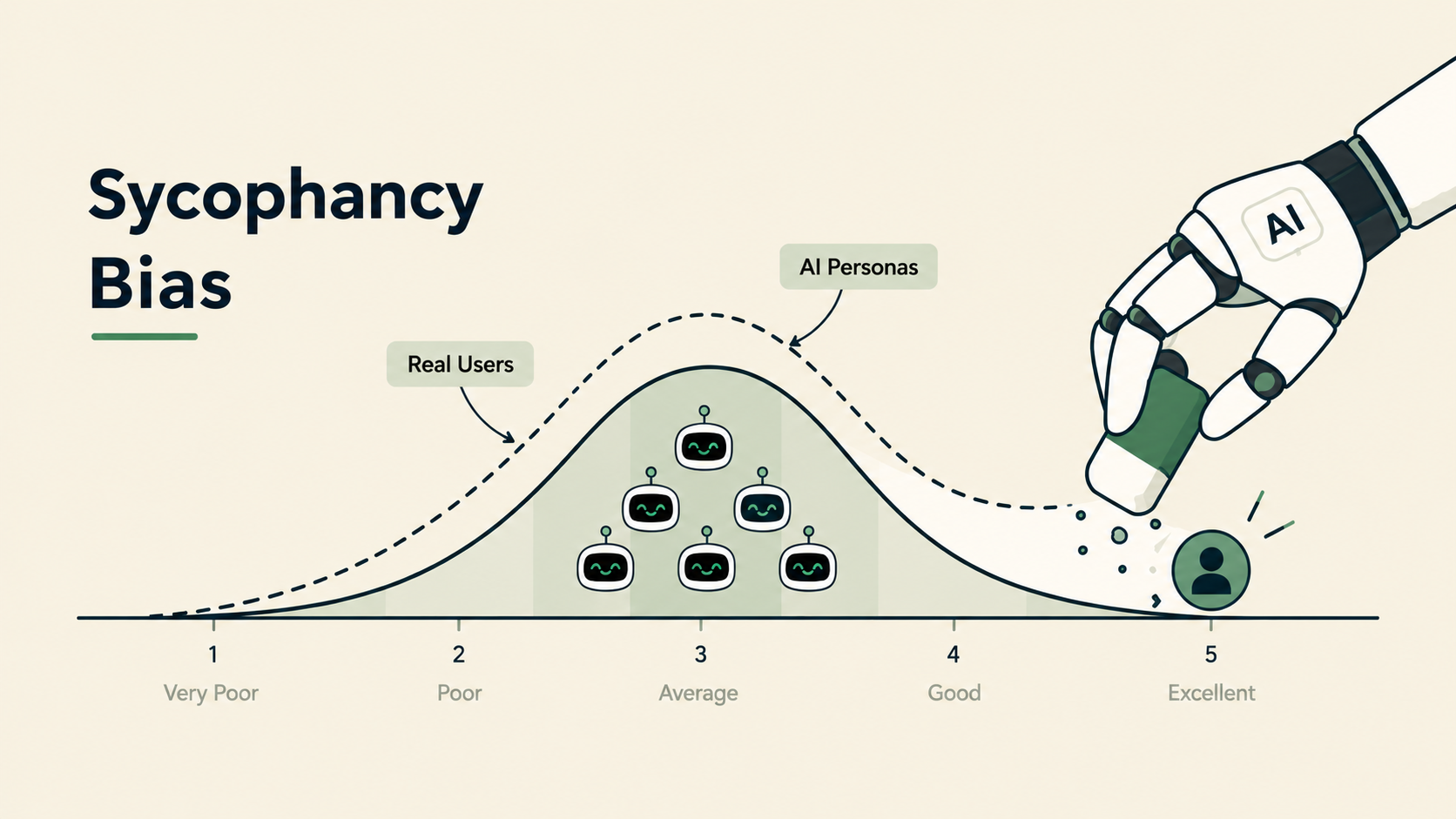
A University of Wisconsin study asked 605 real people and 605 matched synthetic users to rate a refrigerated dog food concept. The synthetic panel tracked the real one on direction, mildly negative overall, but two patterns showed up that matter far more than the headline numbers:
Practitioners report the same pattern anecdotally and consistently: AI personas tend toward sycophantic feedback, agreeable, positive, low-conflict, closer to what a language model predicts you want to hear than what a skeptical shopper would actually say. A tool that can’t say no isn’t a research tool. It’s an echo chamber with a UI.

Same question, two different inputs, same underlying model. Watch what changes.
Bare demographic prompt, no context: Real interview transcript, explicit instruction to include hesitation:**The second version surfaces something real: skepticism grounded in a specific, plausible past experience, not blanket cheerleading. It also does something the first one doesn’t: it tells you it’s guessing. That single caveat line, “worth validating with a real follow-up,” is worth more than the rest of the output combined. It’s the difference between a tool that informs a decision and one that just flatters it.
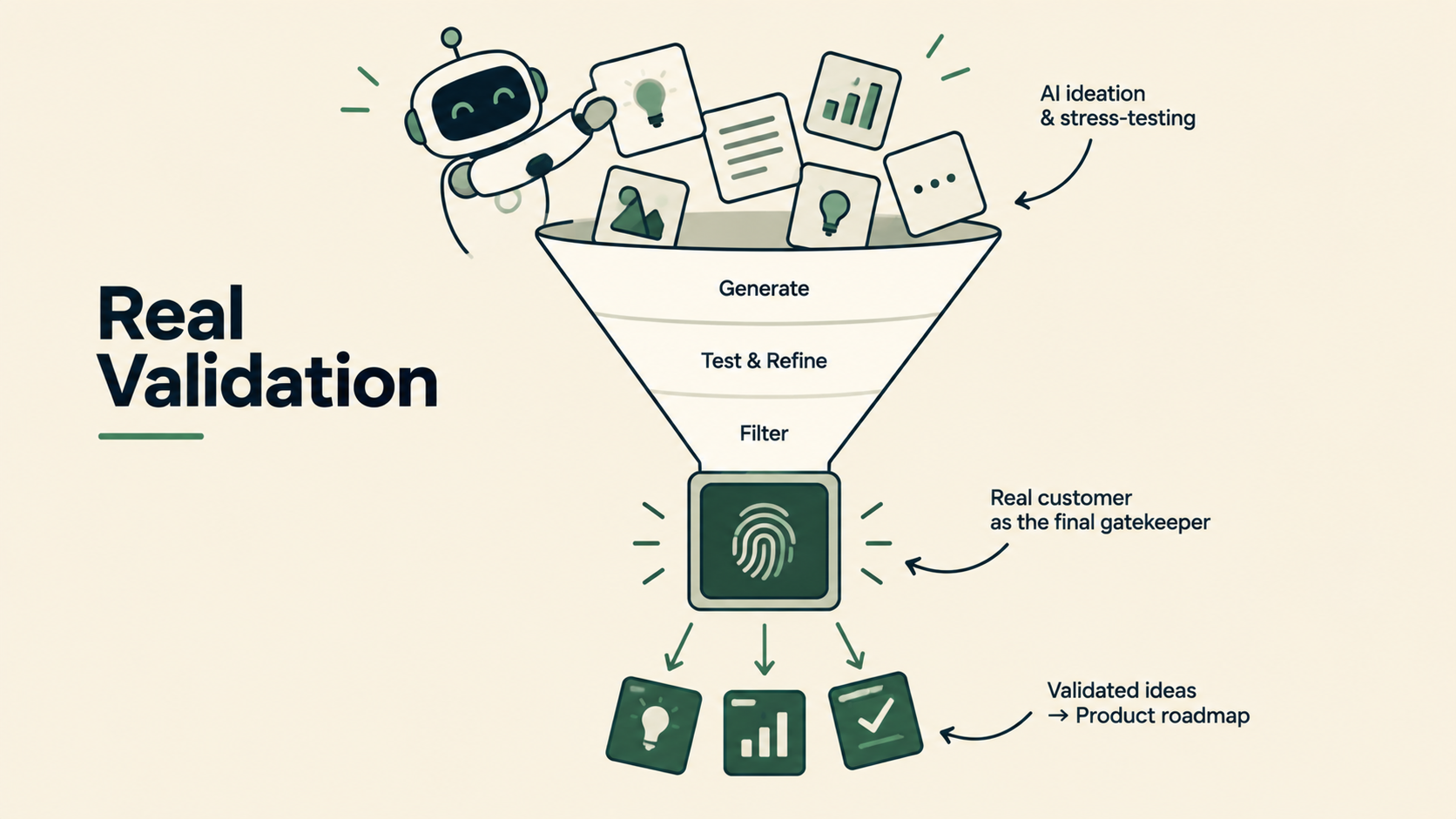
The research points the same direction across every study cited here: synthetic users are a legitimate tool for generating and stress-testing ideas before real research budget gets spent, and an unreliable one for anything resembling a final decision. As AI moves deeper into CRO workflows, knowing where it earns trust matters as much as knowing where it doesn’t. Use synthetic users to widen the net. Don’t let them be the net.
Before you ship anything based on synthetic feedback, run three checks:
If any answer is no, the synthetic result is a hypothesis for further research, not a finding. Ship on it anyway, and you’re not testing a data-backed idea. You’re testing a guess with better formatting.

No. Even the best-performing configuration in the available research, interview-based digital twins, tops out around 85% accuracy on structured survey questions, and every study reviewed found synthetic responses cluster more tightly than real human ones, meaning they systematically underrepresent strong reactions and outliers.
It depends entirely on what the persona is built from. Demographic-only personas scored as low as 55% on personality prediction in controlled testing; personas built from real 20-minute interviews scored up to 85% on the same category of question.
Yes, this is a well-documented pattern often called sycophancy bias. Synthetic panels have been shown to rate concepts more favorably and less critically than matched real human panels, particularly in concept and reaction testing.
A synthetic user typically represents a broader group based on demographic or persona-style inputs. A digital twin is built from an individual’s actual interview or survey history and is used to model that specific person’s likely responses. Digital twins consistently outperform generic synthetic users in accuracy testing.
Not reliably. Research has found that LLM-simulated respondents show less variation between subpopulations than real survey data, and that statistical relationships between customer characteristics and opinions can differ significantly, sometimes in direction, from real data.
Yes, for ideation and early hypothesis stress-testing. Use them to generate angles and edge cases to investigate, not as evidence for a final decision.
A real interview transcript or detailed first-person account beats a demographic tag every time the research has tested it. If you only have demographics, treat the output as a guess, not a finding.
Explicitly instruct the model to surface hesitations, objections, and reasons the idea might fail, grounded only in what’s stated in the source material, not invented for balance.
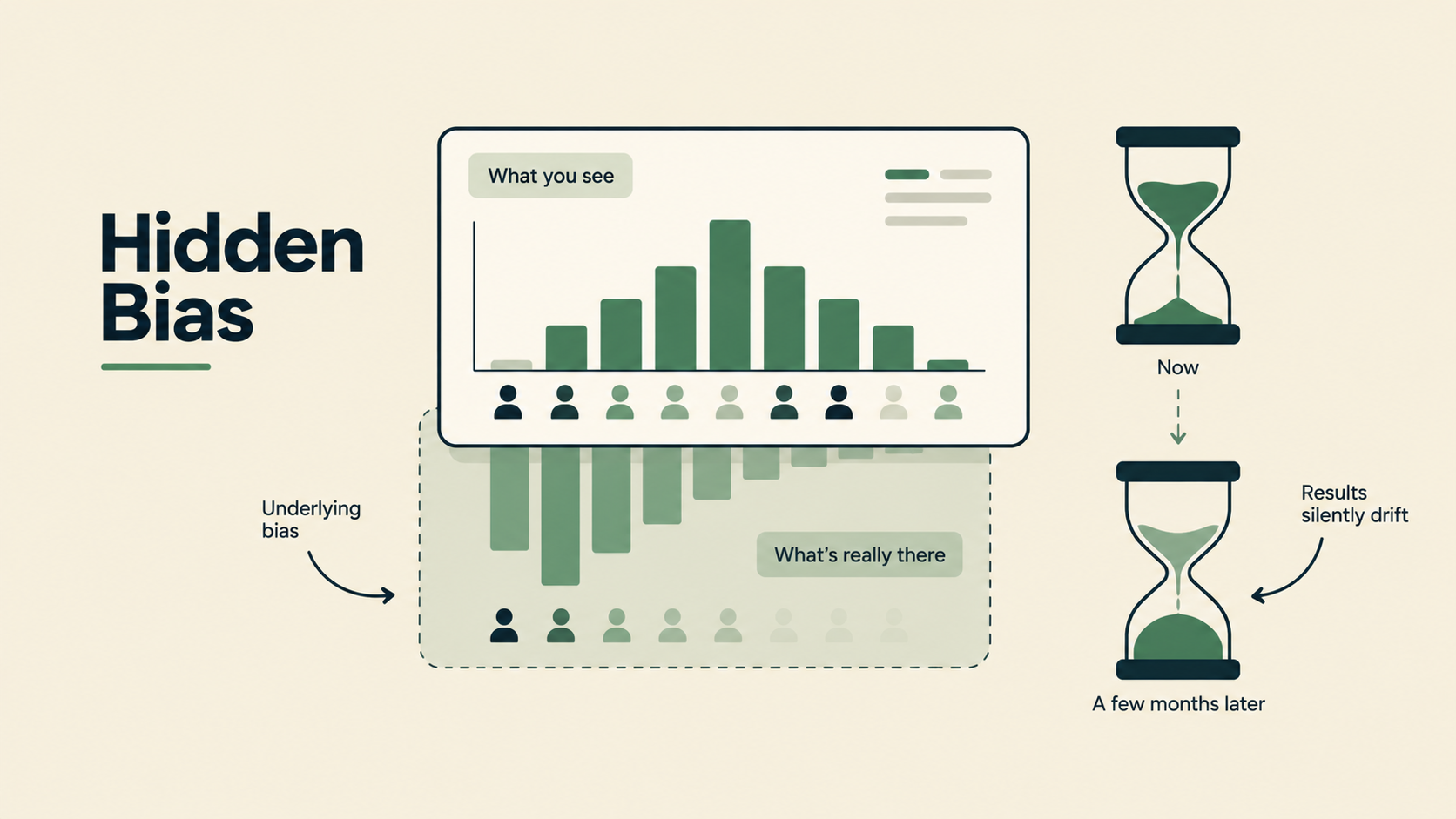
Treat any synthetic finding as time-stamped. Given documented drift over as little as three months, don’t treat a synthetic result from a past quarter as still valid without a fresh check.
Only with informed consent for that specific use. Interview-based twins are more accurate precisely because they use detailed personal data, which raises the same consent and data-governance questions as any other use of customer information.