AI Agent vs Chatbot: What’s the Difference for Your Store?

We are living in a time where people consume content quickly. What actually attracts the attention of people and produces the best outcome is visual content. Today’s consumers don’t just buy things as they please; instead, they peruse the details of the product before making any decision.
A high-quality image or video content provides an excellent product presentation for buyers to view online. As per the survey by Venngage in 2022, over 63% of organizations believe that 60% of businesses will extensively rely on visual content for eCommerce optimization marketing.
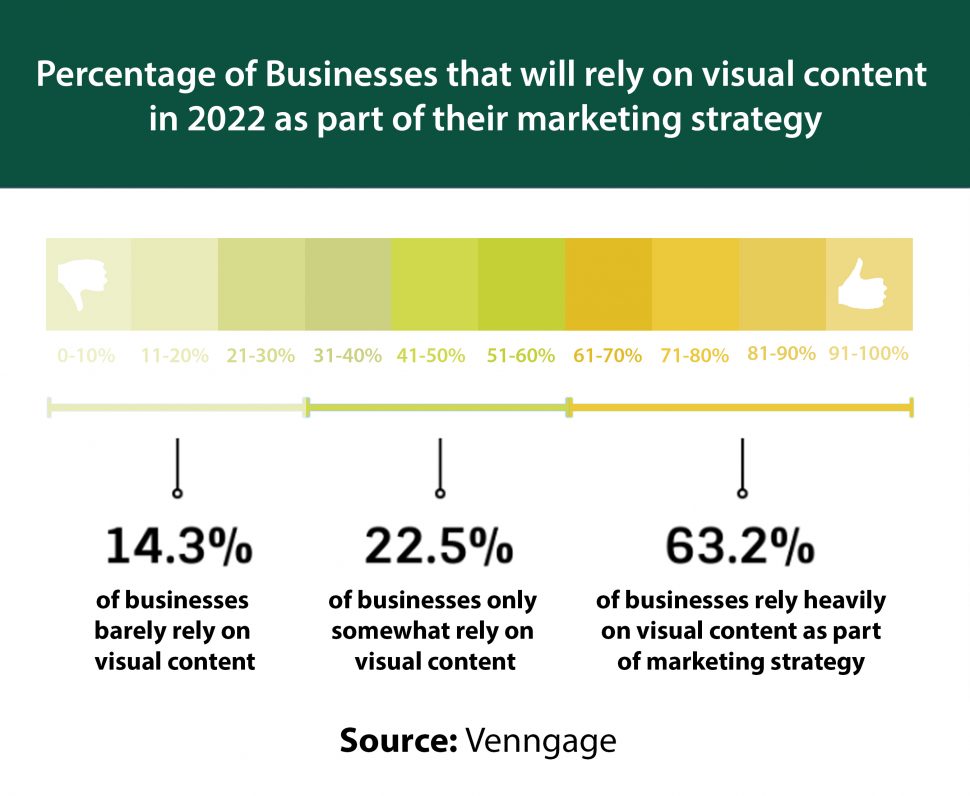
Looking at the above data there’s no doubt that visual content will become an important aspect of eCommerce conversion. Businesses will utilize visual content to show off their products, strengthen branding, and help users in decision-making.
Businesses nowadays provide customers an online version of their in-store experience by leveraging visual content. Visual content attracts customers and makes them aware about the products, engage with them, and increase purchase value. You can improve your online conversion rates and consumer engagement by implementing unique visual experiences.
When a business owner sells something, it is obvious that they want to show the product in all its glory—and if they’re not using visual content to do that, then they are definitely missing out on a huge opportunity.
A customer’s attention is often divided between multiple tasks at once. Thus having attractive images that help them make sense of their purchase decision will make them feel more confident about their purchase. It also helps you build trust with your customers. For example, if they see how easily you make something, or how quickly you ship something out, they’re more likely to trust you and buy from you again. And when your customers trust you, they’ll come back for more.
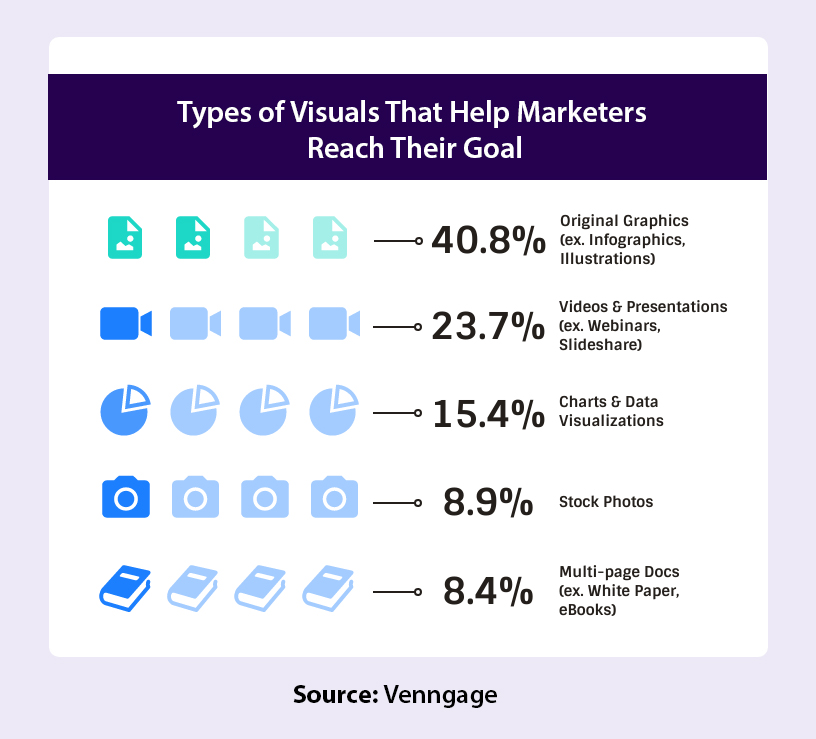
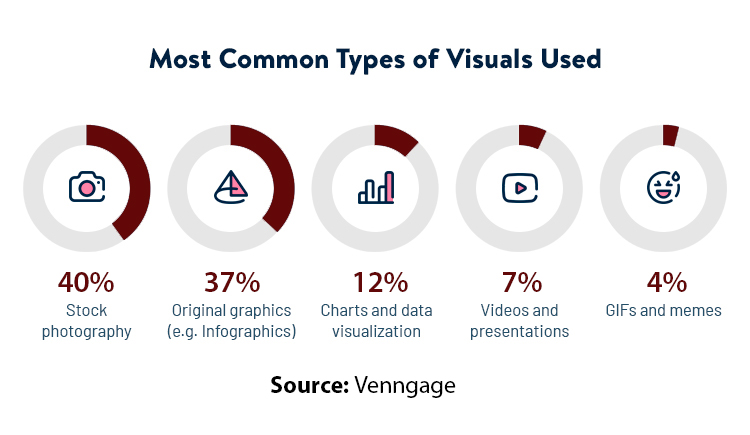
While displaying visual content infographics and illustrations are used frequently, as per the marketers survey by Venngage.
Let’s have a look at the importance of visual content ad how it is changing the eCommerce industry.
When was the last time you read a piece of content that was mostly text-based? How difficult is it for you to read the post, and how much do you remember?
According to Nielsen Norman Group, during a visit on the website, users only have time to read up to 28% of the text on an average Web page, in which 20% is more likely.
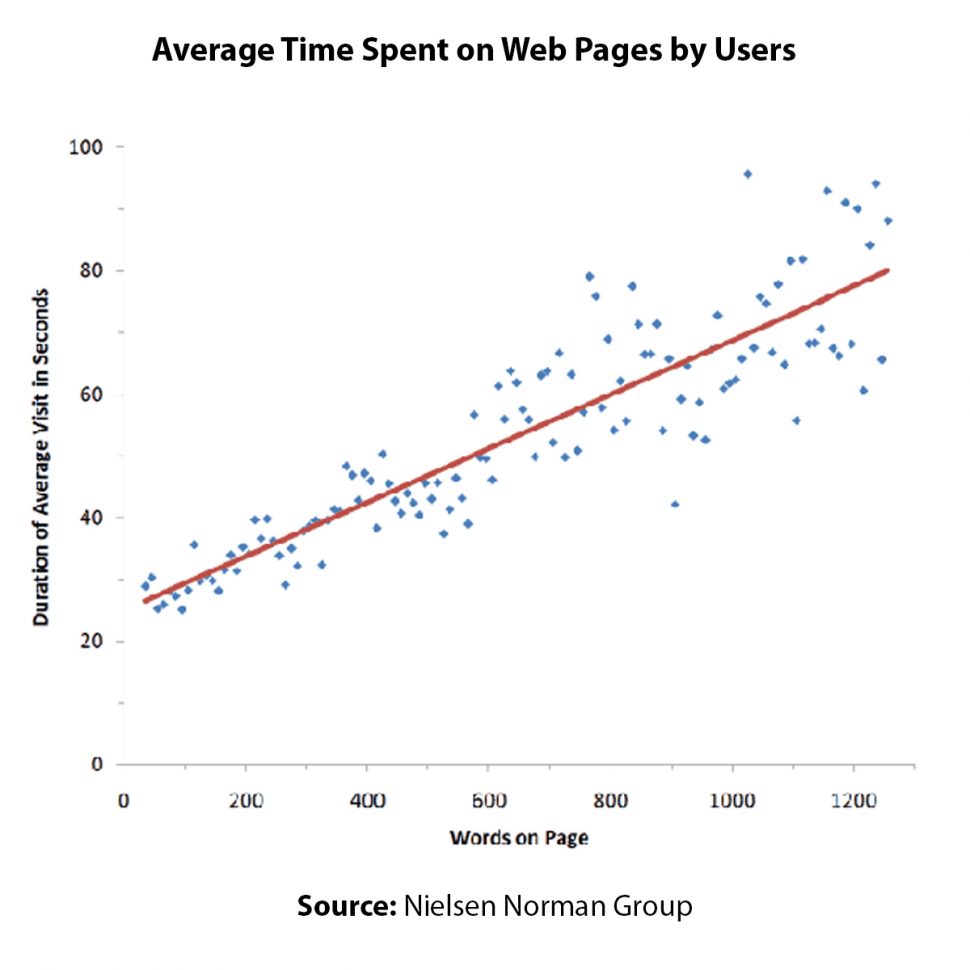
The above graph depicts the actual amount of time visitors spend on web pages of different word counts. You can clearly see that the average visit between 80 to 100 seconds read 1200 words on a page. Also the content is not heavy or overloaded with text. Meaning there are images and infographs included.
According to some studies, people remember 10% of what they hear, 20% of what they read, and a whopping 80% of what they see. This indicates how visual content is an easy way to communicate message with customers.
However, there’s one thing that people need to take into consideration when they’re creating visual content, i.e. it needs to be attractive!
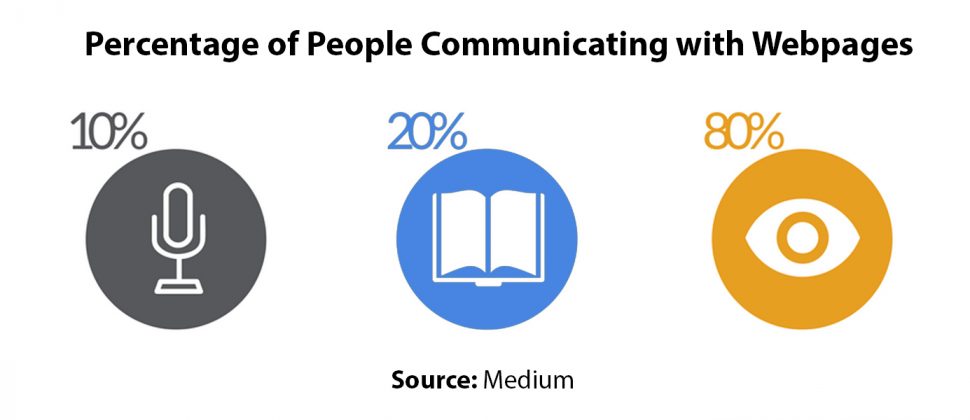
The above information indicates how people are influenced by visual aspects in both cognitive and emotional aspects. Cognitively, people learn how to use specific objects and understand the significance of a specific information. Thanks to visuals, that has enhanced knowledge and communication abilities. People benefit from visual content since it makes information easier for them to perceive and comprehend.
Emotionally charged visual information enhances understanding by establishing a connection between a person and an object.
For many years, businesses have relied on written content to promote their products and services. But as the world has evolved, so have the marketing techniques. Today, visual content is becoming more and more popular in advertising campaigns. Marketers are turning to video ads, infographics, GIFs, and other types of visuals to grab the attention of potential customers.
Product awareness is another benefit that is boosted by visual content. This is because people are more likely to remember what they see than reading. Visual content can be in the form of infographics, videos, and images.
As per some reports, visual content is processed 60,000 times faster than texts, while words are processed and recognized twice as slowly.
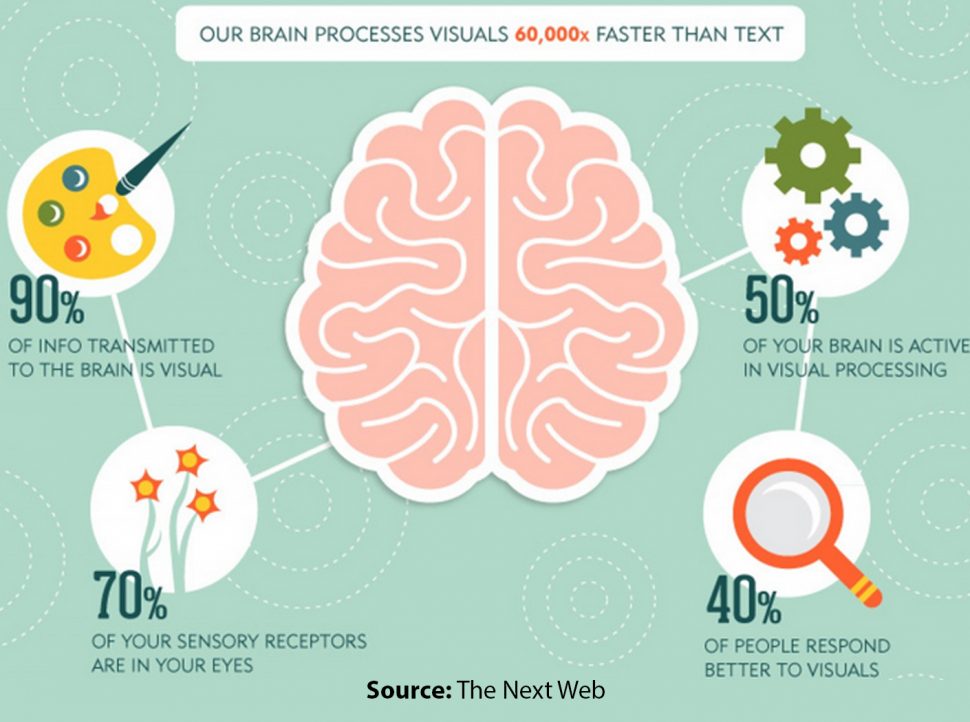
The use of visual content commerce for marketing purposes has recently been on the rise as more companies have realized its benefits. Visual content markets product in a great way because it reduces the amount of text needed and increases brand recall.
According to studies, people tend to recall about 20% of what they read; while 37% of people learn best visually. This means that individuals are more likely to understand visual information, such as photos or infographics, than word or audio.
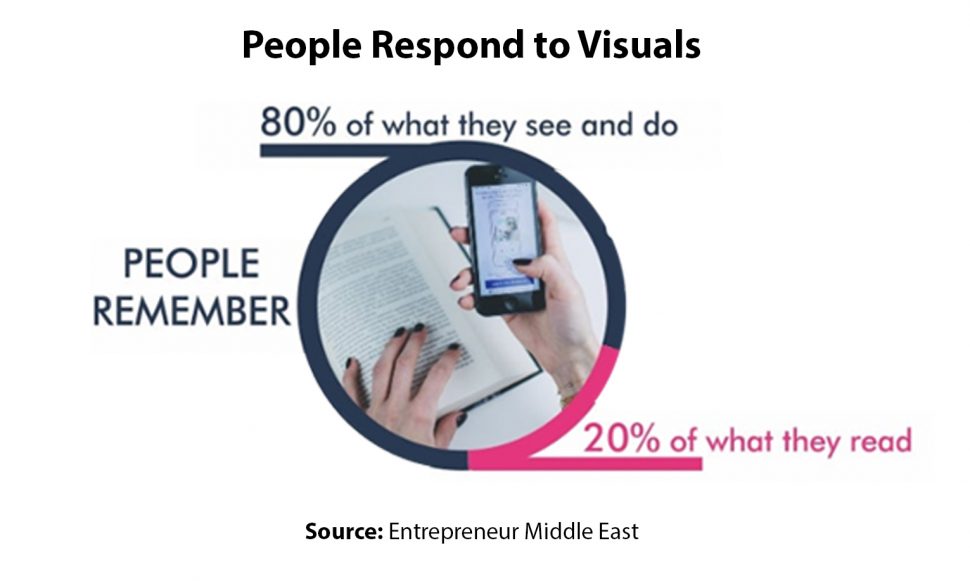
Visuals show the products in use, benefits of the product, and used as a marketing tool. Visuals are not just eye-catching but they also provide context to the reader. They allow people to explore products before buying them. This is an advantage for brands because it increases their chances of getting more sales.
Visual content is important because it helps to communicate complex ideas in an engaging way that is easy to understand. While creating visual content, you can use images, video, and other media to help your audience connect with what you’re trying to say. This makes it easier for them to understand the benefits of using your product or service.
Visual content is also narrates stories that illustrate how the business works or what it stands for.
To make it simple for visitors to browse through the content and absorb brand messages; one should break up big blocks of text using visuals like images, videos, infographs, and so on. For example, according to Hubspot study, Facebook images generate 53% higher engagement among the audience than the average post.
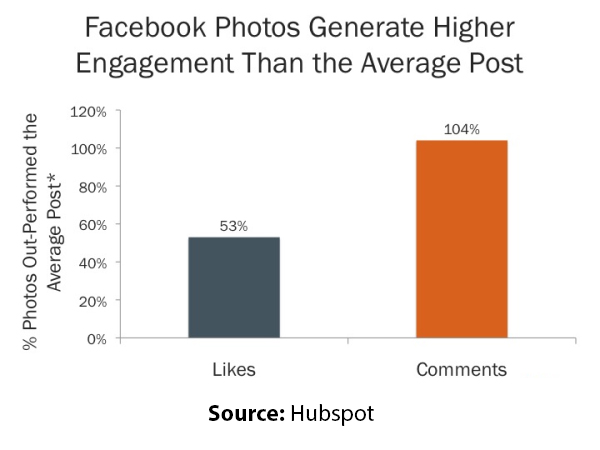
Social media is a powerful tool for businesses, especially when it comes to visual content. Visuals can be used in many ways to provide evidence of your company’s work and services.
Social media, especially visual platforms like Instagram, Facebook, and Twitter are the best way for businesses to provide visual evidence of their social interactions with customers.
Given that the majority of customers are likely to contact you through one of the social media platforms, having a social media presence is essential for your company. To be successful with marketing, you will need your social media presence. Social media users don’t have time for long words. And if your postings don’t include eye-catching graphics that will immediately grab their attention, they will scroll past them.
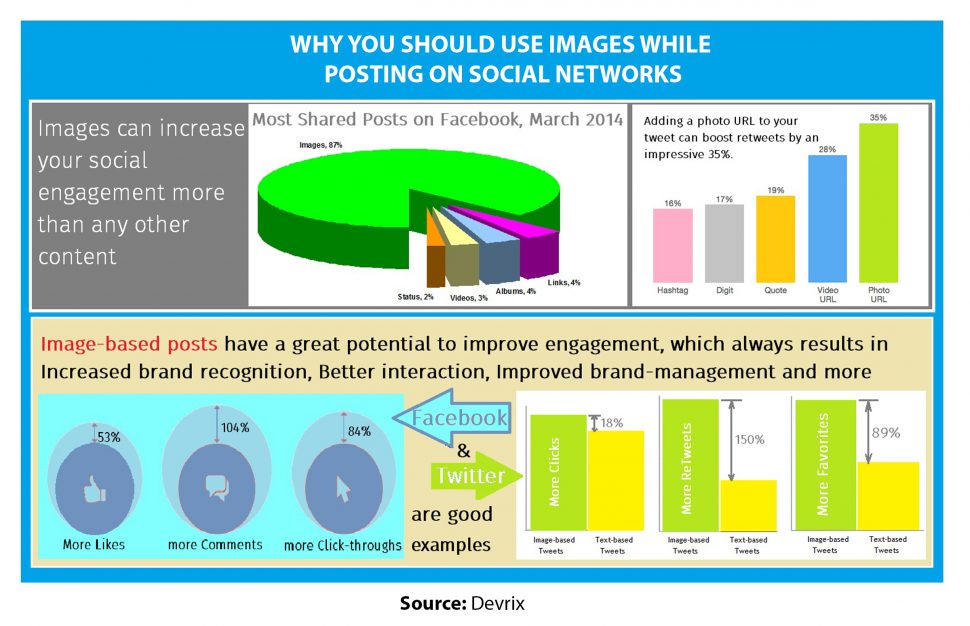
eCommerce optimization content helps you show customers that you’re actively listening to them and responding to their needs. Let’s have a look at how eCommerce visuals helps the customer and the brand:
Technology has changed the way we view visuals. In the past, visuals were used to communicate a message, but now they are being used to create a message. One of the ways in which technology has changed the way we view visuals is through the use of video content.
Video content commerce is becoming more popular on social media platforms. It’s because of this that businesses are becoming aware of its potential to increase eCommerce conversion. Video content can be used as a way of communicating the brand’s values and stories in a way that makes people want to see more from you.
Emerging technologies like mixed reality, augmented reality, and virtual reality are providing a complete new experience that is progressively catching the interest of both customers and marketers. Consumer engagement with brands and product interaction has never been easier thanks to mixed and augmented reality.
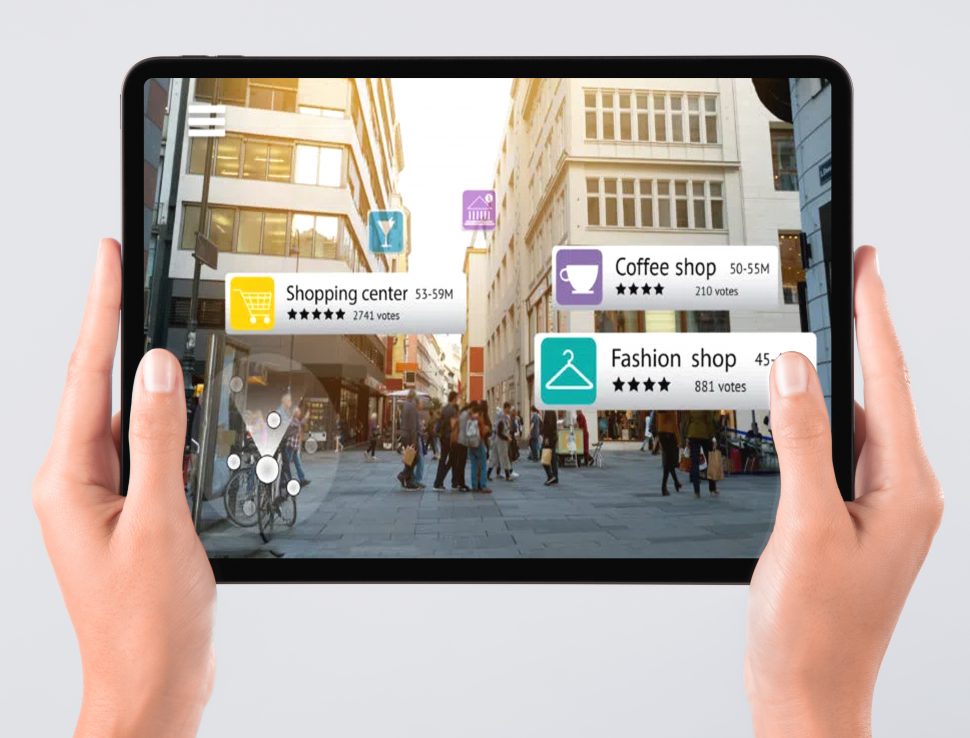
Videos with AI are a great method for illustrating common issues and showcasing the answers that your product can provide. Even if there are more affordable options for visual content, a strong video gives your campaign more credibility by proving that you’re willing to go above and beyond for quality.
For example, Visual-AI monitors the designs and goods published to the platform in order to avert potential legal action or reputational damage. The API are trained to recognize specific brands, terms thought to be racist, misogynist, homophobic, etc. They are also trained to identify objects that are legally controlled using a variety of computer vision technologies.
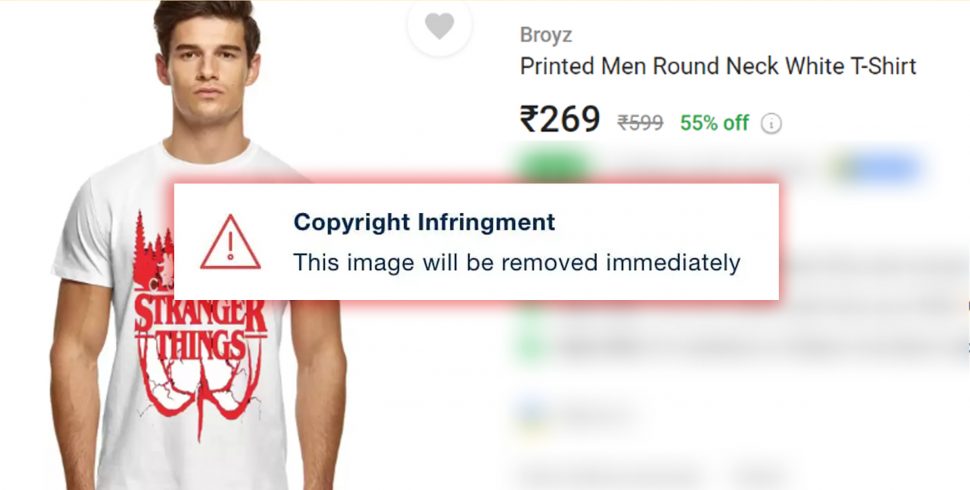
According to research, adding a video to a landing page increases eCommerce conversions by 86%. You should put in the time and effort necessary to ensure that your visual identity accurately and favorably represents your business.
Visual components may help consumers make wise selections while also promoting your brand. Your brand’s entire experience may offer a favorable user experience to your audience, boosting the eCommerce conversion rate and fostering brand loyalty. By using visual cues, you may replicate the in-store experience for clients online. You can raise engagement, enhance the shopping experience, and reduce the difference between in-store and online purchases. You may use it to offer your brand a unique look and feel.
While many people think that visual content is just a way to make things look pretty, it actually plays a crucial role in boosting your website or ecommerce site engagement.
Higher Engagement Rates are one of the most significant benefits of visual content. eCommerce user experience requires engagement at all times. People spend more time on pages with pictures because they are more fascinating than textual content. Videos may compel users to explore more of your website, lengthening their stay on it on average. Videos generate upto 80% engagement.
When you use visual content on your website, you’re making it easier for people to see what the company or product does and why they should trust you. This means that when someone enters your site, they have a better understanding of what to expect from you and how to proceed with their purchasing decision.
Studies have shown that when people see content that’s visually engaging, they’re more likely to take action. This happens because visuals help us understand what the message is about, and how it relates to our lives. In addition, visual is easier for people to digest than text-based content. This makes it easier for visitors to figure out what you’re trying to say and what they should do next, as they scroll through your webpage or ecommerce site.
Visuals also help improve your SEO rankings by attracting more clicks from search engines. Google loves seeing images on pages, which means that they consider them more authoritative and relevant than text-based content.
When consumers are at the top of the sales funnel in the realm of e-commerce, the majority of customers are not loyal to a particular brand. In fact, brand names are removed from 78% of customer searches on Amazon, as per the research by Marketplace Pulse. The final buying decisions are significantly influenced by online interactions.
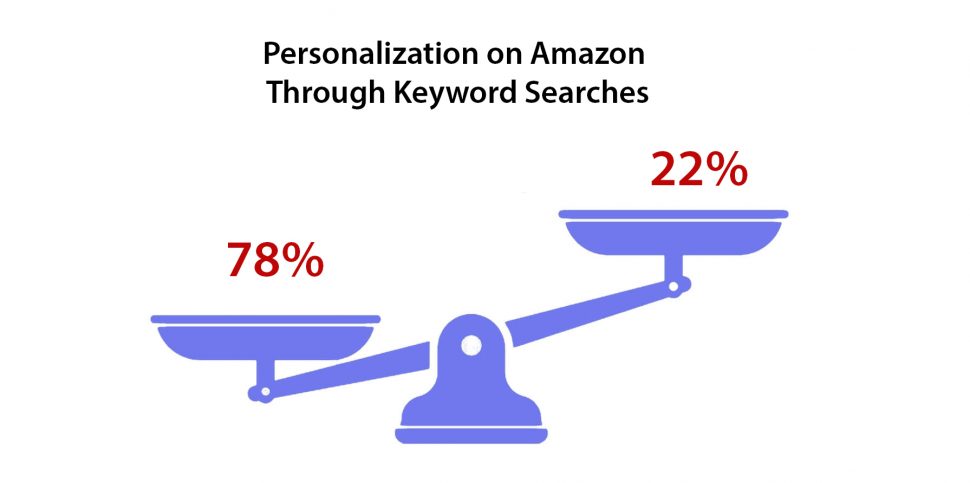
However, customers find themselves inundated with options and choices while making purchases. When customers only see generic product images from one particular position against a white background, the choices become even more limited. But adding product images to personalized content provides a solution to it.
We are aware that consumers do not make purchases based on information about the goods but rather on emotional responses. Contextual images may bring back memories, motivate hope for the future, and improve people’s existing lifestyles. Customers also want to feel appreciated!
According to Epsilon research, 80% of users will make a purchase from a website if they believe the information speaks to their particular interests.
According to another report, 74% of users get irritated when the content is not tailored. The days of marketing that used the same image for all locations, demographics, and personalities are thankfully over. An authentic visual identity that is suited to customers’ likes and preferences is taking the place of this strategy.
Additionally, since the typical customer views hundreds of images each day, it is more important than ever to capture their attention. Marketers have a limited amount of time to not only capture attention but also create relevance and stand out.
In today’s cutthroat market, creating content that is interesting, customized, and memorable is essential. It is a game of efficiency to provide relevant graphics that support conversions while also growing to meet an ever-increasing quantity of visuals generated. Less time, money, and resource wastage results from increased productivity.
Your brand can have a boost via visual elements, which can also assist consumers in making smart purchases.
Visuals can provide a positive user experience, increasing the eCommerce conversion rate and strengthening brand loyalty. You may provide customers with the in-store experience online by leveraging visual cues. You can improve shopping experiences, increase conversion rate and engagement, and close the retail and online buying gap. It allows you to give your brand a distinctive feel and appearance.
Building a positive visual identity is crucial. If you want to set your company apart from the competition in an era where so many firms are competing for attention both online and offline. Visitors can more easily develop connections with your brand due to visual communication that links them to your brand message.
Visual elements raises the worth of what your organization has to offer, which increases the number of individuals who want to be affiliated with you. One way to increase sales is to demonstrate to potential customers that utilizing your product or service and enjoying it themselves is possible. Always remember, first impression counts in business. Therefore, you need to look at the visual appearance part for conversion rate in eCommerce if you don’t want to lose out on sales.