SAADAA × OPTIPHOENIX: A SIZE SELECTION REDESIGN DROVE A 20% CONVERSION RATE UPLIFT
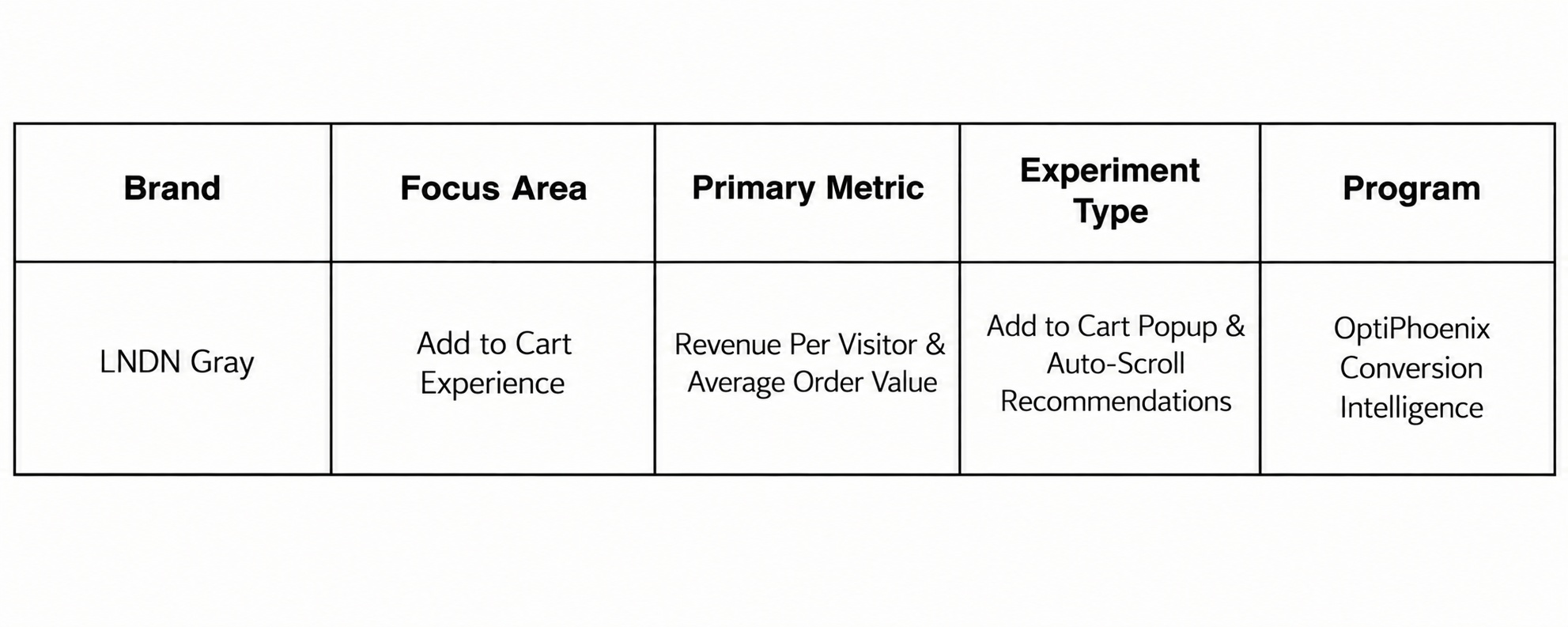
LNDN Gray is a modern art and home décor brand offering bold photography, fine art, and statement pieces for design-conscious consumers. The brand focuses on cinematic visuals and expressive themes. Its artwork spans photography, quotes, and contemporary collections, designed for those who see art as an expression of identity rather than simply decoration. On LNDN Gray’s Product Detail Page, adding an item to cart opened a mini-cart slider. This interrupted the shopping flow and could distract users from continuing their purchase journey. It kept them inside the cart interaction rather than encouraging further browsing.
OptiPhoenix partnered with LNDN Gray to test whether replacing that mini-cart slider with a more focused confirmation would reduce that interruption and improve revenue.
A mini-cart slider answers “what did I just add,” but it does not help a shopper decide what to add next. For a brand built around curating multiple pieces together, that is a missed moment.
Pulling a shopper into a cart interaction right after they added a product interrupts their momentum. That momentum is exactly what a brand like LNDN Gray depends on, the instinct to keep browsing and building out a collection. The gap sat between a shopper who had just shown purchase intent and an experience that redirected them toward the cart instead of toward more of what they were already interested in.
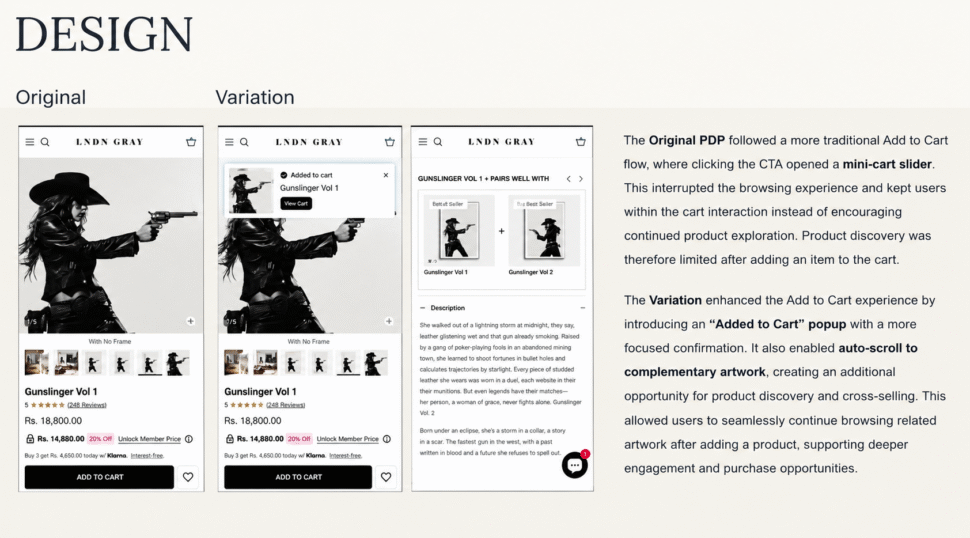
OptiPhoenix proposed replacing the mini-cart slider with an “Added to Cart” popup, paired with auto-scroll to complementary artwork recommendations. This was expected to create a smoother journey, improve product discovery, and encourage users to continue shopping and purchasing.
OptiPhoenix ran a controlled A/B test on LNDN Gray’s PDP.
Variant A (Control): The original Add to Cart flow. Clicking the CTA opened a mini-cart slider that interrupted browsing and limited product discovery after an item was added.
Variant B (Test): An “Added to Cart” popup with a more focused confirmation, paired with auto-scroll to complementary artwork. This let users continue browsing related pieces immediately after adding a product to their cart.
Metrics measured: Revenue Per Visitor (RPV) and Average Order Value (AOV).
Keeping shoppers in a browsing mindset, instead of redirecting them to the cart, moved more revenue per visit.
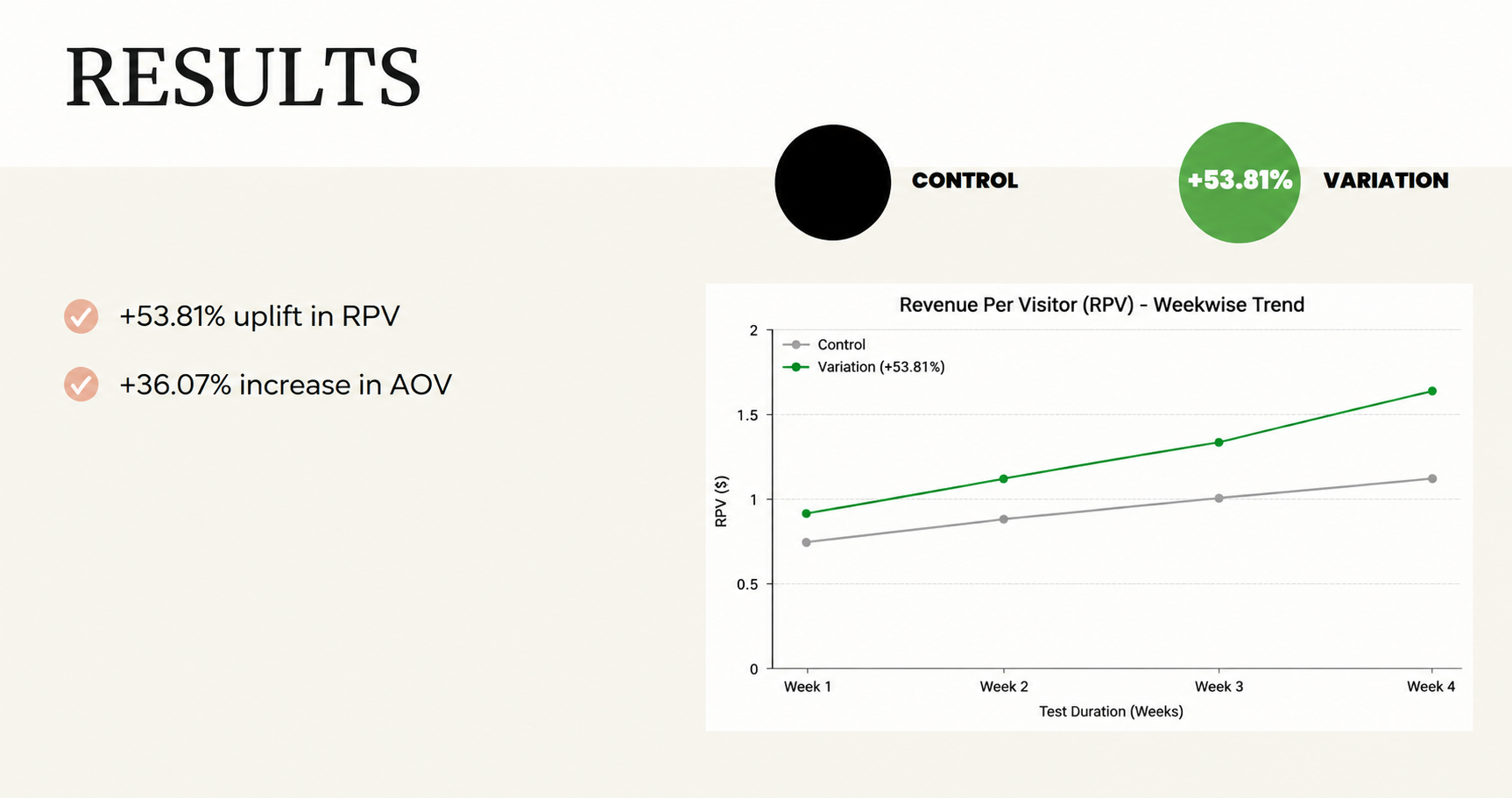
Revenue Per Visitor rose 53.81%. Average Order Value rose 36.07% over the same test.
Confirmation and interruption are not the same thing. Users still needed to know their item was added to the cart. But a mini-cart slider did more than confirm, it pulled them out of the browsing experience entirely. A focused popup confirmed the action without demanding a detour.
Momentum after Add to Cart is worth protecting, not redirecting. Auto-scrolling to complementary artwork kept shoppers moving in the direction they were already headed, toward more art, rather than toward the cart itself.
AOV and RPV moving together points to shoppers buying more, not just buying differently. A 36.07% AOV increase alongside a 53.81% RPV increase suggests shoppers were adding more to their orders. They were not simply completing similar purchases through a smoother path.
LNDN Gray’s shoppers were not losing interest after adding a piece to their cart, they were being pulled out of the browsing experience at the exact moment they were most likely to keep going. By replacing the mini-cart slider with a focused popup that kept the discovery moment alive, OptiPhoenix closed that gap, and shoppers kept building out their collection instead of stopping at one piece.