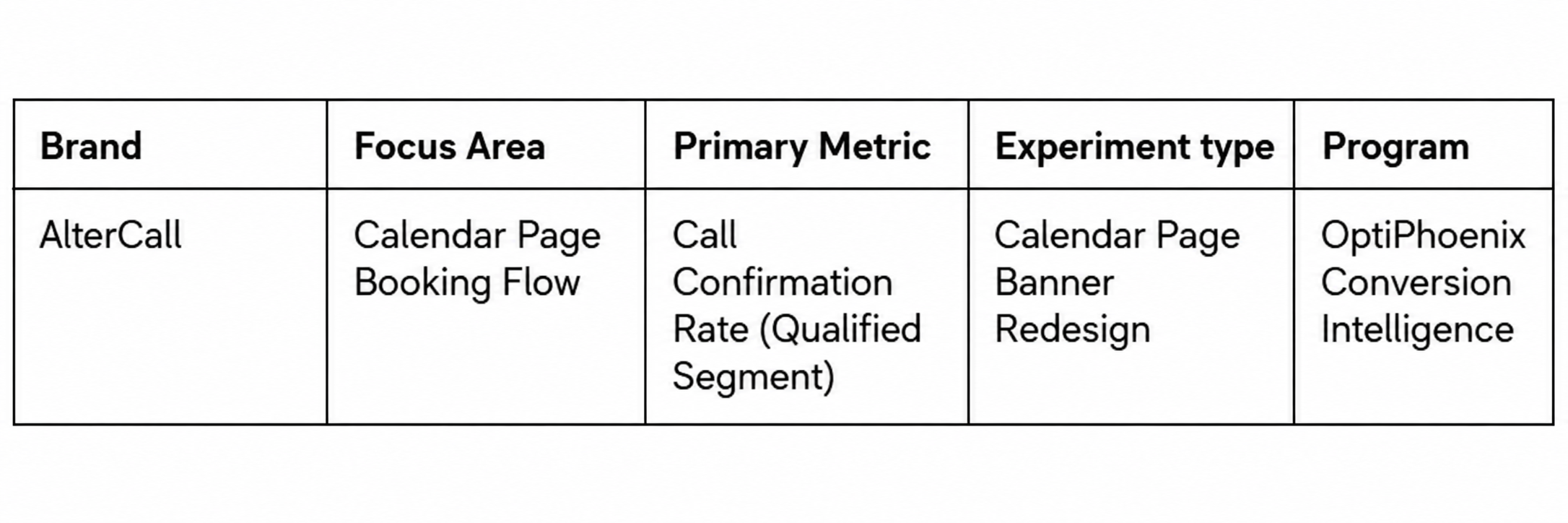
SAADAA × OPTIPHOENIX: A SIZE SELECTION REDESIGN DROVE A 20% CONVERSION RATE UPLIFT
Giva is an Indian jewellery brand offering silver, gold, and lab-grown diamond jewellery through a digital-first shopping experience. On Giva’s mobile listing page, applying a price filter meant opening the filter drawer first. That extra step added effort for shoppers browsing with a specific budget in mind, and may have slowed their path to a product worth buying.
OptiPhoenix partnered with Giva to test whether surfacing price filters directly on the page, without the extra step, would reduce that friction and improve conversion.
The filter existed. It just was not where a budget-conscious shopper needed it to be.
A shopper with a price range in mind should not have to open a drawer to check whether products in that range exist. Every extra tap between intent and result is a chance for that shopper to lose momentum or give up. The gap sat between a shopper who already knew their budget and a listing page that made them work to apply it.
OptiPhoenix proposed that surfacing predefined price filter buckets directly on the PLP, instead of behind the filter drawer, would let shoppers narrow products by budget with a single tap. This was expected to speed up product discovery and drive higher conversion.
OptiPhoenix ran a controlled A/B test on Giva’s mobile PLP over 13 days.
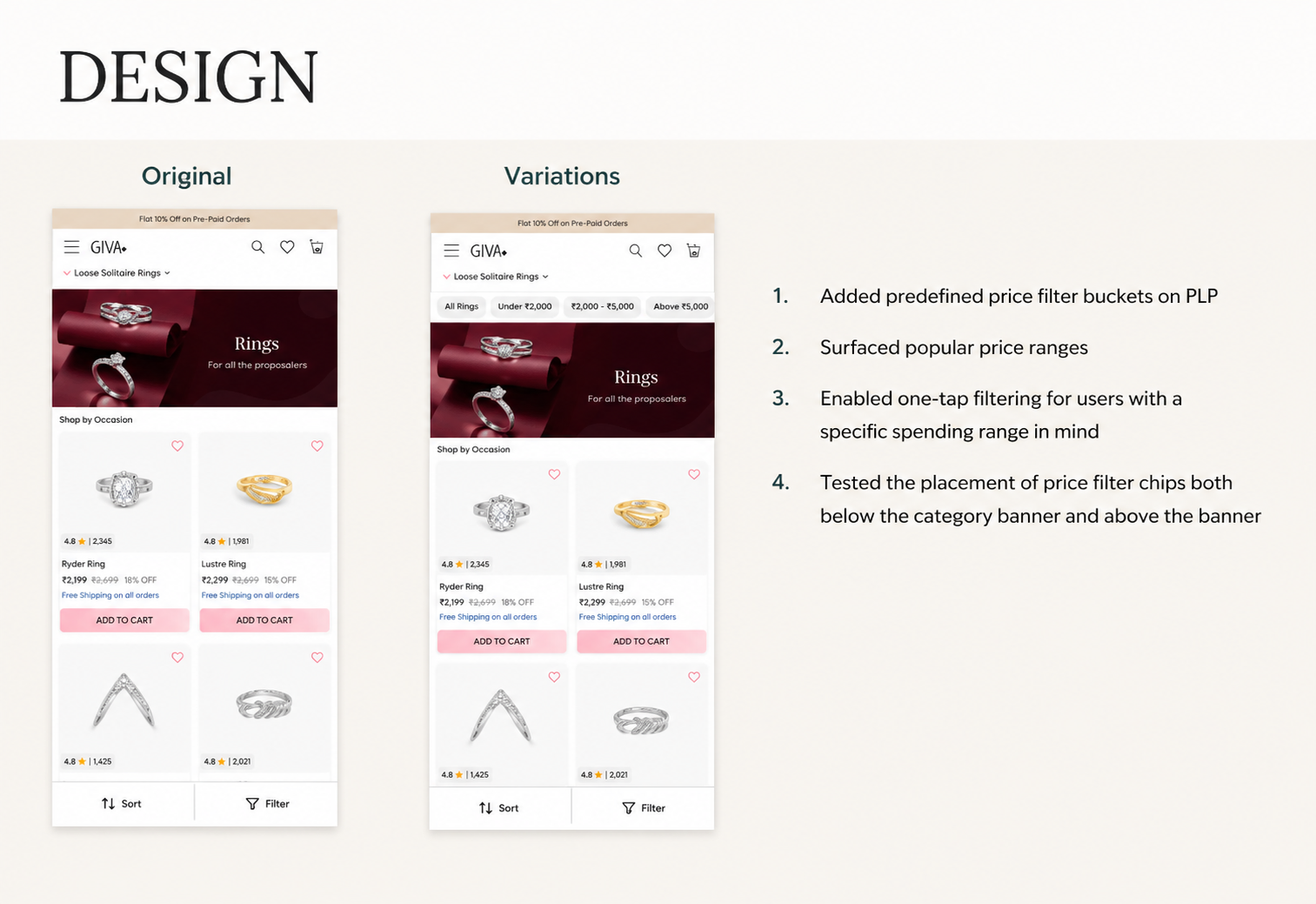
Variant A (Control): The original design, where price filtering required opening the filter drawer.
Variant B (Test): Predefined price filter buckets surfaced directly on the PLP, showing popular price ranges and enabling one-tap filtering. OptiPhoenix also tested chip placement, both below and above the category banner, to find the strongest position.
Metrics measured: Conversion Rate and Revenue Per Visitor (RPV).
Making price filtering a one-tap action moved more shoppers through to conversion.
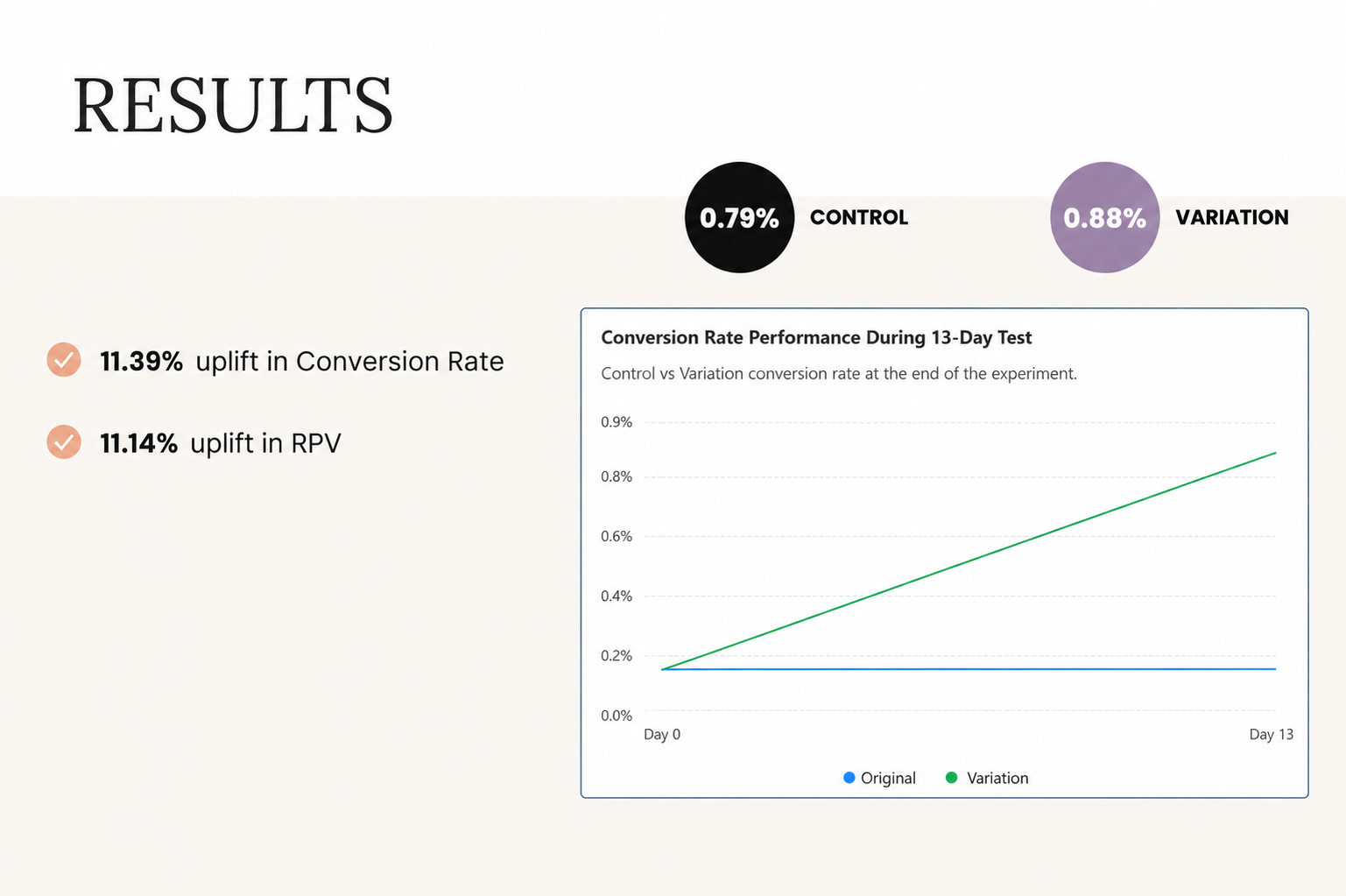
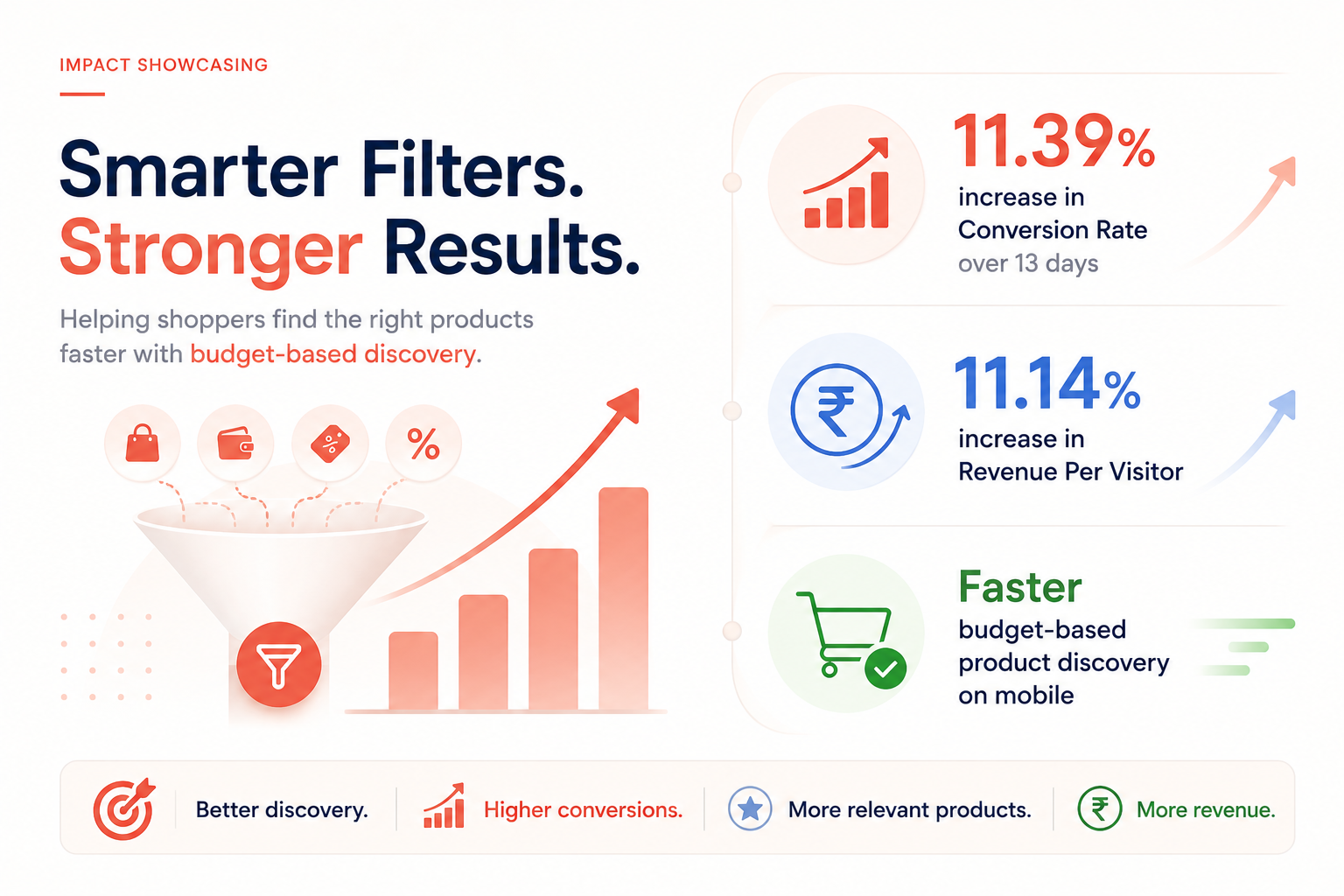
Conversion Rate rose from 0.79% to 0.88%, an 11.39% increase over the 13-day test. Revenue Per Visitor rose 11.14% over the same period.
Surfacing price filters directly on the PLP removed a step between intent and action, and the lift followed.
Hidden tools cost conversions even when they work. The filter drawer functioned correctly. It just was not visible or accessible enough for shoppers to bother using it, which is why surfacing the same functionality directly on the page changed behavior.
One tap beats two. Removing a single step, opening the drawer before filtering, was enough to move both Conversion Rate and RPV in the same direction over 13 days. Effort reduction, not new functionality, drove the result.
Placement testing matters even after the core idea is right. Testing chip placement above and below the category banner shows that where a solution sits on the page can matter as much as the solution itself.
Giva shoppers were not avoiding the price filter by choice. It was simply one step further away than it needed to be. By surfacing price buckets directly on the PLP, OptiPhoenix closed that gap, and the shoppers most likely to convert found what fit their budget faster.