SAADAA × OPTIPHOENIX: A SIZE SELECTION REDESIGN DROVE A 20% CONVERSION RATE UPLIFT
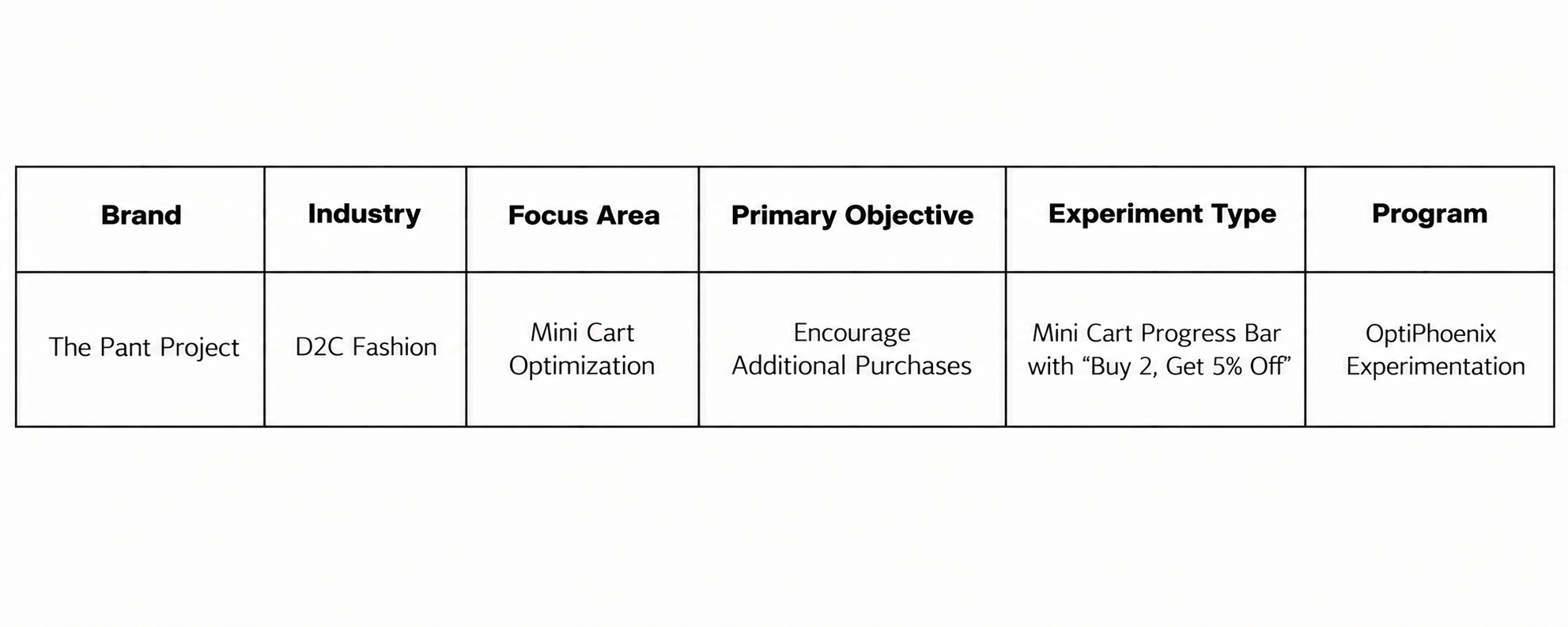
The Pant Project is a D2C fashion brand offering pants across different styles and preferences. Its mini cart was a good place to encourage shoppers to add more products. The “Buy 2, Get 5% Off” offer was available, but its benefit was not clear enough. Shoppers needed to see how close they were to qualifying. They also needed to know what they would gain by adding another eligible item.

OptiPhoenix explored whether making the offer more visible in the mini cart could encourage additional purchases.
A promotional offer can influence a purchase only when shoppers notice it. They also need to understand how to qualify.
The mini cart was a natural place to share this benefit, because shoppers were already reviewing their selected products there. A progress indicator, clear offer messaging, and relevant product recommendations could make the incentive easier to understand at that moment. So the gap sat between an offer that existed and a next step that was not obvious: adding another eligible product.
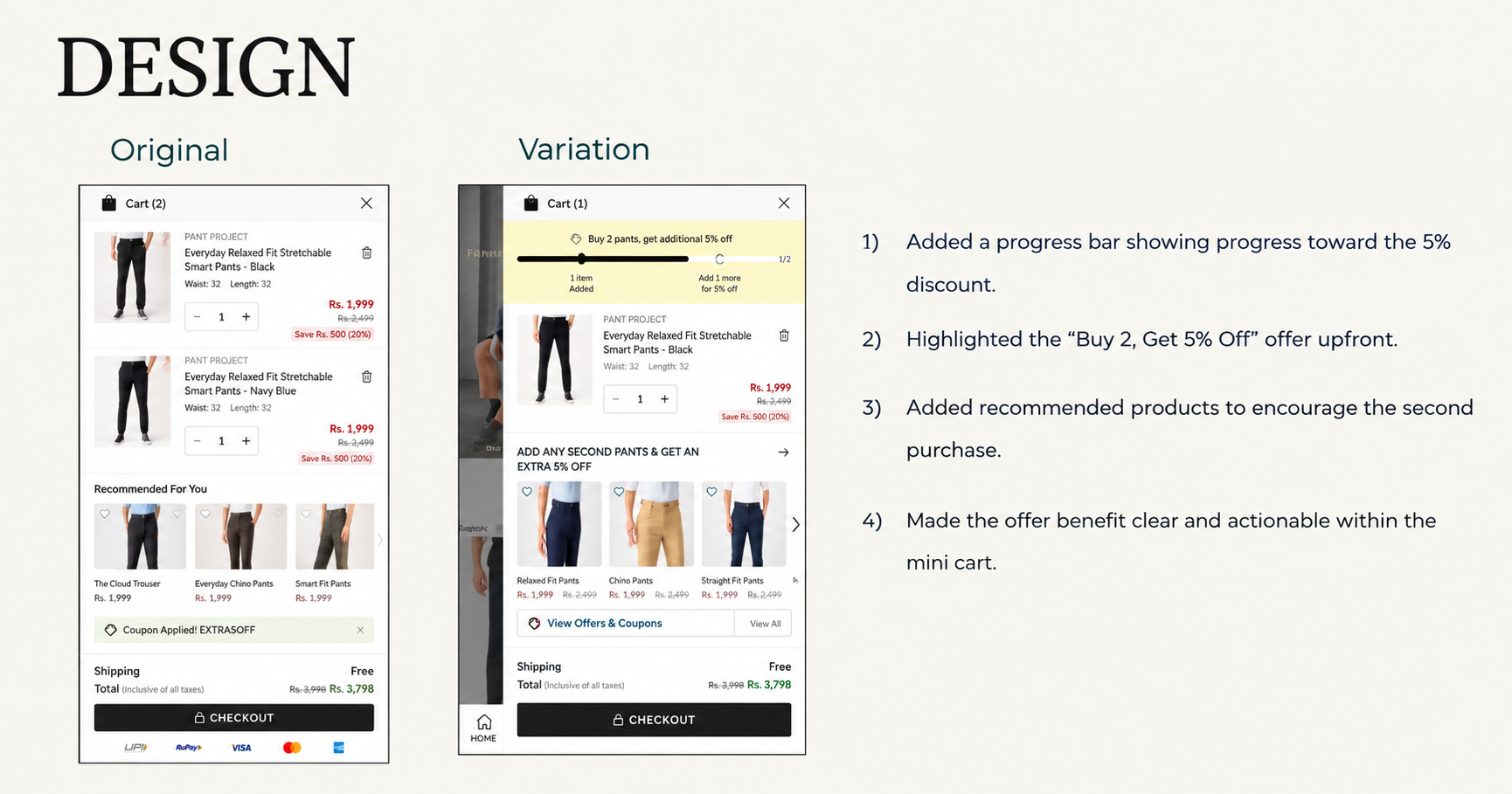
OptiPhoenix proposed adding a progress bar to highlight the “Buy 2, Get 5% Off” offer in the mini cart. The progress bar would make shoppers’ distance from the offer visible. Product recommendations would then give them options to explore. As a result, shoppers were expected to add more eligible products and increase purchases.

OptiPhoenix tested a revised mini cart designed to make the offer easier to understand and act on.
Variant A (Control): The original mini cart experience.
Variant B (Test): An updated mini cart with a progress bar showing progress toward the offer, prominent “Buy 2, Get 5% Off” messaging, and product recommendations to help shoppers discover additional items.
Metrics measured: ready-to-wear pants purchases, eligible-offer purchases, Item Revenue, and Items Purchased.
The goal was to make the incentive more visible. It was also to give shoppers a simple way to explore additional products.
Making the offer easier to see moved more shoppers to add eligible products.
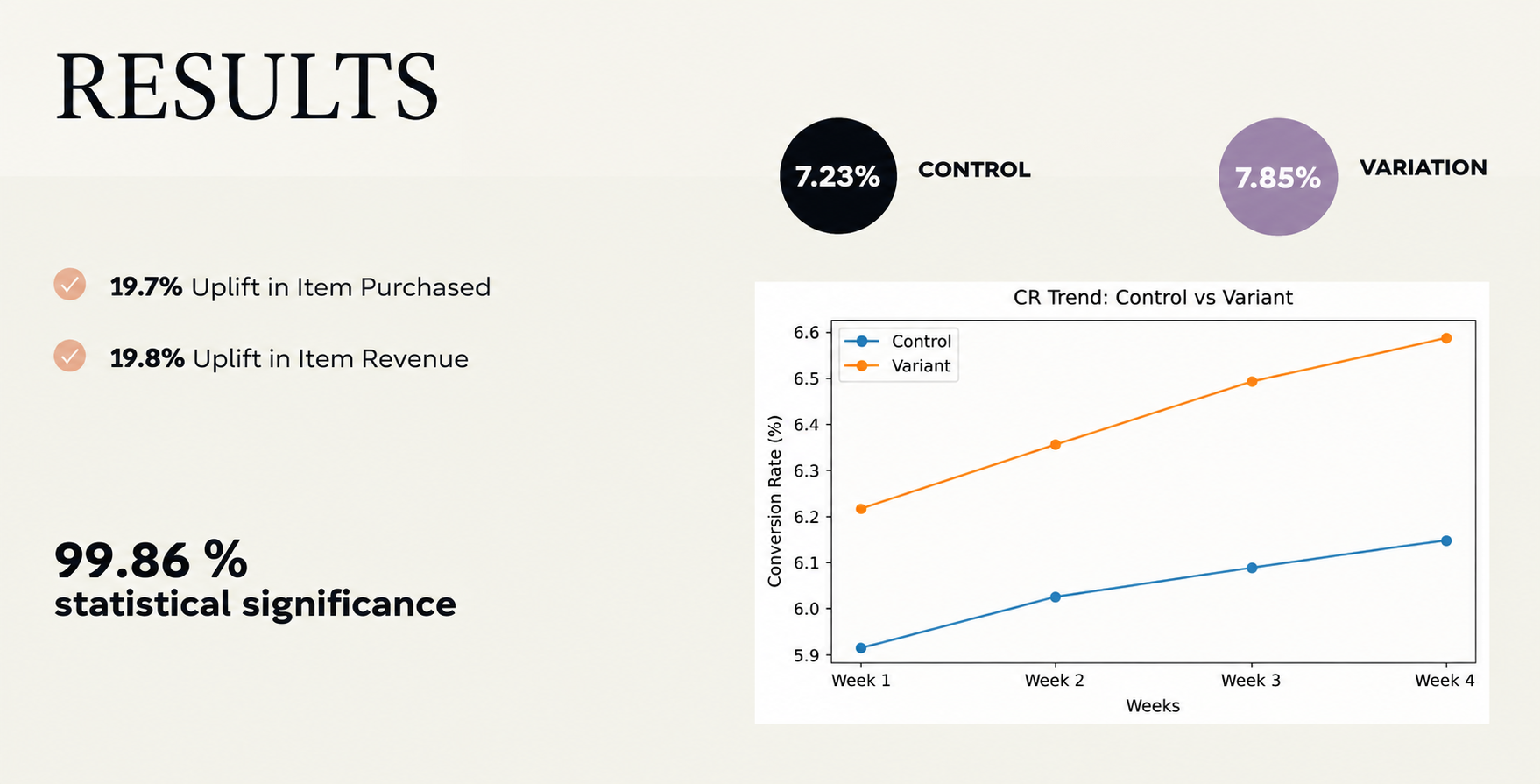
Ready-to-wear pants purchases rose 19.79%. Purchases associated with the offer rose 31.39%. The test reached 99.86% statistical significance.
The test also showed a 19.8% uplift in Item Revenue and a 19.7% uplift in Items Purchased. These are separate metrics from the two headline figures, so they should not be read as interchangeable.
Make promotional thresholds easier to understand. A progress bar helps shoppers see what they need to do to qualify. Without it, they have to work that out themselves.
Show incentives when shoppers can act on them. The mini cart is a relevant moment to share the benefit of adding another item, because shoppers are already weighing their selection.

Connect promotions with product discovery. A discount gives shoppers a reason to add an item. However, recommendations give them something to add. Together, the two make the offer actionable.
Keep the next step clear. Promotional messaging works best when shoppers understand the benefit and can see how to qualify. That clarity also removes unnecessary effort.
The opportunity was not just to display a discount. It was to make the value of that discount easier to understand while shoppers reviewed their cart.
By combining a progress bar, clear offer messaging, and product recommendations, OptiPhoenix made the offer more actionable. Ready-to-wear pants purchases rose 19.79%, and eligible-offer purchases rose 31.39%. Well-placed incentives can shape shopping behavior when shoppers can see exactly how to qualify.