SAADAA × OPTIPHOENIX: A SIZE SELECTION REDESIGN DROVE A 20% CONVERSION RATE UPLIFT
The Collective is India’s premier luxury fashion destination, offering a curated portfolio of global designer and premium lifestyle brands across apparel, footwear, accessories, and beauty categories, operated by Aditya Birla Fashion and Retail Limited (ABFRL). On The Collective’s mobile collection page, the Filter and Sort controls were positioned at the bottom of the screen. This made them less noticeable and required users to scroll before accessing key browsing tools, reducing the visibility of refinement options throughout product exploration.
OptiPhoenix partnered with The Collective to test whether repositioning and anchoring these controls would reduce that friction and improve conversion.
A shopper narrowing down a large catalogue needs to filter and sort more than once, not just at the start of a session. When those controls sit at the bottom of the screen, they are effectively unavailable unless a shopper scrolls back to find them each time.
That repeated effort discourages refinement altogether. A shopper who would happily adjust filters as they browse instead sticks with whatever results they started with, simply because reaching the controls again costs more than it should. The gap sat between shoppers who wanted to keep refining their search and controls that were only reachable at one point on the page.
OptiPhoenix proposed that moving the Filter and Sort controls to the top of the collection page, and making them sticky while scrolling, would keep product refinement accessible throughout the browsing journey. This was expected to improve product discovery and drive a higher conversion rate.
OptiPhoenix ran a controlled A/B test on The Collective’s mobile collection page.
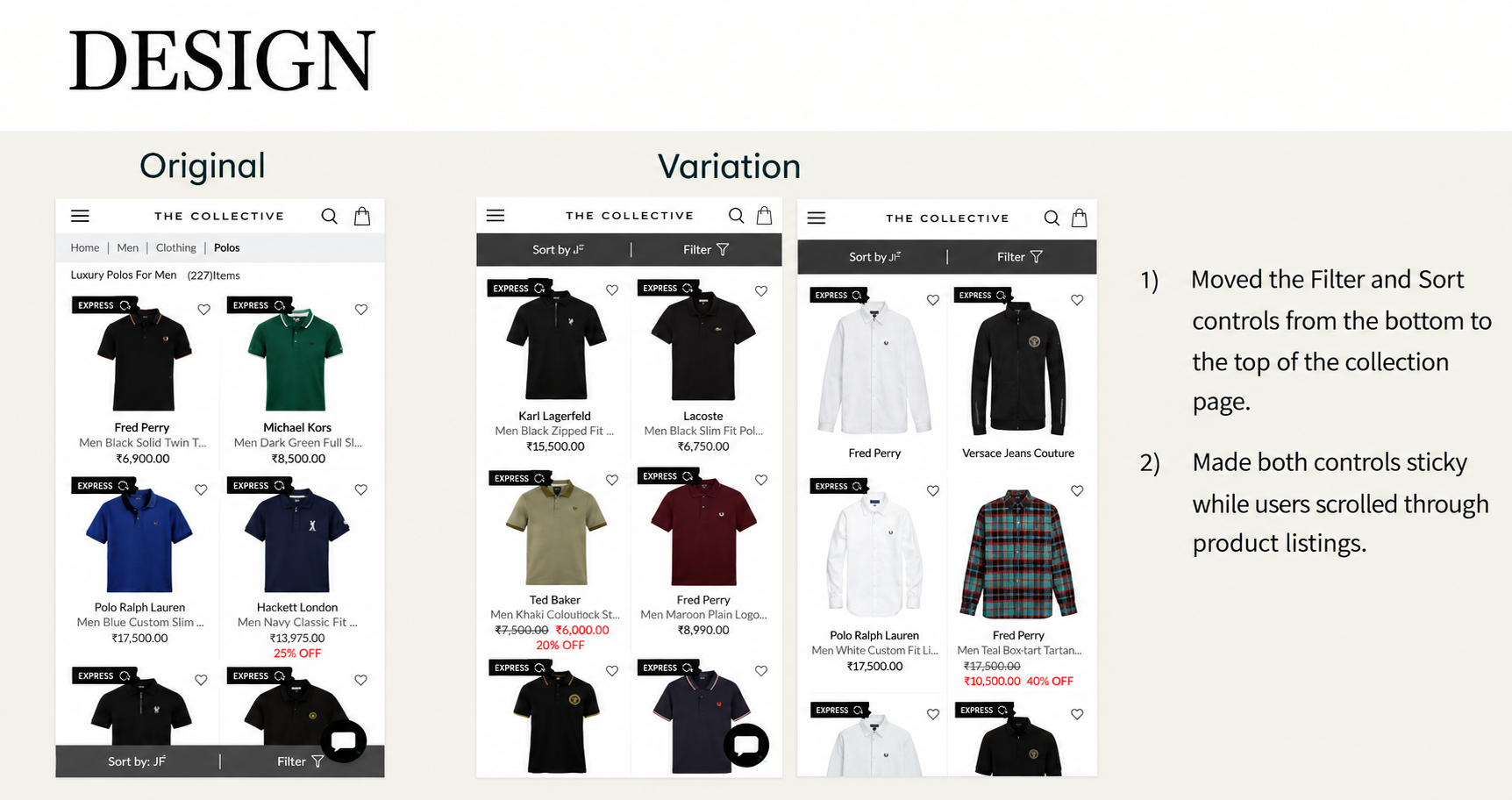
Variant A (Control): The original page, with Filter and Sort controls positioned at the bottom of the screen, requiring users to scroll to reach them.
Variant B (Test): Filter and Sort controls moved to the top of the page and made sticky, remaining accessible as users scrolled through product listings.
Metrics measured: Conversion Rate, Revenue, Filter interaction, and Sort interaction.
Keeping refinement tools within reach at all times moved more shoppers toward a purchase.
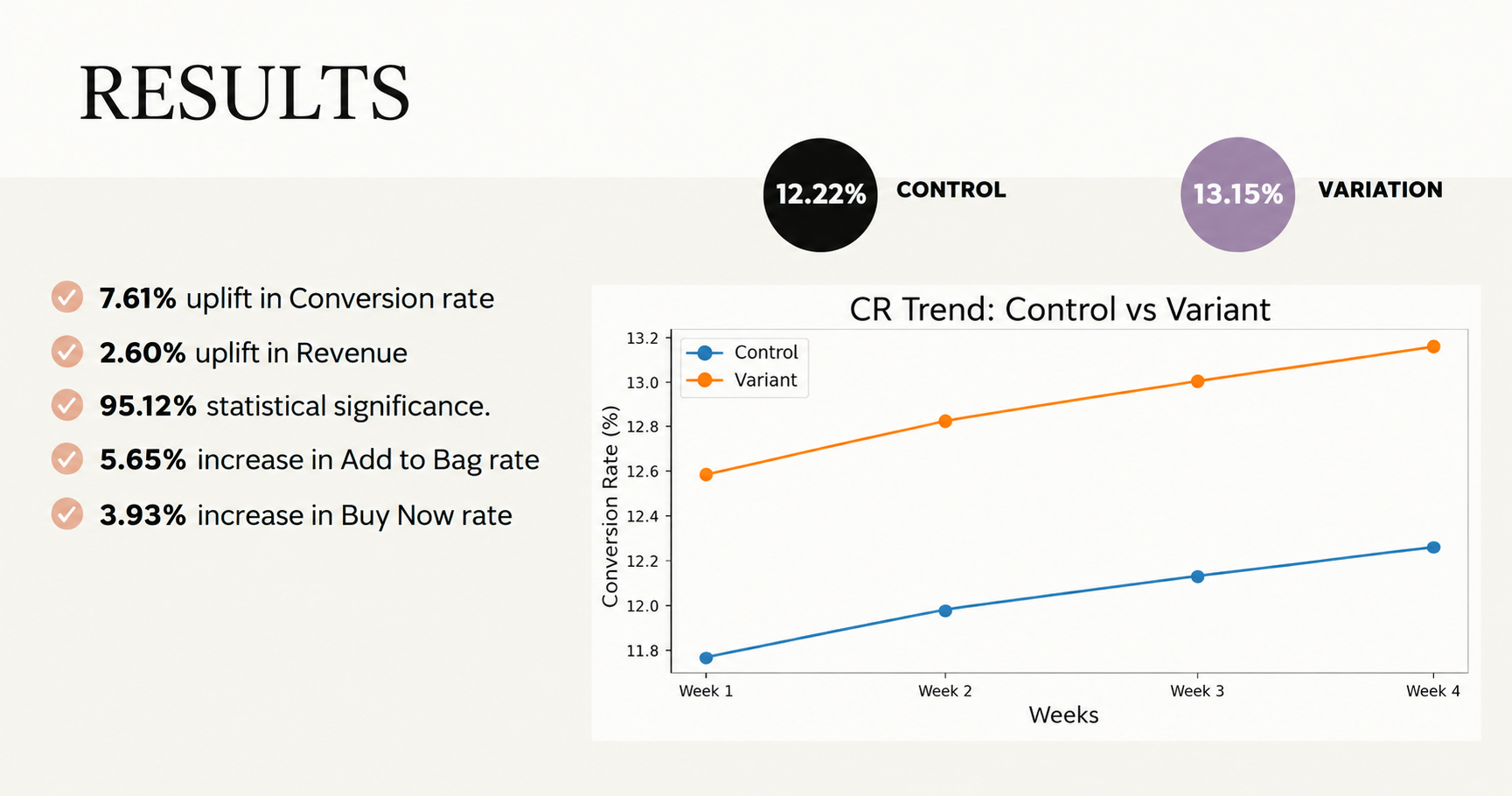
Conversion Rate rose from 2.06% to 2.15%, a 4.33% increase, reaching 96.75% statistical significance. Revenue rose 5.42% over the same test. Filter interactions rose 2.61%, and Sort interactions rose 4.75%. Among users who used Sort, Conversion Rate rose 1.48%.
Accessibility determines whether a tool gets used, not just whether it exists. The Filter and Sort controls worked exactly the same in both versions. The only change was how easily shoppers could reach them, and that alone was enough to increase how often they were used.
Refinement is an ongoing need, not a one-time action. Shoppers do not just filter once at the top of a session, they adjust as they browse. Making controls sticky matched the tools to how shoppers were actually behaving throughout the page, not just when they arrived.
Small interaction increases can still move revenue meaningfully. A 2.61% rise in Filter use and a 4.75% rise in Sort use are modest on their own, but together they contributed to a 5.42% Revenue increase, showing that consistent access to refinement tools compounds over a browsing session.

The Collective’s shoppers were not avoiding the Filter and Sort tools because they did not want to refine their search. They were avoiding them because reaching those tools required extra effort every time. By repositioning the controls to the top and keeping them sticky, OptiPhoenix closed that gap, and shoppers refined their search as often as they needed to.