The Ultimate Guide to Conversion Rate Optimization in 2026: Strategies That Actually Work
In 2026, marketing efficiency will become the single biggest growth constraint for digital-first brands.
Acquisition costs have risen by over 35% globally since 2021 (source: Statista), while user attention spans continue to shrink – now averaging just 8 seconds on mobile before drop-off.
In a world where traffic is expensive and competition is relentless, Conversion Rate Optimization (CRO) has quietly evolved from a “marketing hygiene” practice to a strategic growth pillar for CEOs and CMOs.
Why?
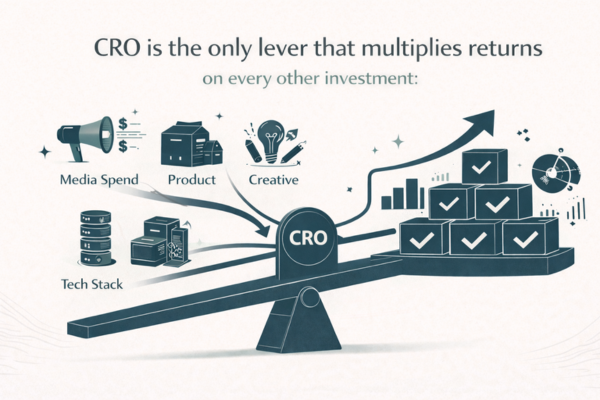
Because CRO is the only lever that multiplies returns on every other investment, your media spend, your product, your creative, your tech stack.
Let’s put this in perspective:
- A 1% improvement in conversion rate for a mid-sized eCommerce brand doing ₹10 crore/month in revenue can unlock ₹1.1 crore+ in annual growth, without adding a single rupee to ad budgets.
- Studies by CXL Institute show that mature CRO programs deliver average ROI between 223% and 450% when run systematically for over 12 months.
- According to HubSpot’s 2025 State of Marketing, companies prioritizing CRO are 2.8× more likely to exceed their revenue targets.
CEOs no longer see CRO as a marketing function, they see it as an organizational discipline: a way to make every decision evidence-based, every customer experience frictionless, and every growth bet validated by data.
This guide breaks down on
the modern pillars driving results,
the challenges leadership teams face,
and the proven strategies that are actually moving the needle for brands worldwide.
What is Conversion Rate Optimization and Why It’s the Growth Multiplier CEOs Didn’t Know They Needed
1.1 Definition & Core Philosophy
Conversion Rate Optimization (CRO) is the process of systematically improving your website or digital experience to increase the percentage of visitors who take a desired action, be it a purchase, sign-up, form fill, or lead submission.
But in 2026, CRO isn’t about button colors or headline tweaks.
It’s a data + behavioral science + experimentation system, a closed-loop process that identifies friction, tests hypotheses, and measures uplift at scale.
At its core, CRO answers a single question:
“What stops your customers from saying yes, and how can you remove that friction?”
This process combines three lenses:
- Quantitative: analytics, funnel data, heatmaps, and behavior tracking.
- Qualitative: user research, interviews, feedback loops.
- Psychological: motivation, trust, cognitive load, and persuasion principles.
1.2 Why CRO Matters More Than Ever in 2026
In 2023-2026, the digital landscape changed dramatically:
- Customer acquisition costs (CAC) increased by 60-80% across Google Ads, Meta, and programmatic (Source: AdWeek).
- Average website bounce rates rose to 57% for retail and 68% for SaaS (Source: Contentsquare 2025 Benchmark).
- Meanwhile, attention spans fell, average scroll depth dropped by 17% in just two years.
This means you’re paying more for every click, but converting less of them.
That’s where CRO becomes the multiplier.
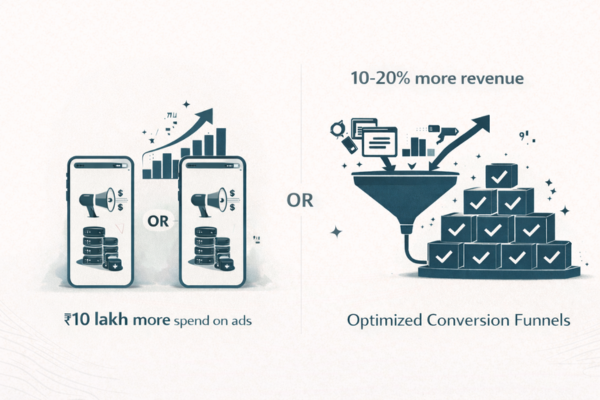
Instead of spending ₹10 lakh more on ads to chase growth, brands can extract 10-20% more revenue from the same traffic by optimizing conversion funnels.
A 2025 study by VWO found that businesses implementing structured experimentation saw:
- 15-30% uplift in lead generation,
- 12-20% increase in eCommerce sales, and
- 2× faster payback periods on ad spend.
CRO amplifies marketing. It makes every rupee smarter.
1.3 The Anatomy of a Conversion Funnel
Every brand, regardless of vertical, runs on a funnel:
- Awareness: The user first discovers your brand (ads, search, social).
- Consideration: They browse, compare, and evaluate your offering.
- Decision: They take action: purchase, sign-up, or inquiry.
- Retention: They return, advocate, and expand their relationship.
Most funnels leak at multiple points.
- 95% of website visitors never go beyond page 2.
- 69% of online shoppers abandon their carts (Baymard Institute, 2025).
- 80% of SaaS free trials never convert to paid.
CRO identifies where those leaks happen and why, then uses data-backed testing to fix them.
Think of it as financial compounding for growth, small percentage gains stacked across multiple touchpoints yield exponential results over time.
1.4 Key Metrics Every CEO Should Track
- Overall Conversion Rate (CR%): the north star metric, but not in isolation.
- Micro-Conversions: newsletter signups, add-to-cart, time on site, video engagement.
- Revenue per Visitor (RPV): captures both conversion rate and average order value.
- Cost per Acquisition (CPA): critical to tie CRO efforts with bottom-line impact.
- Experiment Success Rate (ESR): % of tests that deliver measurable uplift.
- Lift per Test (LPT): incremental impact achieved per test cycle.
When tracked properly, these metrics turn CRO from a tactical project into a boardroom growth dashboard.
1.5 CRO as a CEO-Level Lever
Traditional growth playbooks focus on traffic, product launches, or new channels.
But as the digital cost curve steepens, leadership teams are realizing something deeper:
Traffic is finite. Attention is expensive. Efficiency is forever.
Companies that build CRO into their culture, not just as a marketing function but as a company-wide learning system, are seeing durable compounding results.
As Brian Balfour (ex-HubSpot VP Growth) puts it:
“The fastest-growing companies aren’t the ones who get everything right; they’re the ones who learn fastest.”
CRO is how you learn faster than your competition.
The Modern CRO Pillars: What Will Actually Drive Conversions in 2026?
As we move into 2026, Conversion Rate Optimization (CRO) will no longer be a tactical lever, it will be a strategic growth engine embedded deep into how businesses make decisions.
The digital landscape ahead will be defined by rising acquisition costs, AI-driven personalization, and customers who expect frictionless experiences across every touchpoint.
CRO will evolve into the connective tissue that holds data, creativity, and psychology together.
At Optiphoenix, we see five key pillars shaping the next wave of CRO success in 2026: a framework that blends experimentation, insight, and empathy to deliver measurable business outcomes.
Pillar 1: Structured Experimentation Will Become the Core of Growth
A/B testing will mature from a marketing experiment into a strategic operating system.
By 2026, most high-performing brands will run experimentation programs that look more like scientific labs than campaign calendars.
What We’ll See:
- Every growth initiative will start with a hypothesis, validated through data and experiment design.
- AI-powered test platforms will automatically adjust traffic distribution in real time based on performance probability.
- Experiment velocity (how many learnings a company generates per quarter) will become a key growth metric discussed in boardrooms.
Supporting Forecasts:
- Companies running 4+ structured tests per month will grow 2–2.5× faster than peers. (CXL projection, 2025)
- Only one in four brands will have a mature experimentation process by mid-2026 – a clear competitive gap for early adopters. (VWO Benchmark, 2025)
Pillar 2: Personalization Will Go Predictive, Not Reactive
By 2026, personalization will shift from static “if-this-then-that” logic to dynamic intent prediction.
Websites anticipate user behavior.
The Next Evolution:
- Predictive segmentation models will forecast user intent with 80%+ accuracy using browsing patterns, device behavior, and micro-gestures.
- AI-driven engines will auto-generate personalized headlines, pricing variations, or offers at scale.
- First-party data will be the new goldmine, as cookies vanish, brands that own deep behavioral profiles will dominate.
Expected Impact:
- Personalized experiences will drive up to 25% higher conversion rates and 30% longer session durations. (McKinsey Digital 2026 Forecast)
- 70% of consumers will expect some level of personalization as standard, not as a luxury. (Accenture Consumer Pulse, 2025)
Pillar 3: UX Design Will Be Redefined Around Frictionless Flow
The next wave of UX in CRO will prioritize friction-free flow over fancy design.
Attention will be scarce, and decision fatigue will be real. Winning brands will focus on clarity, speed, and cognitive ease.
What Will Change:
- Micro-interactions, real-time feedback, and intent-based navigation will replace static menus.
- Sites that load in under 2 seconds will capture 40% more conversions than slower competitors. (Akamai Performance Report, 2025)
- Voice-assisted UX and conversational checkout flows will emerge as the next optimization frontier.
Design Priorities for 2026:
- Visual focus hierarchy: guide eyes, not just decorate screens.
- Predictive UX: anticipate the next click before the user does.
- Minimal friction forms: autofill, one-tap checkout, social logins.
- Accessible by design: inclusivity will shift from compliance to competitive edge.
Pillar 4: Behavioral Analytics Will Bridge Data and Emotion
Behind every conversion is a human decision moment, and understanding that psychology will separate great CRO from average.
By 2026, behavioral analytics will combine quantitative tracking with emotional inference, going beyond “what users did” to explain “why they did it.”
Tools of the Future:
- Emotion detection heatmaps: analyzing facial micro-expressions and cursor hesitation to infer confidence or confusion.
- Journey replay AI: automatically clustering drop-offs by motivation type (confusion, distraction, doubt).
- Integrated qualitative feedback loops: micro-surveys triggered contextually at frustration points.
The Psychology Stack:
- Loss aversion: showing what users risk losing will outperform discount offers.
- Social validation: real-time proof (e.g., “742 users bought this today”) will drive higher engagement.
- Cognitive simplicity: single-minded CTAs will outperform multi-choice layouts by over 30%.
Pillar 5: Data Infrastructure & Experimentation Culture Will Define Market Leaders
No CRO strategy will work in 2026 without clean data and a culture that embraces testing.
The highest-growth companies will treat data as infrastructure.
The Cultural Shift:
- Every department i.e., marketing, product, engineering, CX, etc will contribute hypotheses and insights to a shared experimentation backlog.
- CRO dashboards will sit in C-suite reporting, integrated with revenue, CAC, and LTV metrics.
- Test velocity and learning rate will become KPIs as critical as conversion rate itself.
Data Imperatives:
- 100% event tracking coverage via GA4, Amplitude, or Mixpanel will be the baseline.
- Experimentation platforms will integrate with CDPs to push learnings directly into ad and email personalization engines.
- Companies with centralized test repositories will see 3× faster insight reuse across teams. (VWO Forecast, 2025)
The CRO Framework for 2026: From Guesswork to Growth Systems
By 2026, CRO will look less like marketing optimization and more like scientific product development.
Every hypothesis tested will contribute to an expanding knowledge base of user behavior, creating a feedback loop that compounds growth over time.
At Optiphoenix, we visualize it as the Experimentation Flywheel:
1️⃣ Data → 2️⃣ Insight → 3️⃣ Test → 4️⃣ Learn → 5️⃣ Scale → 6️⃣ Automate
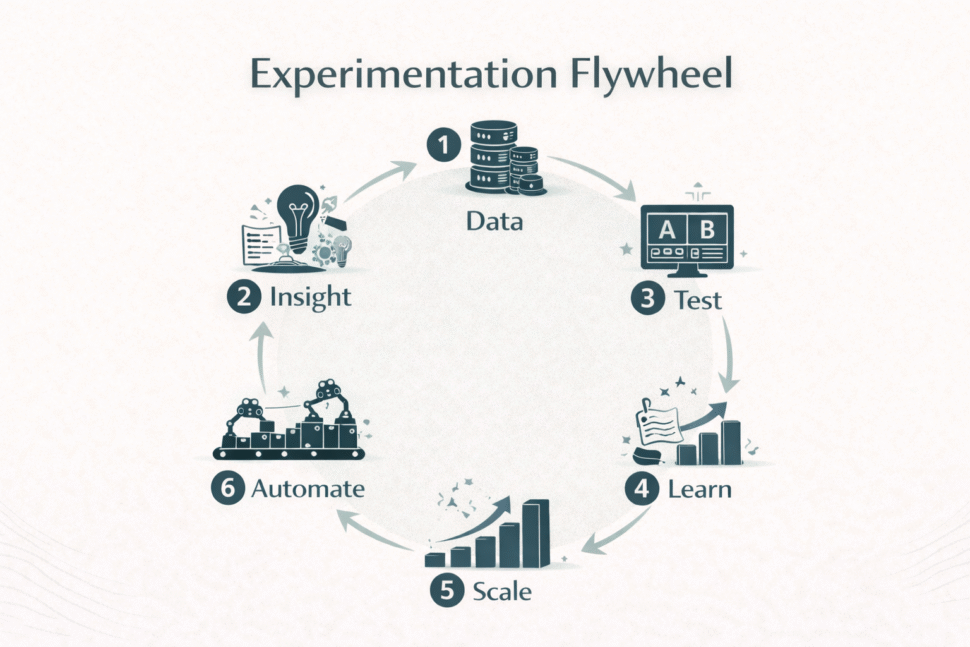
Every spin makes the next one faster, smarter, and more profitable.
The organizations that master this flywheel will move beyond conversion optimization; they’ll build conversion intelligence.
Key Takeaway
In 2026, the best CRO programs will be those with the most discipline and velocity.
The brands that build on these five pillars will see not just higher conversion rates, but higher learning rates, and that’s the ultimate edge.
The Biggest Challenges CEOs Will Face with CRO in 2026
By late 2025, every CEO has heard the same promise:
“Optimize your conversion rates, and you’ll grow faster without spending more.”
Yet as brands move into 2026, most will discover that knowing the importance of CRO is easy, building a scalable, organization-wide program is not.
CRO’s maturity journey follows the same pattern as digital transformation did a decade ago:
The first 10% is tools, the remaining 90% is people, process, and mindset.
Below are the five biggest challenges leaders will face in 2026 as they try to turn experimentation into a growth culture, and how the most adaptive CEOs will overcome them.
1. The Cultural Barrier: From “Winning Tests” to “Learning Velocity”
In 2026, the biggest CRO challenge will be cultural.
Most companies still celebrate A/B tests like campaign trophies:
“Variant B won by +7%; let’s move on.”
But in high-performing organizations, leaders will start asking a deeper question:
“What did this test teach us about our users, and how can that insight scale to the next 20 tests?”
The Emerging Reality:
- 70% of companies entering 2026 will still run ad-hoc, reactive tests without a long-term experimentation roadmap. (VWO CRO Trends 2025)
- Only 15% of CEOs will have CRO represented in executive scorecards or OKRs.
- The best-performing 5% of companies will build centralized experimentation cultures, where teams compete not on results but on learning velocity.
Leadership Shift:
CEOs will need to reframe CRO success from “what won?” to “what did we learn that scales?”
That mental shift; from growth hacking to growth science, will separate the winners in 2026.
2. The Data Dilemma: Accuracy, Accessibility, and Actionability
Even in 2026, most CRO decisions will still be made on incomplete or untrusted data.
GA4 migration issues, broken attribution models, cookie deprecation, these are the silent killers of conversion insights.
By mid-2026, data fragmentation will become a strategic risk.
The Data Landscape:
- 60% of CRO teams will report data inconsistencies between analytics, CRM, and CDP systems. (CXL Industry Survey, 2025)
- 40% of tracked events in most analytics stacks will contain tagging or duplication errors.
- 1 in 3 brands will lose behavioral data fidelity due to cookie restrictions and poor first-party setups.
Without accurate inputs, even the smartest experimentation frameworks collapse.
The 2026 CEO Imperative:
- Invest in clean data foundations: audit every tracking point quarterly.
- Appoint data governance leads who ensure analytical consistency across tools.
- Integrate CRO with finance metrics: conversion uplift should link directly to revenue and margin impact.
In 2026, data cleanliness will be a strategic differentiator.
3. The Talent Gap: CRO Experts Will Be Scarce (and Expensive)
By 2026, CRO expertise will become one of the most in-demand growth skills globally.
The discipline requires a rare mix of left-brain and right-brain, analytics, psychology, design, and storytelling.
Forecast:
- Global demand for CRO professionals will outpace supply by 4:1. (LinkedIn Skills Report, 2025)
- The average salary of a senior CRO strategist is projected to rise by 27% YoY through 2026.
- Fewer than 10% of marketers currently claim statistical competence in experimentation design.
This talent bottleneck means many organizations will rely on specialized CRO partners, agencies or hybrid in-house pods: that combine engineering precision with behavioral insight.
CEO Insight:
Forward-thinking leaders in 2026 will treat CRO as a shared skillset embedded across teams, empowering marketers, designers, and product managers to think experimentally.
It will be less about hiring one “CRO expert” and more about building an experimentation-literate company.
4. The Testing Trap: Scaling Without Diluting Rigor
As companies scale their experimentation programs, a new challenge will emerge, quantity without quality.
Many will boast “we ran 100 tests this quarter,” yet few will know if those tests were statistically valid, contextually relevant, or even worth running.
The Pattern Emerging:
- Up to 55% of A/B tests run globally will produce false positives due to poor setup or early stopping. (Optimizely Forecast, 2026)
- 30% of experiments will be repeated unknowingly because of lack of documentation.
- Many brands will burn the budget on incremental tests (“button color,” “CTA copy”) instead of transformative hypothesis-driven ones.
The Leadership Fix:
- Create a testing maturity model: track not just how many tests you run, but how meaningful each one is.
- Set statistical guardrails: minimum traffic thresholds, duration locks, confidence intervals.
- Establish experiment repositories: one place to log, share, and repurpose learnings.
By 2026, CRO discipline will outcompete CRO activity.
The CEOs who enforce rigor will see compounding ROI, while others drown in noise.
5. The Integration Challenge: Making CRO a Company-Wide Engine
Perhaps the biggest shift in 2026 will be the integration of CRO across departments.
Conversion optimization will touch everything from UX to pricing, onboarding, and retention.
The New Reality:
- CRO will merge with product growth, CRM, and revenue operations.
- Tests won’t just optimize click-throughs; they’ll optimize entire customer journeys – from ad impression to repeat purchase.
- Boardroom discussions will start including “CRO ROI” as a recurring line item.
CEO Mindset for 2026:
- Mandate cross-functional experimentation rituals: weekly growth stand-ups with marketing, product, and data teams.
- Reward learning velocity across departments: bonus structures tied to insights, not just results.
- Adopt a unified performance narrative: link CRO impact to business-level KPIs (revenue, retention, CLV).
In short, the companies that make CRO everyone’s responsibility, not just the growth teams – will create learning organizations that outlast tactical competitors.
Insight
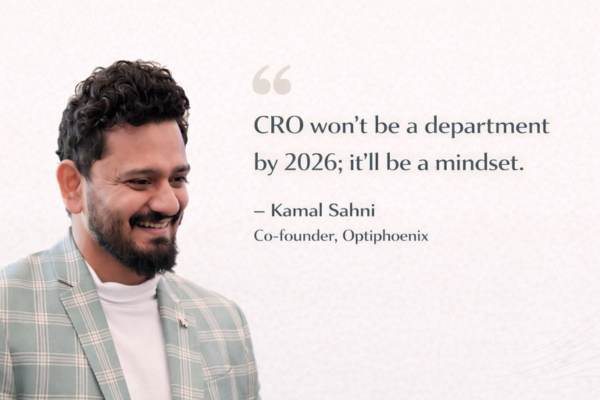
In 2026, CEOs will realize that CRO maturity mirrors organizational maturity.
It’s about transforming how decisions are made.
Those who build cultures of experimentation, enforce data discipline, and connect every optimization to business outcomes will see outsized growth returns because they built a company that learns faster than the market changes.
Proven CRO Tactics That Will Drive ROI in 2026
By 2026, every dollar spent on acquisition will be under scrutiny.
Traffic will still matter – but efficiency will define survival.
The next phase of CRO will not be about more campaigns; it will be about better compounding – every click, visit, and interaction engineered to deliver incremental lift that scales quarter after quarter.
Below are the strategic pillars and tactics that will consistently generate measurable ROI in 2026 – distilled from Optiphoenix’s research programs and global CRO trend analyses.
1. Radical Simplification
The era of “feature-heavy” design will fade.
In 2026, simplicity will become the single strongest conversion accelerant.
Attention spans will average under 5 seconds per landing page view, forcing brands to distill propositions to one decisive moment.
Every unnecessary field, link, or distraction will become a revenue leak.
High-growth brands will streamline navigation, declutter interfaces, and move toward intent-based design, layouts that surface what the user is most likely to need next.
Cognitive friction will become a measurable KPI; simplicity will become strategy.
2. Predictive Personalization
Personalization will evolve from segmentation to prediction.
Algorithms will forecast what a visitor intends to do, not just what they have done.
By mid-2026:
- Predictive recommendation models will drive 20–25 % higher engagement.
- Real-time adaptive messaging will become standard across e-commerce and SaaS.
- First-party behavioral data will replace third-party cookies as the engine of personalization.
CRO leaders will combine behavioral analytics, AI inference, and dynamic UX to ensure that every visitor experiences a contextually relevant journey; invisible in its complexity, seamless in its execution.
3. Frictionless Experience Design
Design will no longer be evaluated on beauty but on velocity – the speed at which a user can understand, trust, and act.
“Flow” will replace “page” as the unit of optimization.
Conversion gains will come from:
- Load performance under 2 seconds as a baseline expectation.
- Unified checkout logic eliminating redundant decisions.
- Adaptive micro-interactions guiding user intent without explanation.
The most advanced CRO programs will quantify friction the way finance teams quantify risk; identifying, scoring, and eliminating it continuously.
4. Behavioral Intelligence
CRO in 2026 will be inseparable from behavioral science.
Analytics will evolve from descriptive to diagnostic: not what users did, but why they did it.
Marketers will rely on a blend of:
- Emotion-aware analytics detecting hesitation, confusion, and motivation.
- Psychological triggers grounded in verified human biases: scarcity, reciprocity, social validation, and cognitive ease.
- Experience mapping that unifies quantitative and qualitative signals into one narrative of decision-making.
Behavioral insight will move from the UX lab to the boardroom.
Companies that understand user emotion will optimize not just conversions, but trust.
5. Continuous Experimentation Systems
By 2026, mature organizations will measure growth not by revenue alone but by learning velocity, how quickly hypotheses are tested, validated, and scaled.
Experimentation will become a core business process, with automation handling:
- Test ideation through AI-driven pattern recognition.
- Traffic allocation through Bayesian optimization.
- Result interpretation through machine learning models that project long-term ROI.
The CRO programs that win will not run the most tests; they will build the fastest feedback loops.
6. Data-Led Decision Architecture
CRO effectiveness will depend on the integrity of its data spine.
With GA4, CDPs, and event-based tracking maturing, leadership will treat data accuracy as competitive infrastructure.
Every tested hypothesis will be tied to business metrics: revenue, margin, retention.
Dashboards will evolve from “marketing analytics” to conversion intelligence systems accessible to every stakeholder.
Clean data will mean cleaner decisions; cleaner decisions will mean compounding growth.
7. Ethical Persuasion
The internet of 2026 will be fatigue-saturated.
Consumers will reward authenticity and penalize manipulation.
CRO will shift toward ethical persuasion; transparency, truth-based urgency, and evidence-driven trust.
- Real inventory cues will outperform artificial scarcity.
- Verified user proof will outconvert fabricated testimonials.
- Simplicity and honesty in messaging will become the highest form of differentiation.
Ethics will no longer be a compliance checkbox; it will be a conversion driver.
8. Post-Conversion Optimization
The conversion journey will no longer end at checkout.
By 2026, retention will be the new CRO frontier.
Brands will optimize post-purchase flows; confirmation pages, onboarding sequences, re-engagement triggers – to extend lifetime value.
CRO will integrate directly with CRM and lifecycle marketing systems, treating every repeat visit as another conversion opportunity.
The organizations that internalize this continuum will see the highest ROI on experimentation programs.
The Strategic Pattern
Across all high-ROI tactics, three meta-principles will define CRO in 2026:
- Speed to Insight → Outlearn competitors faster than they can outspend you.
- Precision over Volume → Ten meaningful tests will outperform a hundred random ones.
- Empathy at Scale → Technology will predict behavior, but only empathy will sustain conversion.
Optiphoenix Outlook
By 2026, CRO will mature into an enterprise discipline; a structured, cross-functional system that blends data science, behavioral insight, and continuous testing.
Organizations adopting this model are projected to achieve:
- 10% year-on-year uplift in conversion efficiency,
- 2.5× faster feedback cycles, and
- Over 40 % improvement in marketing ROI.
The playbook will be simple but unforgiving:
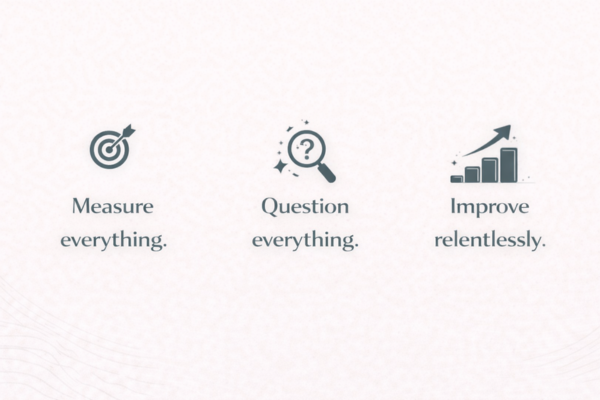
Measure everything. Question everything. Improve relentlessly.
Conclusion: CRO; The Growth Edge of 2026
As we enter 2026, one fact will define digital growth: brands that learn faster will grow faster.
CRO will evolve from a marketing tactic into a strategic discipline, the bridge between data, psychology, and performance.
It will be about building organizations that think experimentally.
The Shift Ahead
- From marketing projects to business systems.
- From chasing traffic to compounding efficiency.
- From isolated tests to continuous learning loops.
Every decision – creative, product, or pricing; will soon be validated through evidence, not assumption.
Growth will come not from more spend, but from more intelligence per customer interaction.
The Optiphoenix Perspective
At Optiphoenix, we believe 2026 will reward clarity, speed, and experimentation discipline.
CRO will become the nervous system of growth; continuously learning, adapting, and compounding.
It will be a culture.
And those who build it will define the next decade of digital growth.