How to Choose a CRO Agency
Conversion rate optimization has grown as a marketing discipline over the last decade. CRO is still in its infancy, and many businesses have begun to embrace it. There are several statistics that you should be aware of to get a better grasp on what CRO looks like today and where it is going.
This blog dives into the latest conversion rate optimization statistics 2023, providing industry insights and helping businesses stay ahead of the curve. Whether you’re a marketer, an entrepreneur, or a company owner; it is a must-read blog if you want to remain updated and improve your website’s performance to maximize your conversion rate.
The conversion rate optimization technique was developed as a result of e-commerce marketers’ desire to enhance the functioning of their websites following the dot-com bubble crash of 2000, which caused many online marketers to go out of business completely.
A growing number of website analysis tools have become accessible as a result of the tough competition in the market. During this time, those trying to survive began understanding the idea of website usability.
As a result of these events, an increasing number of online marketers created marketing strategies with more measurable results. They also started to concentrate on the user experience of their website’s visitors.
In the year 2004, web 2.0 was released. This gave online marketers the freedom to experiment with different types of web 2.0 tools that assisted them with market research, self-promotion, aggregators, etc.
After Google Website Optimizer was released in 2007, interest in the CRO subject increased even further. This free tool used to run basic multivariate testing and A/B testing to improve conversion rates and create user-friendly websites. Later it included data collection, additional alternatives for testing and selection, improved tailored strategies, and many more under its umbrella.
A 2014 survey by Econsultancy found that 59% of online marketers believed that CRO was essential to their overall digital marketing strategy, and as a result, marketers have gotten on the wave.
Maximizing your website’s conversion rate is the cornerstone of successful online businesses today. The ever-evolving digital landscape and the increasing competition make it even more important to stay ahead of competitors. We bring you the latest edition of Conversion Rate Optimization Statistics and Facts for 2023. This comprehensive guide will give you a deep understanding of the current trends and key insights.
From making an impact through website design to the role of mobile optimization in user experience, you’ll learn about the key factors that influence consumer behavior and drive sales with increased website conversion optimization.
Let’s get started with top conversion rate optimization statistics 2023 insights!
At the time of writing this information, according to the most recent statistics from IRPcommerce, the average conversion rate for e-commerce market increased by 1.83% in January 2023 from 1.71% to 1.74% compared to the previous year January 2022.
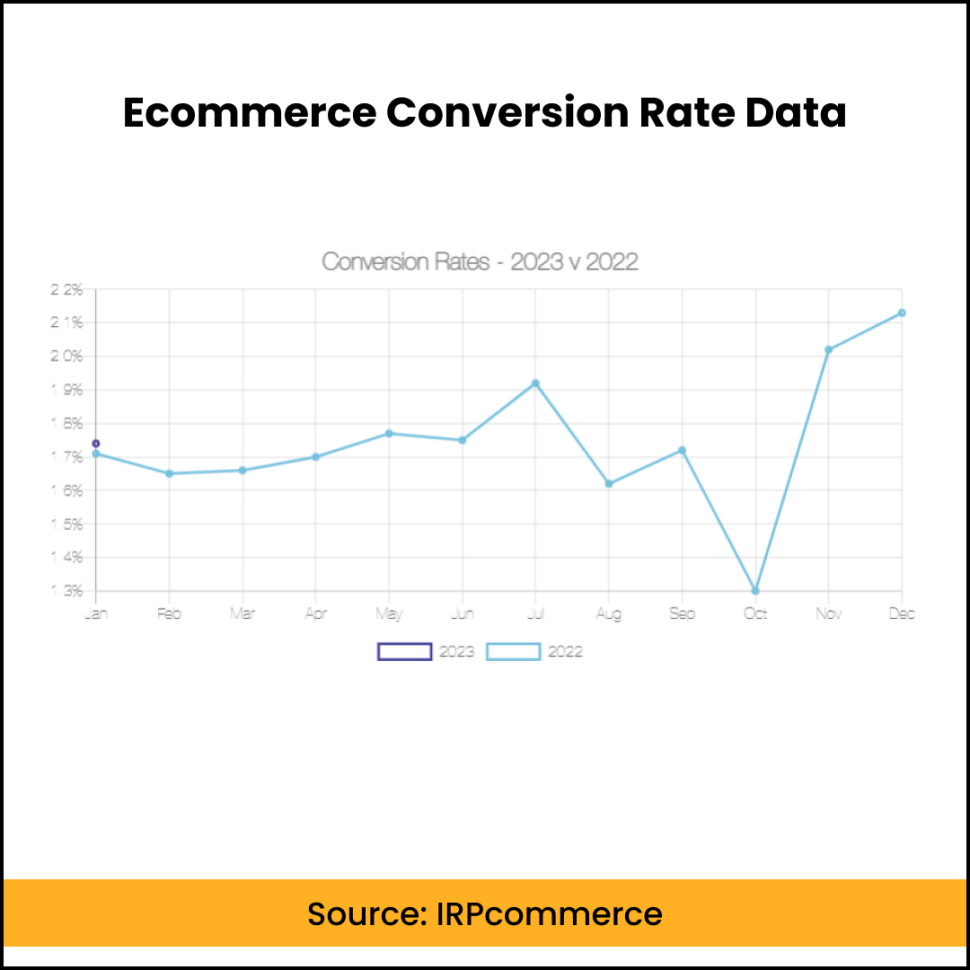
Whereas, when compared to July 2021, the average e-commerce conversion rate across all eCommerce markets grew by 19.63%, from 1.61% to 1.92%.
Pay-per-click (PPC) advertising received all the spotlight when it comes to proving the value of an eCommerce marketing strategy. The ROI of paid social media marketing is a lower and sometimes debated topic.
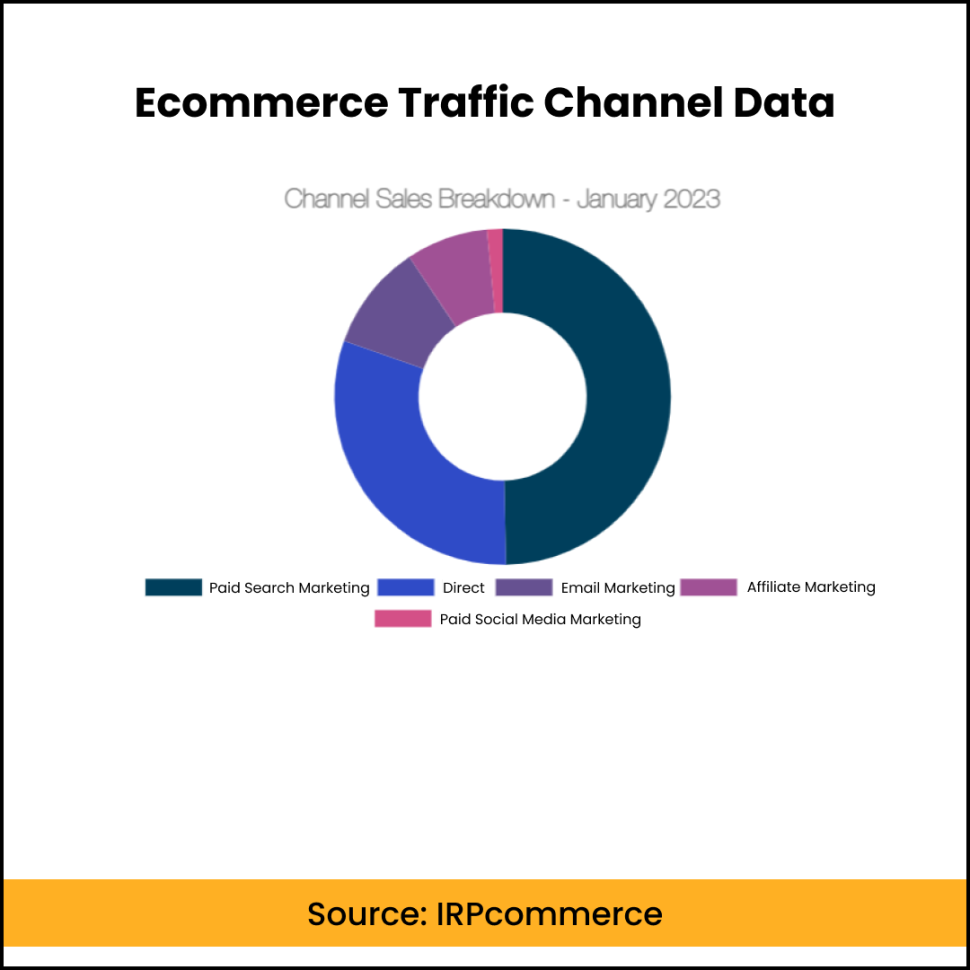
According to the IRPcommerce report, at the time of writing, paid search marketing accounted for 54% of e-commerce sales by traffic channel in January 2023. The sales were then followed by direct marketing(26.3%), affiliate marketing (7.9%), email marketing (10.3%), and paid social media marketing (1.5%). Paid search marketing in comparison to all other marketing strategies, offers a far better and quicker return on investment.
Findings from WordStream shows that landing pages may convert visitors at an average rate of over 2.35% across industries. According to WordStream’s analysis of Google Ads, the conversion rates can range from 3% to 11.45% and higher depending on your sector and the elements of your landing page.
Your chances of getting more conversions may be improved by performing a conventional A/B test on your landing page and altering the colors of the buttons, the font size, and the graphics.
According to Statista report, the home and beauty industry had the highest online conversion rates for e-commerce sites with 3.3% in the third quarter of 2022. Websites in the food and beverage industry were the second with a 3.1% conversion and the haircare industry came third with a 3.0% conversion rate, respectively.
Also, the average conversion rate for all selected segments of e-commerce platforms was 2.1%. When it comes to conversions there are differences across the different types of devices, with desktop visits having a greater conversion rate than a tablet or smartphone visits.
While optimizing landing pages for mobile devices is important, according to Statista’s report, the average conversion rate on mobile devices is just 2%. In comparison, desktop users are far more ready for conversion (3% to 4%) nearly around three times as many desktop users convert as mobile users.
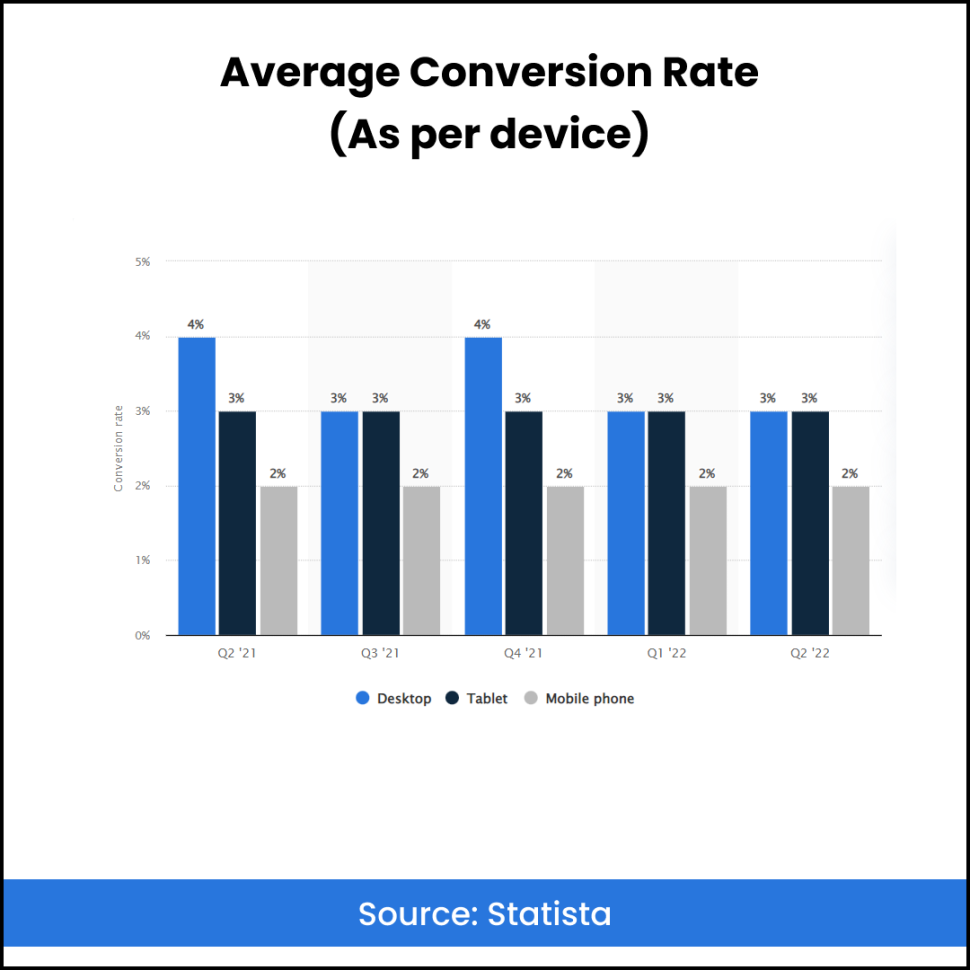
The challenge with mobile is speed, clutter, usability, complex designs, and other aspects, resulting in low mobile conversion. So it is crucial that these challenges must be minimized.
Social proof is the idea where users prefer things liked by others. It is frequently the major motivation for users to visit the landing page, sign up for a service, or make a transaction.
According to the findings by Unbounce, pages with social proof in the content often convert at a rate of 12.5% compared to 11.4% for pages without social proof. Customer testimonials, case studies, and social sharing buttons are relevant examples of social proof.

Another research by Medill Spiegel Research Center states that a lower-priced product’s review displays raised conversion rates by 190%. However, the conversion rate rose by 380% for a more expensive product. The social proof of reviews shows that reviews have more of an effect on the probability of purchase of expensive products than less expensive ones.

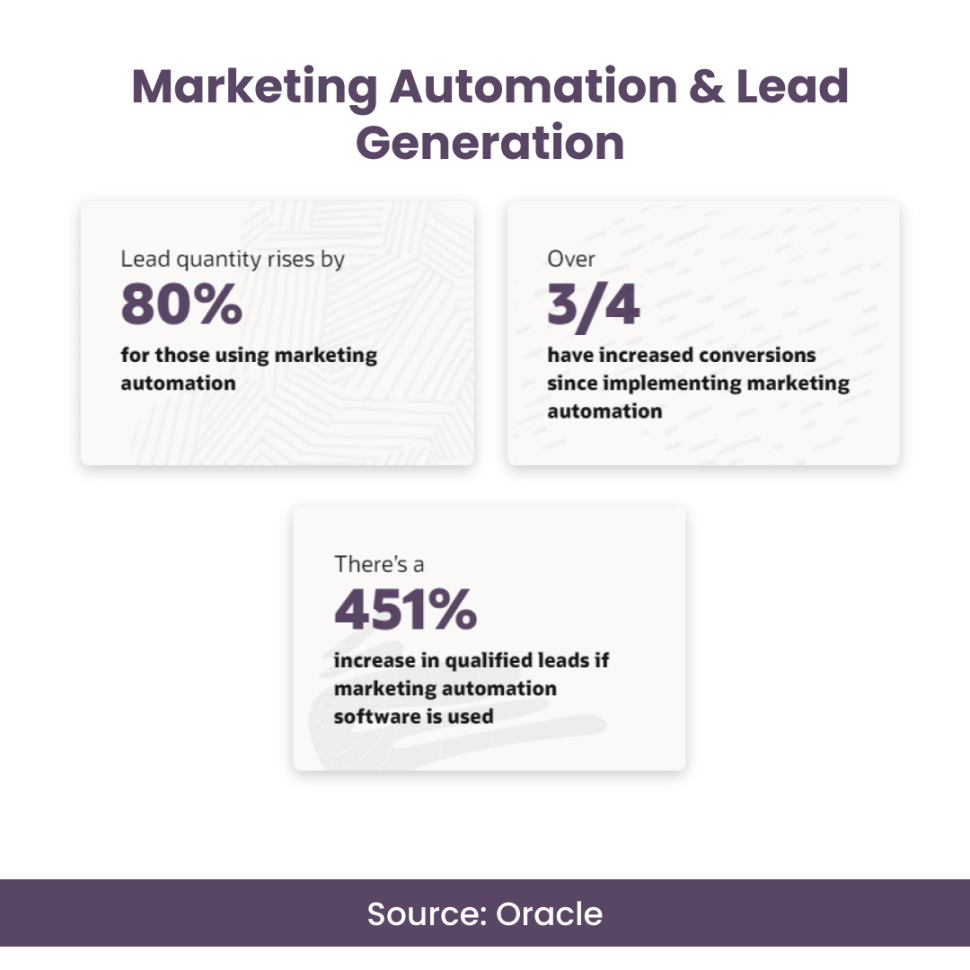
Marketing automation has a proven track record of assisting companies in achieving success. As a result marketing automation tools have led to an increase in leads engagement, better sales, marketing alignment, and increased productivity.
Organizations utilizing automation tools have reportedly seen an 80% increase in the number of leads.
Over 35% of surveyed B2B marketers have a lead nurturing strategy in place. White papers, infographics, and videos are just a few activities for lead nurturing. These activities enhance the customer journey and help to define marketing plans.
The studies found by Aberdeen shows that personalized emails or messages can boost conversions by up to 10%. This is achieved by tailoring the content to individual recipients based on their interests, behaviors, and previous interactions.
Personalization helps to build a stronger connection with the audience, making them feel valued and understood. It also makes the message more relevant and targeted, resulting in higher engagement rates, increased trust, and more conversions.
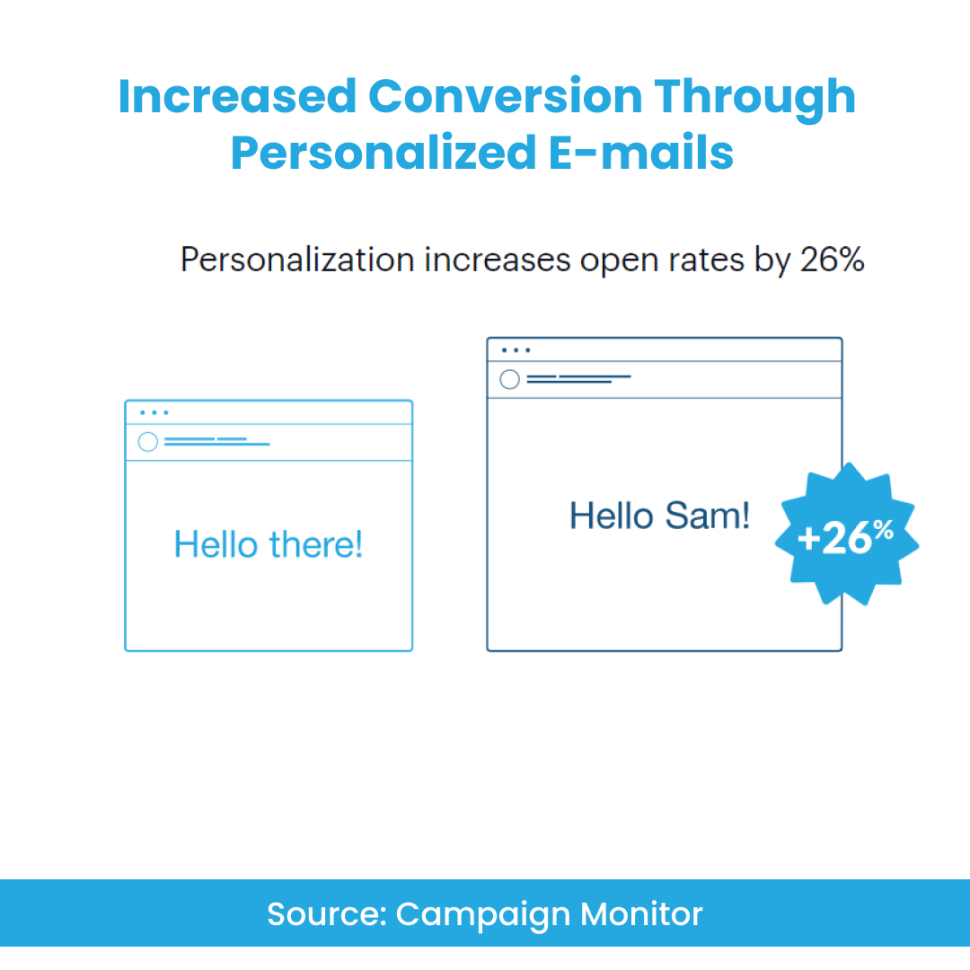
According to Campaign Monitor, segmented campaigns generate 760% more email revenue than non-segmented ones, and emails with personalized subject lines are 26% more likely to be opened.
According to the Freshworks global survey ‘Deconstructing Delight’, 77% of customers are willing to provide personal information for a more personalized and efficient experience that aligns with their values and needs.
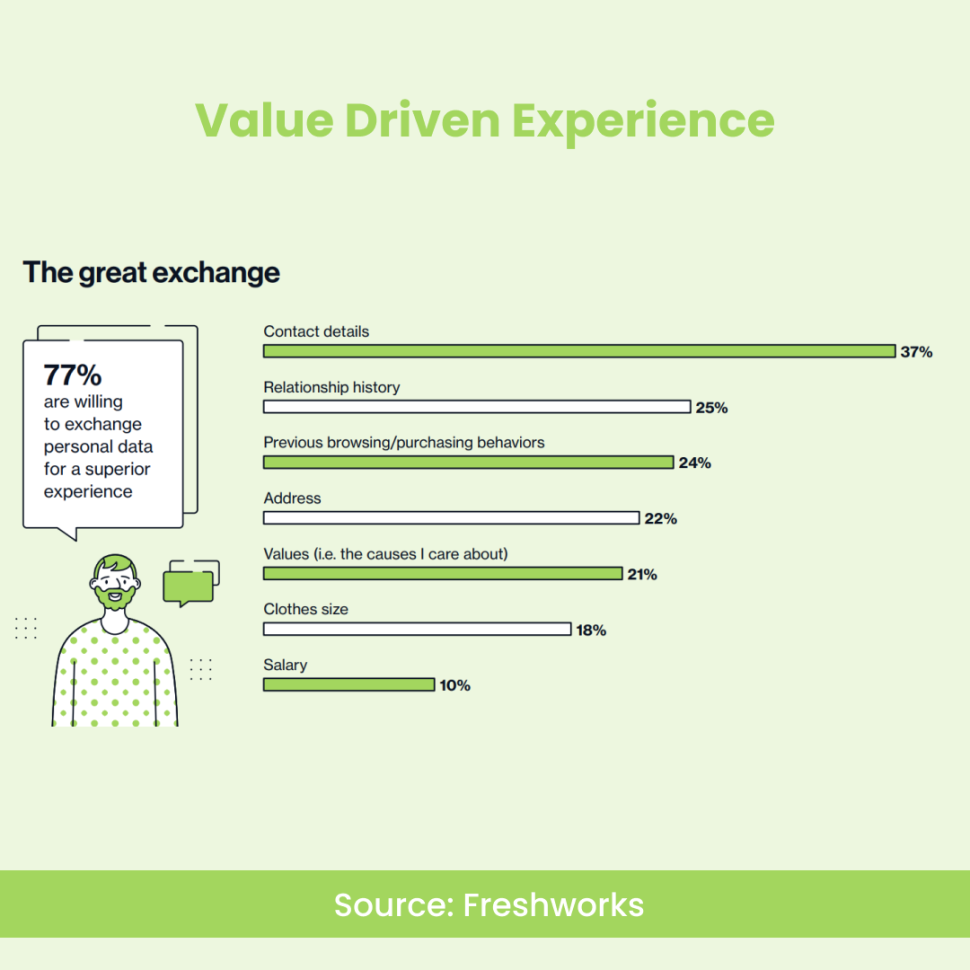
This shows that a significant portion of customers prioritize personalization and are willing to share information to enhance their overall customer experience.
According to the case study by Imaginary Landscape, reducing the number of fields in a form from 11 to 4 can significantly improve conversions by 120%. By streamlining the form-filling process, the chances of potential customers abandoning the form due to frustration or a lack of time are reduced.

A shorter form is also more user-friendly and requires less effort from the customer, leading to a more positive experience. The impact of fewer form fields on conversion highlights the importance of continually testing and optimizing the customer journey to ensure the best possible experience and the highest e-commerce conversion rate.
According to a survey by Econsultancy, published in association with RedEye, A/B Testing is the most common method to improve conversion rate. This shows businesses’ widespread usage of CRO to increase the revenue generated from sales, leads, and subscribers.
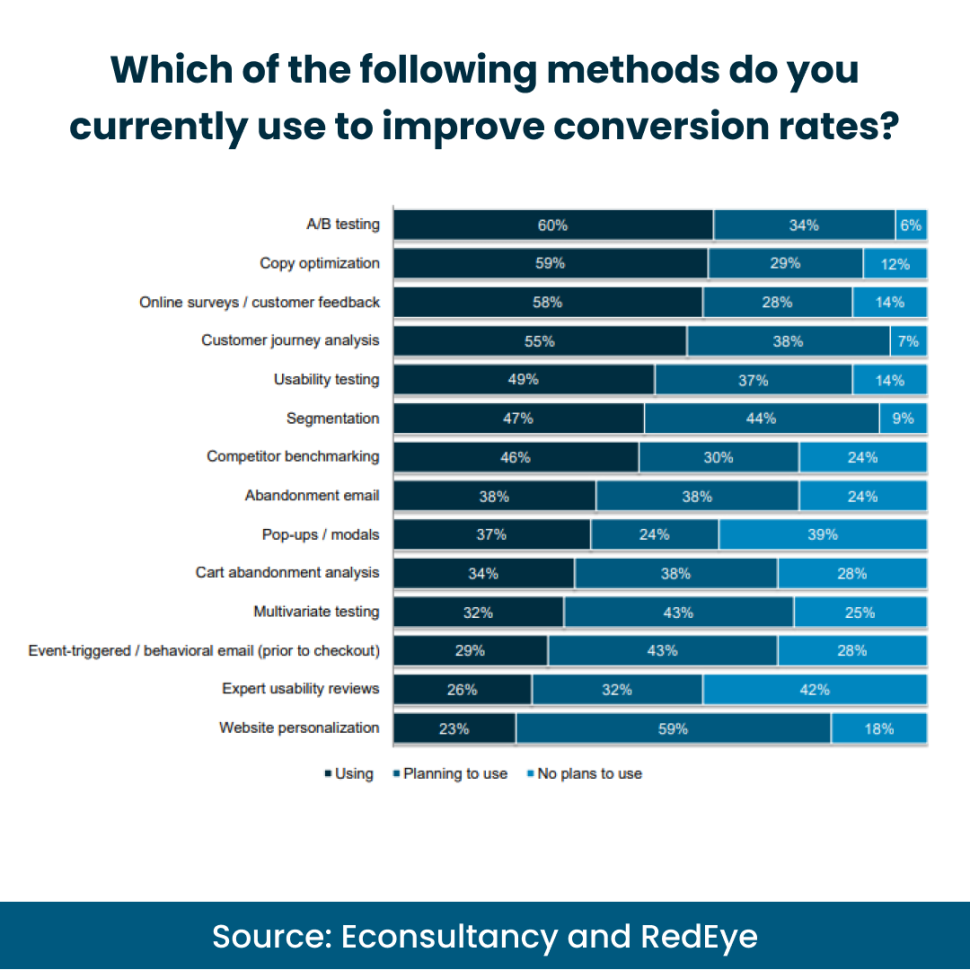
Whereas some of the methods to improve conversion rates are A/B testing, segmentation, usability testing, customer journey analysis, online surveys/customer feedback, copy optimization, etc.
According to Siegemedia, the average website bounce rate is 50.9%. The study also highlights the fact that some websites had bounce rates as high as 92% and as low as 10%.
For example, the average bounce rate for the travel sector was 82.6%. Meanwhile, the real estate sector had an average bounce rate of 40.8%.
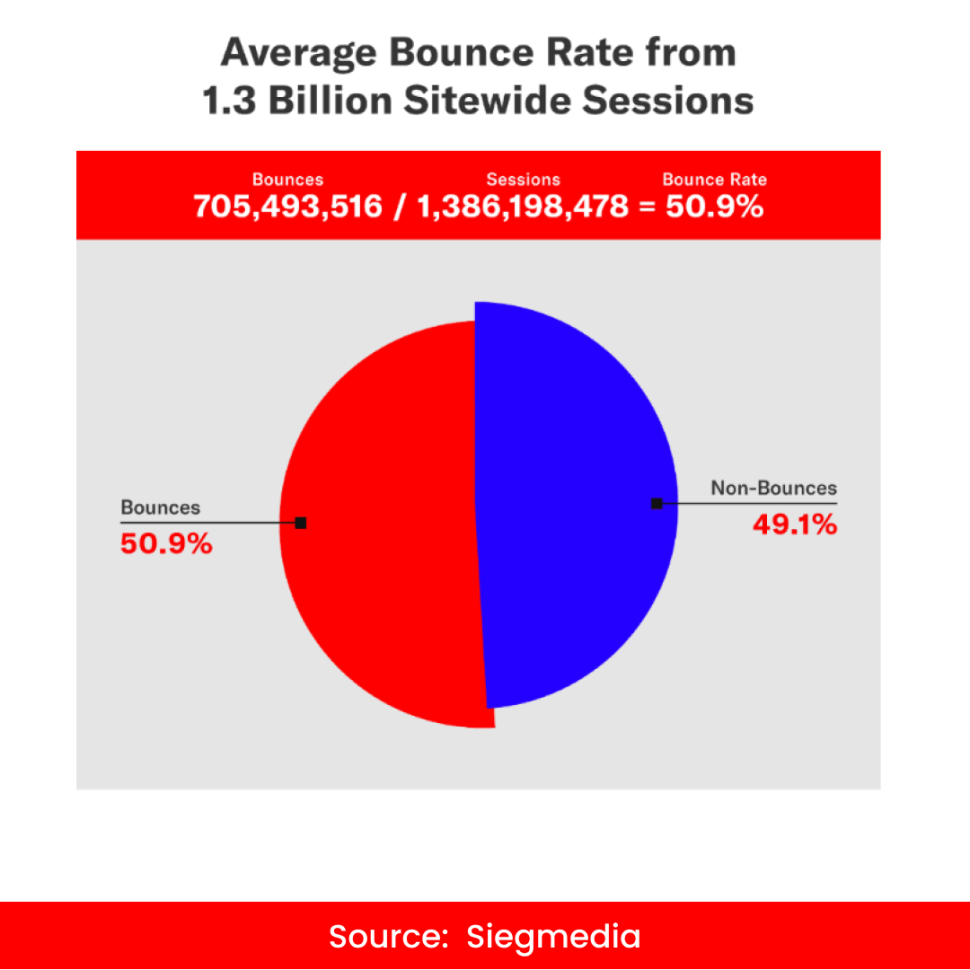
Bounce rates can be influenced by various factors such as website design, page load speed, and the relevance of the content to the visitor’s needs. Therefore, while evaluating your statistics, the bounce rates of your site will become much more informative to you if you segment the homepage from product, category, and blog pages.
Multiple landing pages can help increase the number of leads generated for your business. According to HubSpot research, companies with 10-15 landing pages typically get a 55% boost in conversions compared to those with less than 10 landing pages.
Additionally, those with over 31-40 landing pages saw a conversion rate boost of up to 7 times, more leads than those with 1-5 landing pages.

By creating multiple landing pages, you can target different segments of your audience and tailor your message to their specific needs and pain points, making it more likely they will take the desired action, whether it’s filling out a form, making a purchase, or signing up for a newsletter. This will result in a higher conversion rate and, ultimately, a higher number of leads for your business.
According to research by BrightLocal in its Local Consumer Review Survey 2023, 98% of shoppers read online reviews when browsing for local businesses. Whereas before making a purchase, 76% of shoppers regularly read online reviews when searching for local businesses.
This shows the significant influence that other people’s opinions have on consumer decision-making.
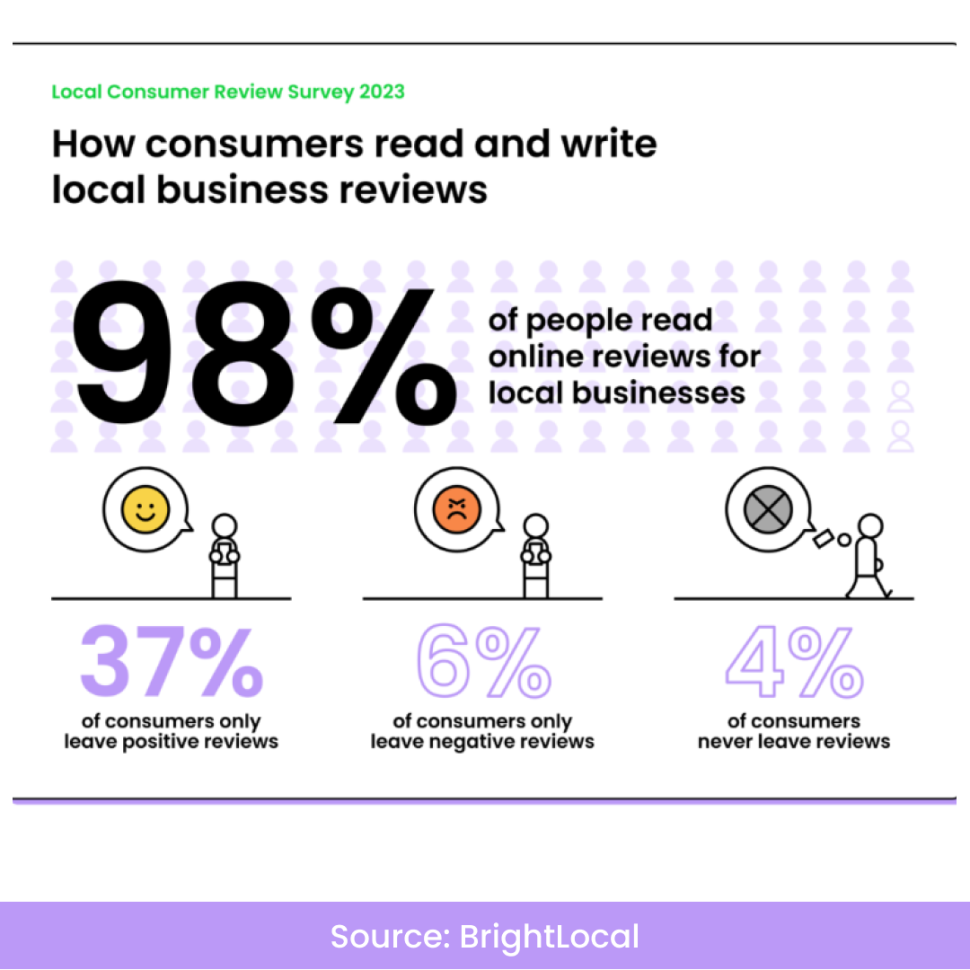
Online reviews provide a platform for customers to share their experiences and provide valuable insights into the quality and reliability of products and services. As a result, companies and businesses are paying more attention to their online reputation and are actively seeking to improve customer satisfaction to receive positive reviews.
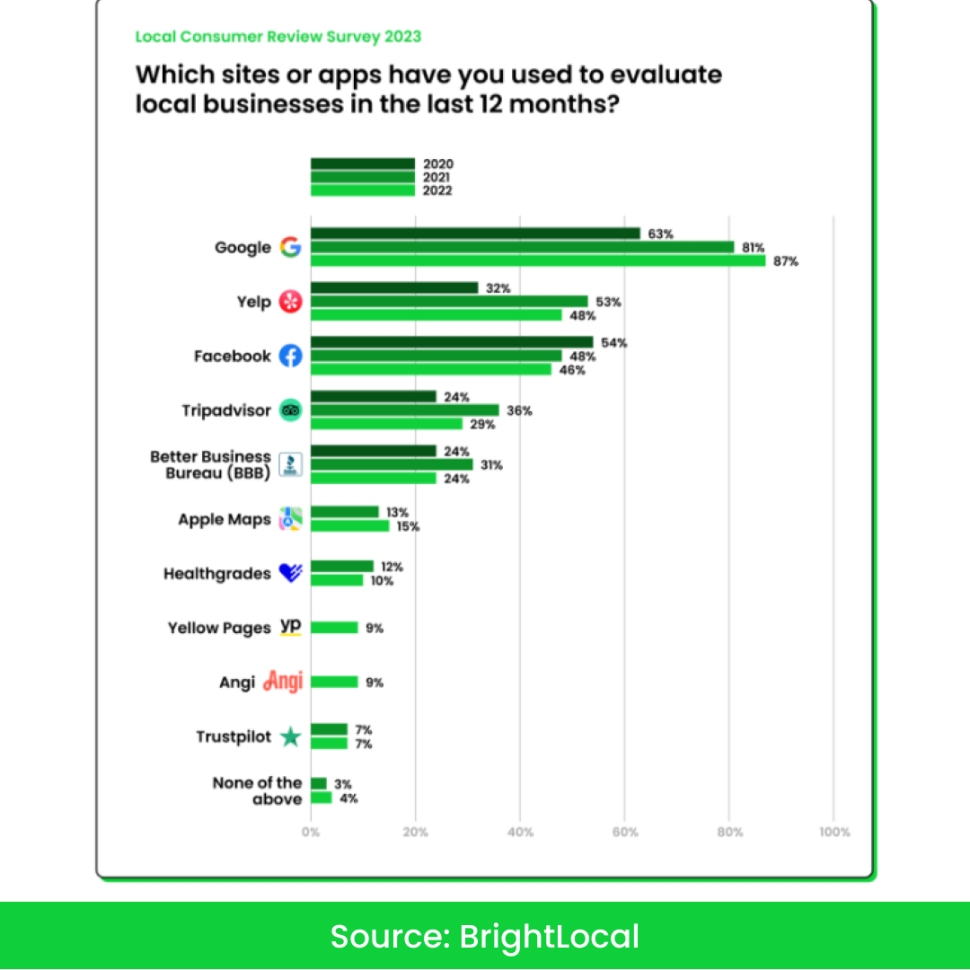
The same survey also shows that 87% of customers used Google to see local business reviews in 2022. The second in position after Google is Yelp, with 48% of individuals exploring local businesses.
According to a HubSpot study, personalized CTAs have a 202% higher click-through rate than default ones. Based on the visitor’s location, language, lead status, and a variety of other factors, personalized CTAs can be created.
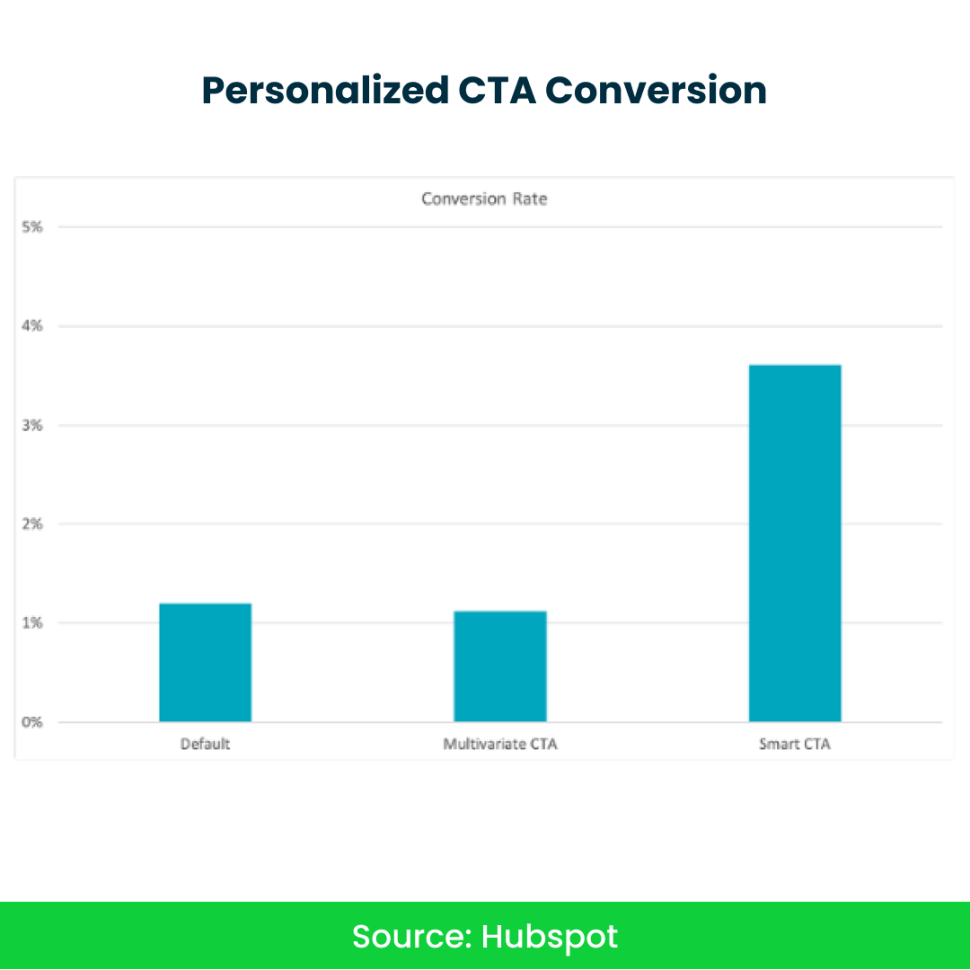
The same study also found that many smart CTAs have conversion rates significantly higher than the average while going over the data. Many CTAs have conversion rates between 25 to 45% for views and clicks.
According to Tosin Thomas’s article, BlueHeadz’s study shows that multiple offers on your landing page can reduce conversions by up to 266%.
In order to create effective landing pages, one thing should be kept in mind- “less is more.” Hence, always have one offer per page because having several offers can confuse visitors, drive them away, and as a result reduce conversions. On the other hand, having fewer options on a landing page will focus visitors’ attention precisely where you want it to.
According to a report by the Baymard Institute, the average rate of online shopping cart abandonment is 69.99%. A complicated checkout procedure, high shipping fees, a sign-up requirement, or a few payment options are just a few of the factors that could lead to a high cart abandonment rate.
As per the report by OptinMonster, the fashion and apparel industry has an abandonment rate of 68.3%, followed by the travel industry at 81.7%. This shows that the rate of cart abandonment varies greatly between industries and goods.
According to Nifty Marketing statistics, 77% of top landing pages were home pages.
However, home pages and landing pages are different. While landing pages have one goal, which is to convert visitors into sales/leads. The homepage invites viewers to learn more about the brand.
This highlights the importance of designing a visually appealing and engaging home page that effectively communicates the brand message and encourages visitors to explore the site further. As such, businesses should focus on optimizing their home page as a key component of their overall digital marketing strategy.
Across all sectors, CRO is becoming more significant to salespeople. According to a HubSpot report, 69% of marketers believe that lead conversion is the utmost priority.
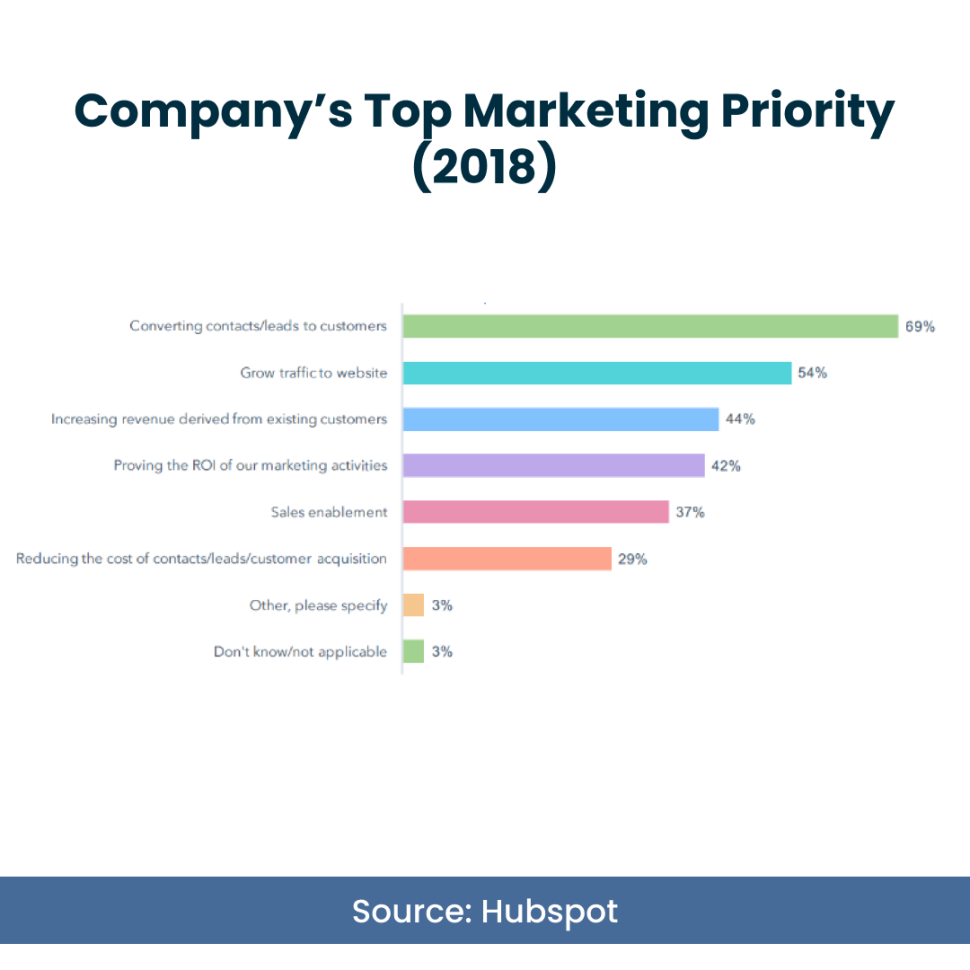
The use of marketing automation tools assists in increasing conversion rates. Marketing automation has led to a 50% increase in conversion rates for B2C businesses.
According to a Hubspot report, 17% of marketers integrated automation or artificial intelligence into their strategies in 2022, with the US and Australia showing the most interest in technologies like chatbots and AI-powered segments.
At the same time, 43% of marketers agreed that automation and AI had been the most successful trends for their company’s growth. Over the following years, automation and AI will most likely increase drastically.
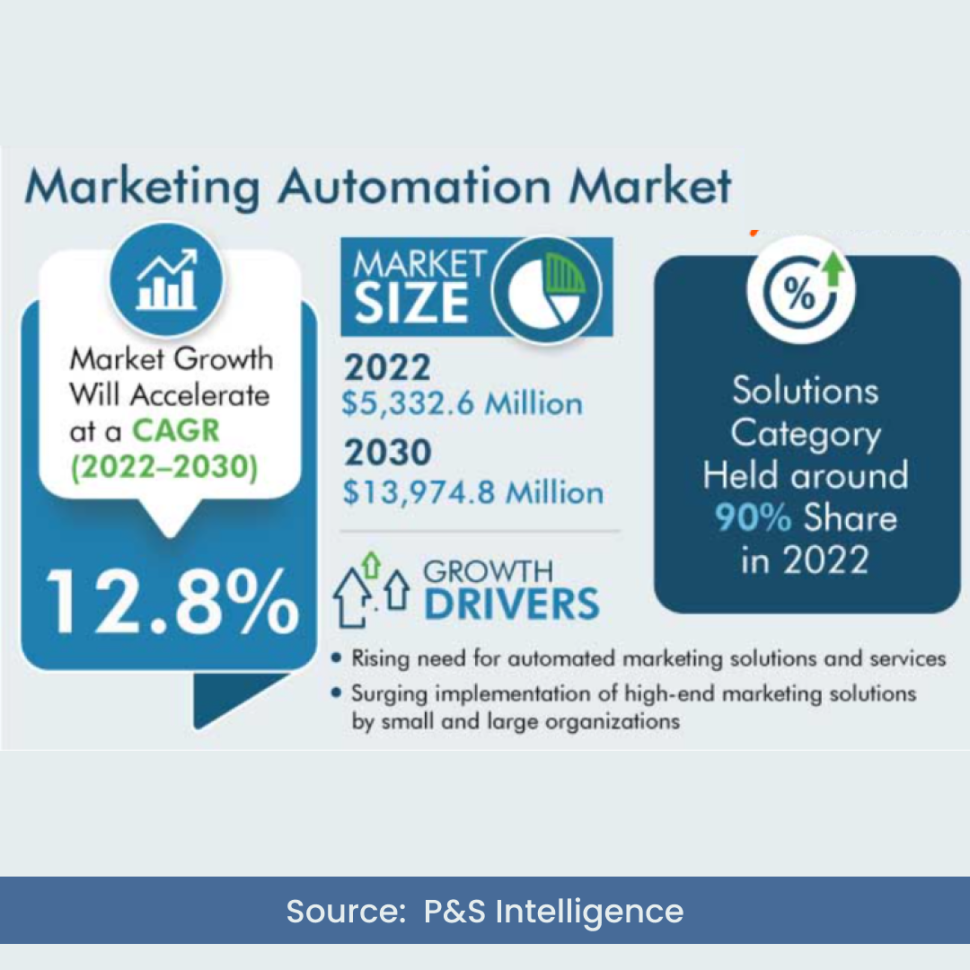
As per the P&S Market Research, the size of the marketing automation market was $5,332.6 million in 2022 and is expected to reach $ 13,974.8 million by 2030 with a 12.8% CAGR during the 2022-2030 tenure.
This proves how the requirement for marketing automation solution and services are increasing with digitally integrated organizations and the use of mobile devices.
A/B testing could be extremely profitable when performed effectively. Some reports inform that the average revenue generated by e-commerce websites is $3 per unique visitor. This income increases even further with properly performed A/B testing. An effective A/B test usually raises it by up to 50%.
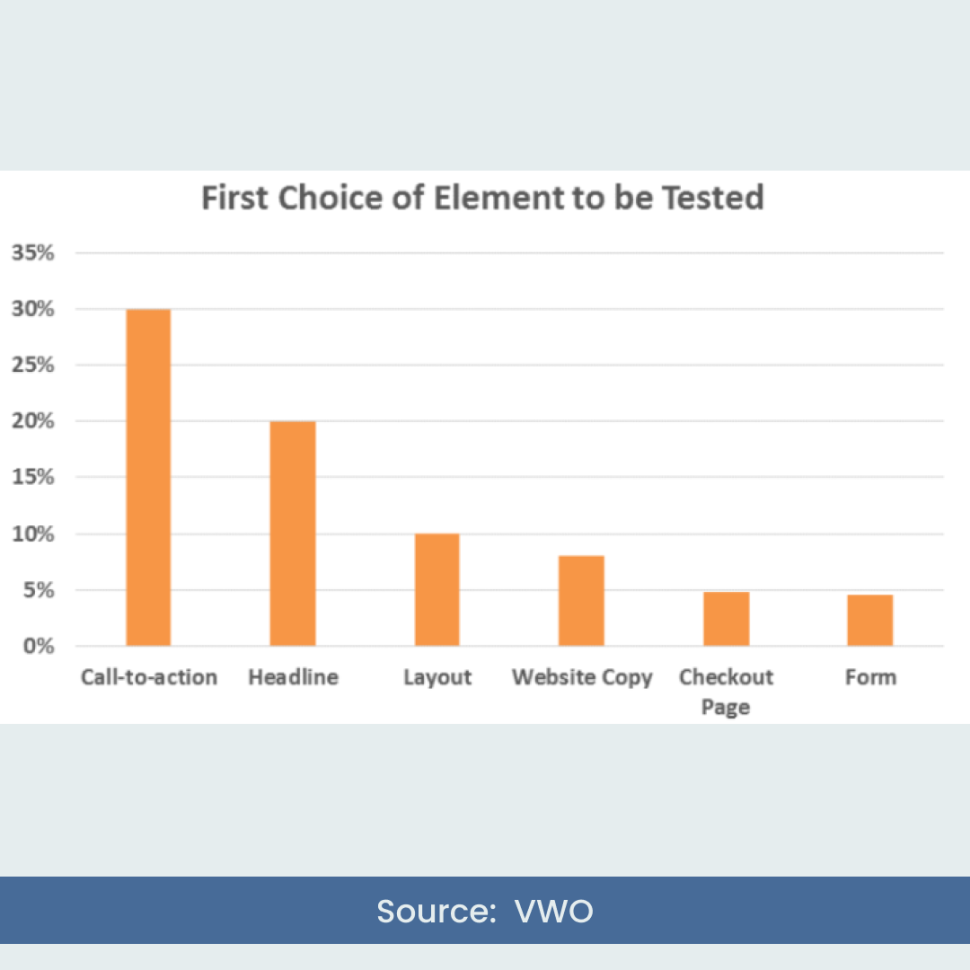
A call-to-action button is the first place where 30% of testers prefer to do the testing. The next comes the headline which is 20%, whereas 10% of testers prefer to test layouts, and 8% of the testers prefer to test the website copy.
According to Statista’s report, the biggest obstacles to testing applications are the lack of appropriate testing method (34%), an in-house testing environment (28%), and mobile testing experts (28%). In addition, some claim that they lack the necessary testing equipment (43%), access to the necessary devices (26%), and enough testing time (52%).
According to data from QY Research, the A/B testing software market was valued at $485 million in 2018, and it is anticipated to rise further. It is predicted that the industry will reach a little over a billion US dollars by the end of 2025. Meanwhile, the annual growth will stay constant at 12.1%.
User acceptance is the industry’s main driving force for AB testing software. Since AB testing involves more than just providing answers to pre-determined questions or resolving conflicts, it is crucial to adopt ongoing improvements to a given experience.
According to a report by Invesp, corporate websites are the most prominent A/B testing target with 77% of firms doing such tests in an attempt to boost CRO.
The same report states that 71% of companies perform two to three tests on a regular basis. Whereas A/B testing of landing pages is also very crucial for any online business because that’s where conversions take place. So, it comes as no surprise that 60% of all firms experiment with their landing page in an effort to boost the performance of their websites.
According to a survey by Econsultancy, published in association with RedEye, about 60% of companies use A/B testing for conversion rate optimization. More than half of the companies use A/B testing data to assist their web-related decisions. In addition, 35% of business representatives planned to use A/B testing to optimize the conversion rate.
Are you looking for a better way to optimize and design your website? If so, it’s not too late to begin.
Whether you’re a newbie or an expert in the field, there is one thing that everyone wants to be able to do: optimize their website. In recent years, many things have changed regarding how people look for information online and what they want from a business. Below, we’ll look at the best strategies for optimizing and redesigning your site in 2023.
Utilizing data from your website is crucial for understanding how well your site is performing and where there may be room for improvement for website conversion optimization. There are a few key pieces of data that you should analyze regularly:
By analyzing these key data pieces, you can better understand how well your website is performing and where there may be room for improvement.
AB testing and multivariate testing are powerful tools that can improve the user experience (UX) and help in a website redesign. By running tests on different elements of your website, you can identify what works best for your visitors and make changes accordingly.
A/B testing compares two versions of a web page to see which one performs better. Typically, one version is the control (the original or current version), while the other is the variation (the new version). A/B tests can be run on anything from the color of a call-to-action button to the layout of a landing page.
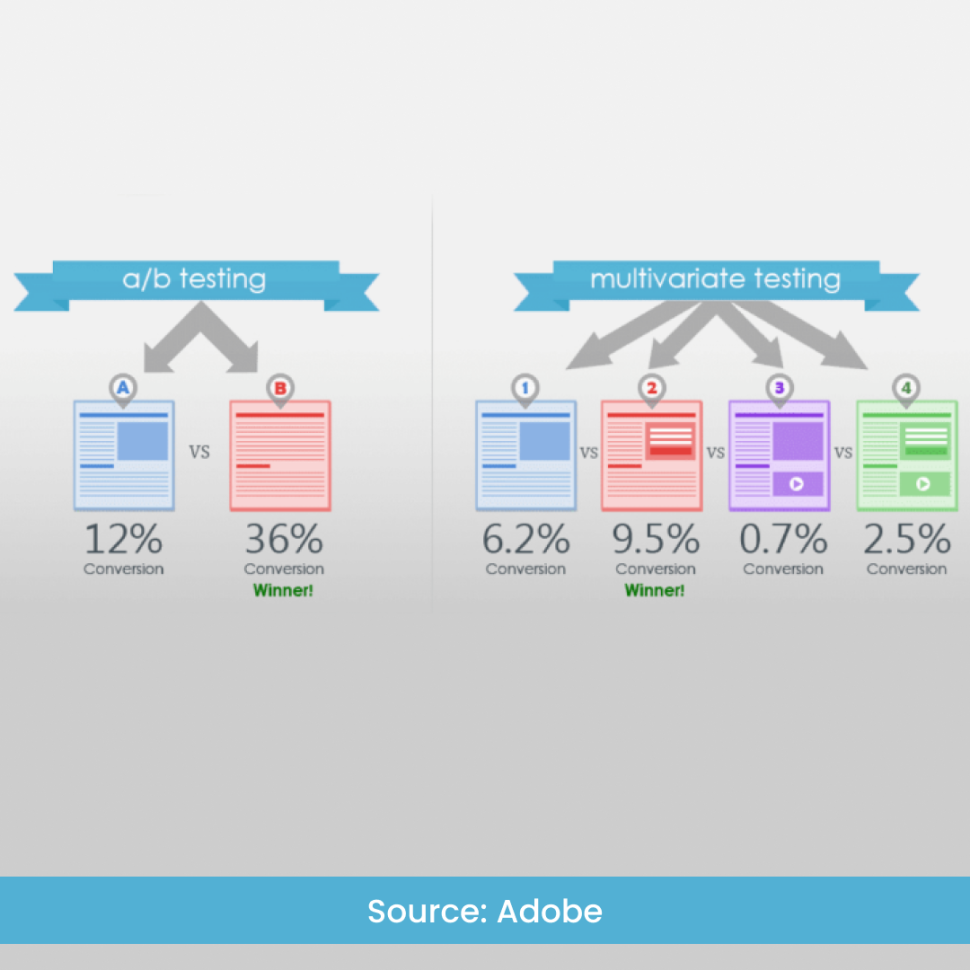
Multivariate testing or split testing is similar to AB testing, but instead of comparing two versions of a single web page, it compares multiple versions of multiple pages. This allows you to test different combinations of elements to see which ones work best together.
Both AB testing and multivariate testing are valuable tools for optimizing UX. You can ensure that your website provides the best possible experience for your visitors by running tests and making changes based on the results.
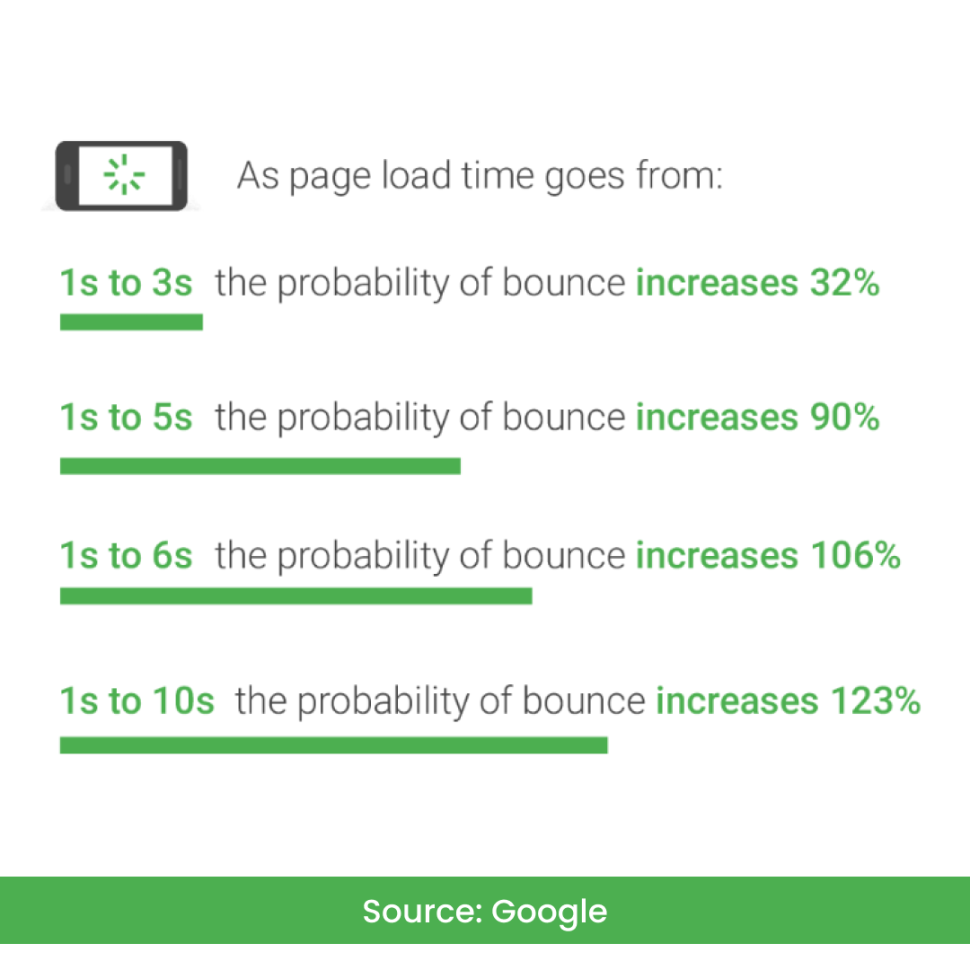
Your website’s speed is important for a number of reasons. First, fast-loading websites provide a better user experience. Studies have shown that users are less likely to engage with a website if it takes too long to load. Second, search engines like Google consider website speed when ranking websites in search results. A faster website is more likely to rank higher than a slower one.
There are a number of ways you can speed up your website. One way is to optimize your images. This means reducing the file size of your images without reducing their quality. Another way to increase loading time is by minifying all JavaScript files on your site. Minification reduces the amount of code your browser downloads when someone visits your site.
There are many other ways you can increase Website loading time, but these are some of the most popular ones business use today. Following these tips can improve your website’s speed and provide a better user experience.
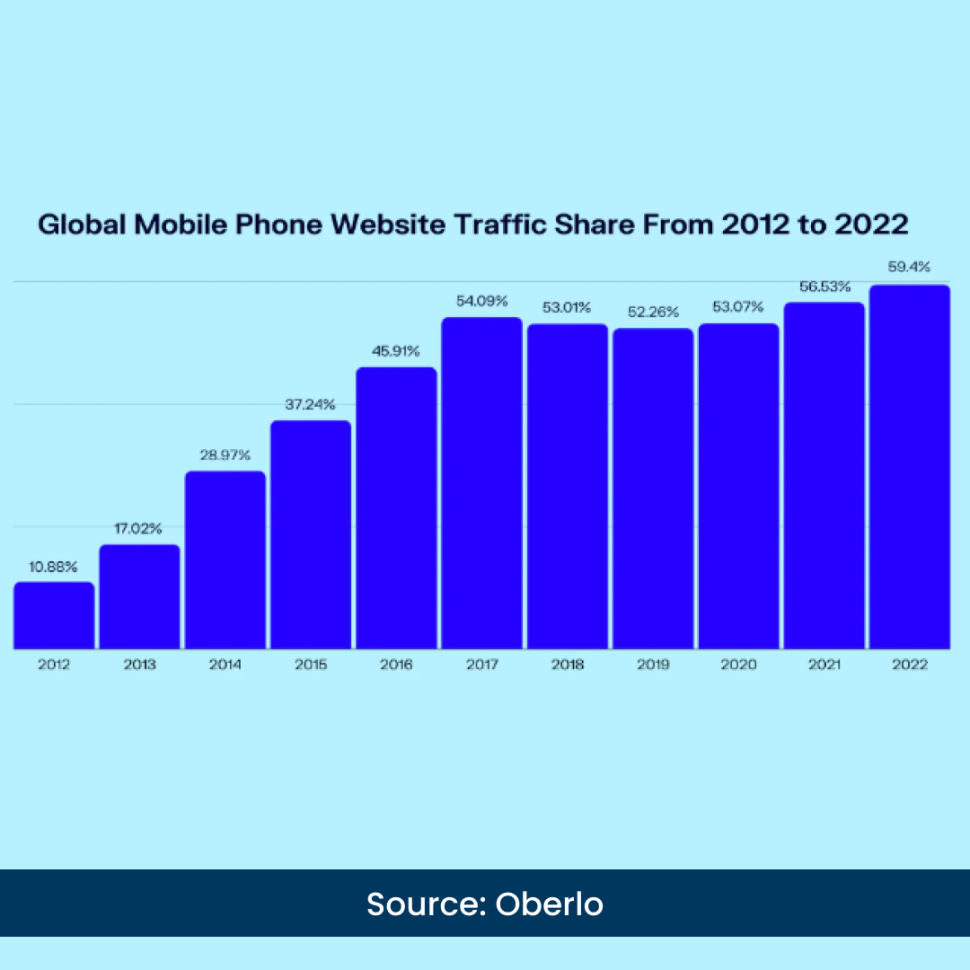
According to a Statista report, mobile devices, excluding tablets account for 59.16% of all web traffic in the second quarter of 2022. This implies that over half of the customers may not visit your website if it is not mobile-friendly and easy to view on a small screen.
Even if your website is already responsive, there are ways to improve the mobile experience. Here are a few tips for better website conversion optimization:
Optimizing your website for a higher search engine ranking can help you increase traffic and visibility. It is an important part of the SEO process, but it’s not easy. It takes time, effort, and expertise to ensure your website is optimized.
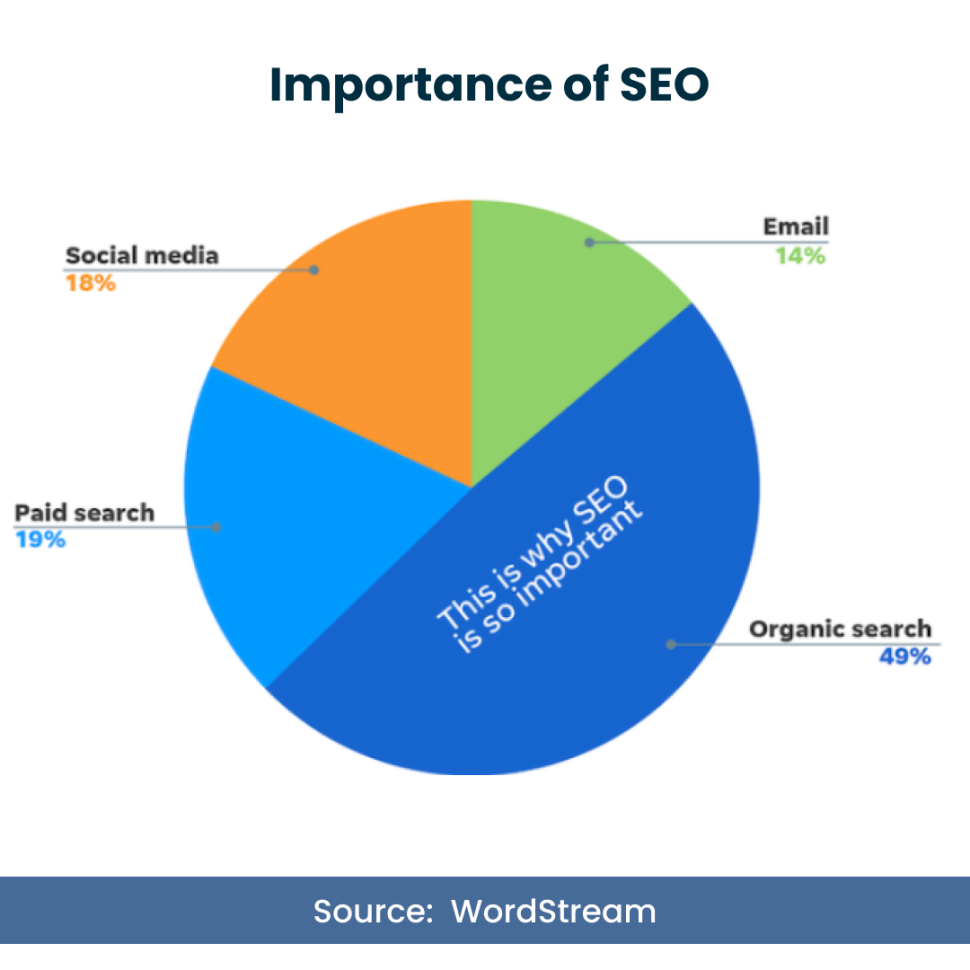
If you want to improve your website’s search engine ranking, you can do a few things.
With all the advancements in digital technology, it has become increasingly important for businesses to focus on website conversion rate optimization.
The current statistics and facts have highlighted that in order to be successful, businesses must allocate resources towards improving their CRO strategy which includes understanding customer behavior and preferences, running AB testing experiments, and revamping existing web designs or content.
By staying up-to-date with the latest trends and strategies related to CRO in 2023, businesses can further unlock potential business opportunities online.