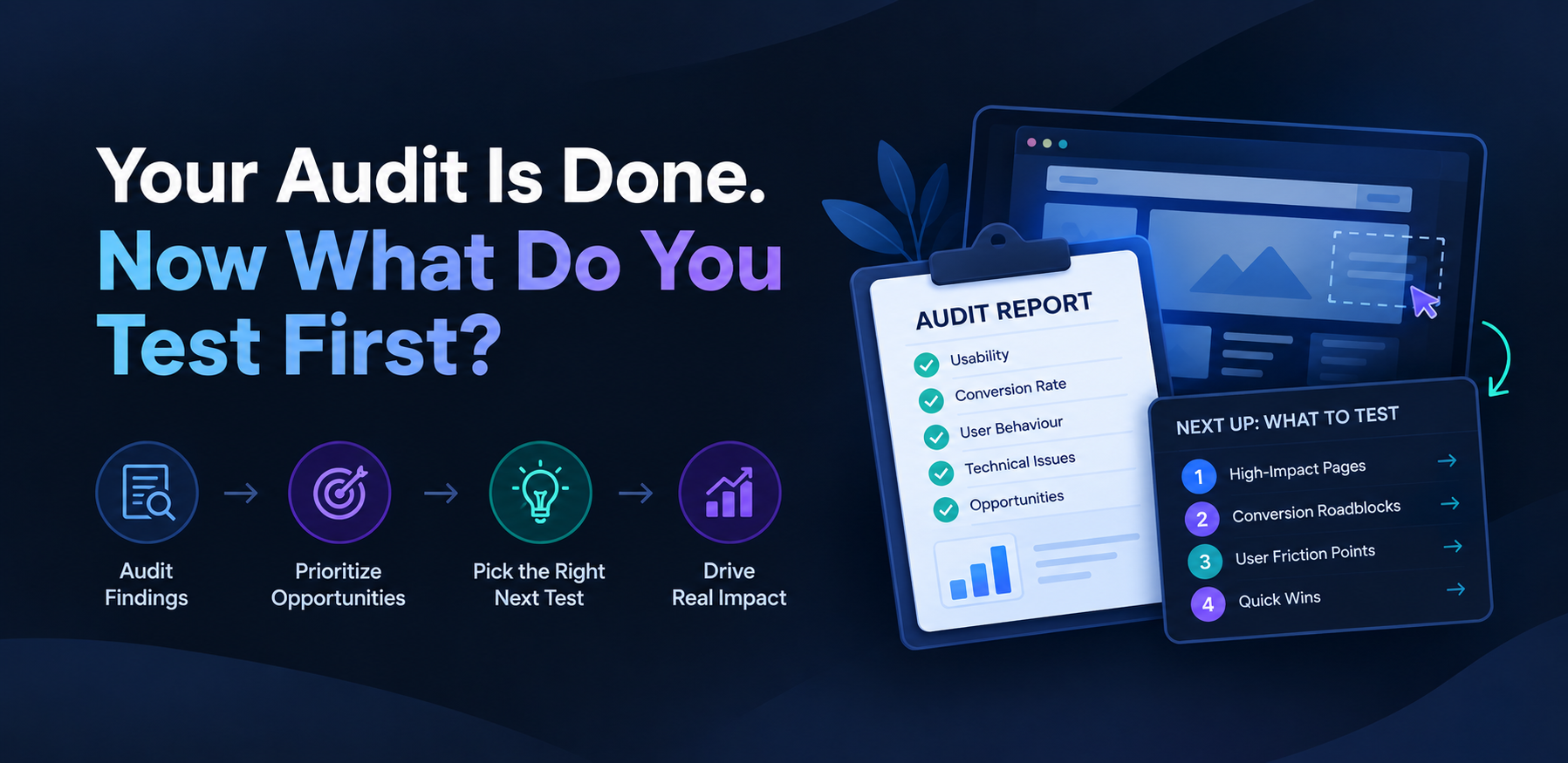
Your Audit Is Done. Now What Do You Test First?
With the growing innovation and services entering the market, there is a race to create better experience for users. Saying that, user experience has become a common phrase these days.
User experience or visitor behaviour is treated as the reputation of a business, influenced by the quality of its customer service and support.
According to a research by Mckinsey, companies that use consumer behavioural data outperform competitors in terms of sales growth by 85%.
The trick is getting users from their first visit to the checkout page to increase conversions. But the situation is that most specialists don’t know where to begin or how to get started. This is understandable given the large number of factors involved in conversion.
Above all, you must know how to recognize your customer’s behavior. Such data can assist you in fine-tuning your conversion rate optimization strategies.
For example, user behavior analytics helps to locate customers who are interested in similar items or genres. Based on their browsing behavior, you may then customize product recommendations.
Conversion is also influenced by user experience design. A wide range of factors influences visitor behaviour for CRO. It will be inadequate to try to optimize every single detail. Rather, you should have an understanding of how your customers act.
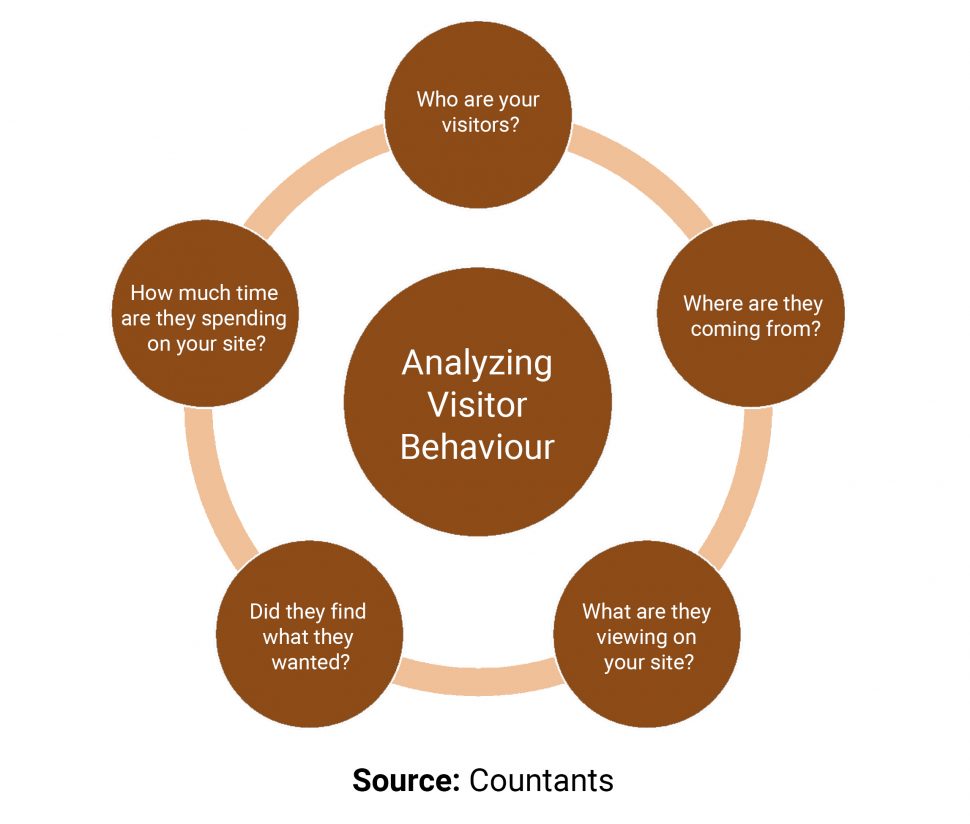
Visitor behaviour analysis (VBA) is the process of collecting, analyzing, and interpreting data about how visitors interact with the website or online platform. This information is then used to gain insights regarding what is working well and what needs improvement with the ultimate goal of increasing conversions and improving the overall user experience.
Visitor behaviour analytics uses various tools to optimize the website experience, understand where visitors are dropping off and the reason for leaving your site, and track leads that you acquire through your website.
Analytics gives you the ability to see how many people visit your site, how long they stay on it, why they left, which pages they look at most often, and where they depart from the site. There are a number of different types of visitor behaviour analytics that improve user experience and increase sales.
Collecting behavioral data is a great way to understand what content your audience finds most engaging, and how they interact with that content. It’s also a great way to make sure that you’re capturing the right information about your audience.
Here are some tools that you can use to collect behavioral data:
Hotjar is a web-based recorder that enables you to analyze your visitor behaviour. In order to identify specific insights fast, Hotjar’s Continuous Heatmaps provide you the ability to filter data and build unique heatmaps depending on user criteria, such as the user’s job or title, the date they registered their account, whether they are using a trial version of your product, and more.
Heat maps are a visual tool that assists in making data-driven decisions for A/B testing, website updates, and redesign. It aggregates user behavior, which makes it easier to combine quantitative and qualitative data for data analysis. They provide a quick understanding of how your target market interacts with an individual product or website page—what they click on, scroll through, or ignore—helping you spot trends and optimize your site and product to boost user engagement and sales.
Crazy Egg offers eye-tracking tools, i.e., based on where visitors click on your website, it produces heatmaps. As a result, it helps you decide where to concentrate. You may use it to filter information on the top 15 search engines, key phrases, operating systems, and so on.
In order to use this tool, it’s important to add a small JavaScript code to your website’s page. When the code is added to your website, Crazy Egg will monitor user activity. You can view the clicks on the sites you are tracking in a report that is generated by your servers. The dashboard in the member’s area of the Crazy Egg website lets you review the reports. It collects website traffic data, so it’s great for identifying low traffic periods or times when there are fewer people interacting with your site.
It also allows you to identify how many different devices are visiting your site, which can help with marketing campaigns aimed at mobile users or specific demographics such as millennials (who spend more time on their phones than they do in front of a computer).
It is another option for collecting behavioral data from visitors. A simple and cost-free method of monitoring and analyzing website traffic is provided by Google Analytics (GA).
With the help of GA you can turn visitors into customers through its rich reporting and analytics tools.
In addition to monitoring the quantity of visitors, GA provides valuable insights into how your website is perfroming and what you can do to accomplish your objectives. You get the leverage to monitor the number of traffic attained by your website, its source and the visitor behaviour. You can also track social media activity and analyze mobile app traffic among other things to make smart business decisions using GA.
Knowledge is powerful, but do you know what’s even more powerful? Insight. It’s beneficial to know beforehand so that you have the potential to change outcomes. Visitor behaviour analysis is critical to your business’s success.
Now that you know the importance of visitor analysis, it is time to understand how visitor analysis works. There are 2 steps involved in behaviour analysis.
Quantitative and Qualitative analysis are two ways of analyzing your visitor data.
Quantitative analysis is the process of gathering data by counting, measuring, or categorizing it. It helps you understand the things that are happening in your business so that you can make better decisions. Quantitative analysis can help you decide how many visitors you need to attract to keep your site up and running, which areas of your site require improvement, and how much time visitors spend on each page of your site. To analyze user visits, we look at the data and numbers in quantitative terms; as it gives some indication or grey area regarding the user visit.
Qualitative analytics is the opposite of quantitative analysis. It involves looking at patterns in data instead of counting them. Qualitative analysis involves engaging with the information itself; reading it, listening to it, looking at it, etc.—and drawing conclusions based on those observations.
For example, a qualitative analyst might observe that customers who purchase product X tend to prefer product Y over product Z. This would allow them to make a decision about which products to sell and which ones not to sell.
They also determine why customers prefer one product over another by looking at the demographics (age range, gender, etc.), their behavior patterns (how often they buy), or any other relevant factors. This can help you identify trends and develop hypotheses about why those trends exist. Qualitative analytics allows companies to look for correlations between factors such as age, gender, location, or device type. We use click maps, scroll maps, and heat maps to collect data.
There are a lot of ways in which you can increase conversion with behavioral data based on your goals. The first thing to think about is: what do you want to do with the data?
If you’re looking at customer behavior as an indicator of how well your website or app is performing; then it’s important to know what kind of customer base you have so that you can make sure that your product is appealing to those customers. It’s important to know what kind of products they’re buying from other companies.
For example, if someone is visiting your site a lot but hasn’t bought anything from you yet, then maybe it’s time for an ad campaign.
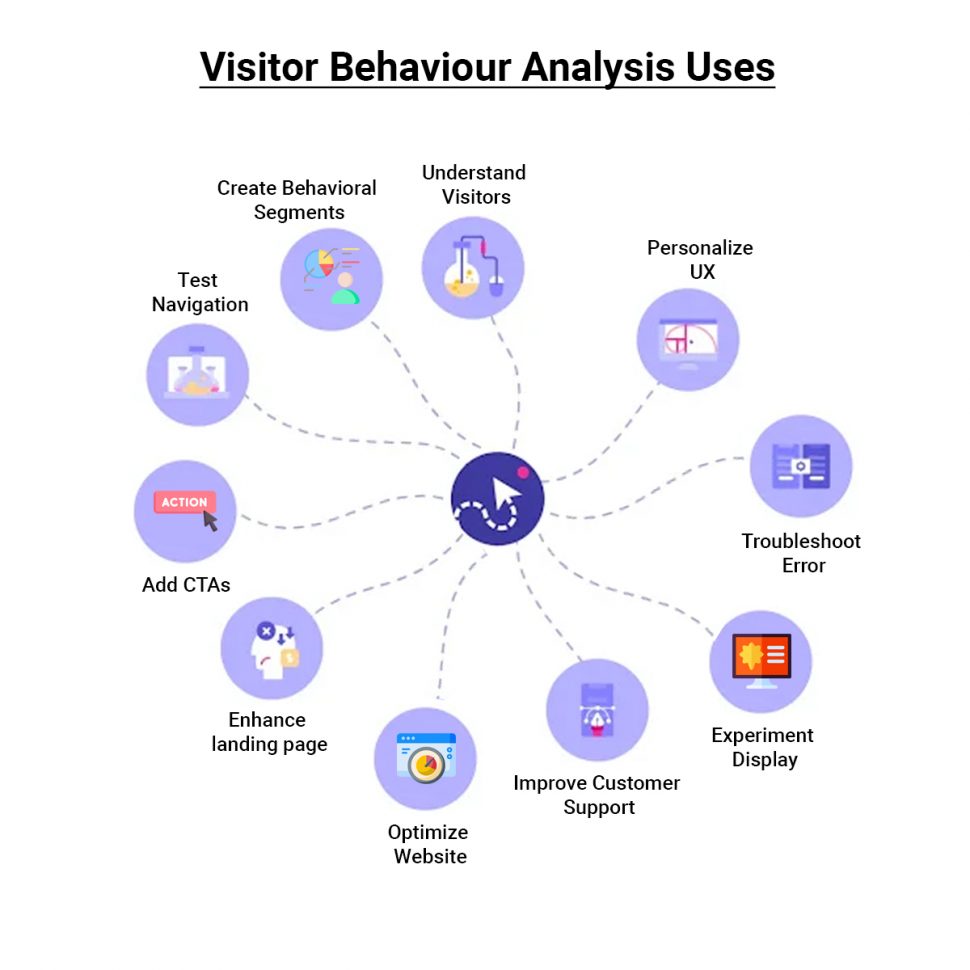
When you want to improve the efficiency of your website, you need to know where your visitors are dropping off. It’s especially important when you’re trying to increase conversions as it’ll help you focus your efforts on making sure that the pages that will convert best are getting the most attention from your audience. Your site visitors are dropping off in three distinct places.
While it might seem like a simple task, identifying the type of content that works best for your site can be difficult; —especially when it comes to improving conversions. It’s important to understand how users interact with your site and what they’re looking for before you make any changes.
It’ll also help ensure that you have enough data to make informed decisions about what kind of content is effective at driving sales.
The journey of a user is not just about the product, but also about the experience. The first step to personalizing your user experience is to know what your users are going through. You can use tools like Google Analytics to collect information about how people are using your site. Later you can use that information to create a custom interface for each user.
Once you’ve created the custom interface, you want to make sure that it’s intuitive and easy for users to understand. The best way to do this is by listening and taking notes on how visiotr behaviour is interacting with the site; so that you can keep improving upon it over time. The user’s experience should be personalized based on their journey. This is achievable by analyzing data and feedback from successive stages of the user’s interaction with the product.
Troubleshooting errors on a website can increase visitors’ conversions by making sure that the page is loading properly. So that people are able to search what they are looking for. This helps them understand what you have to offer, and know if there is something wrong with your website.
It’s important for you, as an entrepreneur or business owner to make sure that all of your pages work properly and load quickly so that people don’t get frustrated by waiting for page load. This can lead them away from your site because they will be annoyed to waste their time checking it out.
The reason is simple: your website is a reflection of your brand, and the experience people have with your site reflects the best possible experience they have with whatever product or service you’re selling. If they have trouble getting through your site, or if they can’t find what they need, then it seems unlikely that they’ll be able to find anything that will convince them to buy from you.
But if you fix these errors, your visitors will feel more comfortable and confident in what they are seeing because they know it is trustworthy. When things go smoothly, customers are more likely to feel like they’re getting their time’s worth and remember you.
Businesses need to experiment with how to set up their product display for their website and to know visitor behaviour. This will allow them to create the best experience for their customers. If a business creates an experience that is not ideal for the customer, the company loses out on sales and revenue.
If a business sets up its product display incorrectly, or if it is not displayed in a way that provides clear information regarding each item; then the customer can get confused about what they’re purchasing and may have difficulty making a decision regarding the purchase. Additionally, if customers are unable to easily find information about the product available for purchase, they may leave without making a purchase at all.
For example: If a business has a variety of different products for sale, then it is better for them to have a different style of display for each one. It is so because the customers can see what products are available without having to scroll through all the information about each one individually.
A call-to-action (CTA) button takes users to a specific page or pop-up space on your website. If you have a CTA and it’s not working, then you may be giving your customers the wrong impression about them contacting you.
For example, if a user comes to your site and can’t find the information he wants, he might get frustrated and leave without completing the process. A call-to-action can help improve conversions with user behaviour analytics by giving people the right information at the right time.
In addition, trying different call-to-action methods and offers on your website can increase visitors’ conversions. It is because it shows that you are willing to experiment with new ideas and try different things before making any final decisions (about what will work best for your brand or business).
One effective way to increase conversions is to try different call-to-action methods and offers on a website. This can be done by testing different forms of text, images, and colors to know which is the most effective. This research can then help the marketer better understand what will work best for their target audience.
Another way to create an effective CTA is by using testimonials from customers who have used your product before. For example, if someone goes through a process of researching products that fit their needs; in this case, they might feel more comfortable buying from your site because they already know what to expect from the product. Thus, this trust is the key that gives them hope that it’s going to work for them as well.
Increasing the number of people using your products can really help improve your bottom line. One of the best ways to get customers is by providing them with a top-notch customer service experience that makes them feel they are special.
People today are increasingly using internet for almost all tasks. Thus, the more they are able to use it, the more likely they are to find your brand and service. To improve your customer support service features for online customers, you should ensure that your website is easy to use and understand.
Businesses should also make sure that it is quick and efficient so that when a customer has a question or problem, they feel comfortable calling you directly rather than searching the internet for answers. They can also improve your customer support service by creating frequently asked questions (FAQs) page on your website, where you provide answers to commonly asked questions about your products or services. This will save time for both business and the customers, as well as help keep everyone happy.
Mobile devices have become more and more popular in the past few years, and this is especially true for smartphones. The number of people who use their phones to access the internet has increased dramatically in recent years. And it’s expected to continue growing at an even faster rate in the future.
Unfortunately, many websites are not optimized for mobile users, which can lead to lower conversion rates and lost sales.
An optimized website for mobile device increases visitors’ conversions by creating content that’s easy to consume on a small screen. This means making sure that content is short, concise, and easy to understand so that users get what they need. It also means providing clear instructions on how users can interact with your site, so they can navigate without getting lost or confused.
The second way to optimize website for mobile devices and increase conversions with user behaviour is through touch-friendly design elements. When you have an optimized site, the whole experience will feel more natural for users who are trying to navigate the website on their mobile devices. This means they’ll be able to find exactly what they’re looking for swiftly. This also makes it easier for them to interact with your business in ways that work best with their experience.
Also, make sure that all links on your site are clickable so users can easily navigate around your pages without having to scroll through long blocks of text or images that are difficult to read. You should also try using images instead of text whenever possible so visitors can see exactly what it looks like.
Visitors who come on a landing page might have an interest in the product and not necessarily the company. The goal of landing pages is to convert visitors into customers and increase revenue.
Therefore, it is important that every piece of information that appears on the landing page is relevant to your company. You should use data-driven techniques such as visitor behaviour analysis through A/B testing to determine which user has converted at what point.
If your landing page is not attracting visitors then it is time to work on it and make some changes. The first step in improving your landing page is to consider its purpose. What do you want the visitor to do when they arrive at your website? Do you want them to purchase something, download a free resource, or sign up for an email list? The answer will help you determine what kind of content should accompany each action.
For example, if you’re selling products, it makes sense to include a discount code or coupon right on the landing page. This will help increase sales! You also need to think about what kind of information is most relevant to the person at this stage of their journey.
The web is a dynamic place. This means that people are constantly looking for ways to consume content. And the way they do that is by expanding at a rapid rate. That’s why it’s important to test your site’s navigation methods and layouts to see what works best for your audience.
Even if you don’t think it will make a difference in terms of traffic or conversion rate; you might be surprised to know how many people prefer one method of navigation over another— and how much time they spend on your site as a result.
Testing different navigation methods and layouts for your website are important. It helps to increase the number of visitors to your website through different navigation methods and layouts. Testing different navigation methods and layouts through visitor behaviour optimization will help you determine which method works best for your audience, as well as how you can use these options in the future. Testing will also allow you to see how people interact with your website based on the goals, needs, and preferences.
The more information you have about what your audience is looking for when they visit your website, the better decisions you can make regarding improving conversions with user behaviour design options and content updates.
You can use tools like Google Analytics to test different navigation methods and layouts. It will allow you to see which elements of your website are working well, what makes users click on certain links, and which parts of your website need improvement.
Companies are always looking for ways to increase conversion rates and drive their business forward. One way to do this is by segmenting your audience based on behavioral data analysis.
Segmentation allows you to tailor content, advertising, and other services to specific groups of people. Behavioral segmentation can help you create a website that’s more effective at getting sales or attracting new customers.
For example, if you’re selling shoes online, you might want to create a “shoe-buying” behavioral segment so that you can target people who have expressed interest in buying shoes. You can also create personalized ads based on the behavior of those who visit the website and see how much profit you can make.
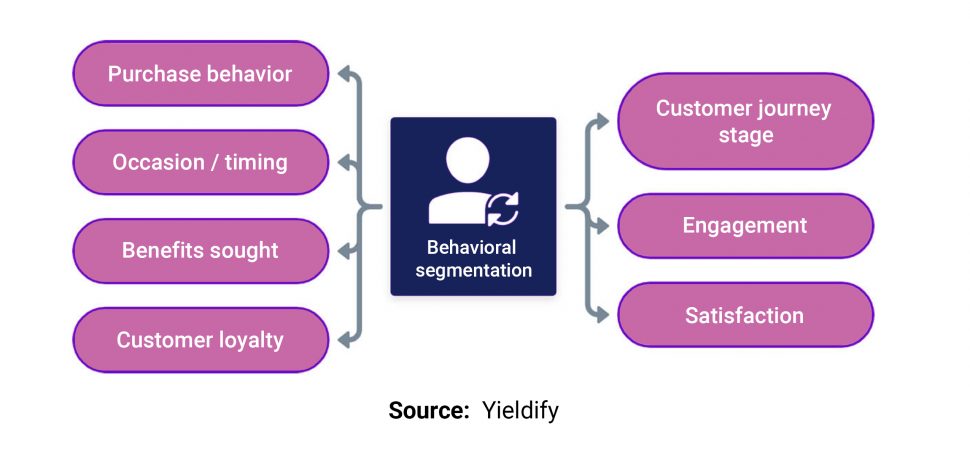
To provide unique content or features only available to certain audiences, you can also create segments for different types of users.
Thus, to improve behaviour analytics and conversion rate, business needs behavioral segments to make sure that the visitors they get on their website are the right ones.
By using website user behaviour analytics, you can gain insights into the user’s behavior and make data-driven changes to your website. This will improve performance and increase conversions of the website. It’s worth noting that the consumer is always the center of attention. You should work to improve the user experience and make the purchasing process easier for customers. This process will help to quickly convert them into a customer.
Moreover, businesses not only increase conversion with behavioral data, but also build relationship with customers to gain their trust. Once the customer understands your product or brand, then comes a sense of loyalty and trust between both the parties.