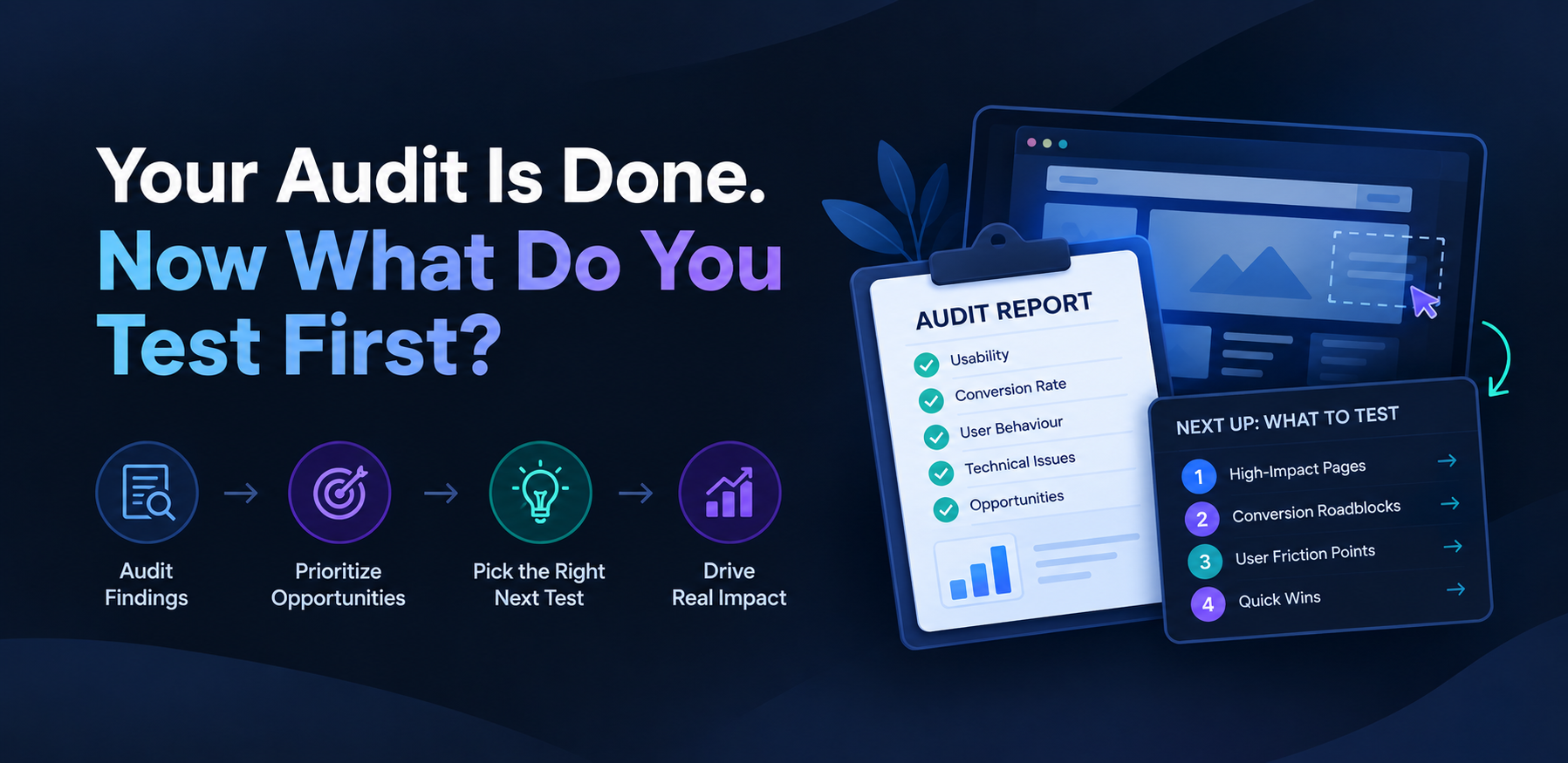
Your Audit Is Done. Now What Do You Test First?
Most guides on testing and web development start with a site that already exists. You have the homepage, product pages, checkout flow, and everything else in place. Then someone decides they want to run a test. That creates some real problems: sending traffic to different versions, keeping redirects clean, and making sure a redesign doesn’t quietly break something no one is checking.
Those problems are worth solving. But they’re not the only ones to think about. There’s a bigger question that usually gets overlooked:
What if the site had been built for testing from the start?

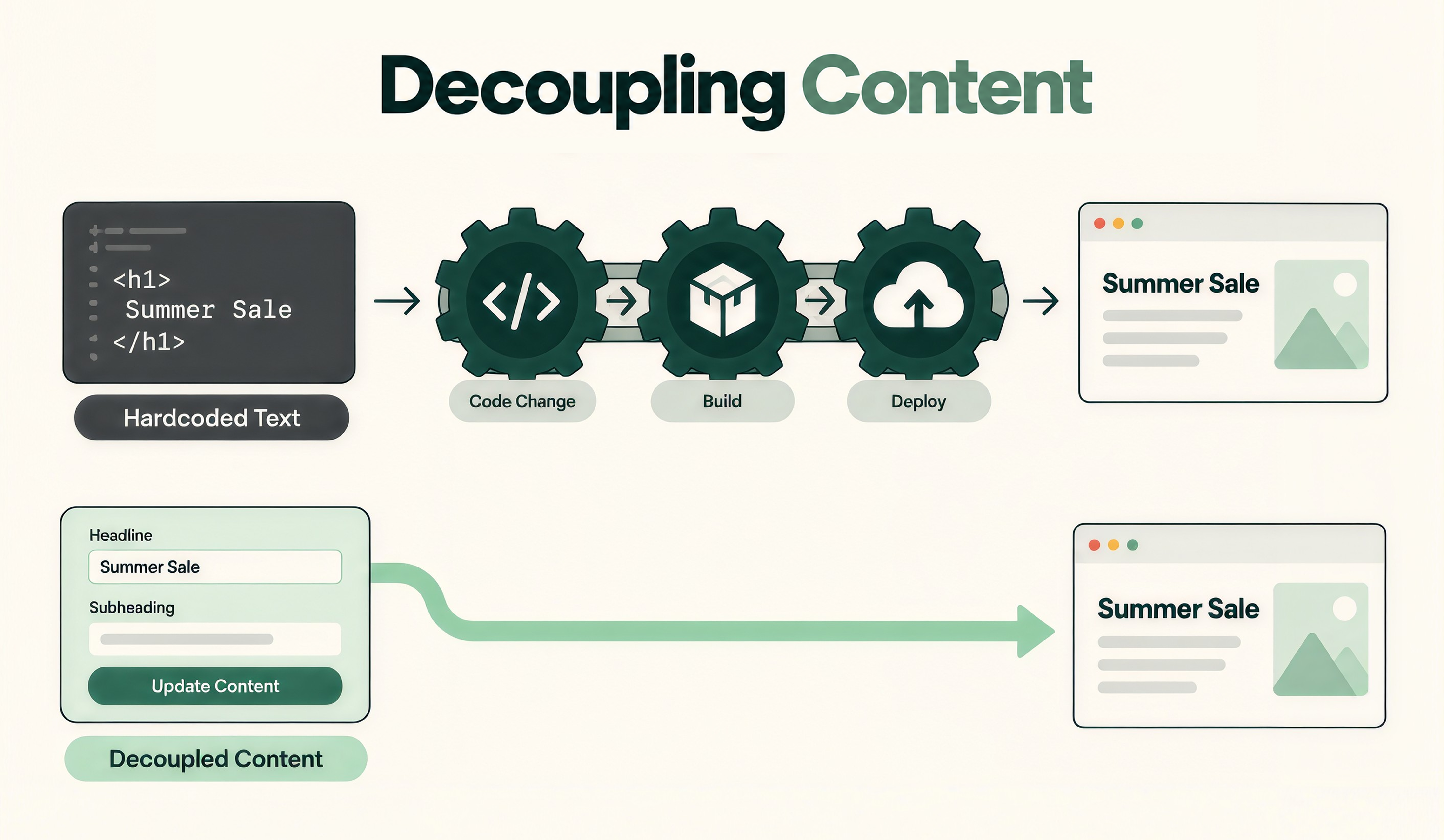
Say you want to test two versions of a headline or simply change the color of a CTA. Maybe you want to test something bigger, like a completely new checkout flow against the existing one. If that headline is hardcoded into a template, changing it means a code change and a deployment. Every time.
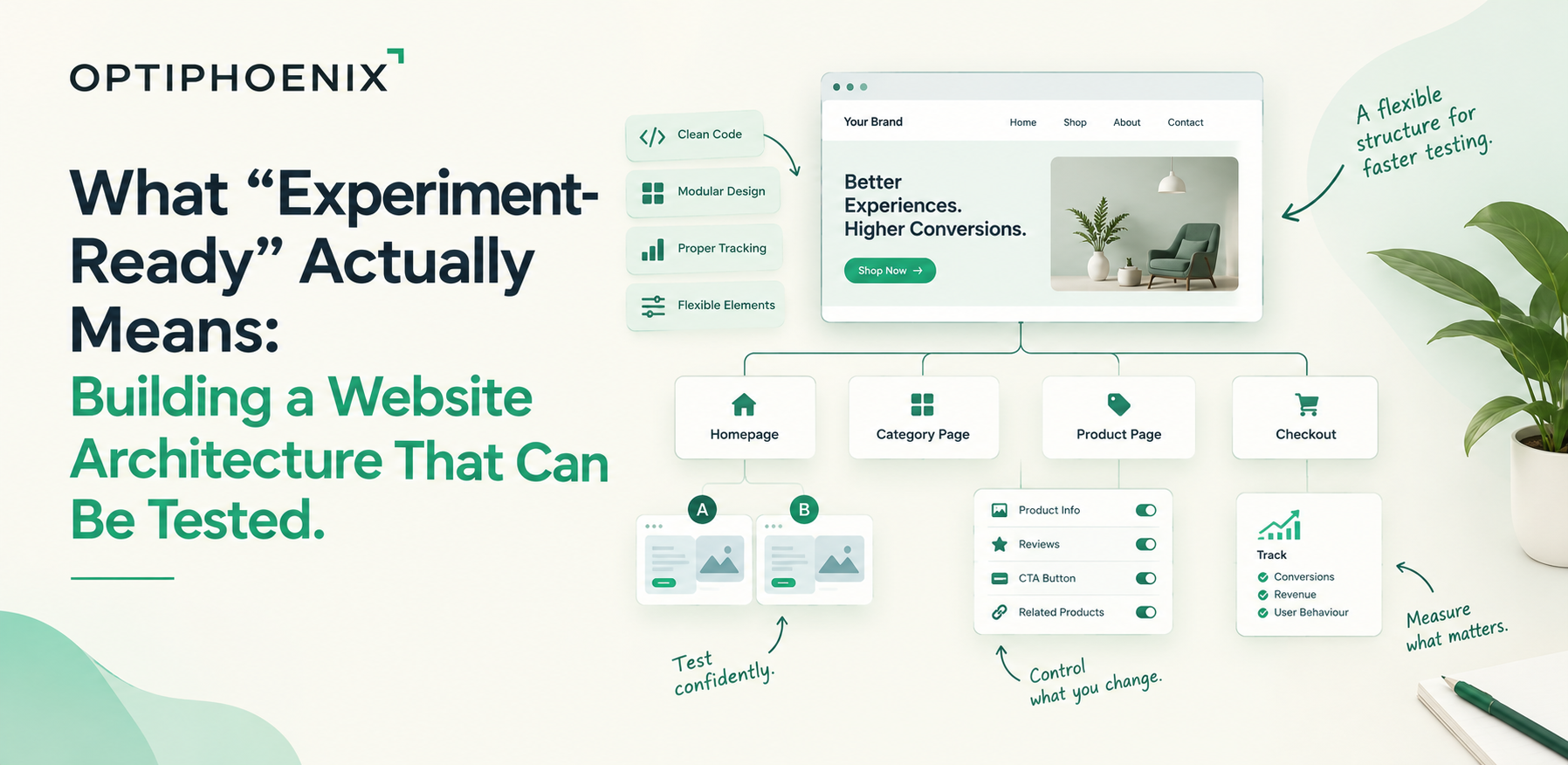
A site built with testing in mind handles this differently. Content that might change during an experiment stays separate from the code that renders it. That means a new variant can exist without someone having to touch the deployment pipeline.
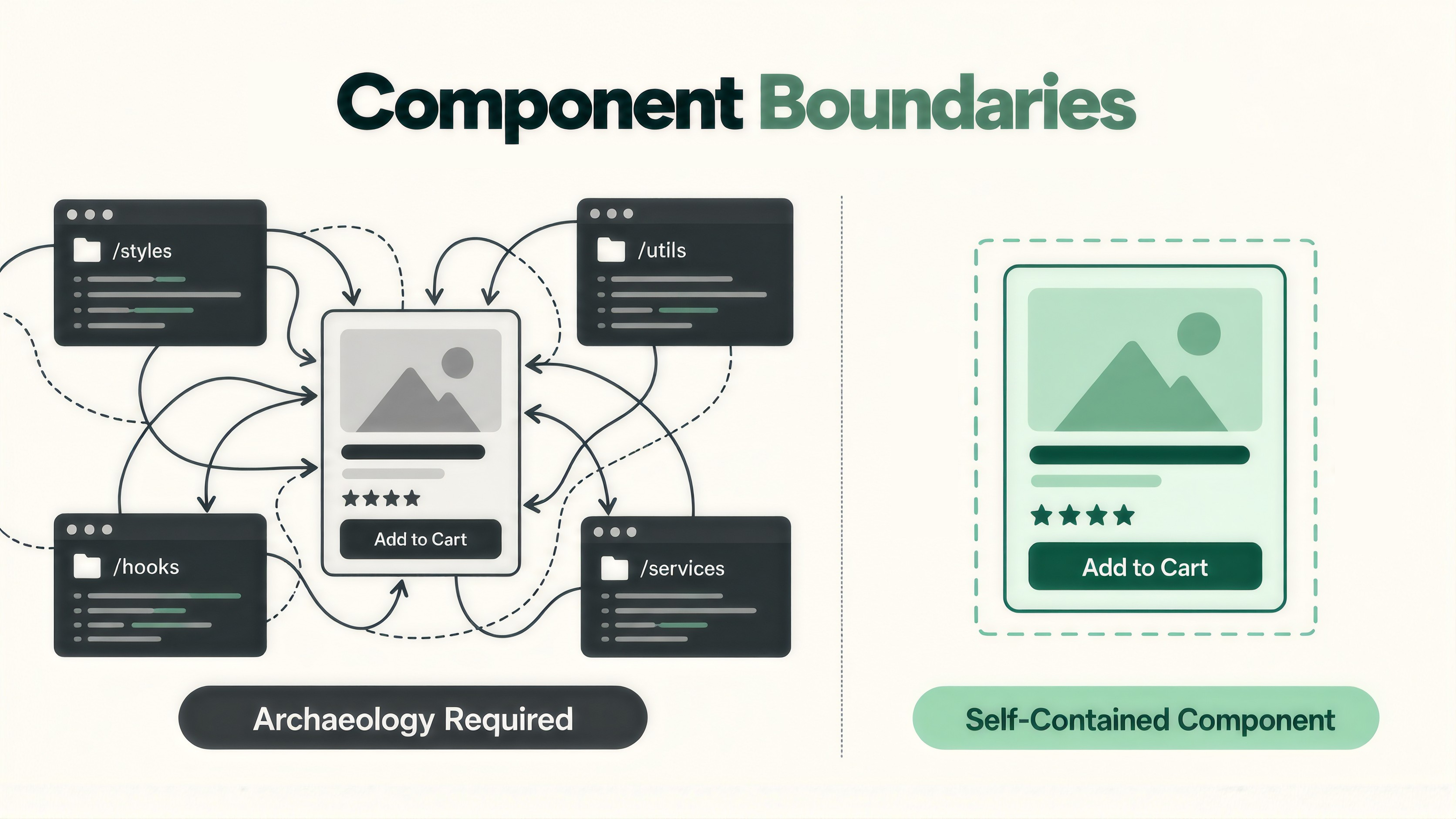
The same applies to how components are built. If a product card depends on four other parts of the codebase, replacing it means understanding and changing all four. A cleaner setup keeps that change contained. This isn’t really about choosing a fancier framework. It’s about making changes without creating a chain of work across the rest of the codebase.
Go back to that product card example. The real cost isn’t the four other parts of the codebase it touches. It’s that nobody can say for certain, without checking, which four parts those are. Every test that touches that component starts with archaeology before it starts with actual work.
Research on feature flag systems, including work out of Concordia University, describes a more deliberate version of this: routing decisions that happen continuously as the application runs, rather than a flag being a single static value checked once at startup. That’s a meaningfully different way of thinking about it. A flag isn’t a switch you flip and forget. It’s an active part of how the application decides what to render, on every request, and treating it that way from the start is what keeps a test from requiring a mini-investigation just to scope it.

None of this needs to be complicated. It mostly needs to be decided on purpose, before the third or fourth test comes along and the coupling has already calcified into something nobody wants to touch.
Client-side testing works fine for a while. Swap some text, change a color, done. But once a team wants to test something structural, a different checkout flow, a personalized pricing page, pure client-side tools start showing their limits. The team ends up needing server-side testing whether the architecture was ready for it or not.
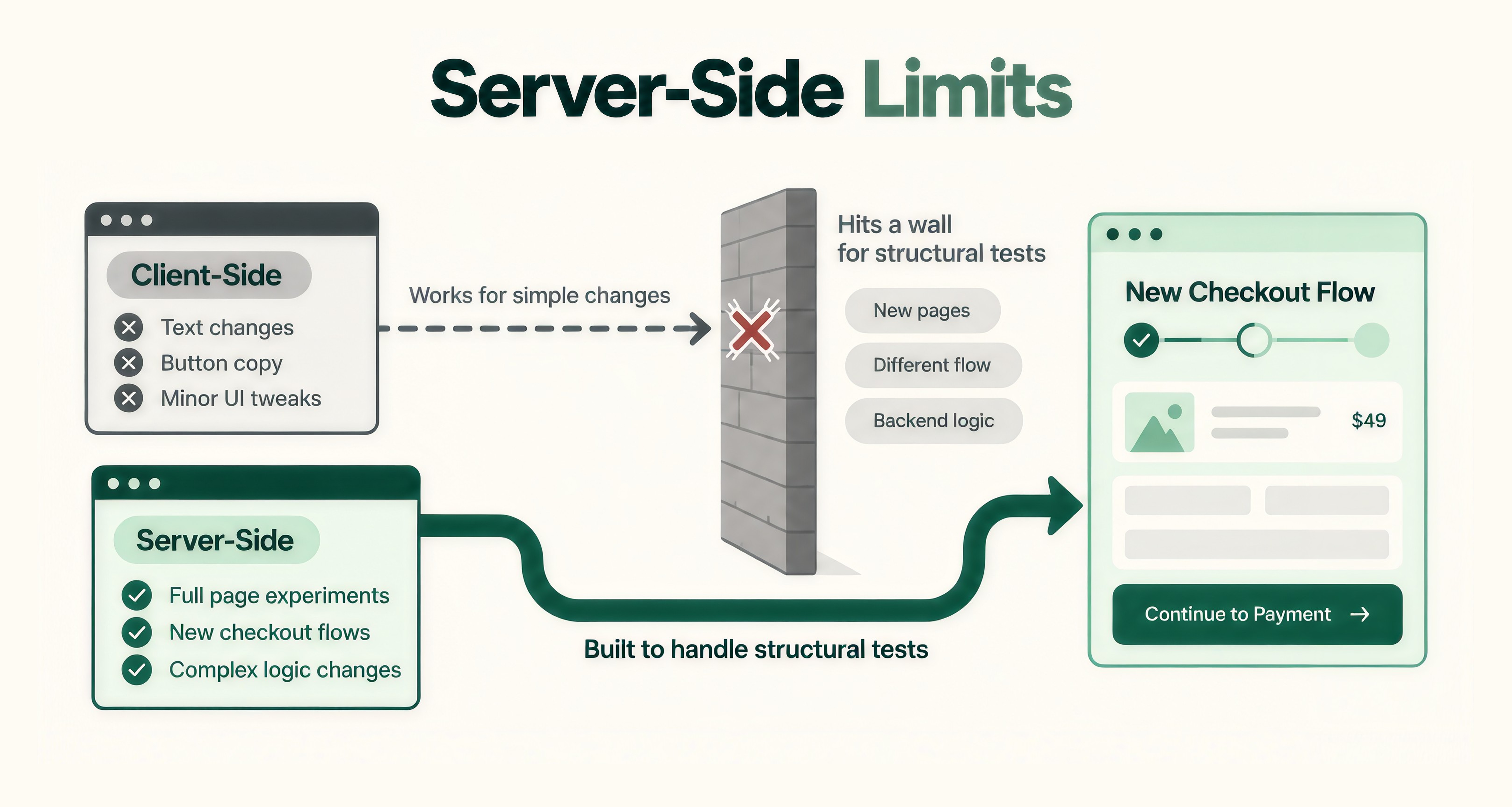
Whether that transition is painful or straightforward often comes down to an earlier decision: which CMS the site runs on. A traditional CMS that renders everything through its own templating system can make server-side variation harder to bolt on, since it controls more of the rendering path than a headless setup would. Teams often blame the CMS choice later, when really nobody thought it through at the time, because nobody was thinking about testing yet.
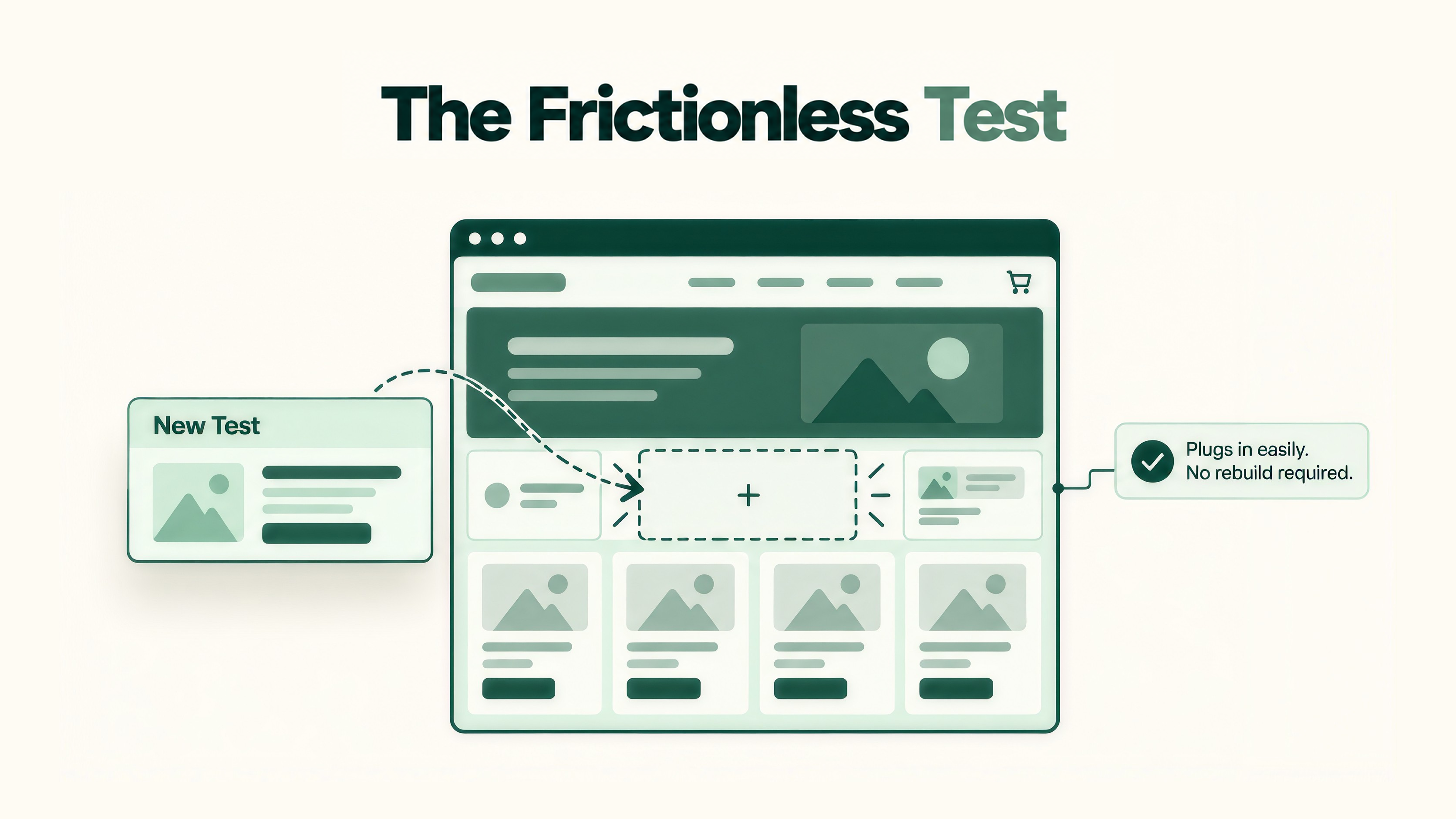
None of this shows up as a single feature you can point to. It shows up as an absence of friction. A new test doesn’t require a mini rebuild first. Content changes don’t require a developer standing by. A flag added six months ago is easy to find and easy to tell whether it’s still needed. Server-side testing is a real option when the team needs it, not a multi-month migration project.
None of this depends on picking one specific framework or CMS. Plenty of stacks can support it, and plenty of expensive, modern stacks fail to, because the testing consideration never got built into the decision. It’s the same reasoning behind pairing a bought platform with a custom-built layer around it rather than assuming any off-the-shelf tool will fit a workflow it was never designed for.

The actual test of whether a site is experiment-ready isn’t its tech stack. It’s whether the last test the team wanted to run needed a rebuild first, or whether it just plugged in.
OptiPhoenix builds sites with this in mind from the first architecture decision, not as something retrofitted once the testing team shows up asking for changes. Talk to our team about your next build.
It means content and configuration stay separate from hardcoded code. Component boundaries stay clean enough that changing one piece doesn’t require touching unrelated code. And feature flags follow a consistent, traceable pattern instead of scattering through the codebase as one-off decisions.
No. A traditional CMS can still support this if it’s set up with testing in mind. The problem isn’t the CMS category. It’s when the rendering approach makes variant content or server-side changes harder to implement than they need to be.
Most A/B testing advice assumes the site already exists and focuses on how to run the test safely. This is about the decisions a team makes before any test exists, the ones that determine whether running that test later is easy or requires rebuilding part of the site first.
Usually because a flag gets treated as a one-time switch instead of an active part of how the application decides what to render. When flags aren’t scoped consistently from the start, every new test requires figuring out what a given flag actually touches before anyone can safely change it.
Before they actually need it, ideally. Retrofitting server-side readiness onto a site built purely for client-side changes is a real project, not a quick addition. Teams that plan for it during the initial build avoid that migration entirely.