AI Agent vs Chatbot: What’s the Difference for Your Store?
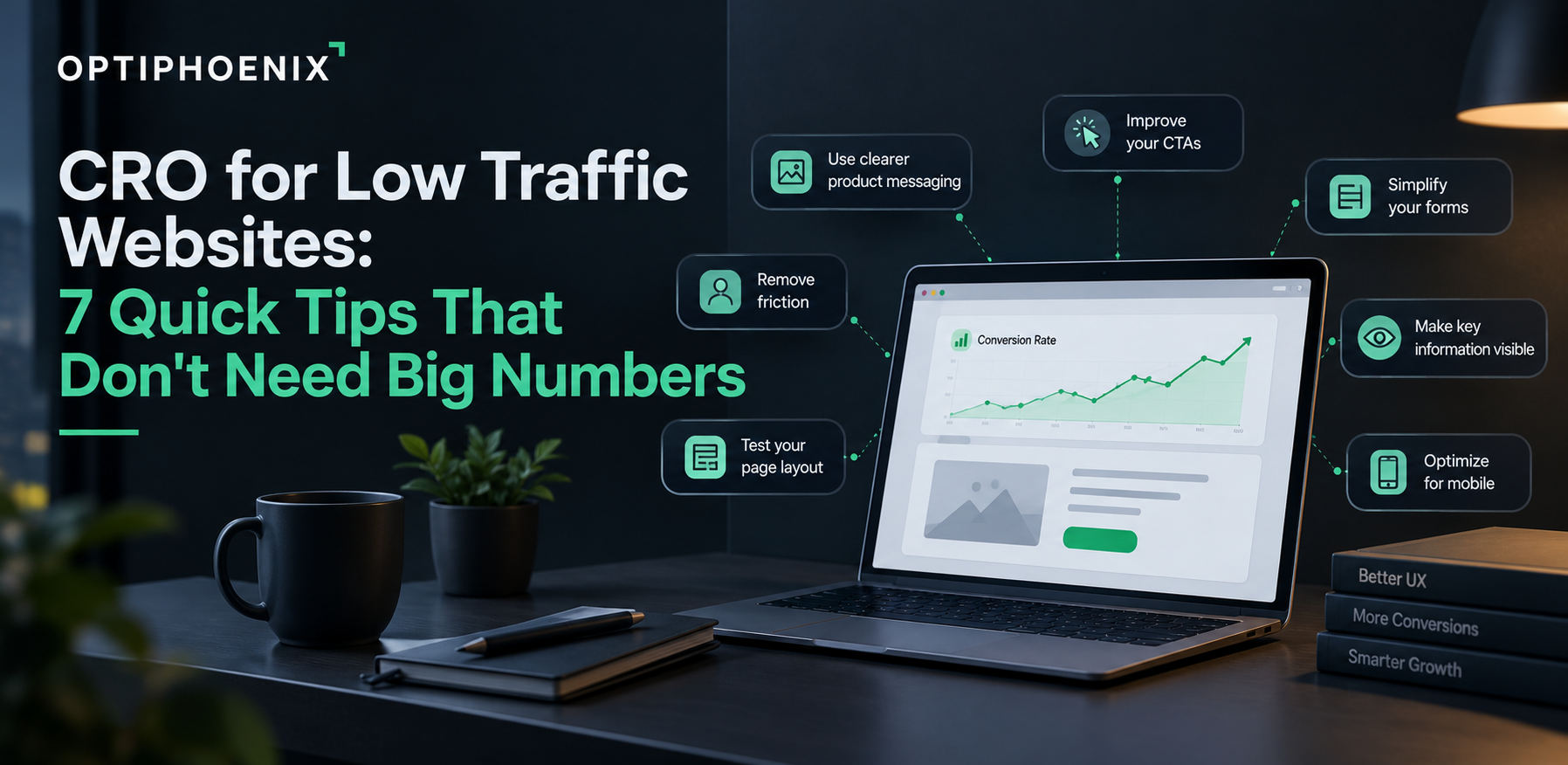
CRO can be stressful when your website has low traffic. Most of the guides recommends A/B testing but when you enter your numbers into a sample size calculator the estimated test duration can stretch to months. So you put the idea aside and the website stays the same.
We hear this from smaller stores and newer brands quite often and it’s understandable. Low traffic does make testing harder but there are still practical ways to improve your website without waiting months for a test to finish.
Here are seven things we’d focus on first, in roughly the order we’d tackle them.

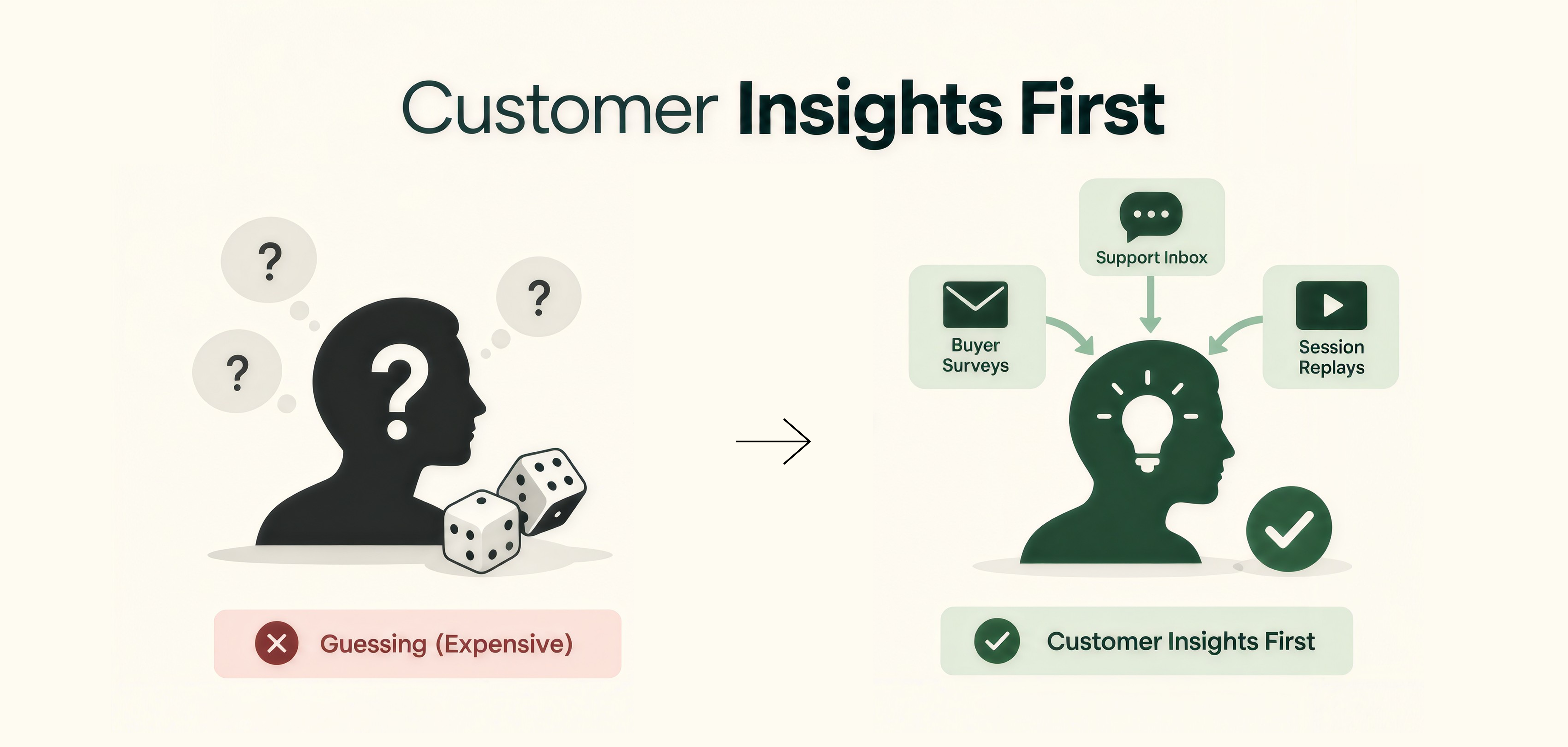
When traffic is low, every guess becomes a little riskier. Start by understanding what’s stopping people from buying. Talk to five recent customers and ask what made them choose your store and what nearly put them off. Go through the questions that customers send to your support team. You can also watch a few session recordings of visitors who left without making a purchase. These small checks can reveal problems worth fixing before you spend time running tests.
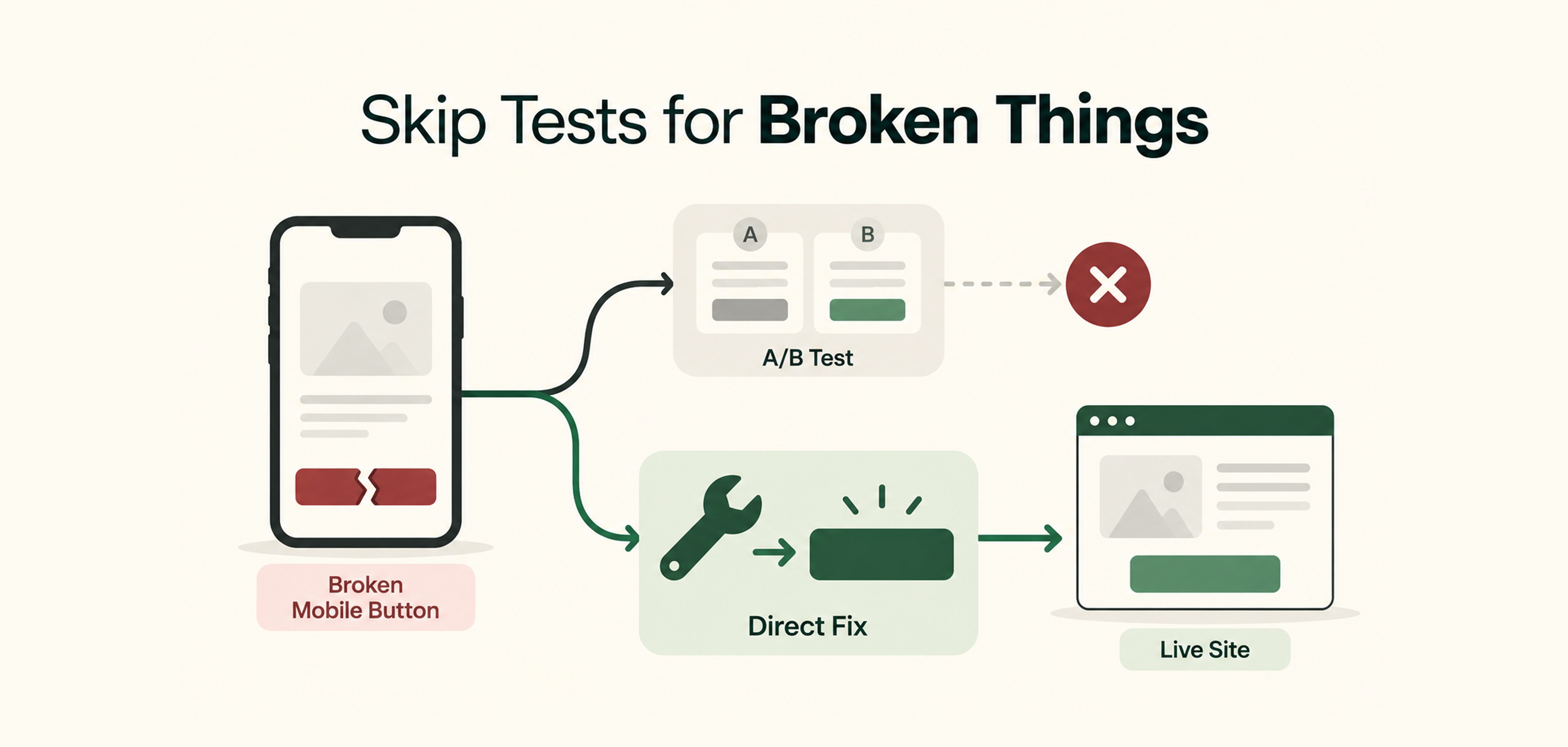
Not every change needs an experiment. If a button doesn’t work on mobile, fix it. If delivery costs only appear at the last step show them earlier. Tests are for real questions, not for faults everyone can see.
If you aren’t sure where the weak spot sits, start with the whole journey. Our post on funnel audits versus page-level testing explains how to find the step that loses the most people before you pick a page to change.
A small site can only see big differences. Atul Jindal makes this point in Search Engine Journal. A move from 5% to 5.5% is hard to spot with few visitors, while a move from 5% to 45% is easy. Those numbers are an illustration, but the logic holds.
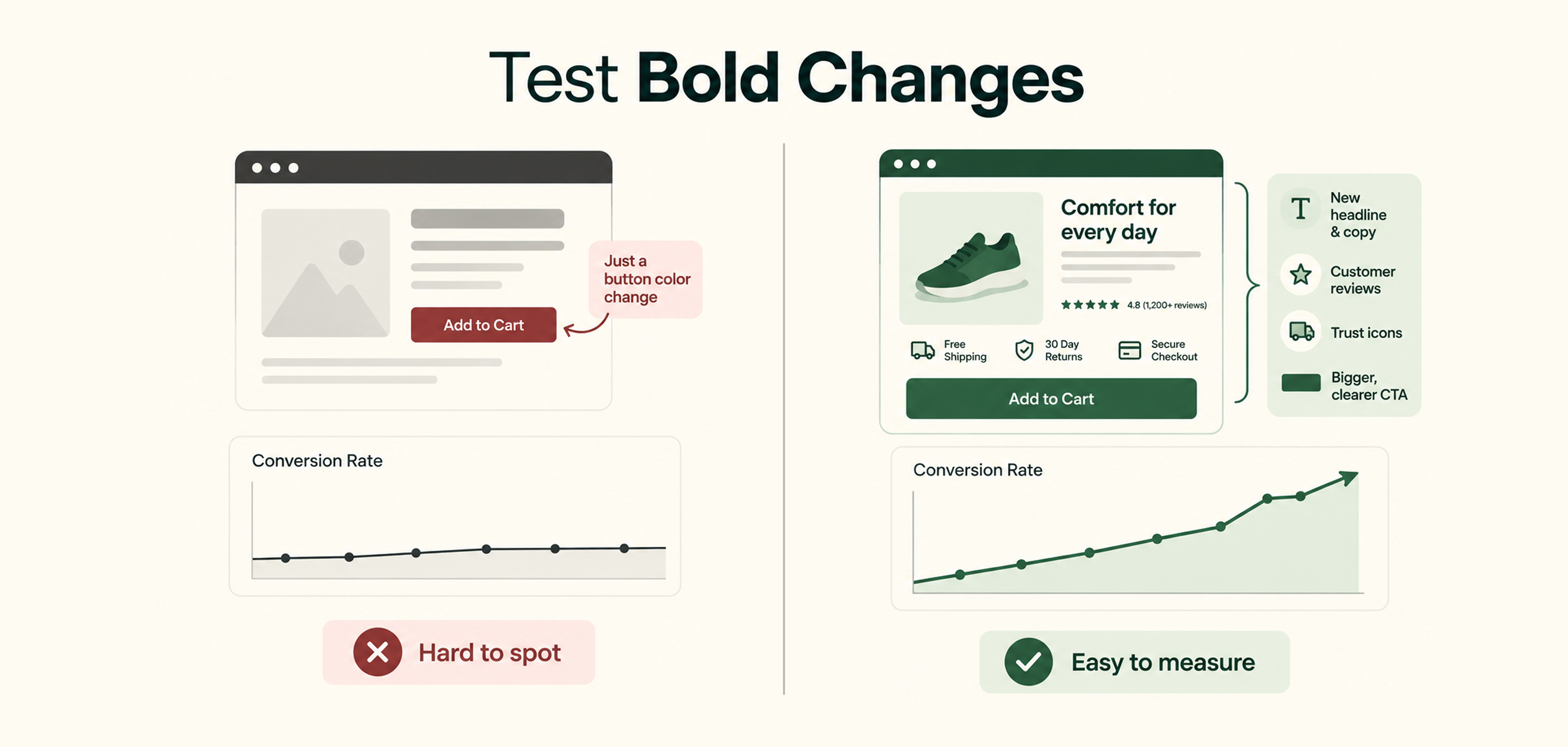
Speero showed what this looks like in practice. A UK dog food retailer bundled three changes on its cart page. They added customer reviews, benefit-led copy and payment trust icons in one variation. After more than 1,300 visitors across several business cycles, that version converted 13.5% better than the original.
We’d add the honest part too. The revenue gain was only 79% statistically significant, so the result was promising but not proven. That is what low traffic results usually look like.
Purchases are rare on a small site. Add-to-cart clicks or checkout starts happen more often, so they give you more to measure. Jindal recommends tracking these smaller actions along the whole journey.
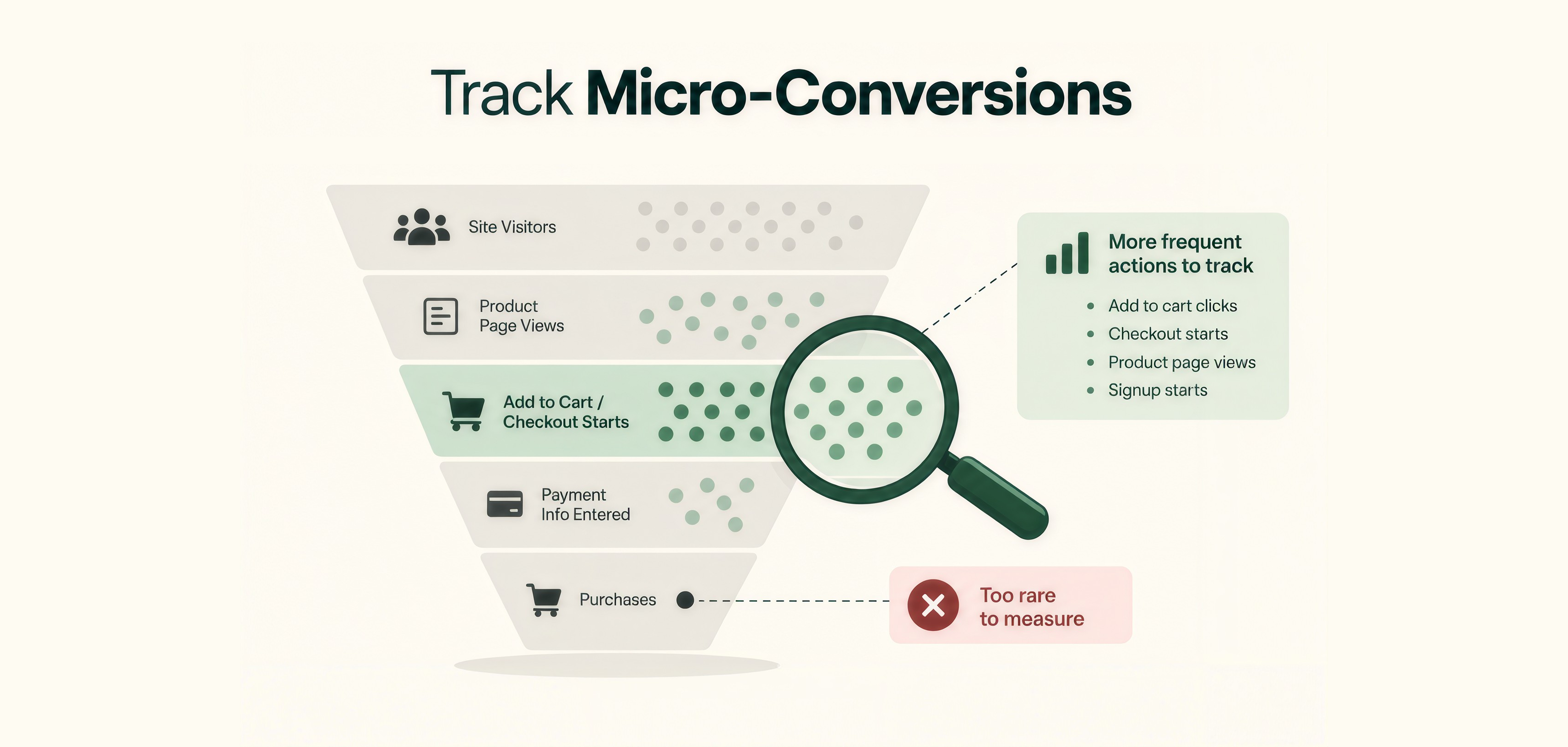
There is a catch. A smaller action might not lead to more revenue. So treat it as a supporting signal, and keep an eye on sales alongside it. Our post on CRO program metrics beyond win rate covers how to pick the supporting numbers.
Jindal also says you needn’t be afraid to test at an 80% or 85% confidence level instead of the usual 95%. He adds that lower confidence can hurt accuracy. We’d read that as a trade, not a shortcut.
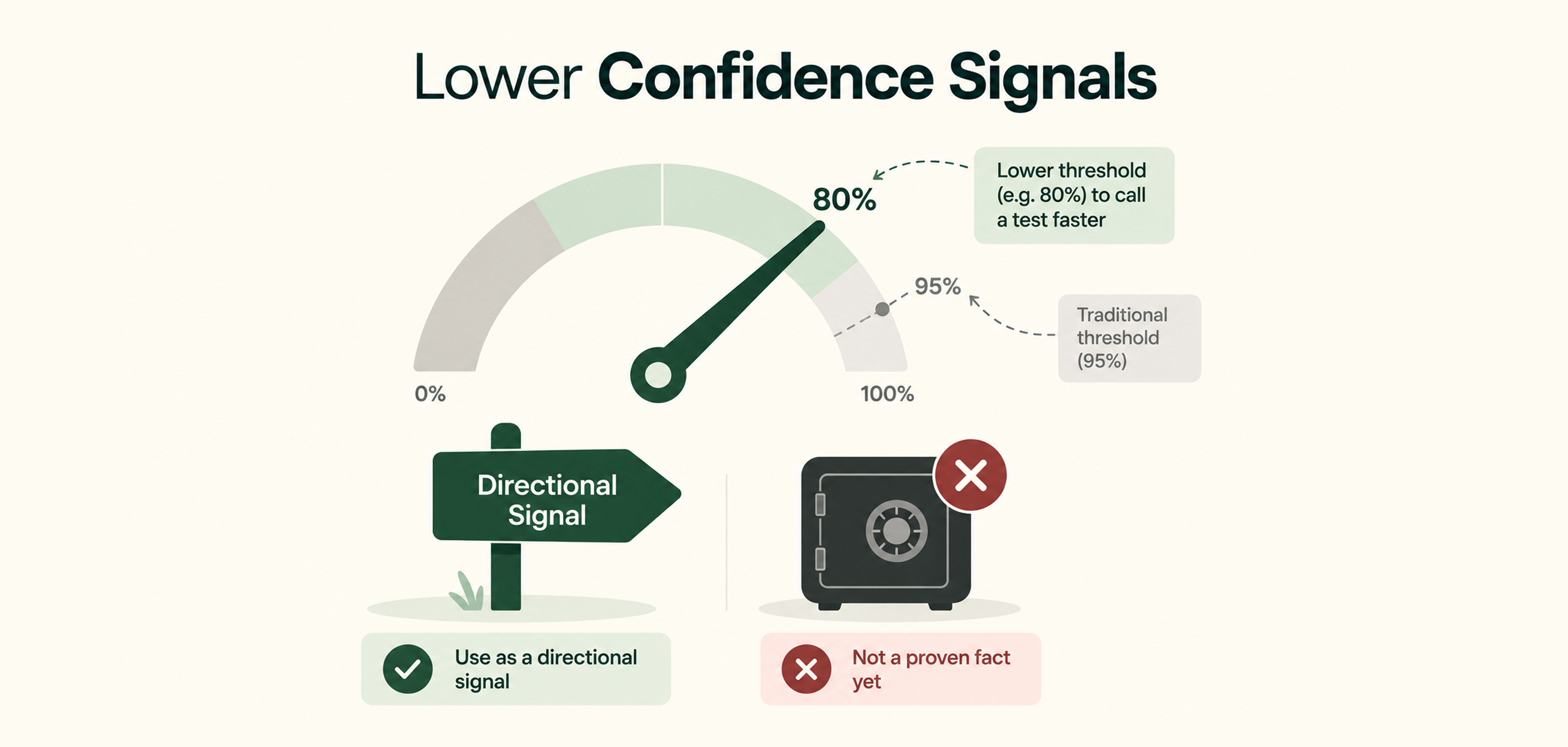
If you go that route, call the result a directional signal and write it down that way. Then avoid betting your whole quarter on it. Our guide on how long an A/B test should run covers sample size and stopping rules in detail, so we won’t repeat them here.
When traffic is tight, stacked tests compete for the same few visitors. You also lose the ability to tell what moved the numbers. So run one test, give it enough time to pass through more than one business cycle, and wait for it to finish.
This feels slow. It is slower. But a single clear answer beats three muddy ones.
With a small audience, every test is precious. A flat result still tells you something. It may mean the idea was too small, or the audience didn’t care about that problem.
Keep a short note after each test. Record the question, the change, the result and what you’d try next. Six months from now, that note will save you from running the same test twice.
Low traffic means it can take longer to get clear results from a test, but that doesn’t mean your website has to stay as it is. Start by listening to your customers, fix the issues you find and test one significant change at a time. If you’re unsure where to start, we’d be happy to take a look at your site with you. Talk to our team about your low traffic site.

Yes, but only for big changes. A small change produces a small difference, and a small site can’t detect it. For everything else, lean on customer research and obvious fixes.
It depends on your current conversion rate and the smallest lift you care about. Work that out with a sample size calculation before you launch, and plan around the result.
For clear faults, yes. Fix a broken form or a confusing delivery message straight away. Save testing for the questions where you honestly don’t know the answer.