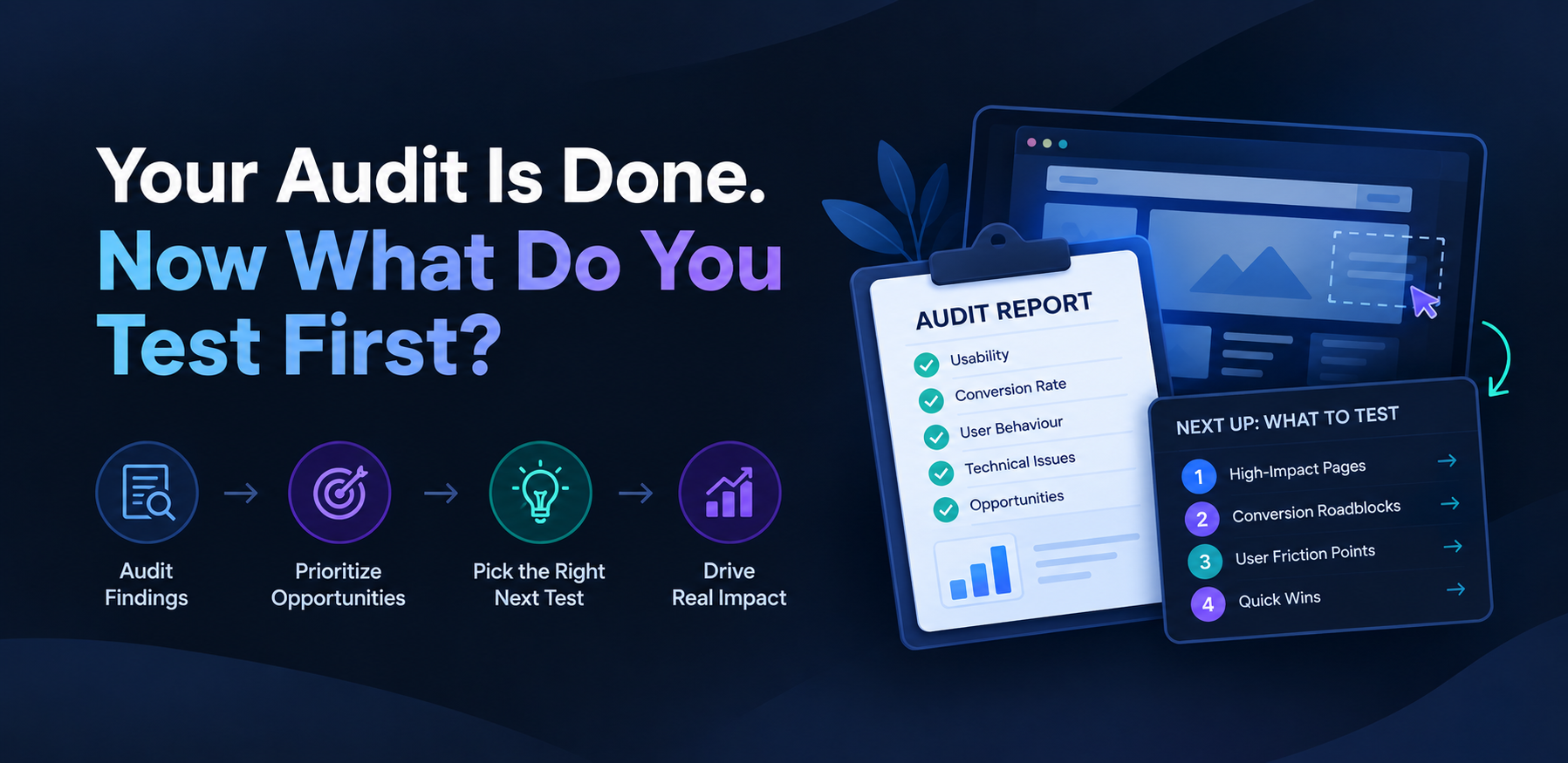
Your Audit Is Done. Now What Do You Test First?
You ran the test. The button is green now instead of blue. The headline is sharper. The page even loads faster than it did a month ago. And yet, revenue looks exactly the way it did before you started.
This is one of the most common frustrations we hear from growth teams: individual page tests keep winning but the business isn’t growing any faster. The problem usually isn’t the test. It’s that the team tested the wrong layer of the funnel. A single page can be optimized to perfection and still sit inside a funnel that’s leaking users somewhere else entirely. At checkout. At signup. Between two steps that were never looked at together.

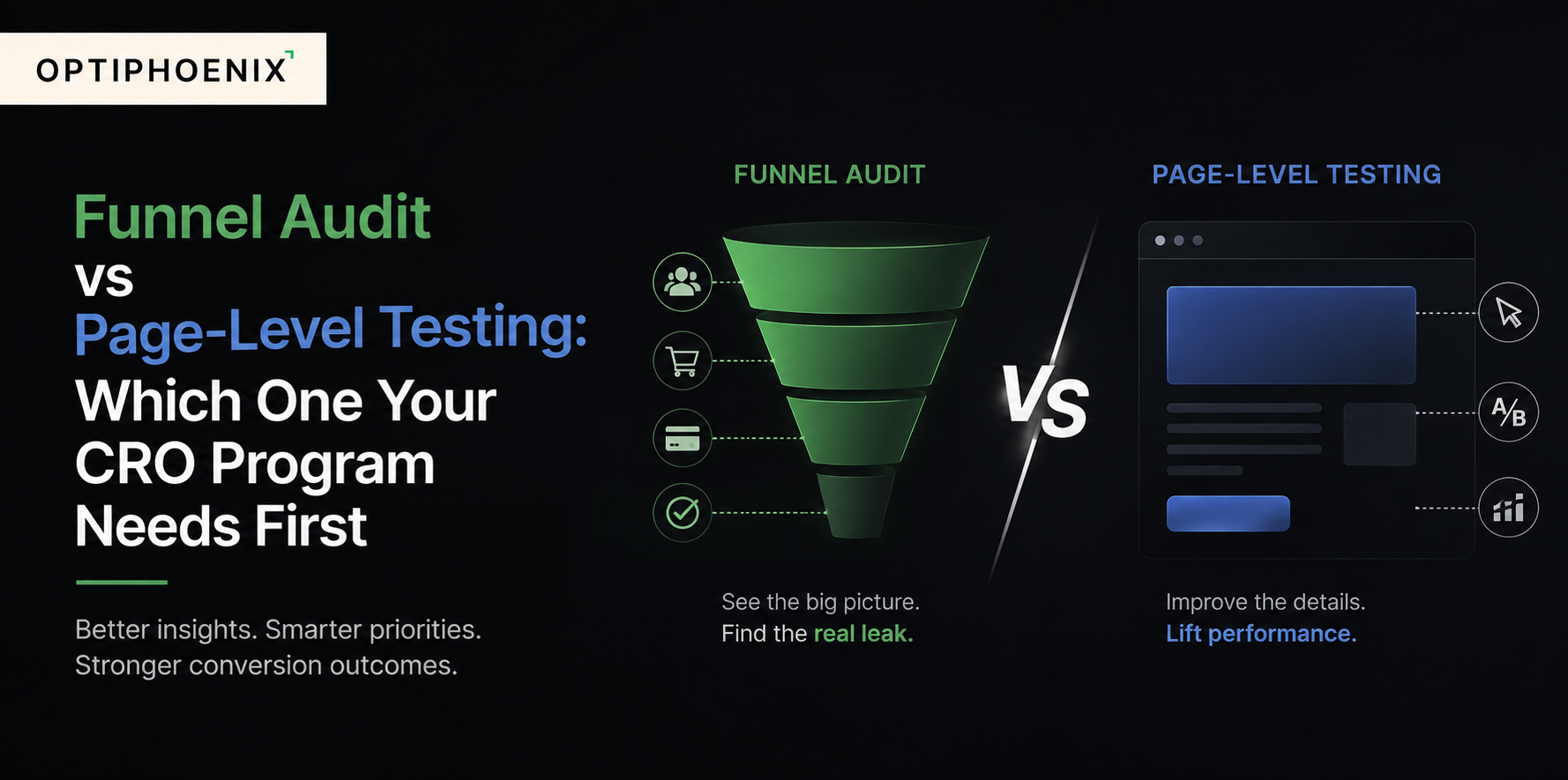
This is the difference between page-level testing and a funnel audit. They solve different problems. Knowing which one you need first can save months of testing effort that never shows up on the revenue line.
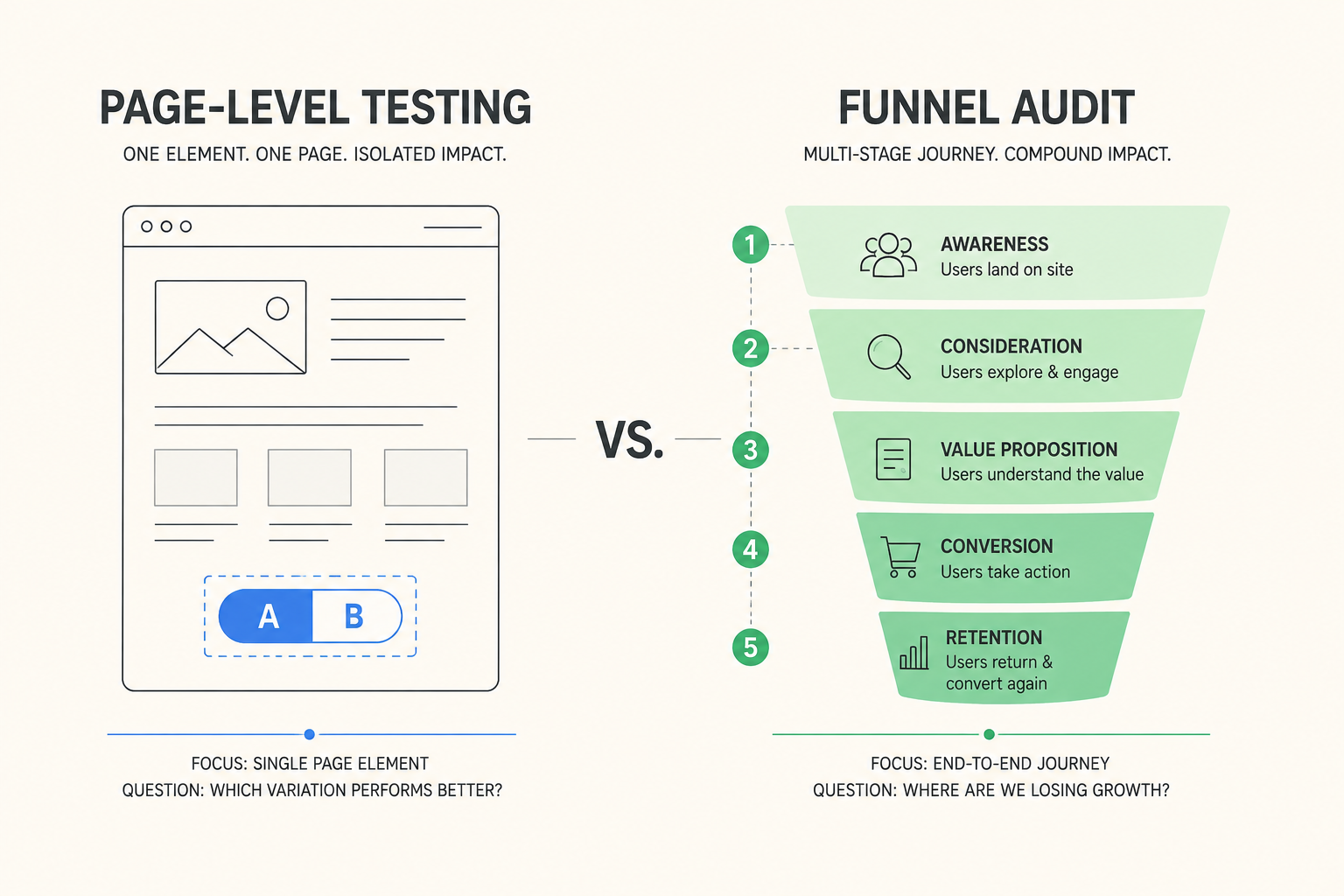
Page-level testing, most commonly A/B testing, compares two or more versions of a single page to see which one performs better against a specific goal. You change one variable, a headline, a CTA color, a form field, and measure the difference in conversions on that page.
It’s fast to set up and easy to interpret. It works well when you already know where the problem lives. If your product page has a high bounce rate and you suspect the value proposition isn’t landing, a page-level test can confirm or reject that hypothesis quickly.
The limitation is scope. Page-level testing only tells you how one page performs in isolation. It doesn’t tell you what happens to the same user three steps later. It also can’t tell you whether the win on that page is being cancelled out by friction elsewhere in the journey. Scope isn’t the only thing that can quietly undermine a test either. Broken tracking or an inconsistent data layer can make a winning page look flat, which is a separate problem worth ruling out before you trust any result.
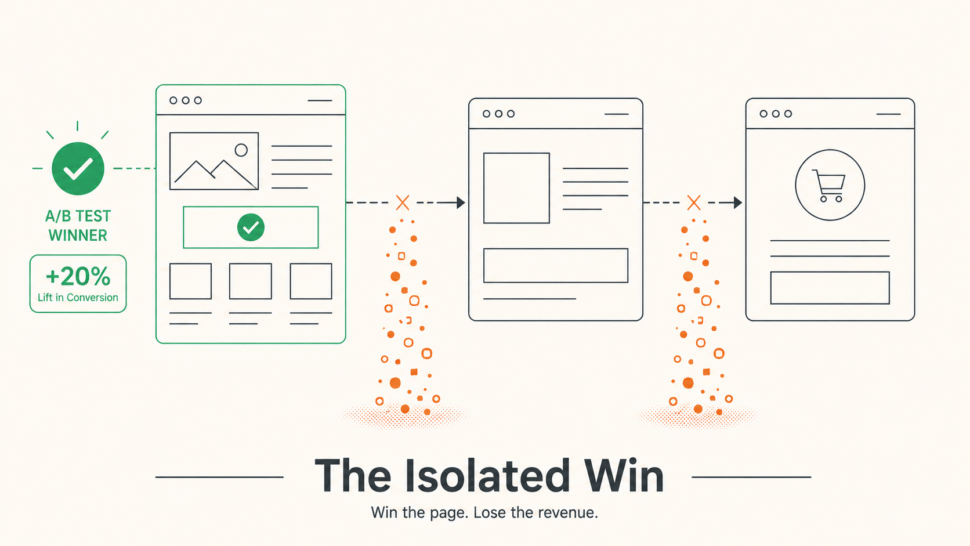
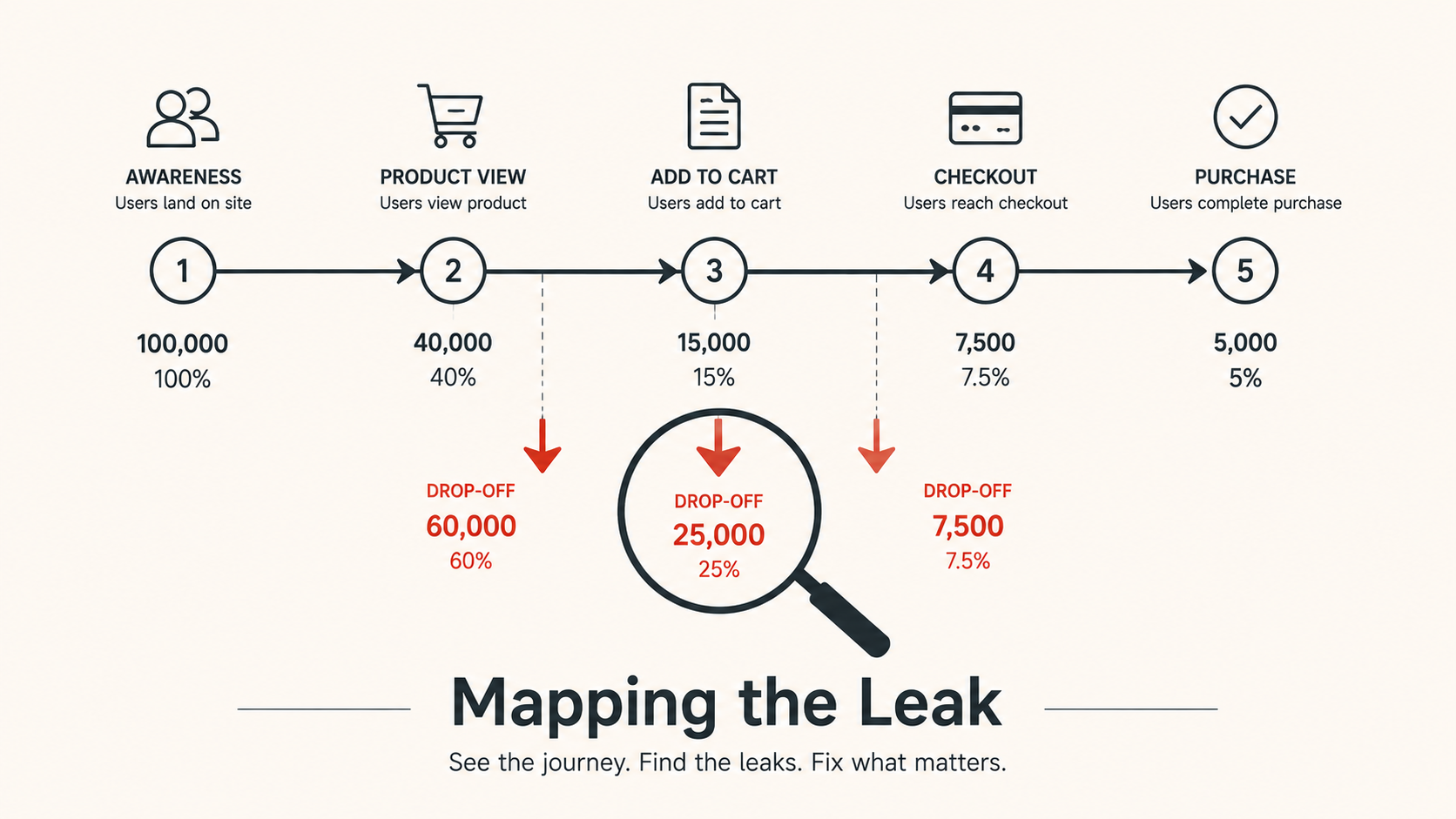
A funnel audit looks at the entire path a user takes, from first touchpoint to final conversion. It maps where they drop off at each stage. Instead of asking “does this page convert better,” it asks “where in this journey are we actually losing people, and why.”

This involves reviewing analytics data stage by stage and segmenting by traffic source and device. It’s often paired with qualitative signals like session recordings or user feedback, because the data shows where people leave but rarely explains why on its own. A funnel audit produces a prioritized list of the leaks that matter most, based on where the biggest drop-offs are actually happening, not where a team’s intuition says the problem is. For a full breakdown of what this process looks like step by step, see our guide on running a conversion rate audit.
The tradeoff is time. A proper audit takes longer to run than a single page test. It also requires access to analytics, CRM, and often marketing automation data to build a complete picture.
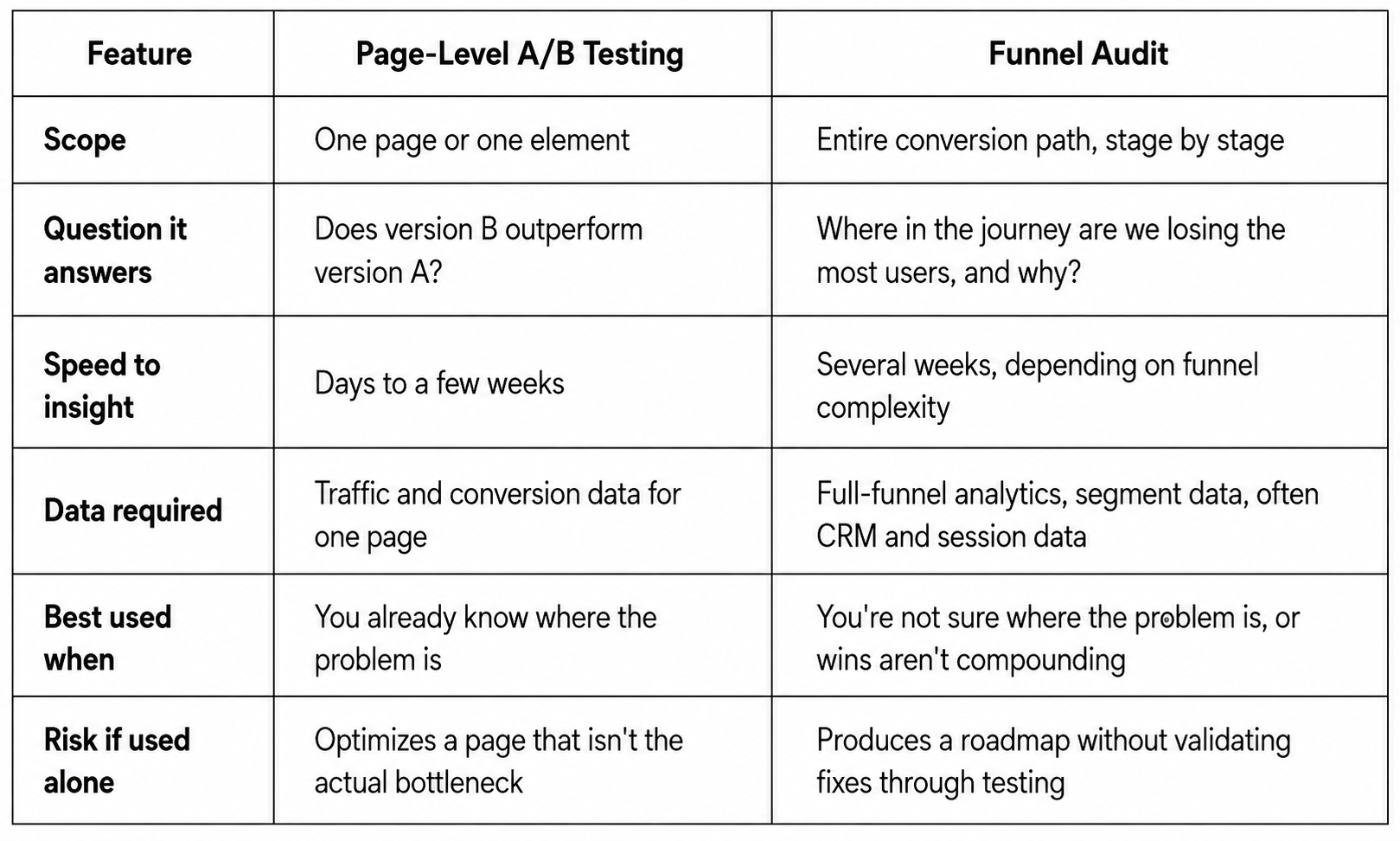
A few signals usually make the decision clear:
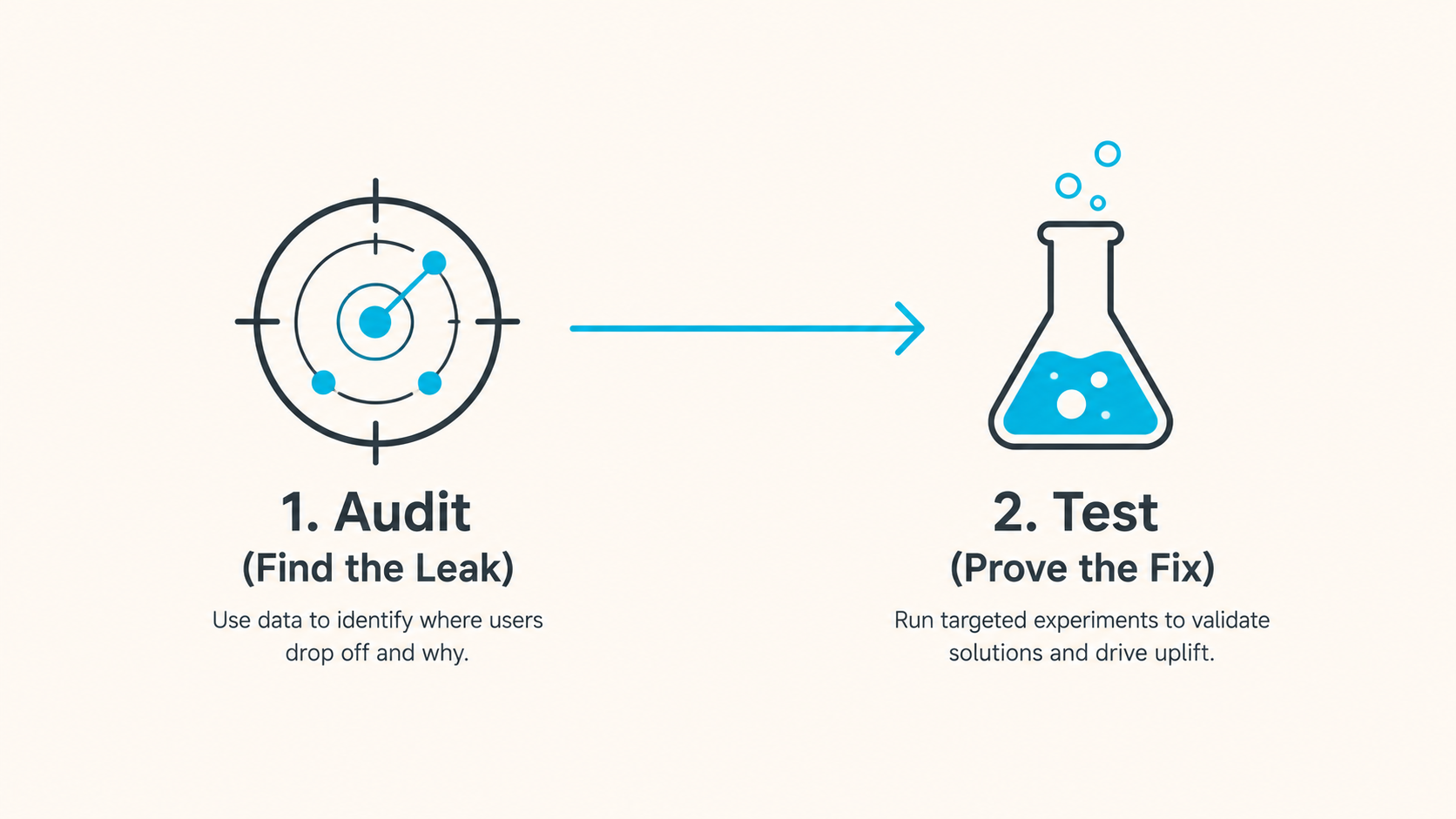
Most mature CRO programs use both, in sequence. The audit tells you where to look. The tests tell you what to change, and prove that the change actually works. Skipping the audit and going straight to page-level tests is why so many teams end up with a long list of “statistically significant” wins. Those wins rarely move the business metrics that matter.
This gap is measurable at scale. Cart abandonment has hovered around 70 percent industry-wide for years, according to Baymard Institute research. That number rarely moves through page-level tweaks alone, because the friction causing it is spread across multiple steps, not concentrated on one page. Teams that address this at the funnel level see a different outcome. CXL Institute has found that mature CRO programs run systematically for over 12 months deliver average ROI between 223 and 450 percent. HubSpot’s 2025 State of Marketing report found that companies prioritizing CRO are 2.8 times more likely to exceed their revenue targets. The common thread is sequencing: audit first, then test with intent.
At OptiPhoenix, every CRO Program begins with an end-to-end funnel audit, not a testing calendar. Before we recommend a single test, we map where users are actually dropping off across acquisition, conversion, and retention. The testing roadmap is built around what that data shows, not around which page happens to be top of mind. This sits inside a broader shift we’ve written about before, where CRO moves from a series of isolated projects into a company-wide experimentation system .This is also why isolated testing, however well executed, rarely compounds into meaningful growth on its own. A page can win its test and still be the wrong page to have tested in the first place. Governance frameworks and cross-team alignment exist to prevent that. Every test a team runs stays connected to a documented reason, not a guess about what might help.
If your team has been testing consistently but the results aren’t showing up where it counts, the fix usually isn’t a better test. It’s an audit that tells you which test to run next.
A funnel audit is a review of every stage in a user’s journey, from first touchpoint to final conversion, to identify where people drop off and why. It looks at analytics data stage by stage, often combined with session recordings or user research, to produce a prioritized list of the leaks that matter most.
A funnel audit diagnoses where users are dropping off across an entire journey. A/B testing validates a specific fix on a single page or element. An audit tells you where to focus. Testing tells you whether the change you made actually works.
If you don’t already have a documented view of where users drop off at each stage, yes. Testing without that context often means optimizing a page that isn’t the actual bottleneck. If a recent audit or clear data already points to a specific problem, you can move straight to testing that fix.
No. An audit identifies the highest-impact areas to focus on. Testing is still required to confirm a proposed fix actually improves conversion before it rolls out to all users. The two are sequential steps in the same process, not substitutes for each other.
There’s no universal fixed interval. It depends on how often your funnel, traffic sources, or product change. As a general practice, teams revisit a full-funnel audit whenever testing wins stop translating into revenue growth, or after a significant change to the product, pricing, or acquisition channels.
Yes. This is typically called funnel testing or multi-page testing. A coordinated set of changes is tested across several connected steps at once, rather than a single page in isolation. It requires more traffic and a longer runtime to reach statistical significance than a single-page test.
At minimum, stage-by-stage analytics data covering the full journey from acquisition to conversion. A complete audit typically also draws on CRM data, session recordings, and segment-level breakdowns by traffic source and device. This is what explains not just where users drop off, but why.