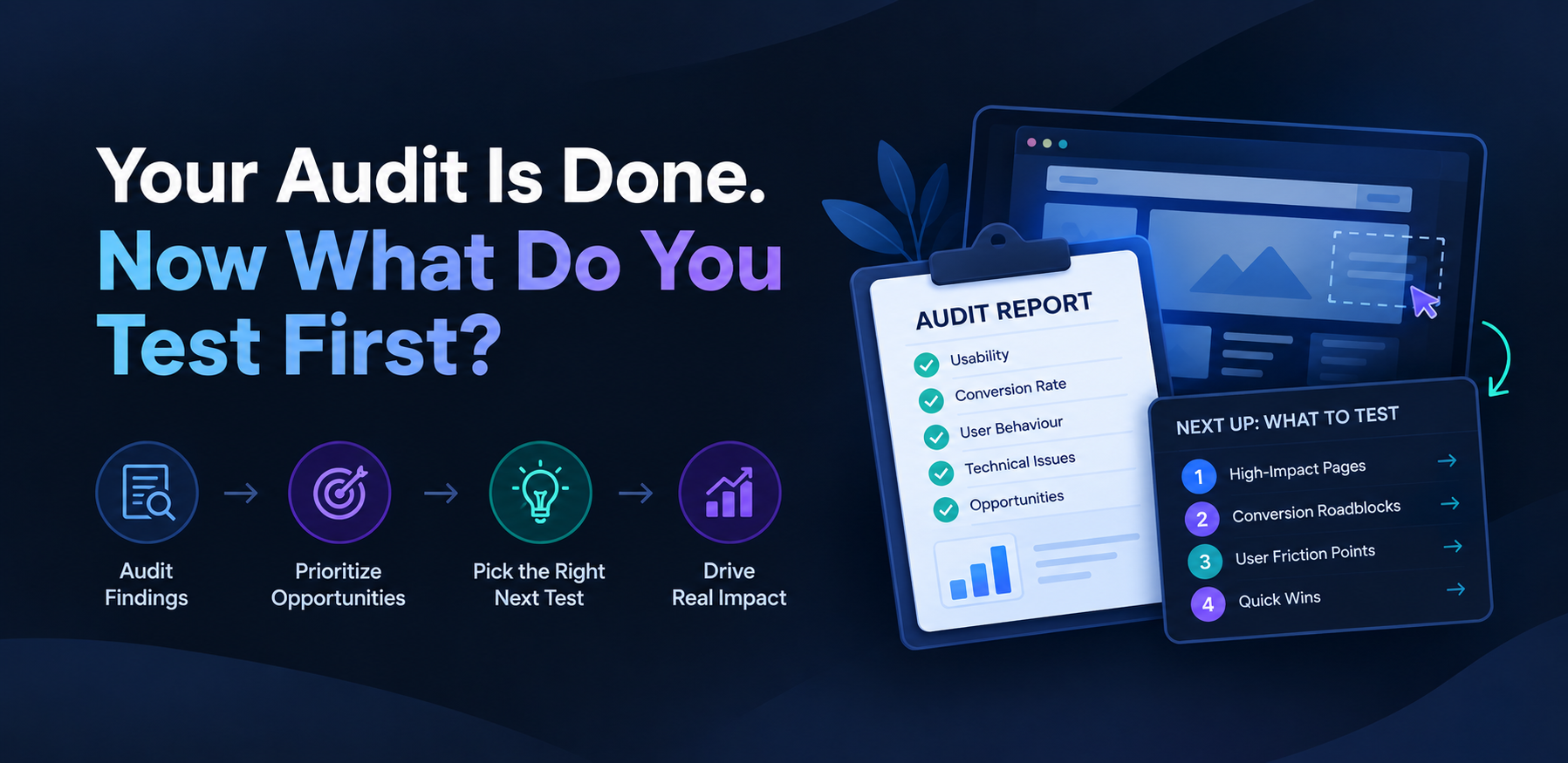
Your Audit Is Done. Now What Do You Test First?
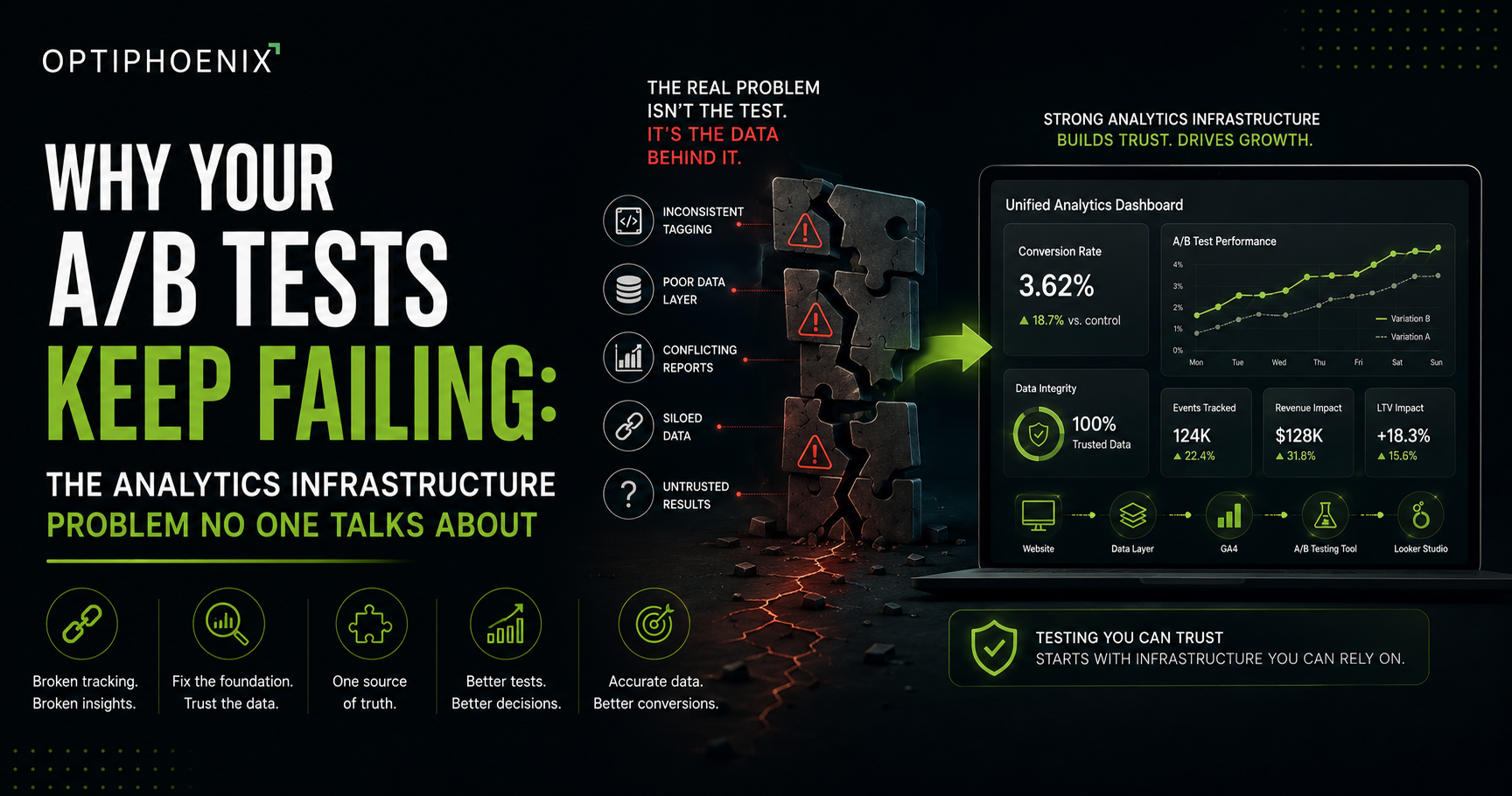
Why your A/B tests keep failing, usually has less to do with your hypothesis and more to do with what’s happening underneath it. When event tracking is inconsistent, funnels are half tagged and data lives across platforms with no shared source of truth, test results cannot be trusted, no matter how strong the hypothesis or how clean the design variant looks the fixes usually start with a testing-first framework, not a bigger sample. Before blaming a losing test, the measurement setup behind it deserves a hard look.
A test comes back inconclusive or contradicts what the team expected. The instinct is to question the hypothesis, the sample size or the design. Getting the basics of A/B testing right first rules out the obvious causes before you go looking underneath. What gets missed more often is the layer underneath all of it: whether the data being collected was accurate in the first place.

A test can be built correctly and still produce unreliable results if the tracking underneath it was never solid. Inconsistent event firing, duplicate tags, or a data layer that different tools interpret differently can all distort results without anyone noticing until numbers stop making sense. This is the pattern behind why your A/B tests keep failing even when the team is doing everything else right.
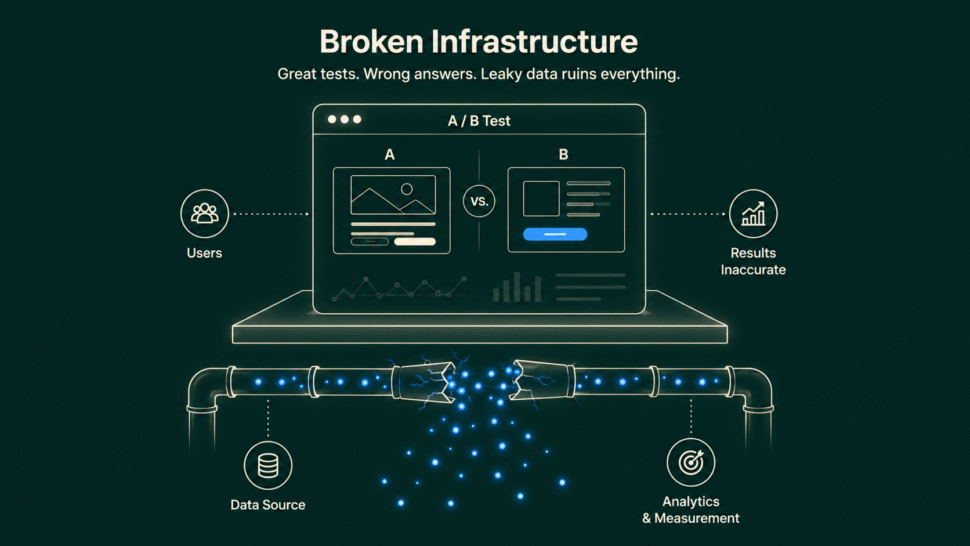
Analytics infrastructure is the underlying system that captures, structures, and delivers data before any experiment or dashboard uses it. It is not a single tool. It includes:
When this foundation is solid, experimentation results reflect what actually happened on the site. When it is not, test data becomes noise dressed up as insight.

These are the gaps that show up most often in CRO programs and each one can quietly compromise test results:
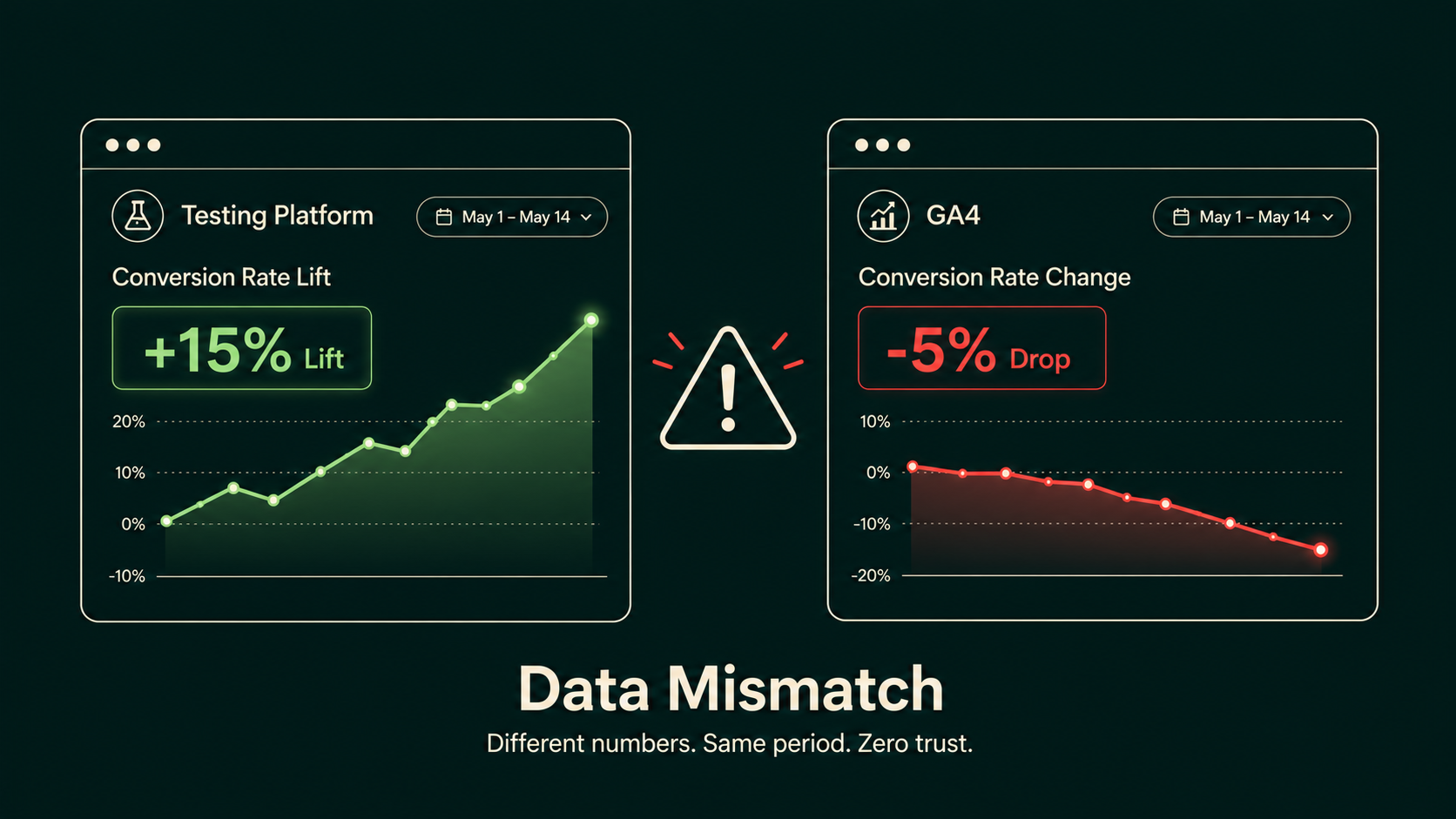
This is the question most “why tests fail” content skips, and it is the real answer to why your A/B tests keep failing even when the hypothesis looks solid. A team can do everything right on the hypothesis side, clear question, specific prediction, well-designed variant, and still get a result that looks wrong. That happens when the measurement layer was never validated before the test launched.
Analytics infrastructure problems rarely announce themselves directly. They show up as symptoms that get misdiagnosed as testing or hypothesis problems:
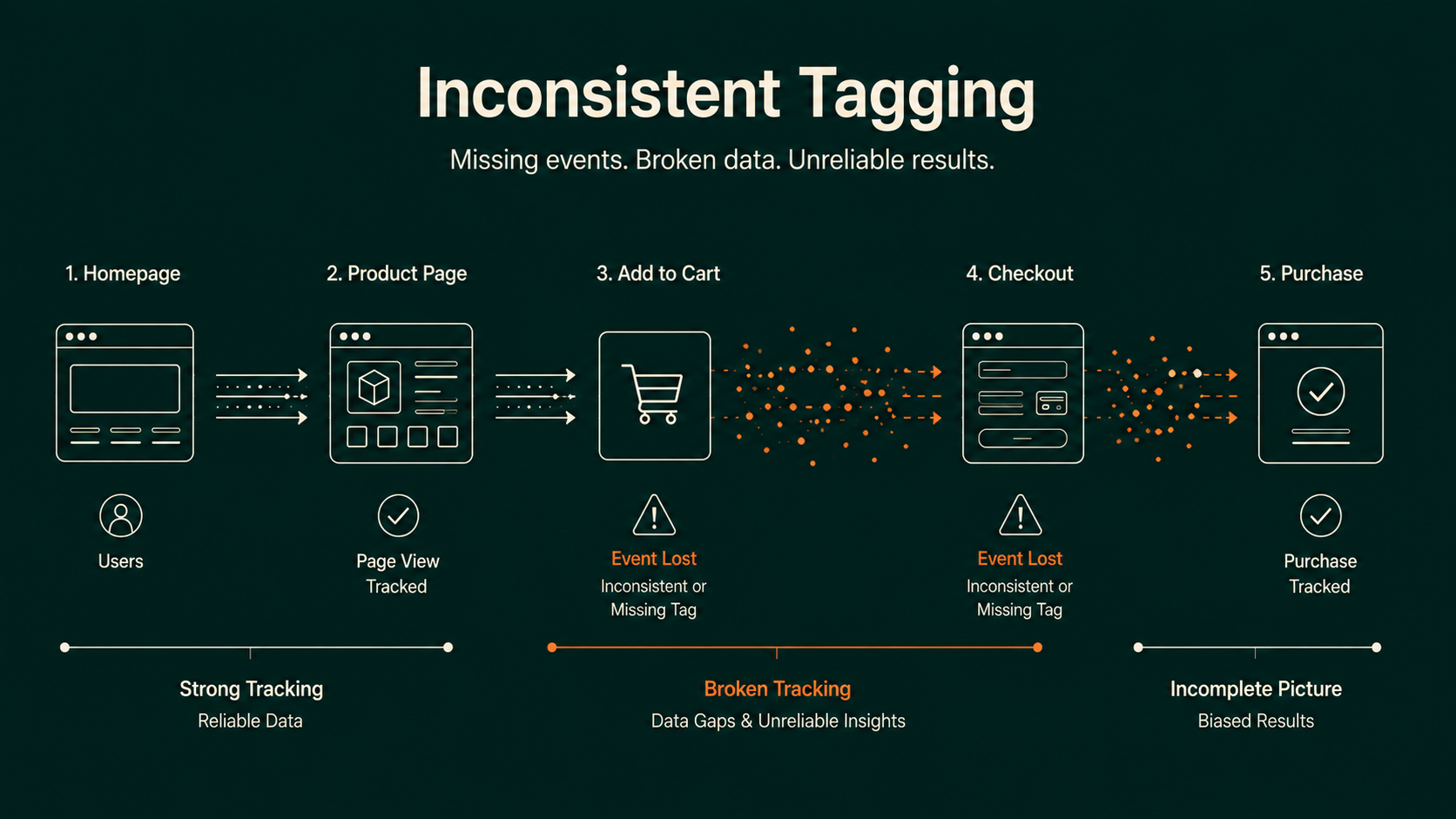
When this becomes a pattern, the fix is rarely “write a better hypothesis” or “run more tests.” It is auditing the infrastructure underneath them.

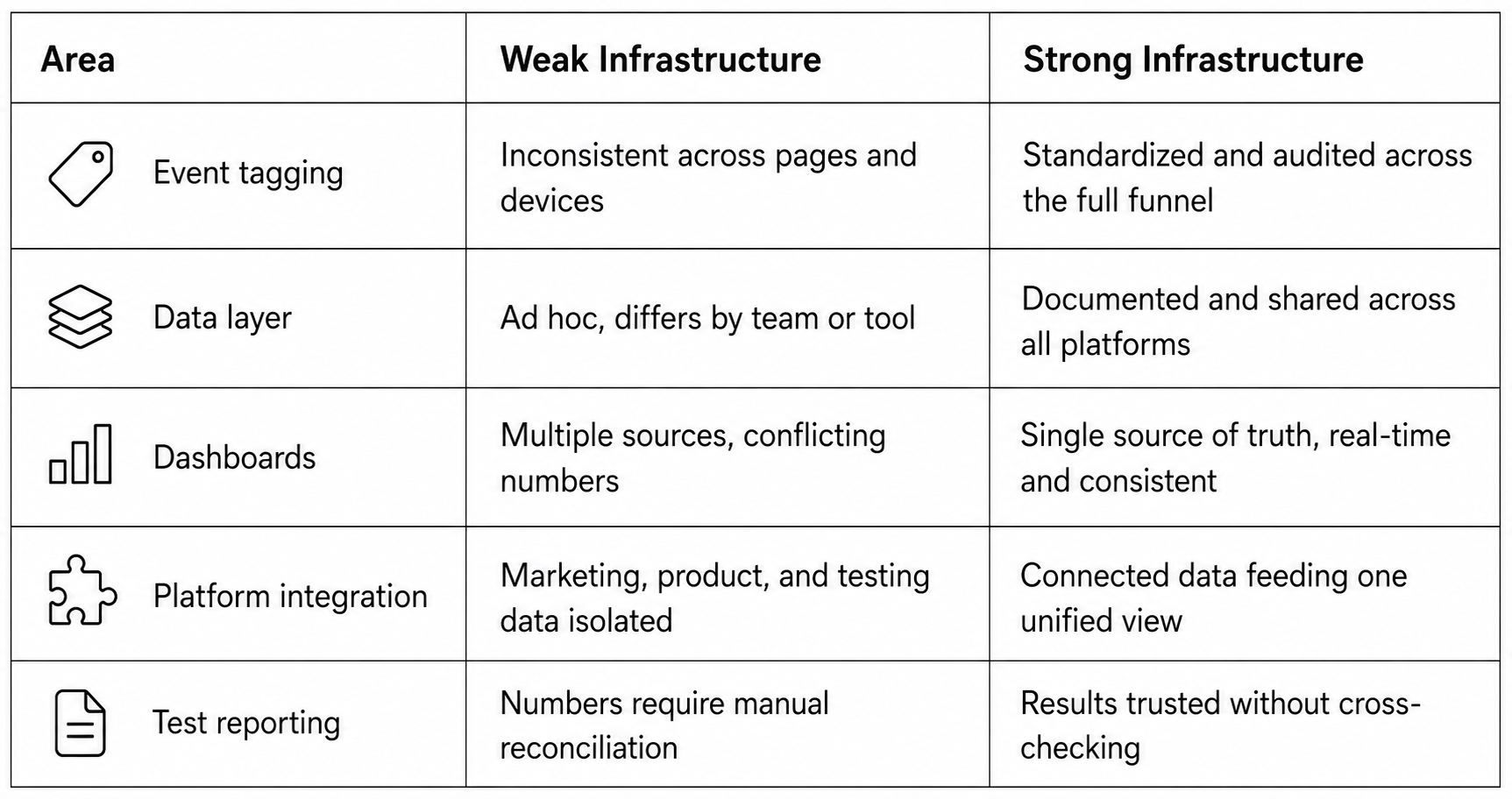
A CRO program that wants test results it can act on needs to treat analytics as infrastructure, not an afterthought. In practice, that means:
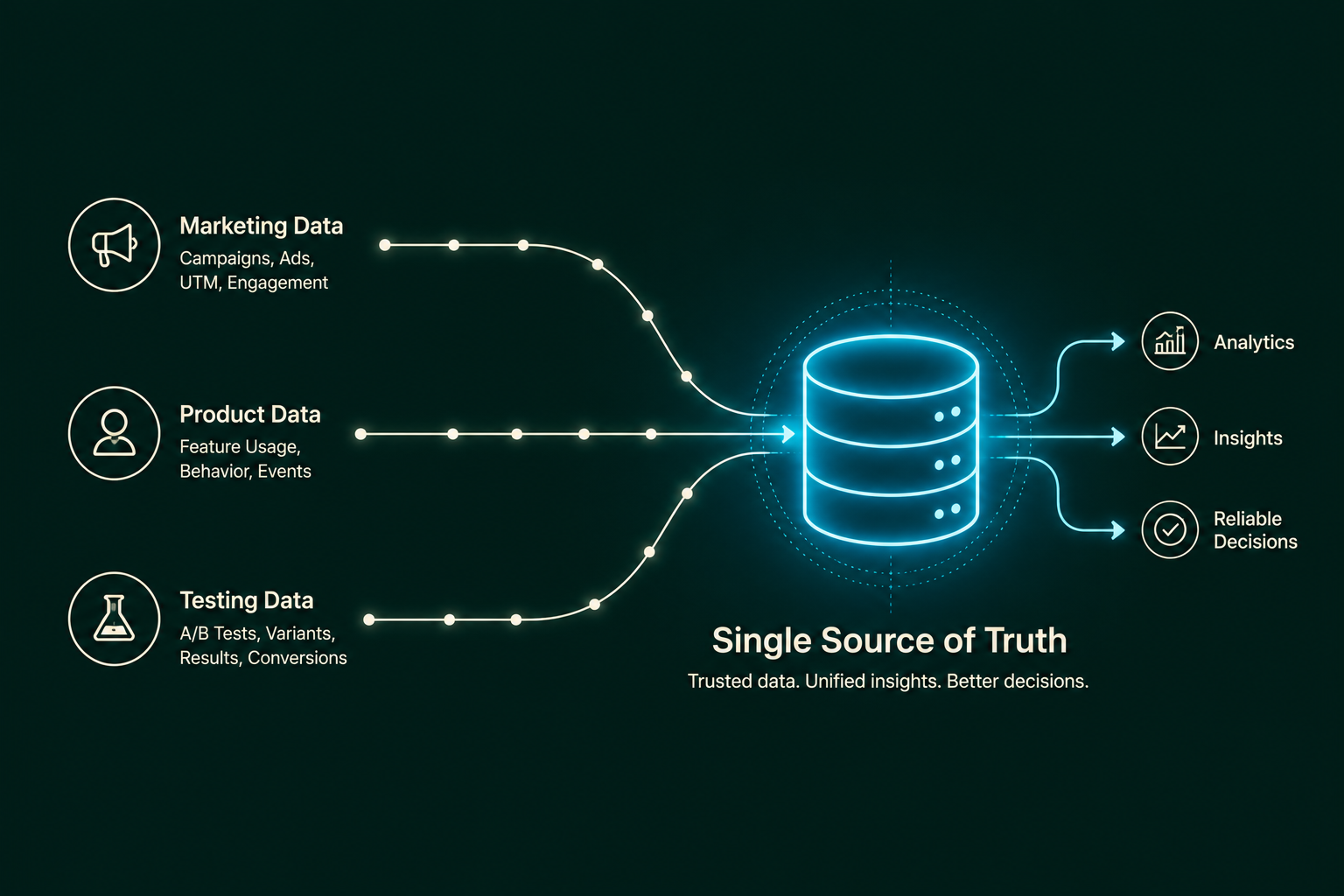
OptiPhoenix builds and audits this exact foundation, GA4 setup and audit, data layer architecture, Looker Studio dashboards, Adobe Analytics configuration, and cross-platform integration, for CRO teams across D2C, Retail, SaaS, BFSI, and Aviation, supporting 150+ brands with CRO audits and programs to date.
This usually points to inconsistent event tracking or a data layer that GA4 and the testing tool interpret differently. An analytics audit is the first step to identifying where the mismatch originates.
No. GA4 requires integration with a third-party A/B testing tool to run and manage experiments, with GA4 used afterward to interpret the results. Google Support
A data layer is the structured set of information a website passes to analytics and testing tools. When it is inconsistent, different platforms record the same user action differently, which directly affects test accuracy.
Before launching a new testing program, and periodically afterward, especially after major site changes, new platform integrations, or when test results start looking inconsistent across tools.
GA4 setup is one piece of it. Analytics infrastructure also includes data layer standardization, dashboard reporting, and integration across marketing, product, and experimentation platforms.
Looker Studio consolidates data from GA4 and other sources into a single dashboard view, which is useful when teams need real-time reporting without switching between platforms.