AI Agent vs Chatbot: What’s the Difference for Your Store?
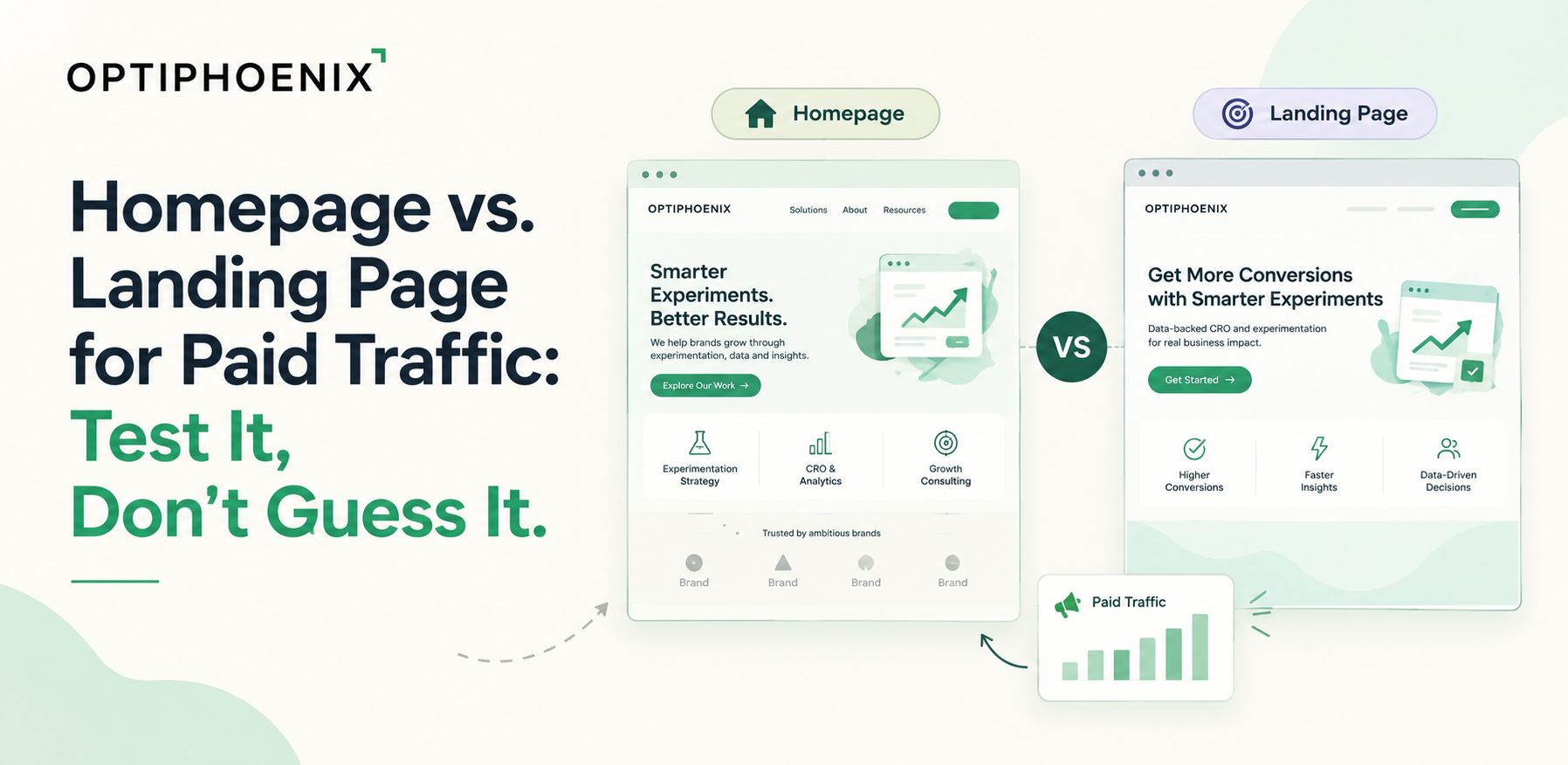
If you’ve been running paid traffic for a while, you’ve probably heard the advice: build a dedicated landing page. The thinking is that your homepage can’t speak to one specific ad as clearly as a page built for that campaign. That advice usually makes sense. But it’s still an assumption. And when you’re paying for every click, assumptions can get expensive. The answer may already be sitting in your existing data. You just need to look at it before deciding what to build.

Before building a new page, look at the one you already have and break down its conversion rate by traffic source. Compare paid and organic traffic on the same page, with the same content. It’s a simple check, but it can save you from building a page you didn’t actually need.
If paid traffic converts much worse than organic traffic on that same page, the issue may not be the page itself. It could be the quality of the traffic, or a mismatch between what the ad promises and what people see after they click. Skip this check and you could end up building a second landing page with the exact same problem. Now you have two pages to maintain, without knowing whether you fixed anything.
There are a few situations where sending paid traffic to the homepage is genuinely the right move, and most landing page advice skips past them without mentioning it.
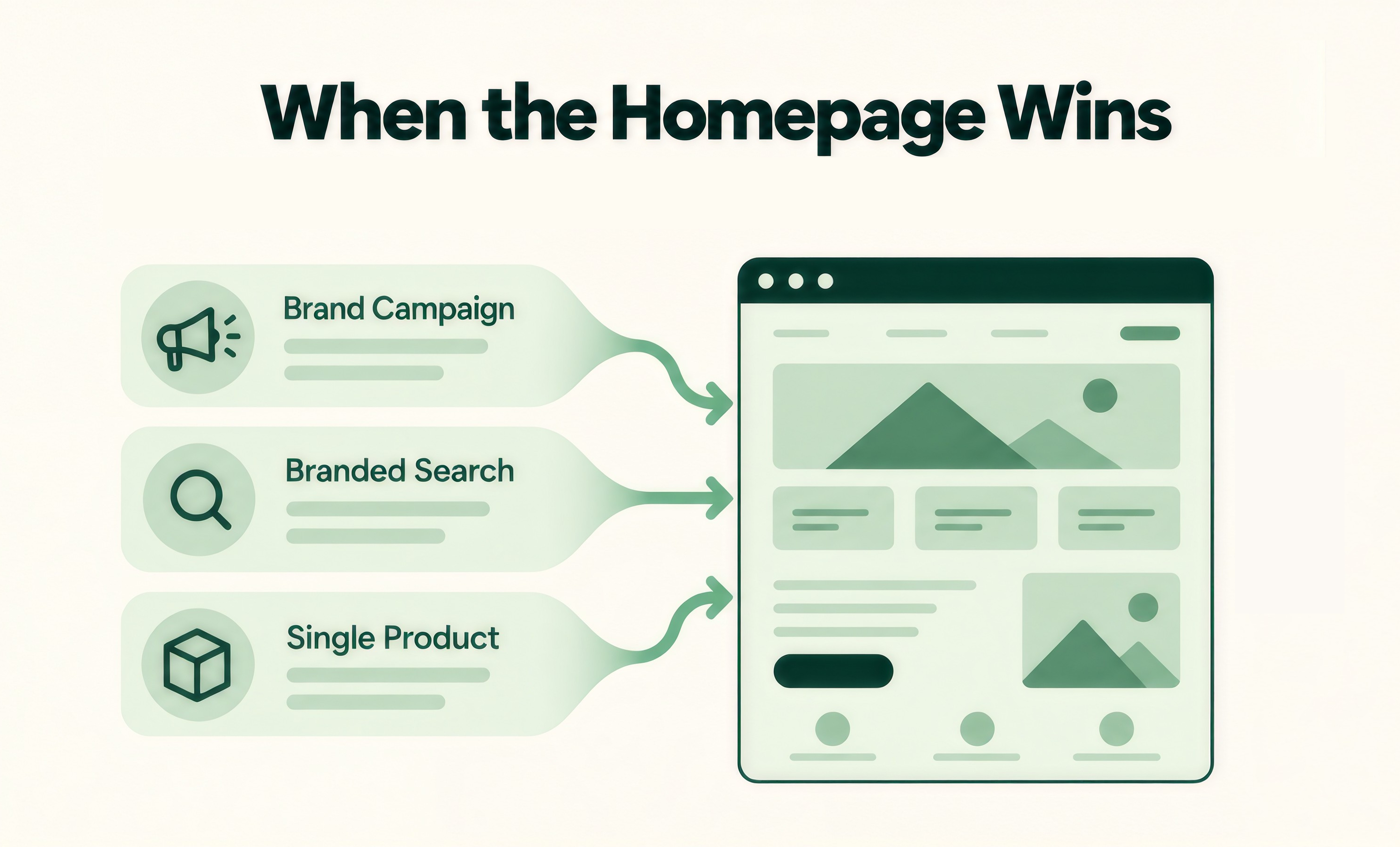
If the ad is a brand campaign, about who you are rather than what you’re selling, the homepage is the natural place to land. A stripped down landing page would feel disconnected from what the ad was even about and your visitor would notice.
Branded search works the same way in reverse. Someone typing your company’s name into Google already knows who you are. They want to browse your site, not get funneled into a narrow page with the navigation stripped away. Doing that to someone who came looking for you specifically removes exactly the paths they were hoping to find.
And if you only sell one product, your homepage already functions as the landing page in every way that matters. Building a second page that repeats the same pitch adds upkeep without adding much upside for anyone, including you.
Outside those situations, a dedicated landing page usually wins. Usually isn’t always, though. That’s the whole reason the traffic split from the first section matters more than any general rule someone hands you.
A lot of landing page checklists reduce message match to one line: does the headline match the ad copy. That’s a fine starting point, but it doesn’t go far enough to actually tell you anything.

Message match works better as a hypothesis you test than a box you tick once and forget. The same idea runs through our testing-first framework for landing pages. A test with no clear overall winner can still be hiding a real result inside one segment: mobile visitors, a specific traffic source, people coming back for a second look. Message match tends to behave exactly like this. Rewrite a headline and it might do nothing for your organic visitors while moving paid conversion quite a bit. That’s because paid visitors showed up already holding a specific promise and the page either keeps it or breaks it.
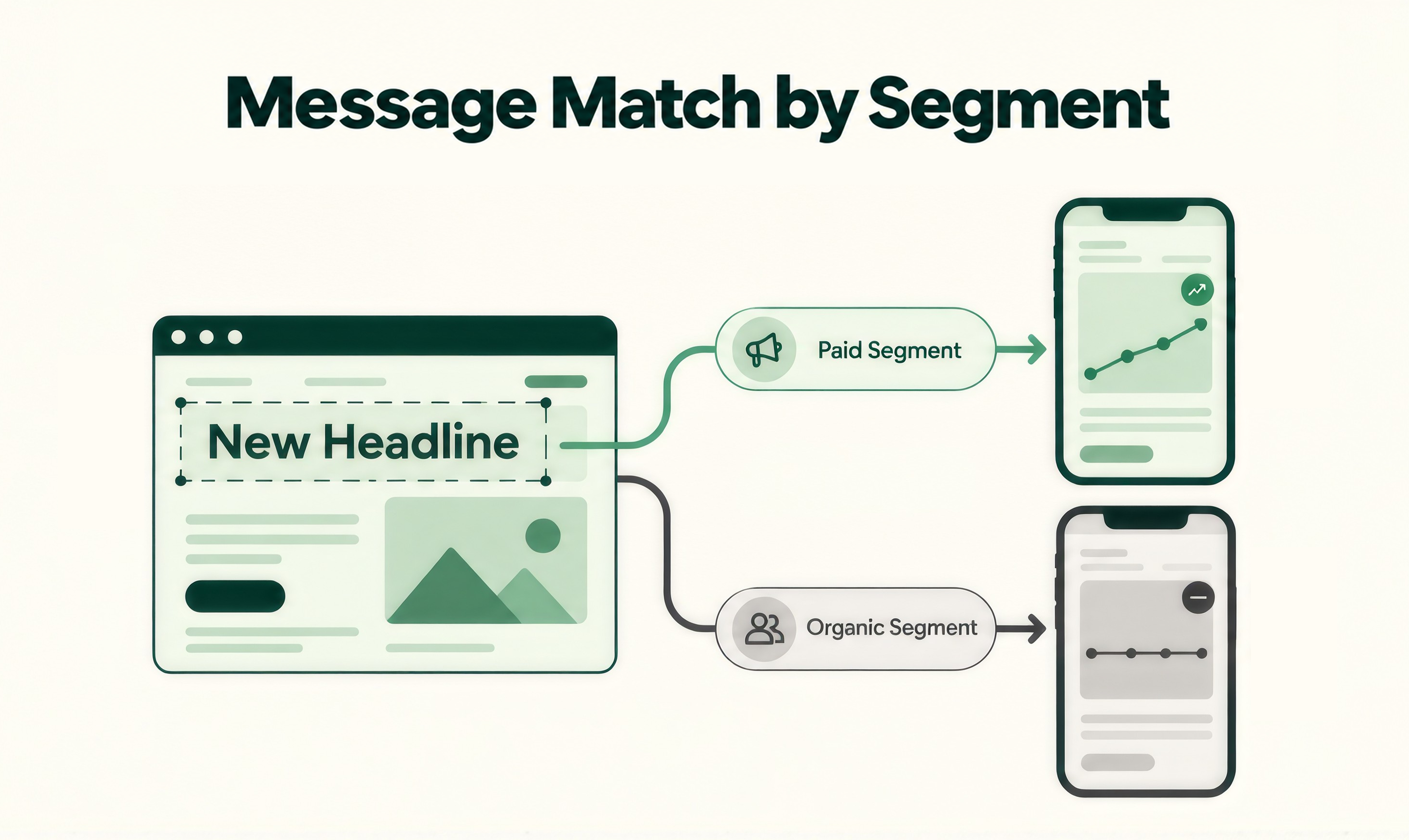
So test headline and CTA changes by segment instead of just implementing them and hoping. The same build discipline that keeps any test result trustworthy applies here too, not only to the bigger experiments on your roadmap.
This isn’t purely a conversion rate question, and it’s worth caring about even if your numbers already look fine. Google’s own Quality Score documentation lists landing page experience as one of three factors in the score, alongside expected click-through rate and ad relevance. A page that doesn’t match what the ad promised doesn’t just convert worse. It can quietly raise the price of every single click sending people there.
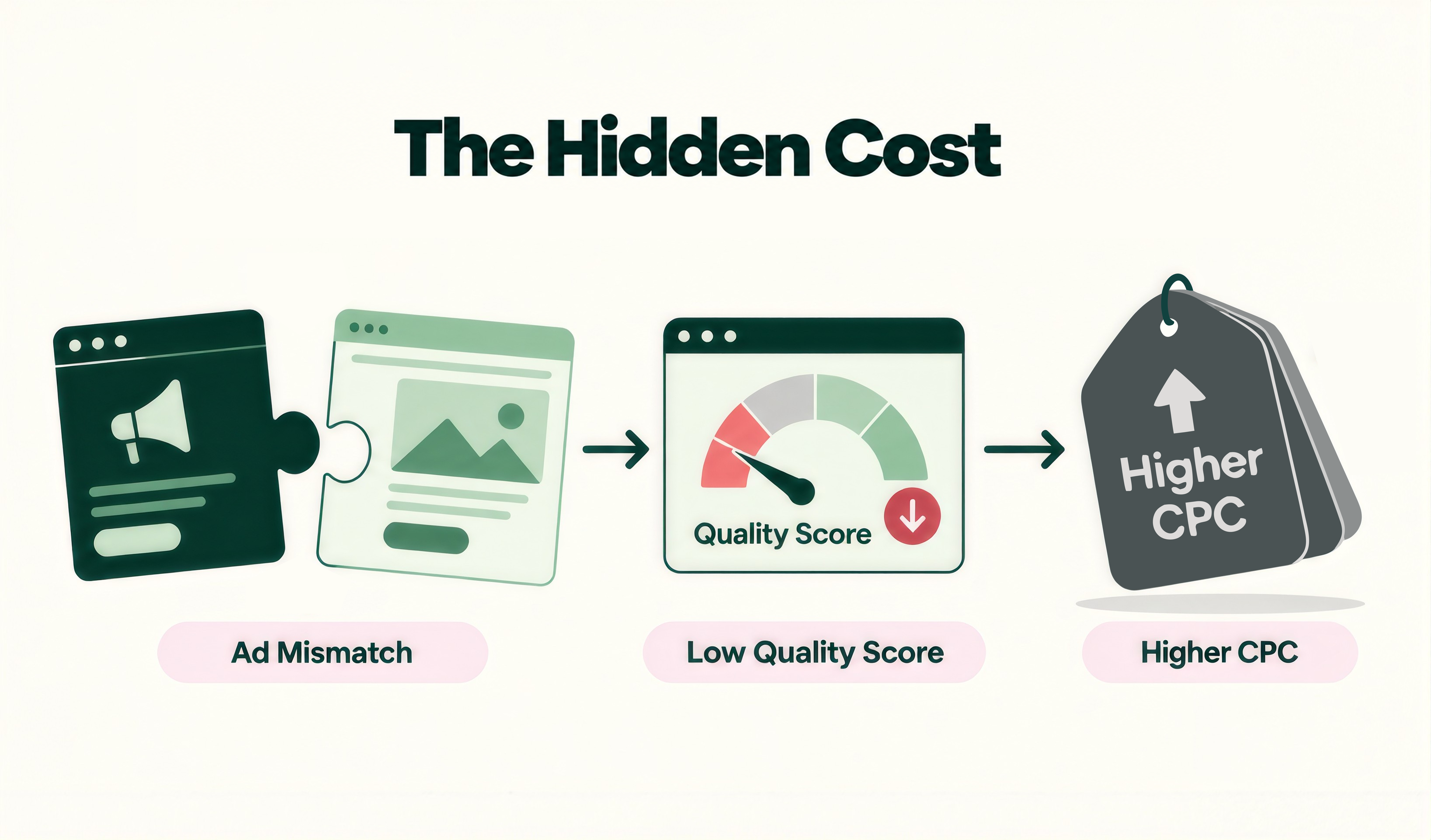
That’s a secondary reason to run the diagnostic from the first section, not the main one. But it means an unfixed message match problem costs you twice over: fewer conversions, and a higher price to earn each visit in the first place.
It was never really a choice between homepage and landing page sitting in isolation. It’s whether you checked the traffic split first. Whether the exceptions above genuinely apply to your situation. And whether you’re testing message match by segment instead of taking it on faith because someone told you to.
This shows up especially clearly on mobile traffic, where a message match gap tends to surface harder than it does on the channel that’s already converting well.
OptiPhoenix runs this diagnostic before recommending anyone build a new page, because a new page is only worth building if the old one actually earned that conclusion. Talk to our team about your paid traffic conversion rate.
Not always, even though it can feel like the safe default. Brand campaigns, branded search, and single-product catalogs are the three cases where the homepage still makes sense. Outside of those, a dedicated page usually performs better, but it’s worth confirming with the traffic split rather than just assuming it.
Split your conversion rate by source on the page you already have. If paid traffic converts much worse than organic on identical content, that points toward traffic quality or a message mismatch, not a design flaw you need to redesign around.
A checklist treats it as something you fix once. Testing treats it as a hypothesis you check by segment, since a headline change can genuinely help one traffic source and do nothing at all for another sitting right next to it.
Both, which is easy to miss if you’re only watching one dashboard. Google’s Quality Score documentation names landing page experience as one of three components that determine cost per click. A page that doesn’t match its ad can make every click more expensive than it needs to be.
Whatever the traffic split points you toward. If paid visitors specifically underperform after clicking through, the headline and above-the-fold messaging are usually the first thing worth testing, since that’s what someone sees in the moment they’re deciding whether to stay or leave.