AI Agent vs Chatbot: What’s the Difference for Your Store?

Every article on build versus buy for experimentation tools assumes you have to pick one. The vendors selling platforms argue against building. The agencies selling custom development argue against buying. Neither side mentions the actual answer. Most experimentation stacks need both. The real skill is knowing exactly where the line sits.

A commercial experimentation platform gives you a long list of components out of the box. Mixpanel’s own breakdown of what a team builds in-house names SDKs, randomization logic, statistical models, experiment controls, data pipelines, monitoring, and governance. That’s the full engine underneath a test.
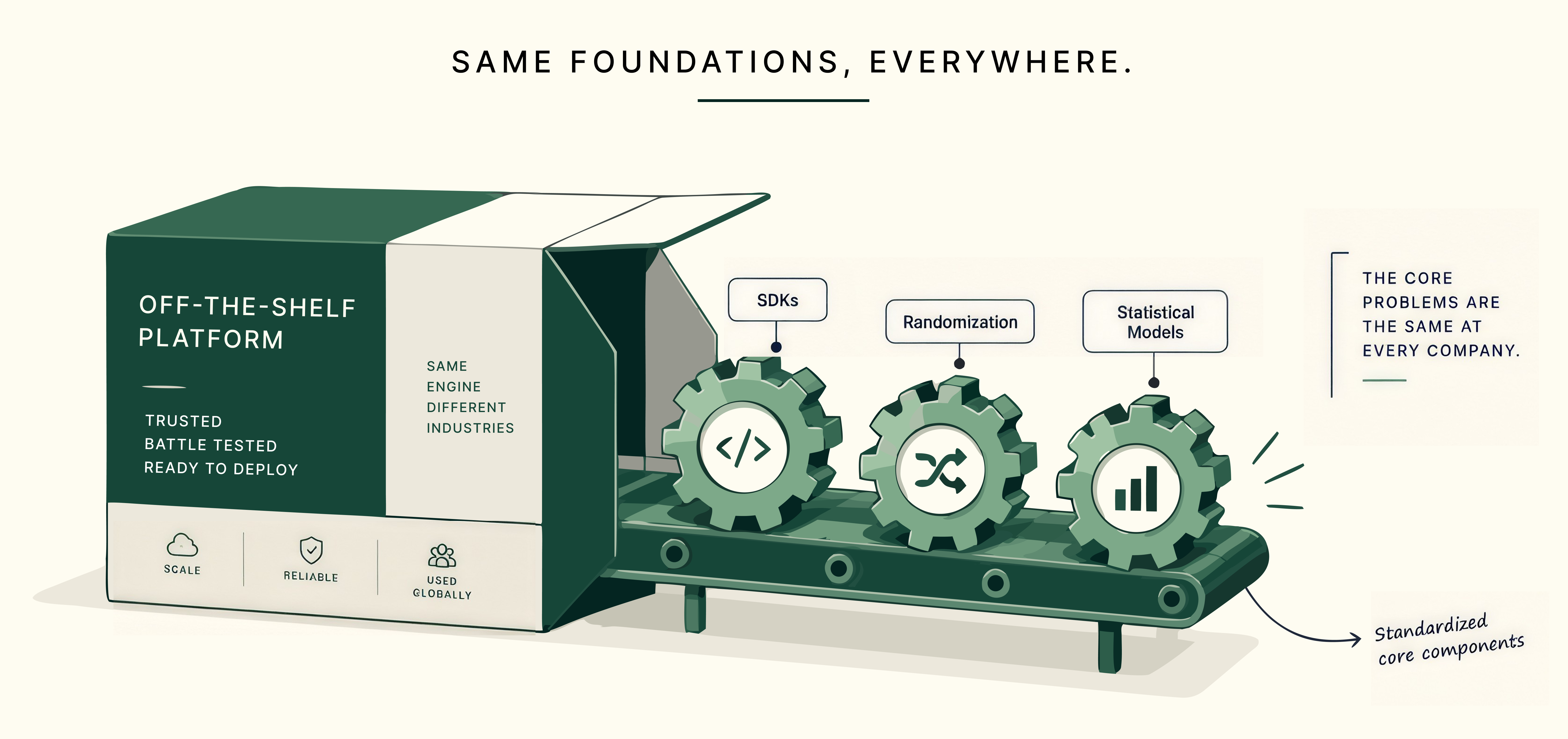
That engine is the same problem at every company. Randomizing traffic correctly doesn’t change based on your industry. Calculating statistical significance doesn’t change based on your team size. A platform vendor can solve this once and sell it to thousands of customers. That’s exactly why buying it usually makes sense. Building this layer from scratch only pays off at the scale of a Meta or a Netflix. Eppo’s own founders have acknowledged those companies spent hundreds of thousands of engineering hours getting there.
The core testing engine is standardized. How a team actually works almost never is.
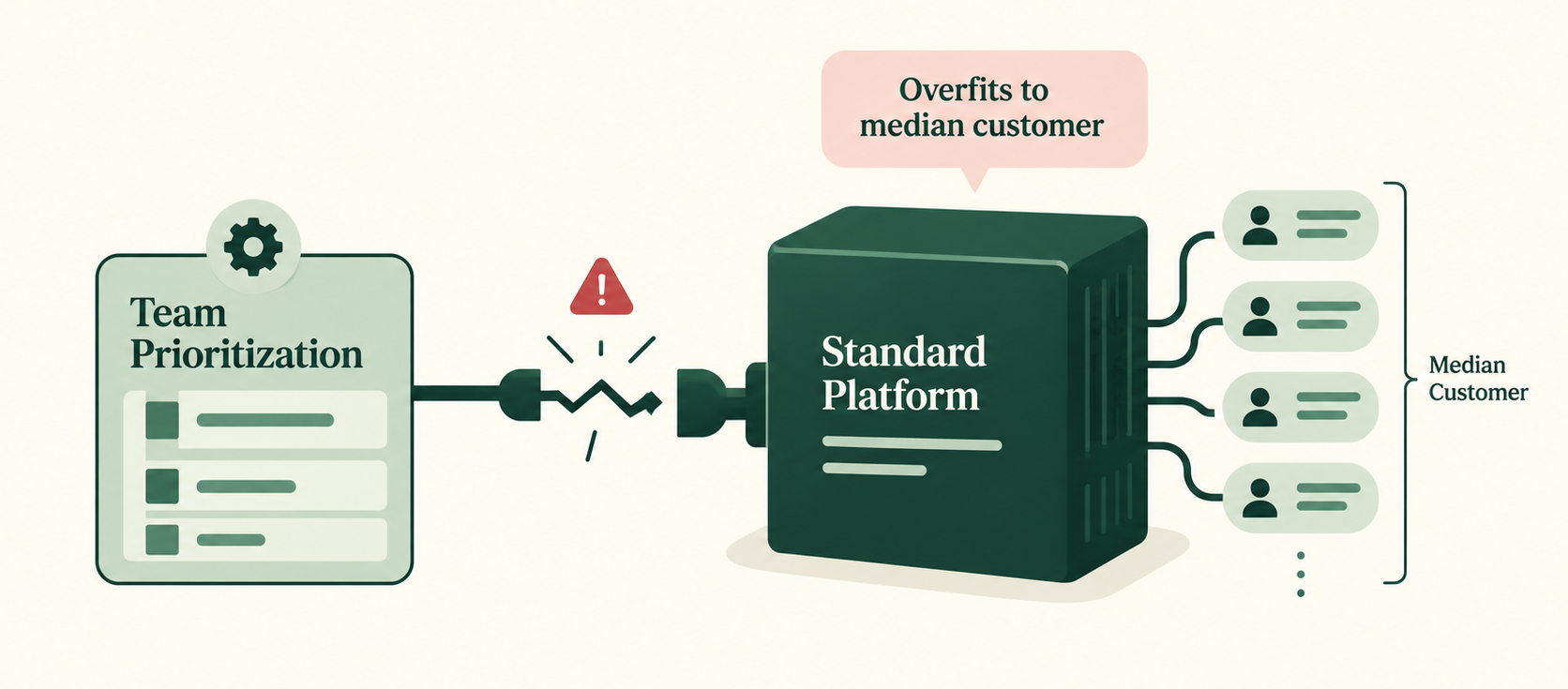
Statsig’s argument against building custom platforms warns that internal tools “overfit” to today’s needs and struggle as new product areas emerge. That criticism cuts both ways. A bought platform overfits too, just to the needs of its median customer instead of yours specifically. Nobody’s off-the-shelf tool knows how your team prioritizes which tests to run. It doesn’t know where a past test’s context lives once the test ends. It can’t know how your specific CRM and product stack need to talk to the testing tool.
ABsmartly’s own comparison gestures toward exactly this layer with its hybrid model. Keep core capabilities like server-side experimentation and deep internal integrations in-house. Buy a client-side or feature-toggle system for the standardized parts. Almost nobody develops that idea past a passing mention. Most of this content comes from vendors with an obvious reason to prefer the “just buy everything” answer.

Every vendor’s total-cost-of-ownership comparison stacks engineering hours against a subscription fee. That’s a real cost, but it’s not the only one.
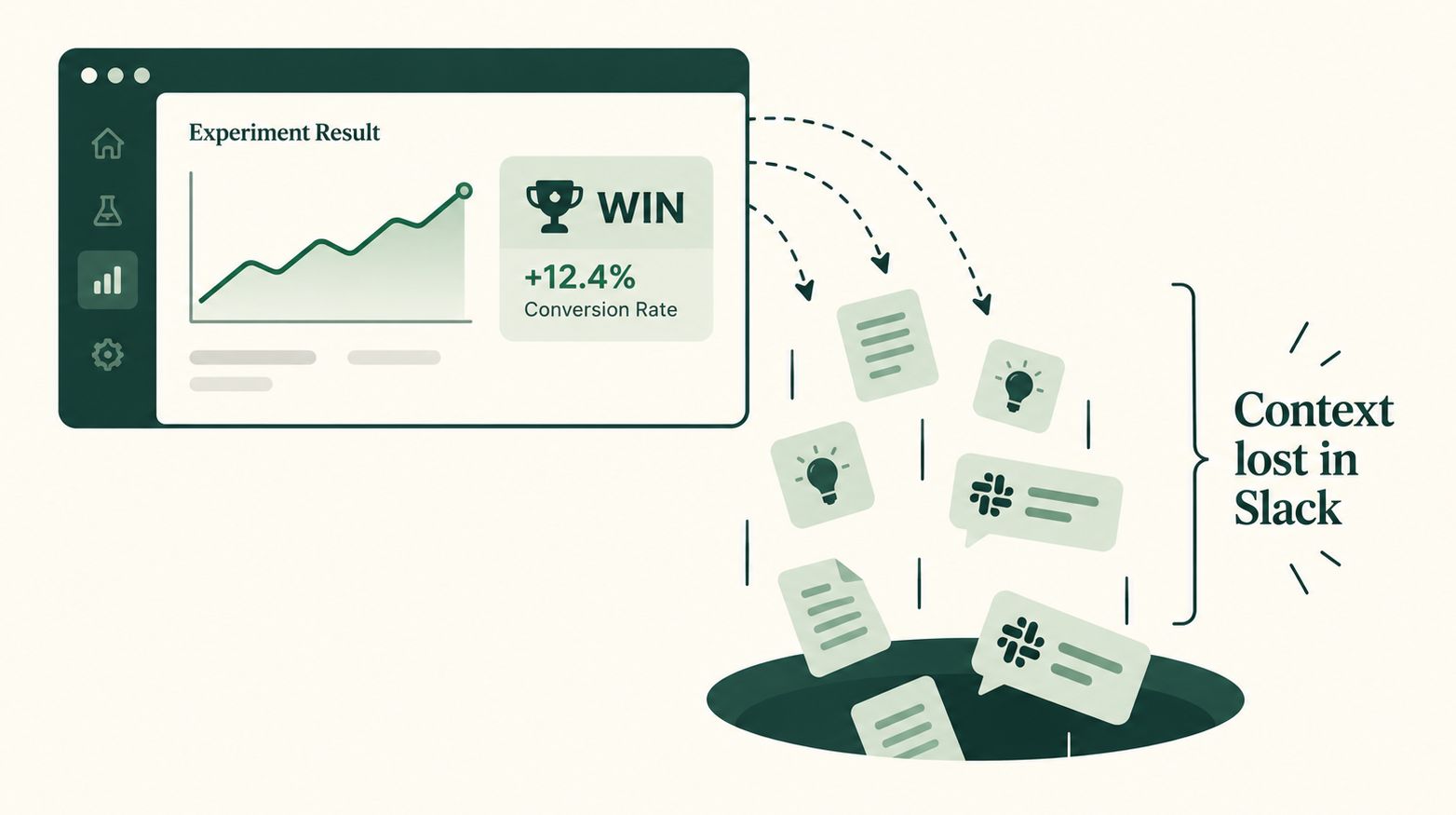
The missing cost shows up once a test ends. A win becomes a number in a dashboard. The reasoning behind it, however, usually doesn’t. Why the team prioritized that hypothesis, what got ruled out first, what the team actually learned, all of that typically lives in a Slack thread or one person’s memory instead. That’s because off-the-shelf platforms don’t solve this. It isn’t a testing problem. It’s a workflow problem specific to how your team operates, and that’s exactly the kind of gap a custom internal tool closes.
Buy the core testing engine. Randomization, statistical models, SDKs, and experiment execution are the same problem everywhere. A platform vendor has already solved it at a level almost no internal team can justify rebuilding.
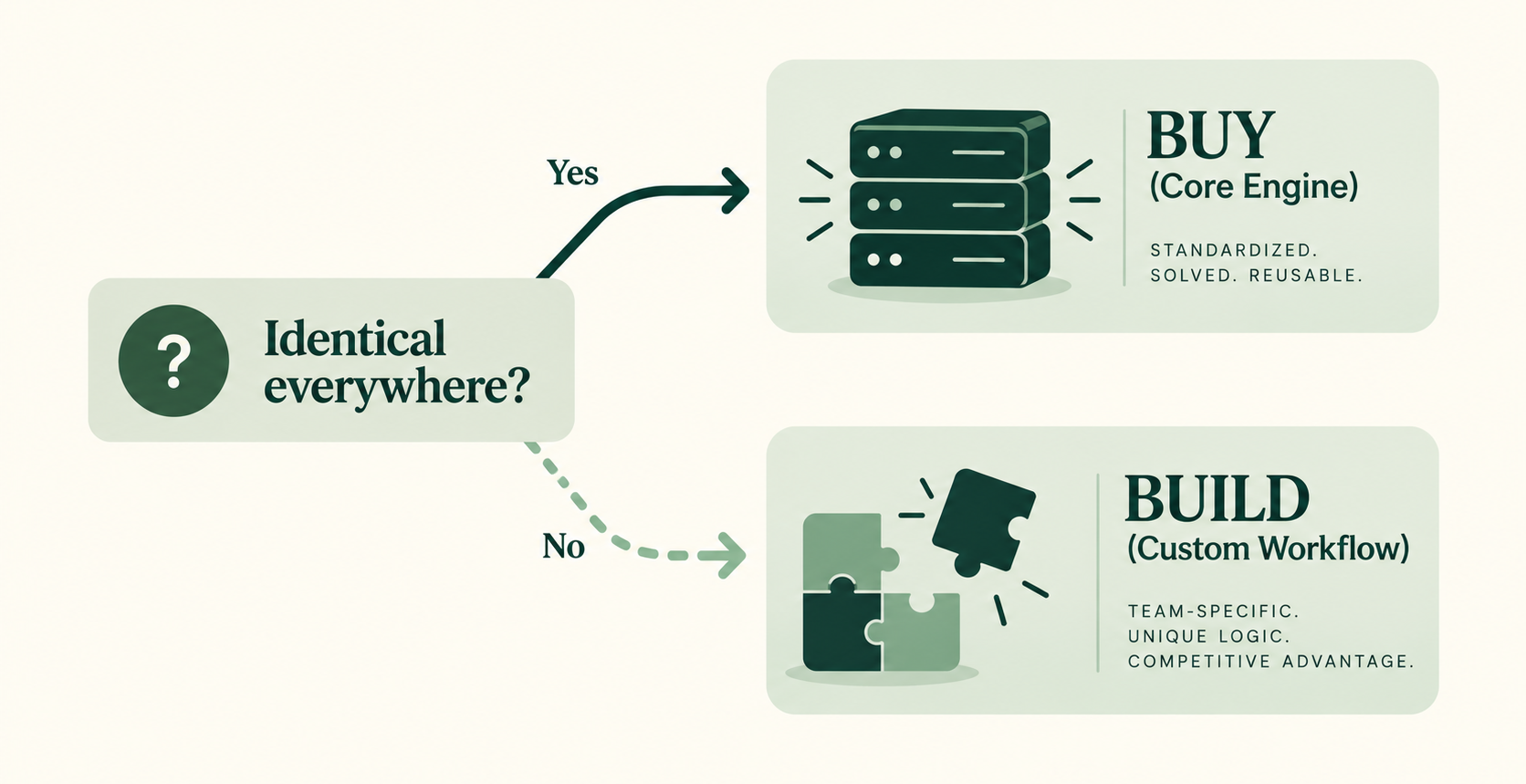
Build the layer specific to your team. Experiment prioritization workflows belong here. So does a searchable record of what’s already been tested and why. So do integrations connecting the testing tool to your specific analytics and CRM stack. None of this looks the same at every company. No vendor builds it for you.
One question does most of the work. Would this component look identical at every company using the same platform? If yes, buy it. Someone has already built it better than a one-off internal project will. If the component only makes sense because of how your specific team works, build it. No vendor has a reason to solve your specific workflow.
OptiPhoenix runs on this same hybrid model in practice. We pair a partner testing platform for the core engine with custom-built experiment management and governance frameworks layered around it, so a test’s context never lives only in one person’s memory. The same discipline keeps server-side testing and client-side testing running as one program instead of two. The stack works as one system, not a build side and a buy side operating in isolation.
The real skill was never choosing a side. It’s knowing exactly where your line sits today, and rebuilding it as the team outgrows the last one.
Getting this right compounds with everything else in the broader CRO program a custom app supports. A tool that fits the workflow gets adopted. A tool that fights it gets abandoned within a quarter.
OptiPhoenix builds the custom layer around whatever testing platform already fits your core engine. Nothing gets rebuilt from scratch. Nothing gets forced into a generic workflow. Talk to our team about your experimentation stack.

Almost never, for the core testing engine specifically. Randomization, statistics, and experiment execution are solved problems. A commercial platform already handles them at a level most internal teams can’t justify rebuilding. The exception is scale most companies never reach.
Anything specific to how your team actually works. Experiment prioritization workflows, a searchable record of past test learnings, and integrations connecting your testing tool to your specific analytics and CRM systems all belong here. These don’t look the same at every company, so no vendor builds them for you.
Because they’re selling the alternative. Their content is honest about the real costs of building an entire platform from scratch. It rarely mentions that most teams aren’t choosing between building everything and buying everything. The real decision is which specific layer belongs where.
The cost of losing a test’s context once it ends. Standard comparisons weigh engineering hours against subscription fees. They skip what happens to the reasoning behind a test once someone logs the result. That’s a workflow gap, not a testing gap. A custom tool usually solves it, not a bigger platform subscription.
Yes. The same logic applies. Buy the standardized execution layer. Build the coordination layer that keeps testing decisions consistent, regardless of whether a fix lives in the browser or on the backend.