What “Experiment-Ready” Actually Means: Building a Website Architecture That Can Be Tested
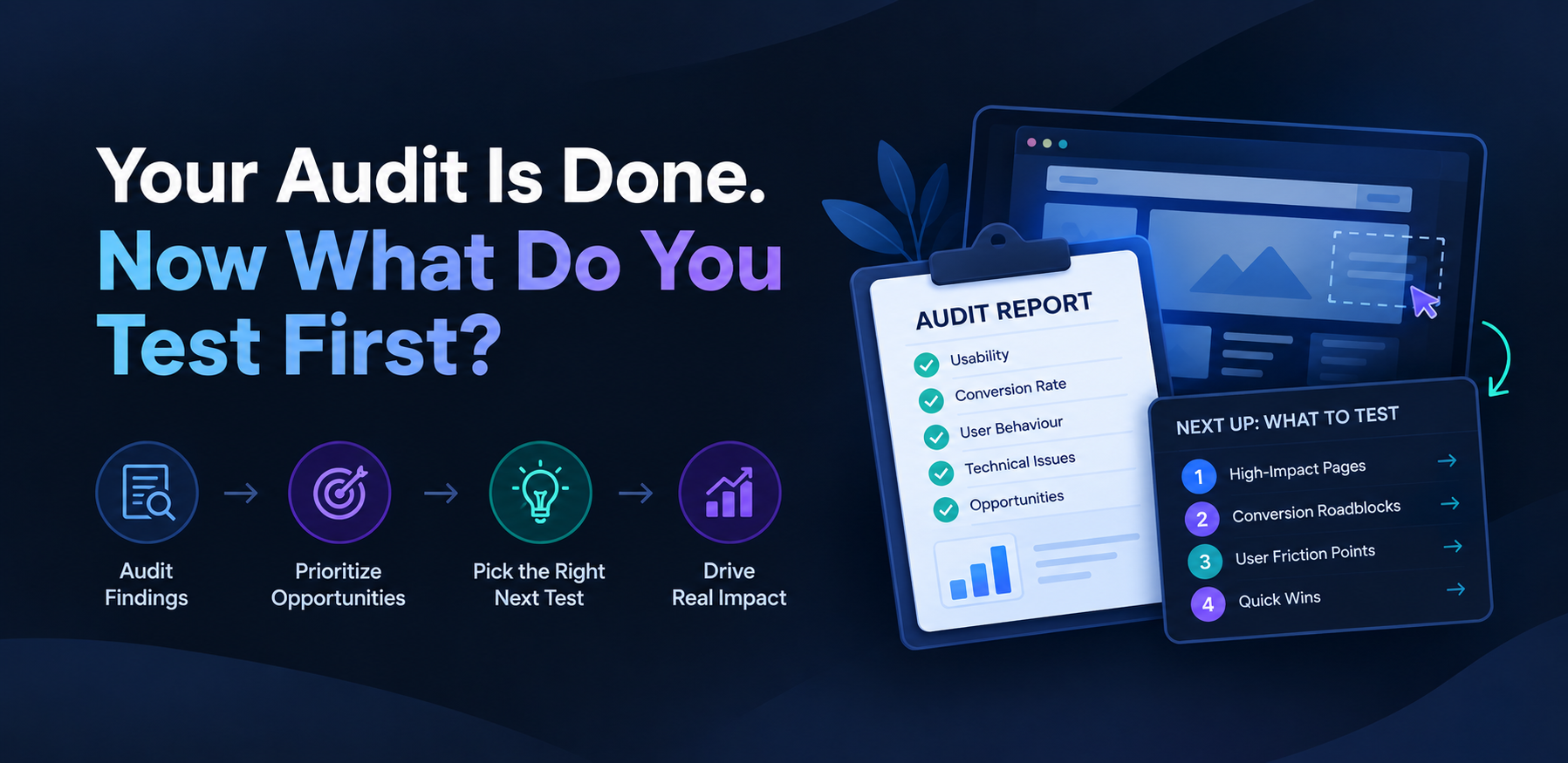
A finished conversion audit can feel a little overwhelming. The report is thorough, the findings are valid and somewhere around the 40th row of the spreadsheet, one thought starts creeping in which is where do we actually begin?
This doesn’t mean the audit missed the mark. It’s doing what it was supposed to do. An audit is meant to uncover all the leaks. Figuring out which one deserves attention first is a different job, and it often doesn’t get enough thought.

Without that step, audit reports tend to sit in shared drives while teams go back to testing the latest idea that came up. The sections below look at how to sort the findings, assess the evidence behind them, score them, and make sure the priorities actually fit the traffic the site gets.
Scoring an entire audit in one pass mixes together items that need different treatment. Most findings fall into one of three groups and each group leads somewhere different.
Some findings are plainly broken things. A form that fails in one browser, a button that does nothing on a certain phone, an error at checkout. These do not need an A/B test. They need a ticket and a developer. Fixing them early also keeps broken experiences from muddying the results of later tests.
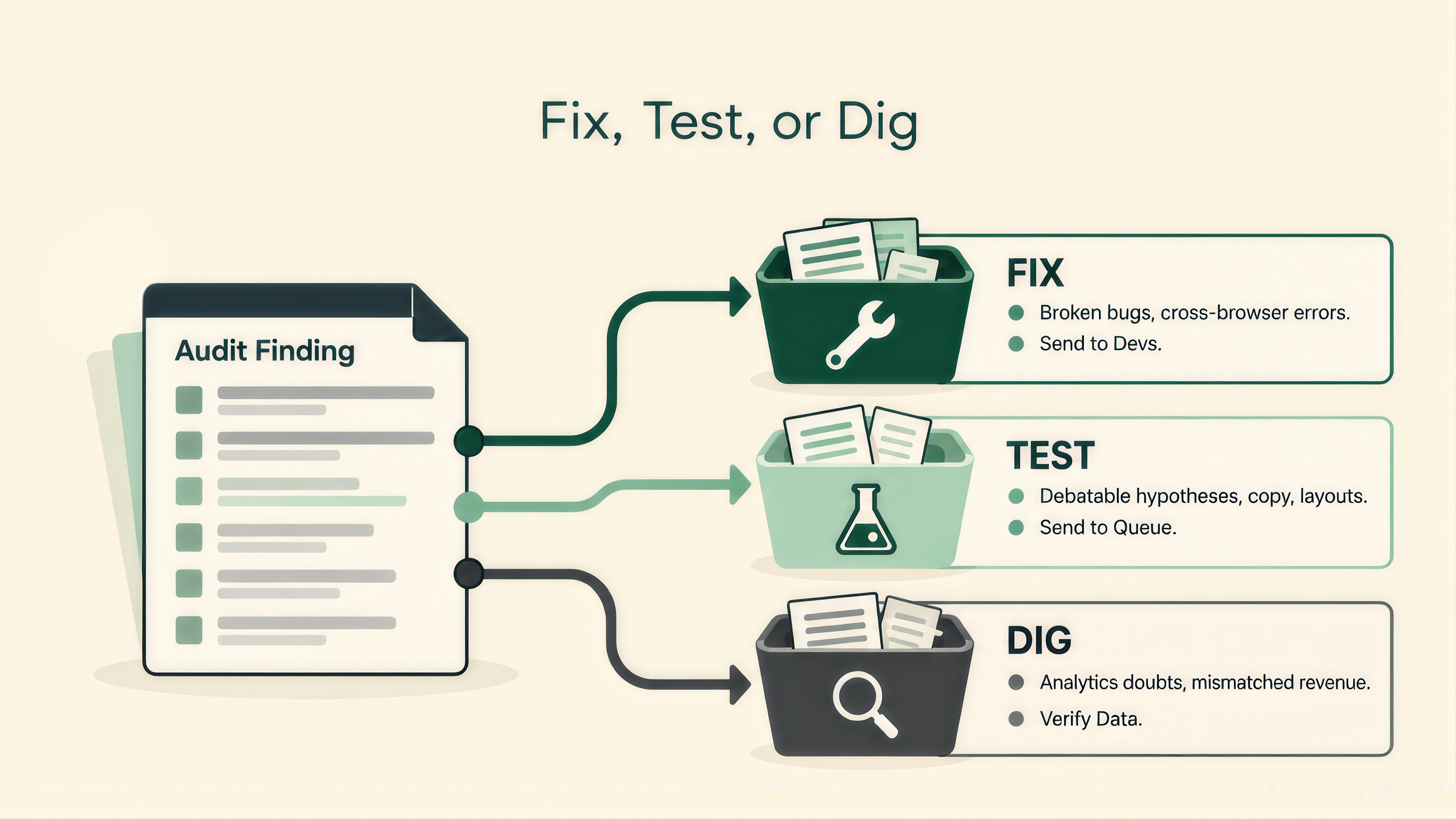
Other findings are hypotheses. Visitors hesitate at a step, and reasonable people could disagree about the right fix. Copy, layout, offer framing, price display and step order all belong here. This group becomes the test queue, and the rest of this post is mostly about it.
The third group depends on numbers nobody has verified yet. If analytics events fire twice, a consent banner hides part of the traffic, or revenue in the dashboard does not match the order system, any score built on that data inherits the error. These findings need a data check before they join the queue. The post on why A/B tests keep failing because of analytics infrastructure explains what to look for.
A simple way to remember this is Fix, Test or Dig. Fix the broken, test the debatable, dig into the doubtful.
A finding supported by one source is an observation. A finding where funnel drop-off, session replays and an expert review all point at the same step is far more likely to be worth a test.
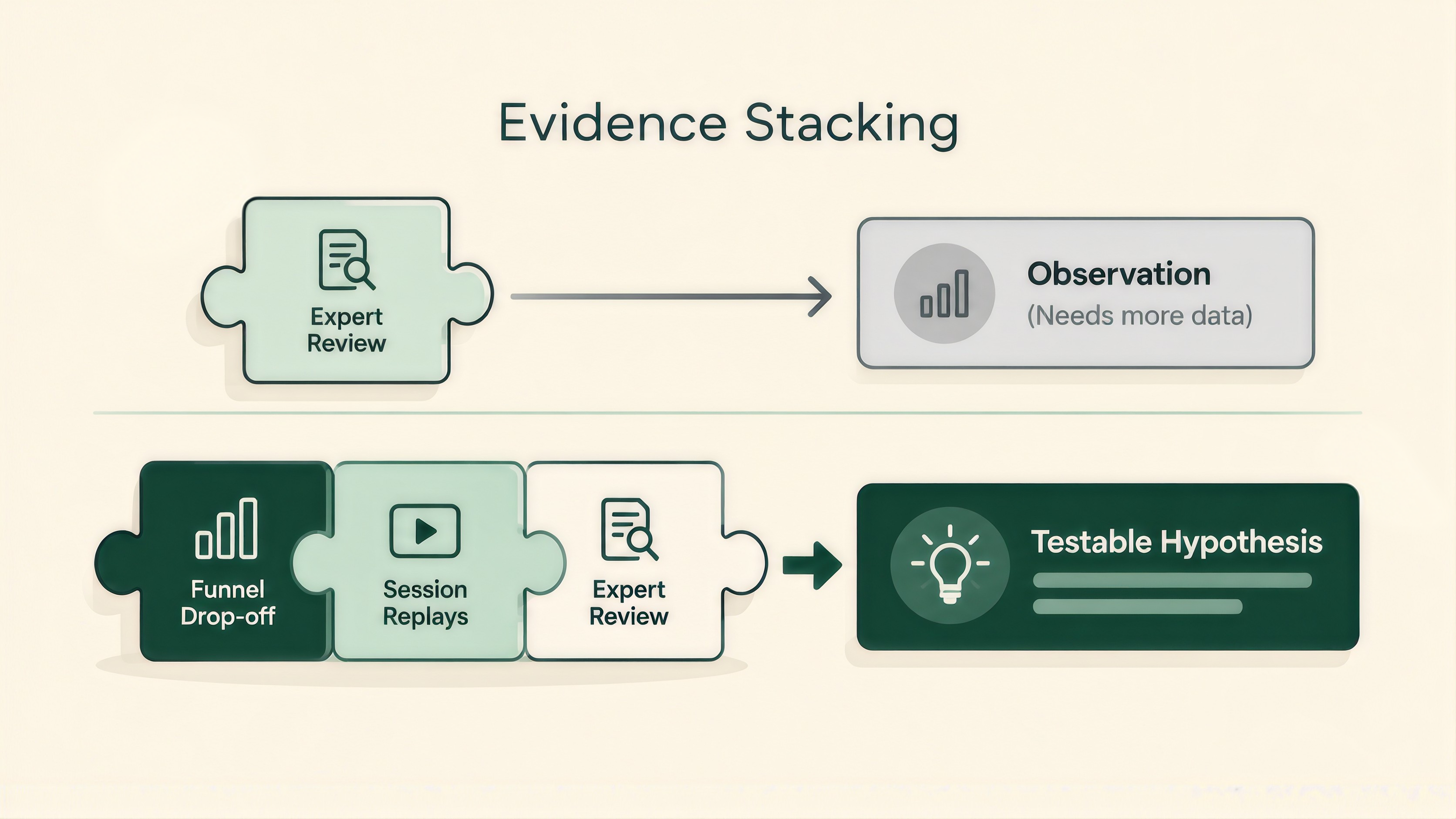
The structure of the audit helps here. Each finding in an OptiPhoenix audit is written as Observation → Implication → Action → Impact, drawing on behavioral, engineering and business evidence. A finding that arrives with all four parts converts into a hypothesis almost directly. One that is missing the impact line usually has a number somebody still needs to go and find, and it can wait until that number exists.

Audit scores also carry their own bias, which is covered in the post on why conversion audit scores feel objective when they are not.
Three frameworks come up most often. ICE, popularized by Sean Ellis, scores impact, confidence and ease. PIE, created by Chris Goward, scores potential, importance and ease. PXL, from CXL, replaces sliding scales with yes or no questions tied to evidence, such as whether an idea is backed by heatmap data or sits on a high-traffic page.
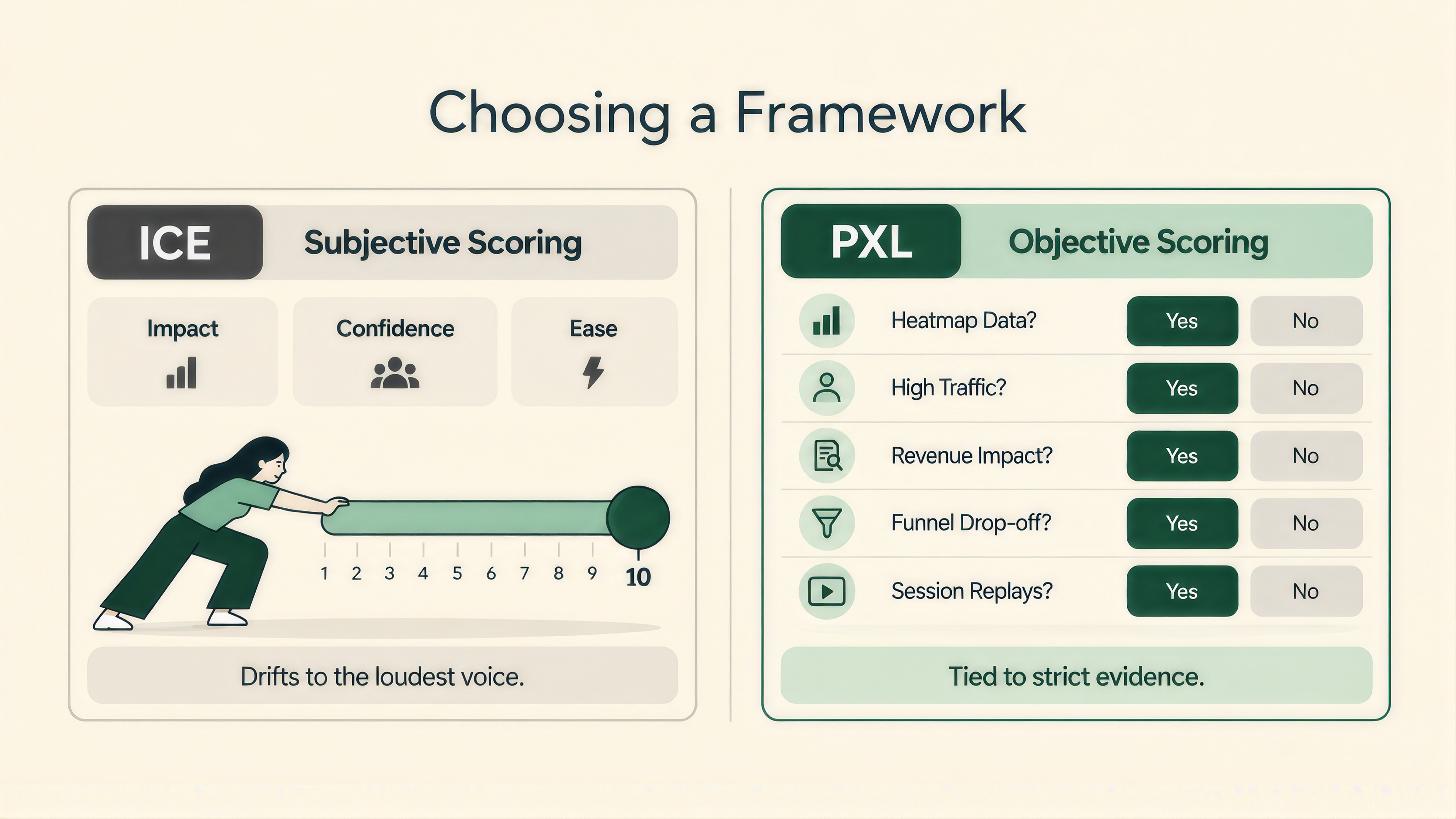
ICE and PIE are quick, but every input is a judgment call. When several people score the same idea, the numbers tend to drift toward the most confident voice in the room. PXL reduces that, though it takes longer and can undervalue bolder ideas built on framing or psychology. The same list can come out in a different order depending on which framework is used, so the choice matters more than it seems.

This part surprises people most. A page with modest traffic cannot detect a small lift in any sensible timeframe. A tweak to a headline on a quiet page might run for months and still end without a clear answer.
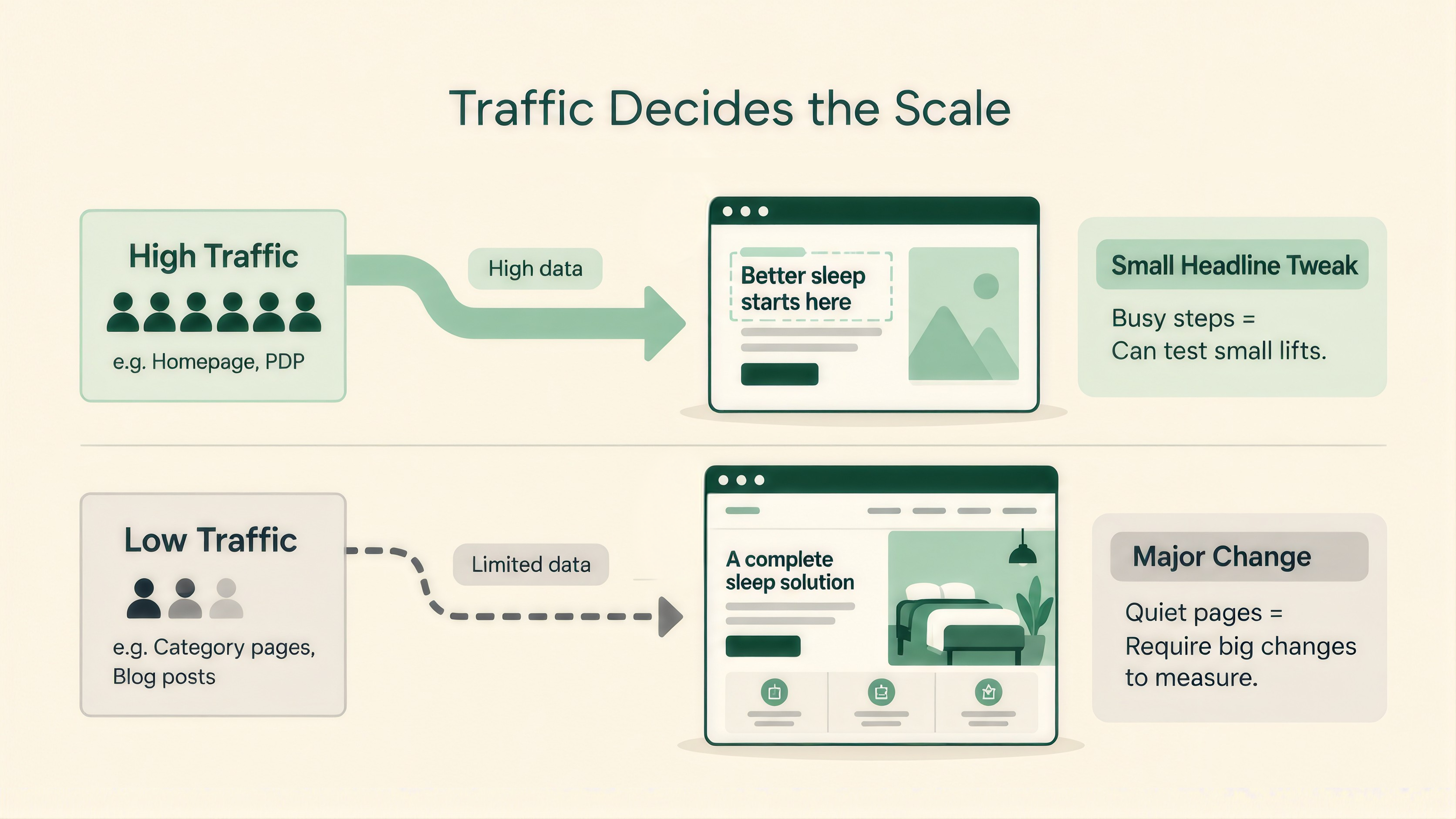
Findings on busy steps close to revenue get a head start for that reason. On lower-traffic pages, bigger changes are easier to measure than small ones, and testing higher in the funnel, where more visitors pass through, is often easier than testing at the very end. The post on funnel audits versus page-level testing looks at that trade-off in more detail.
Fixes for broken items can start right away and run alongside the first test. A good first test has strong evidence, sits on a high-traffic step and needs only moderate build effort. A win is welcome, but a clean and trustworthy result matters just as much, because it builds the confidence of the people who approve everything that follows.
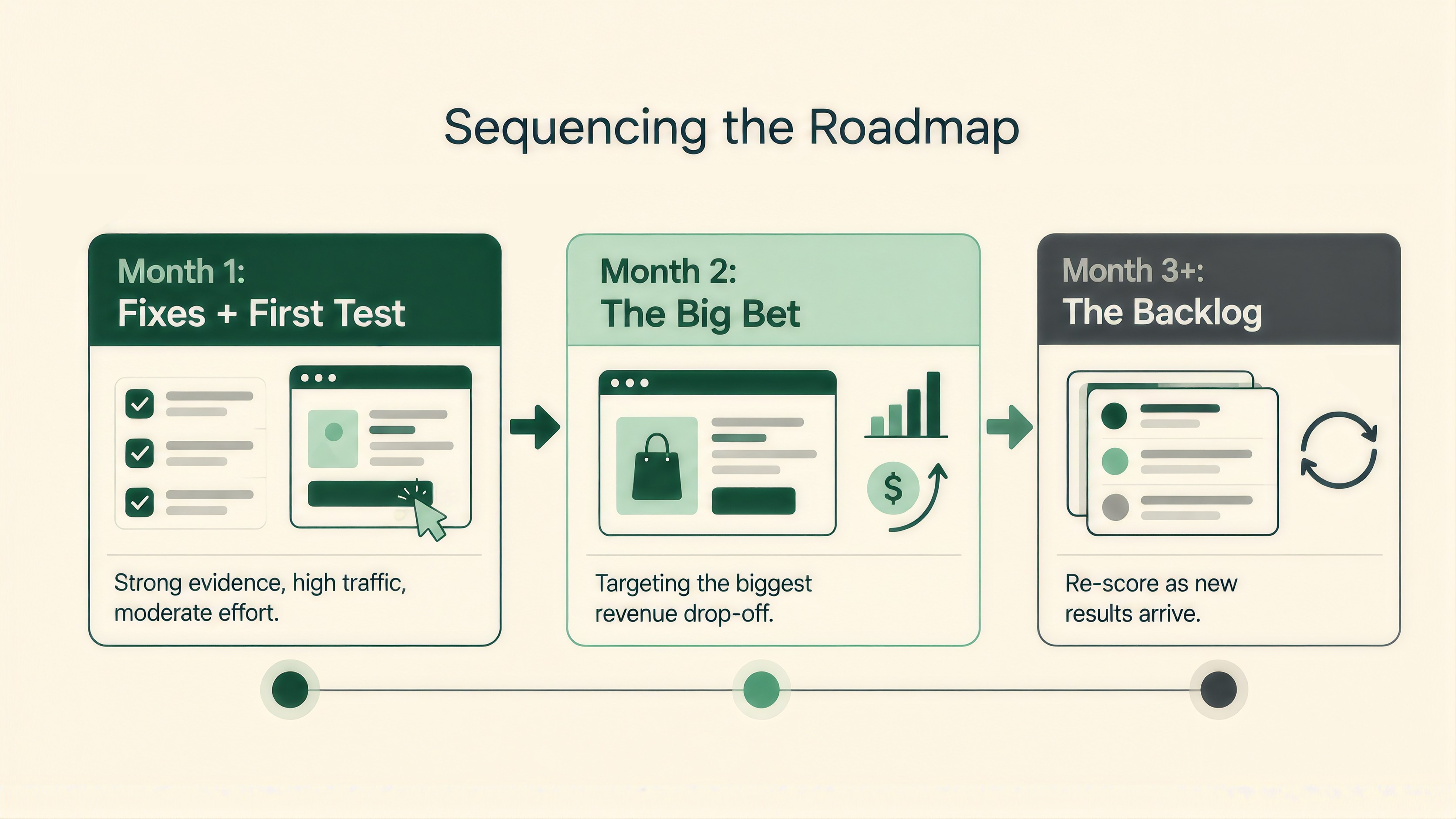
After that comes a larger bet on the biggest revenue drop-off the audit found. Everything else stays in the backlog. Scores should be revisited as results arrive, since a result on one page changes how confident a team can be about similar ideas elsewhere. An idea scored months ago may no longer deserve its place.
Each test also needs a hypothesis written before anything is built. A simple template works well.
“Because [observation from the audit], changing [element] for [segment] should [change in behavior], which will show up in [metric].”
If a sentence like that cannot be completed, the finding probably needs more work before it becomes a test.
Starting with the easiest ideas feels productive. An easy test with no evidence behind it is still a low-value test, and a string of flat results early on can make people lose faith in the whole program.
Running several tests on the same page at once makes results hard to read, because the changes interact. Skipping agreed stopping rules leads to arguments about whether a result is ready. And a backlog that nobody maintains slowly turns into the same shared-drive problem the audit started with.
Sorting, scoring and sequencing a long audit is easier with someone who has done it across many funnels. OptiPhoenix has supported more than 150 brands across D2C, retail, SaaS, BFSI and aviation, and every conversion audit is delivered with prioritized quick wins and a long-term experiment backlog.
The easiest way to begin is the free mini audit. It gives you a first look at your site from the OptiPhoenix team, without a big commitment.
Anyone who would like a rough number first can try the Decision Engine Calculator.
Sort the findings into things to fix, things to test and things that need a data check. Broken elements go to development, verified hypotheses go to the test queue, and doubtful findings wait until the data behind them is confirmed.
No. Obvious defects such as broken forms or dead ends should be fixed directly. Testing is for changes where the best answer is genuinely uncertain.
ICE suits small teams that need to score quickly. PIE helps when traffic data is available. PXL works better when several people score ideas and the results need to stay consistent. Many teams add their own questions about revenue, evidence and traffic.
That depends on traffic and on whether the tests touch the same pages or journeys. Tests that overlap on one page make results harder to interpret, so most programs keep a single test per page or flow.
Whenever a result comes in or business priorities change. Scores from several months ago can be out of date.